
Listen to this post: What ‘Polycrisis’ Really Means – And Does It Still Help Us Understand the World?
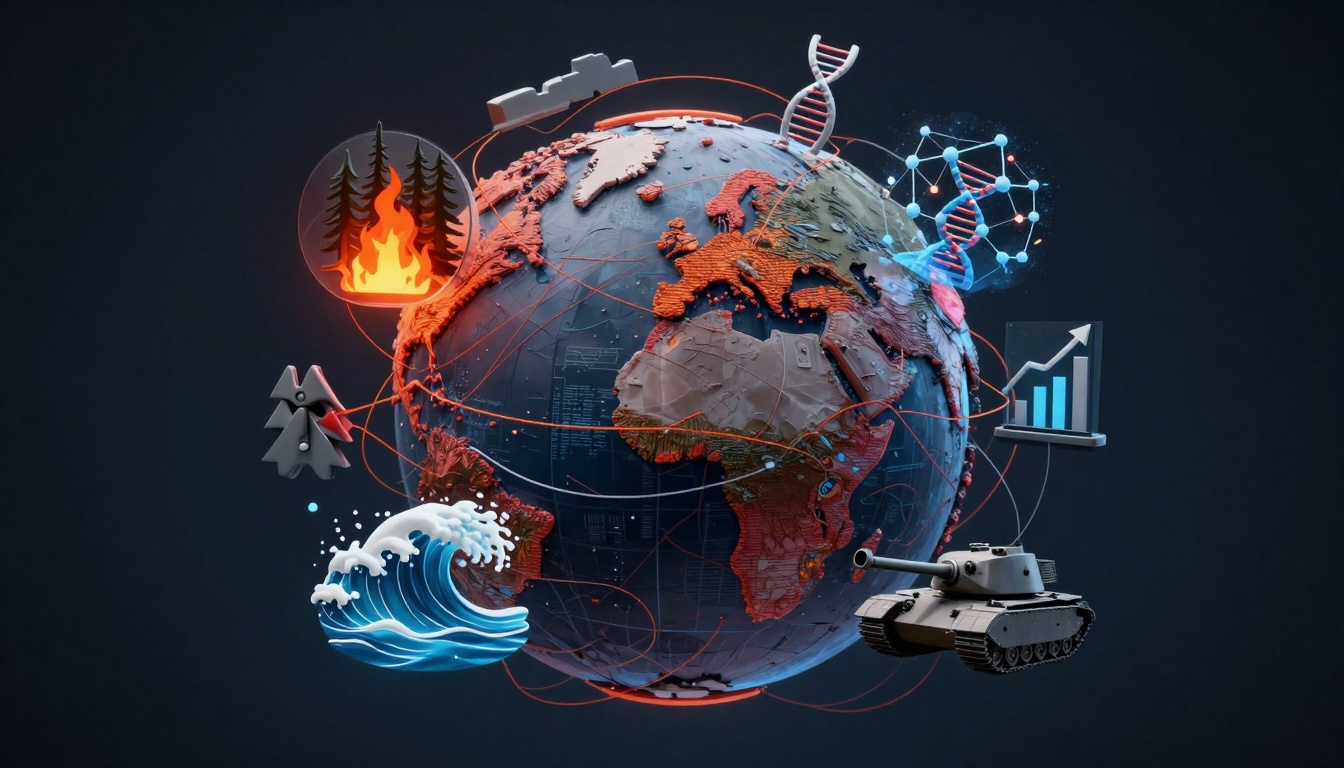
Wildfires tear through forests as fuel prices spike and distant wars send shockwaves through markets. Food shortages hit supermarkets while floods displace thousands. These shocks do not stand alone. They feed off each other, turning bad into worse. This tangle defines polycrisis: separate crises that collide and amplify one another. The impact dwarfs what any single event could do.
The term gained traction in the 2020s. COVID locked down the world, then Russia’s invasion of Ukraine choked energy supplies. Climate disasters piled on, from heatwaves to droughts. Prices soared, mental health crumbled, and trust in leaders eroded. By 2026, these threads weave tighter amid AI disruptions and cyber threats.
This article unpacks polycrisis. We trace its origins from quiet academic books to front-page warnings. Real-world cases show crises in action. Critics point out flaws, and we test if the idea still sharpens our view of chaos. In a month like January 2026, with fresh risks brewing, does polycrisis clarify the storm or just name the fog?
The Roots of Polycrisis: From Niche Idea to Global Buzzword
Picture crises not as isolated storms but threads in a vast web. Pull one, and others tighten. This image stems from 1993, when French thinker Edgar Morin and Anne Brigitte Kern wrote Homeland Earth. They saw the planet as a single, fragile system where problems overlap and intensify.
The concept simmered in complexity science circles. Crises nest inside each other, like Russian dolls of trouble. Globalisation sped this up. Trade routes link factories from Asia to Europe. A factory halt in one spot ripples worldwide.
Mark Swilling sharpened the term in 2013. He described crises as nested, each layer feeding the next. By the 2010s, leaders noticed. EU chief Jean-Claude Juncker used it for Europe’s pile-up of debt, migration, and populism. Then came Adam Tooze. In the 2020s, this historian charted feedback loops, where shocks bounce and grow.
Groups like the World Economic Forum amplified it. Their reports, from 2023 onward, flag polycrisis as top risk. The Cascade Institute mapped how these knots form. By 2026, it’s no longer obscure. It’s how thinkers frame our linked fate.
Key Thinkers Who Shaped the Term
Edgar Morin pictured Earth as a shared home under siege. In Homeland Earth, he and Kern warned of crises blending across borders. Swilling added layers: social strains nest within economic ones, all under environmental pressure.
Adam Tooze brought it current. He spots loops, like pandemics sparking inflation that ignites unrest. The World Economic Forum’s stories on polycrisis credit him for naming our shared overload. WEF reports through 2026 keep it alive, urging joined-up responses.
How Real Events Brought It to Life
Europe’s 2010s tested it first. Debt crisis bled into Brexit votes and migrant waves. Juncker called it polycrisis as economies stalled. The 2020s exploded the idea. COVID hit, then Ukraine war. Supply lines snapped, prices jumped. Climate events, like 2022 Pakistan floods, drowned crops amid global hunger.
These shocks proved the web real. One crisis primes the next, scope widens, pain deepens.
Clear Examples of Crises Crashing Together
Empty shelves greet shoppers. War blocks grain ships, drought wilts fields, and pandemic scars linger. This is polycrisis at work. Shocks multiply, each worsening the rest.
Take 2023 warnings from the WEF. They predicted shortages in food, water, energy. By 2026, these play out. Cyber attacks hit grids as climates extremes strain supplies. Economic debts from 2008 linger, now tangled with AI job shifts and US-China frictions.
Stories bring it home. In East Africa, locusts swarmed crops during COVID lockdowns. No aid arrived. Hunger spread. Ukraine’s war cut fertiliser flows, so yields fell worldwide. Heat domes baked wheat fields in India. Prices rocketed, sparking protests from Sri Lanka to the UK.
Inequality adds fuel. Post-2008 gaps widened. Now, 2020s debts crush households as energy bills soar. Mental health dips from isolation feed workplace gaps, slowing recovery. Conflicts brew where floods displace farmers, arming tensions.
COVID and Its Ripple Effects
COVID shut factories. Supply chains froze. Prices climbed as demand bounced back. Mental health tanked; isolation bred anxiety.
Climate woes layered on. Wildfires choked air, worsening lung issues from the virus. Inflation bit harder for the poor. WEF noted this cluster in their risks report, where living costs outpaced wages. By 2026, resurgent diseases mix with debt, trapping nations.
War, Weather, and Wallet Pain
Ukraine war spiked energy. Europe shivered, factories idled. Food costs followed as Black Sea ports closed.
Droughts hit the same year. Mississippi barges stalled, US grains rotted. In 2026 outlooks, WEF ties cyber risks to resource fights. Heat fuels migration; borders strain. Wallets empty as bills mount, unrest simmers.
Why Critics Say Polycrisis Falls Short
Some call it a buzzword for “bad times.” Too broad, they say. It lumps wildfires with wars without pinning root causes like inequality or colonial scars. Solutions? None clear. Leaders stare at the mess, unsure where to start.
Definitions clash. One group’s polycrisis is another’s coincidence. Cambridge scholars outline this fuzziness, noting it blurs local pains with global ones. Fix debt, spark inflation elsewhere. Scare tactics rule: overload breeds despair, not plans.
It ignores history. Crises always cluster; think 1930s depression and wars. Regional views suffer too. Africa’s droughts matter less than Europe’s gas woes in big reports. Yet it grabs eyes. Names the feeling of everything hitting at once. That pull keeps it useful, flaws and all.
Can Polycrisis Guide Us Through 2026 Chaos?
It shines light on links. Siloed fixes fail in our wired world. Spot the web, build whole responses: resilient supply chains, green energy buffers.
Downsides loom. Overload risks paralysis. “Too big,” leaders shrug. But pair it with tools like risk maps from the Stockholm Resilience Centre. Track cascades early.
In 2026, WEF eyes cyber-resource knots, rival powers fraying deals. Polycrisis fits: it demands joined thinking. Use it sharp, for plans not panic. What links do you see in your news feed?
Conclusion
Polycrisis names crises that crash and compound. From Morin’s web to Tooze’s loops, examples like COVID-war-climate piles show its bite. Critics flag vagueness and inaction traps, yet it reveals ties silos miss.
It helps grasp 2026’s tangle, if we act on insights. Watch news for patterns: energy hikes feeding unrest, tech shifts amid floods. Step back from the storm. Spot the threads.
Follow CurratedBrief for updates on these global knots. What crisis link surprises you most? Share below. Clarity cuts through chaos.