
Listen to this post: What School Textbooks in 2030 Might Say About the 2020s
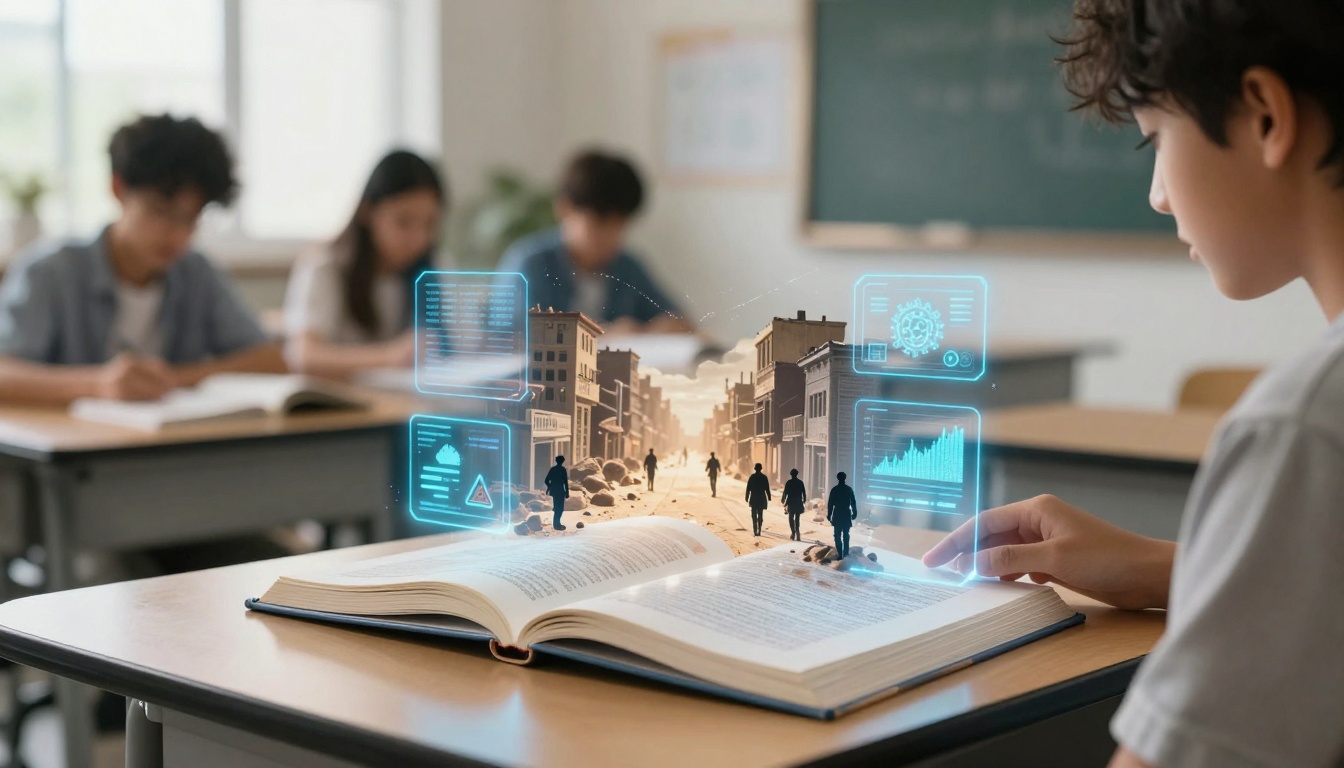
Picture a classroom in 2030. A student named Alex flips open a crisp history textbook to the chapter on the 2020s. Glossy pages show empty city streets, soldiers in trenches, and glowing AI screens. The decade jumps out as a wild mix of fear, fights, and breakthroughs. Kids like Alex read how a tiny virus shut down the world, wars dragged on without winners, and smart machines changed jobs forever.
Textbooks will boil it all down to simple lessons. They will paint the 2020s as a bridge from old ways to a tech-driven future. Expect bold summaries on the COVID-19 pandemic, bloody border clashes, the AI explosion, shaky money markets, and hot planet warnings. These books aim to teach resilience amid chaos. Historians will note how leaders rose and fell, nations pulled together or apart. What wild ride will they describe for pupils? This post imagines those key chapters, pulling from real events up to early 2026.
The Pandemic That Stopped the World
Textbooks in 2030 will likely peg COVID-19 as the spark that lit the 2020s. The virus hit hard in early 2020, forcing global lockdowns from March. Cities went quiet; shops bolted doors. Over seven million died worldwide by mid-decade. Daily life flipped: masks became normal, hand sanitisers dotted every corner.
Schools closed for months, sending kids to screens at home. Jobs vanished in waves, with airlines grounded and factories idle. Governments pumped trillions into aid. In the US, over 155 million voted amid the mess in 2020. Protests erupted too, like after George Floyd’s death. The pandemic mixed health scares with social firestorms. Writers will call it “the event that froze time and forced change.”
Empty streets in London and New York told the story. Families clapped for nurses from windows. Zoom calls replaced office chats. The world learned to live apart, yet connected online. Recovery crawled as variants popped up. Vaccines saved lives, but scars lingered in lost jobs and broken routines.
Lockdowns and Social Shifts
Lockdowns hit everyday folks hardest. Schools shut, leaving millions of children behind on lessons. Parents juggled work from kitchen tables. Job losses soared; hospitality workers queued for aid.
George Floyd’s murder in May 2020 lit protests across cities. Crowds demanded justice on race and police power. Black Lives Matter grew louder amid the virus quiet. Belarus saw huge street marches against a rigged vote. These shifts pushed talks on fairness long after masks came off.
Path to Vaccines and New Norms
Science raced ahead with vaccines. Labs rolled them out in under a year, a record win. Billions got shots by 2022, easing the worst waves.
Myanmar faced bloody crackdowns after a 2021 coup. Protests met tanks. Hybrid work stuck around; offices half-full even in 2026. Textbooks will praise quick fixes but note lasting gaps, like mental health strains from isolation.
Wars and Power Struggles Across Borders
The 2020s saw old grudges flare into long slogs. Textbooks might label it “an age of frozen fronts and leader comebacks.” Russia’s full push into Ukraine in February 2022 dragged into a fourth year by 2025. Drones buzzed skies; trenches scarred fields. Putin held power till 2030 plans.
Israel hammered Gaza in rounds, with a 2025 peace sketch amid ruins. Iran felt US strikes. Trump returned in 2025, marking “Liberation Day” after Capitol chaos in 2021. Biden’s 2020 win faded fast. Cambodia and Thailand clashed at borders; US eyed Caribbean spots.
Pupils will read tense tales: frozen mud in Donbas, aid trucks dodging shells. Leaders gambled big. Trump’s trade threats hit Panama. No quick wins; just weary troops and empty promises. Historians note how tech like drones kept fights alive without full invasions.
Ukraine’s Long Fight
By early 2026, Russia crept forward in winter chill, grabbing bits near Kupiansk. Ukraine fired drones deep into Russia, hitting oil tanks. Attacks killed civilians; blackouts left Kyiv cold. EU loaned 105 billion euros for aid.
Trump and Zelenskyy neared a deal, 90-95% agreed, but Putin demanded cities like Odesa. No big peace yet. Losses mounted: over 163,000 Russian dead. Textbooks call it a grind that tested wills.
For context on stalled talks, see this analysis of education challenges toward 2030.
US Elections and Global Ripples
The 2020 US vote sparked riots at the Capitol on 6 January 2021. Trump lost but roared back in 2024. His win shook allies. Policies hit trade foes; Panama got warnings.
Elections rippled out. Putin’s grip tightened. Borders stayed hot, with no easy fixes.
AI’s Sudden Leap into Everyday Life
AI stole the show in mid-2020s textbooks. Writers dub it “the spark that lit human potential.” Chatbots like those from 2022 exploded; by 2026, 75% of firms used generative tools. Agents handled tasks solo, like booking trips or writing reports.
Humanoid robots vacuumed homes and stacked warehouses. Quantum chips sped math. Open-source models like Llama let anyone build. A hype dip came, but real cash flowed into factories run by code.
Kids in 2030 learn how AI boosted drugs and weather forecasts. US, China, Russia raced for military edge. Brain links helped the paralysed walk in thoughts. Spatial glasses mixed real and virtual worlds. Fun fact: robots flipped burgers while coders fretted job shifts.
Textbooks cheer: “Machines turned co-workers, slashing drudge work.”
From Chatbots to Smart Agents
Chatbots started fun in 2022, spitting poems on demand. Soon, agents planned weeks ahead. Edge AI ran on phones, saving power.
Businesses plugged in fast. Models grew smarter yearly.
Robots and Future Tech Dreams
Humanoids like those from Tesla eyed home chores by 2026. Brain-computer interfaces let thoughts control cursors. AI built AI factories, looping progress.
Dreams met reality: quicker cures, safer drives.
Economic Swings and Climate Alerts
Money rode a rollercoaster. AI stocks dipped post-hype; Ukraine rebuilds fattened US firms like Tesla with contracts. Trump’s trade tools hit foes. Inflation bit from war fuel spikes.
Climate pages warn of ignored alarms. Summits dragged; disasters struck, like Cyclone Amphan’s floods. Rare-earth scraps fuelled green fights. Stanford research shows how history books handle climate now, hinting at future focus.
Textbooks balance booms with busts: firms adapted, but heatwaves cost lives. Hope flickered in solar booms amid warming woes.
In 2030, textbooks frame the 2020s as chaos forging tomorrow. A virus taught togetherness; wars built grit; AI unlocked doors. Power flipped with Trump and Putin holding sway. Economies bent but snapped back.
What will Alex think of our mess? Ponder your spot in history. Act today; shape those pages. Reflect: how do current choices echo into that future classroom? Share thoughts below. Thanks for reading.
(Word count: 1487)