
Listen to this post: How to Stop Overthinking Every Message and Move On
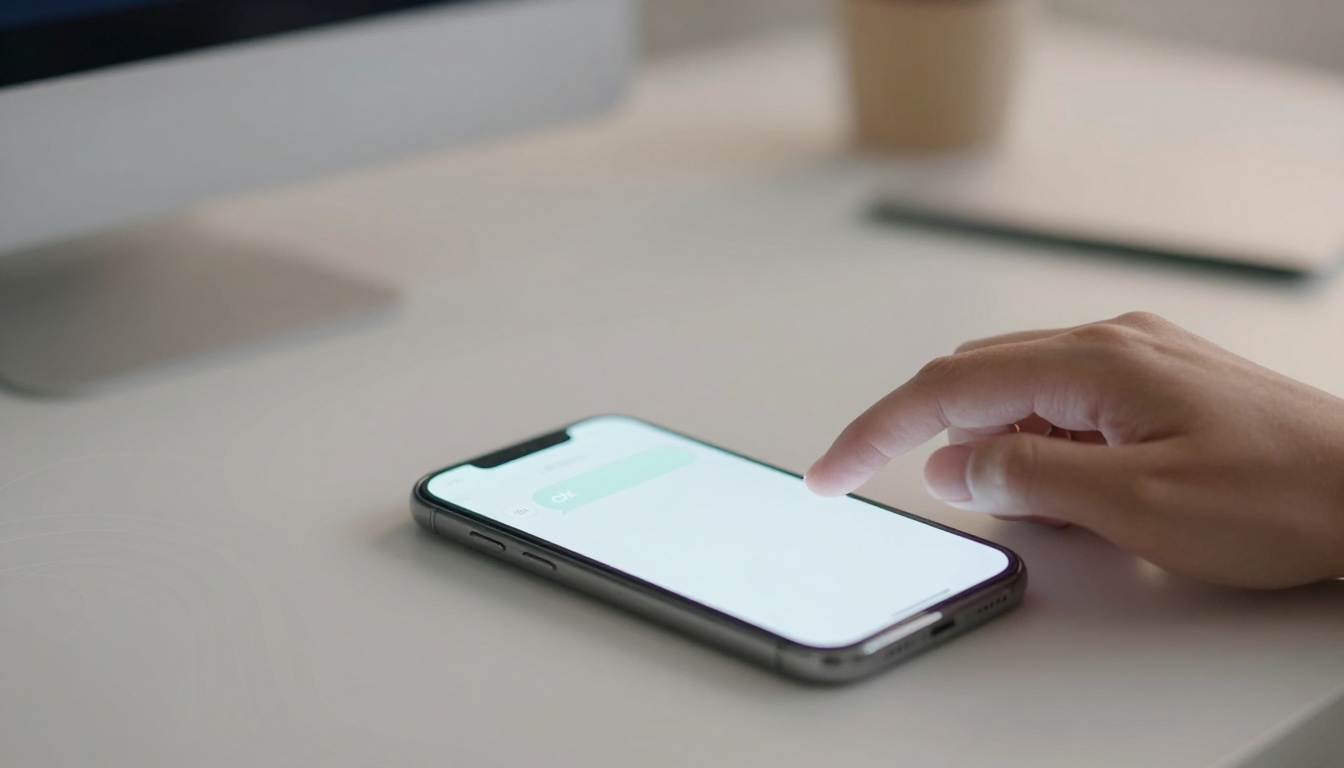
You see a short reply pop up. Two words. Maybe a full stop. Your stomach drops anyway.
You read it once, then again, then you zoom in on the punctuation like it’s evidence. You check the timestamp. You check when they were last online. You start rewriting your reply in your head, then in the chat box, then you delete it. Twice. Ten times.
That’s what overthinking messages often looks like: treating a normal text like a test you can fail. The problem is, texts don’t carry much information. Your brain tries to make up for that gap, and it can spin a whole story from a single “ok”.
This is a simple plan to reply with confidence, stop the checking loop, and get back to your day.
Why texts mess with your head (and why it feels so real)
Texting is a strange kind of communication. It’s fast, casual, and always within reach, yet it’s missing the stuff your nervous system relies on to feel safe: tone of voice, facial cues, timing in a real room. A message is a flat photo of a moment, and you’re expected to guess the rest.
If you’ve got any fear of rejection, texting can press right on it. A delayed reply can feel like being ignored. A short reply can feel like disapproval. Your mind doesn’t like gaps, so it fills them. Often with worst-case stories because they feel “useful”, like you’re preparing for pain.
Perfectionism adds fuel. If you believe the right words can control the outcome, you’ll keep searching for them. You’ll re-read your last message to see if you sounded needy. You’ll rewrite your next one to sound cool, calm, funny, unbothered, but also interested. It’s exhausting.
Past experiences matter too. If you’ve been ghosted, criticised, or made to feel “too much”, your brain learns a pattern: uncertainty equals danger. The trouble is, uncertainty is the default setting of texting. People reply in meetings, on trains, between tasks, half-asleep. The medium is messy, but your brain reads it like a verdict.
If this spirals into constant worry, you’re not alone. Some mental health writers describe this as “message anxiety”, a mix of rumination and urge-checking that can affect sleep and mood. For a quick explanation of why it happens and what helps, see message anxiety and why you overthink texts.
The hidden trigger: your brain is trying to “solve” tone that is not there
Your mind scans for clues because it wants certainty. With texts, the “clues” are tiny and unreliable: a full stop, a single emoji, a “seen” receipt, or a reply that’s shorter than yours.
Two harmless examples your brain can twist:
- “Sure.” (Your mind: “They’re annoyed.” Reality: “They’re busy and confirming.”)
- “K” (Your mind: “They hate me.” Reality: “They’re walking, typing one-handed, and trying not to drop their phone.”)
Texting uncertainty is normal. It’s not proof that something’s wrong. When you notice yourself hunting for meaning in punctuation, treat that as a sign to pause, not to dig deeper.
Why your phone habits keep the spiral going
Overthinking doesn’t just live in your head. It’s trained by what you do next.
Compulsive checking teaches your brain: “This is urgent.” Re-reading teaches your brain: “There’s hidden danger here.” Drafting and deleting teaches your brain: “If I get this wrong, I’ll pay for it.” The habit becomes a loop, and each loop makes the next one easier to trigger.
A few signs it’s taking over:
Sleep gets disrupted because you’re waiting for a reply.
Focus drops because part of you is always monitoring your phone.
Mood dips after checking, even if nothing bad happened.
You avoid replying because it feels like pressure.
The good news is that loops can be untrained, but you’ll need a repeatable system.
A simple reply system that stops the loop before it starts
If texting feels like walking on ice, your goal isn’t to “feel confident” first. Your goal is to act in a way that creates confidence later. That starts with structure.
This system is built for real life. It keeps your messages short, clear, and low-pressure. It also stops you treating every reply like a mini-essay.
Here’s the core idea: one message, one job. When you know the job, you stop auditioning for approval.
Before you type, take one breath and ask: “What’s the purpose of this message?” Not “How do I sound?” Not “What will they think?” Just purpose.
Then do three things:
- Decide the goal (one goal only).
- Write for up to two minutes.
- Read once, then send.
That’s it. Simple doesn’t mean easy, but it’s doable, and it works because it cuts off the parts where you spiral.
If you want a longer read on the patterns behind over-analysing texts, and how to interrupt them, you might recognise yourself in how to stop overthinking every text message. Take what’s useful, leave what isn’t.
Use the one-goal rule: decide what this message is for
Most overthinking happens when a text is trying to do five things at once. You’re answering a question, showing interest, avoiding rejection, sounding relaxed, and testing the water, all in one go. Your brain can’t settle because the goal isn’t clear.
Pick one purpose:
Confirm plans: “Sounds good. Shall we say 7-ish at the pub near the station?”
Answer a question: “Yes, I can do Thursday. After 6 works best for me.”
Show interest: “I had a good time yesterday. Fancy doing it again next week?”
Set a boundary: “I can’t chat properly right now. I’ll reply later this evening.”
A helpful trick is to keep your message close to spoken English. If you wouldn’t say it out loud in one breath, it’s probably too much for a text.
Also, stop trying to pre-empt every reaction. You don’t need to soften every line with five smiley faces. Warmth is fine, but you don’t have to perform.
When your goal is clear, your wording can be simple. Simple reads as calm. Calm reads as confident.
The 2-minute draft, read once, then send rule
Perfection is a moving target. You can chase it for 20 minutes and still feel unsure. That’s because the problem isn’t the wording, it’s the doubt.
Use a timer if you need to. Give yourself up to two minutes to write the message. Then read it once for obvious mistakes (wrong day, wrong name, accidental sarcasm). Then hit send.
Why it works: you’re teaching your brain that texting is a small task, not a high-stakes event. The first few times will feel uncomfortable. That’s normal. Discomfort isn’t danger, it’s your brain adjusting.
If you freeze, use a fallback line that buys time without drama:
- “Let me check and get back to you later today.”
- “I’m just in the middle of something, I’ll reply properly soon.”
Those lines do one job: they keep you honest and stop you disappearing.
After you hit send, stop checking and get your life back
The most vulnerable moment is right after you send. It’s like you’ve posted a letter and you’re standing by the letterbox, waiting for the sound of footsteps.
This is where you build a new habit. Not by “staying strong”, but by changing the environment and giving your body something else to do.
Research summaries on digital communication often point to a simple truth: typed chats carry less emotional information than voice or face-to-face contact, so your brain gets less reassurance from them. That’s why waiting can feel louder than it should. The answer isn’t more checking, it’s less exposure to the trigger.
You’re aiming for one shift: from “I must know now” to “I can handle not knowing”.
Set a waiting window so you do not refresh your screen all day
Make a rule you can keep. Start small.
A realistic first step is a 20 to 30-minute waiting window after you send. During that time, no checking the chat thread. After that, you can look once, then set a longer window (45 minutes, then 60). It’s like stretching a muscle. You don’t force it, you train it.
Simple changes help:
- Turn on Do Not Disturb for a set time.
- Move the messaging app off your home screen.
- Turn off “read receipts” if they make you spiral.
- Batch notifications, so you’re not pulled back every minute.
If waiting time is the hardest part for you, you might also like the idea of “in-between time” support described in ways to stop anxiously waiting for a text back.
Replace the check with a tiny action that changes your body state
Your urge to check is not just mental. It’s physical. Your chest tightens, your hands itch, your attention narrows. So pick actions that change your body, even slightly.
A short menu (choose one, not all):
Walk to the kettle and make a drink.
Stretch your shoulders for 30 seconds.
Wash up one item and stop.
Step outside for two minutes and feel the air.
Message a friend about something else, a normal life message.
The point isn’t to distract yourself forever. It’s to teach your nervous system that sending a text isn’t an emergency. Each time you ride out the urge, you build evidence: “I can handle this.”
When you should switch to a call, and when to get extra help
Texting is great for quick logistics and light chat. It’s not great for anything that needs care, tone, or fast clarity.
If you keep having the same misunderstandings, or you’re stuck in long back-and-forth messages, it may not be a “you” problem. It may be the wrong channel.
Also, if your texting anxiety is affecting daily life, treat it like anxiety, not like a messaging problem. You don’t need to white-knuckle it alone.
For a broader look at overthinking in relationships, including how it can show up as constant reassurance-seeking, see overthinking in your relationships.
Choose voice for anything that needs tone, care, or quick clarity
Switch to a call when:
- You’re discussing feelings or conflict.
- There’s been a misunderstanding already.
- You’ve had a long silence and you need clarity.
- You’re rewriting every message and still feel unsure.
- The topic keeps bouncing around without resolution.
A simple script that doesn’t sound intense:
“Can we do a quick call later? It’ll be easier than texting.”
Or, if you want it softer:
“Do you fancy a quick call when you’ve got a minute? I keep overthinking tone over text.”
Tone is easier to hear than to guess.
If texting anxiety runs your day, treat it like anxiety (not a texting problem)
Get extra support if you notice:
Panic-like symptoms after sending messages.
Avoiding friends because replying feels too hard.
Work or sleep suffering due to checking.
Compulsive behaviours you can’t seem to stop.
Talking to a GP or a therapist can help you address the deeper pattern, whether it’s social anxiety, relationship fears, or rumination. Support isn’t an overreaction, it’s a practical step.
Conclusion
Texts are low-information, so keep your replies low-pressure. When your brain tries to turn punctuation into a warning sign, bring it back to basics: one message, one job.
Use the one-goal rule to stop overloading your replies. Use the 2-minute draft, read once, then send rule to cut off perfectionism. After you hit send, set a waiting window and replace checking with a tiny body action. When the topic needs tone or care, switch to a call.
Today’s challenge is small on purpose: send one normal reply without re-reading it. Let the message be ordinary, and let your life be bigger than your screen.