
Listen to this post: Pacific Islands on the Frontline of Climate Change and Great-Power Rivalry
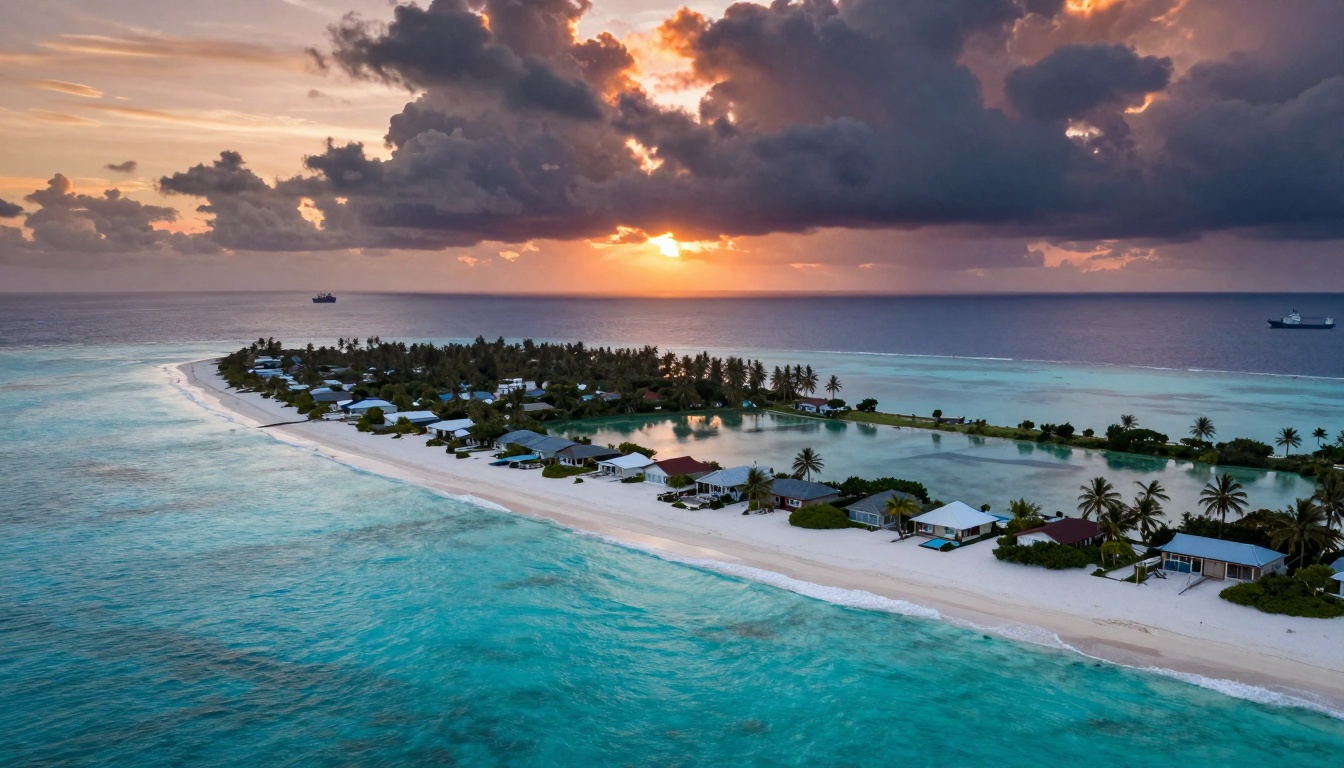
Waves crash over the thin strip of sand in Kiribati. Homes sink into the sea. Families pack what they can before the next flood hits. These pictures come from low-lying atolls like Kiribati and Tuvalu. Storms in 2025 battered them hard. Now, in January 2026, the threats grow. Sea levels rise faster in the western Pacific. Some spots see 10 to 30 centimetres more than the global average. Over 50,000 islanders face risks each year from floods and erosion.
But climate change is not the only danger. Great powers turn these islands into battlegrounds. China signs port deals in the Solomon Islands. The US pushes back with bases and aid. Homes vanish under water. Foreign ships dock at new piers. Island leaders juggle both fights. They lose land and freedom at the same time.
This post looks at the rising seas and storms first. Then it covers the US-China tug-of-war over ports and bases. Finally, it shows how islands push for their own way ahead. Why care now? Trends point to worse floods by 2050. Rivalry heats up with Taiwan in mind. Small places shape big-world power.
Rising Seas and Fiercer Storms Put Lives at Risk
Salt water seeps into taro patches on Tuvalu. Villagers watch their farms turn barren. NASA data from early 2026 paints a grim picture. These islands face at least 15 centimetres of sea rise in the next 30 years. No matter what nations do on emissions. By the 2050s, Tuvalu could see 25 flood days a year. That’s up from fewer than five now. Kiribati might hit 65. Many atolls sit just one to two metres above the waves.
Erosion chews at coasts. In Fiji’s Serua Island, waves destroyed houses over 20 years. Fresh water lenses under the ground mix with salt. People drink brackish water or ship it in. A UN report warns of 68 centimetres rise by 2050 under three degrees of warming. Storms make it worse. South-West Pacific oceans hit record heat in 2024. Heatwaves covered 40 million square kilometres. They harm corals and boost sea levels through expansion.
Cyclones pack more punch. Warmer air holds more moisture. Winds tear roofs off. In 2025, storms flooded villages across the Marshall Islands. Families flee to higher ground, but there is little. Displacement cycles start. People move, then return for graves and churches. In Fiji, they call this tie to land vanua. One elder in Serua said, “We can’t leave our ancestors.” Kids grow up hearing stories of the sea taking grandmothers’ houses. Governments offer relocation. Most say no. Culture roots them deep.
Global sea levels climbed 0.59 centimetres in 2024 alone. Ice melts faster. Water expands. Pacific islands bear the brunt. Low economies mean weak defences. No high walls or dykes. Just sandbags and prayers. China matches US aid to a Pacific environmental body, but funds fall short of needs.
Ocean Warming Hits Fish Stocks and Food Supplies Hard
Oceans warm 0.7 degrees Celsius since the 1950s. That’s three times the global rate in the Pacific. Corals bleach white. Reefs provide 50 to 90 per cent of protein for islanders. They die off fast. Fish change paths. Tuna heads poleward. Local fisheries crash.
Acidification bites too. Shellfish struggle to build shells. Ciguatera poison spreads in warming waters. It taints reef fish. Families fall sick from numb lips and dizzy spells. Poor diets follow. Kids lack nutrients. Empty nets mean empty bellies.
One fisherman in the Marshalls pulls up lines with few catches. “The sea changed,” he says. Stocks could drop 50 per cent by the 2050s. Food imports rise. Prices soar. Health woes follow.
China Builds Ports While US Revives Old Bases
China lays concrete in Honiara, Solomon Islands. New ports gleam under the sun. Deals promise roads and stadiums too. Beijing eyes airfields in Fiji and Samoa. Why? To track US ships. Secure rare earth minerals. Ease the Malacca Strait choke point. Loans flow in. Islands take them for cash-strapped budgets.
The US wakes up. It eyes Tinian’s North Field. Plans runways by 2027 for island-hopping drills. Like World War Two, but modern. AUKUS brings subs from Australia and the UK. Japan and New Zealand send aid. Block China’s spread. No war yet. But Taiwan tensions simmer. Arms deals spark rows.
Debt traps worry leaders. Solomon Islands owe billions to China. Sovereignty slips. Bases flood too, from climate hits. Strategic spots turn vulnerable. Tensions flared at the Pacific Islands Forum. Islands bar big powers from some talks. Tired of the squeeze.
Maps show the first island chain. From Japan to Guam. China probes gaps. US fills them. Human cost mounts. Workers build under foreign flags. Locals fear bases draw fire.
How AUKUS and Allies Push Back Against Beijing’s Gains
Australia buys nuclear subs. UK joins in. They patrol deep waters. Japan opens bases to US marines. Philippines too. Mineral pacts secure supplies. No reliance on China.
Contrast hits hard. Beijing’s loans bring strings. Debt risks sovereignty. Allies offer grants. Less burden. Balance tilts. No alarm. Just steady push.
Pacific Forum in Palau this year spotlights it. Islands pick partners wisely.
Islands Speak Out and Seek Their Own Path Forward
Floods make islands needy. Aid draws powers close. Relocation offers come. Tuvalu links with Australia. Keeps statehood as land sinks. But culture binds. Poverty loops trap them. Selective deals help. China for roads. US for climate cash.
Can small nations stay neutral? 2026 cyclones loom. Taiwan prep adds heat. Global support matters. Rich nations must step up. Cut emissions. Pay losses. As these nations navigate the challenges of climate change, implementing sustainable economic models for islands will be crucial. By fostering resilience and innovation, they can not only protect their environments but also build economic stability. Collaboration with international partners will enhance their efforts and support the transition to these vital frameworks.
Leaders unite at forums. Demand fair deals. Resilience shines.
Conclusion
Pacific islands fight seas and superpowers at once. Rising waters flood homes. Rivalry builds ports that might flood too. Data shows 15 centimetres rise soon. Storms strengthen. Smart diplomacy offers hope.
Islands show grit. They balance ties and hold land dear. Follow CurratedBrief for updates on these shifts. Act now. Support aid. Cut carbon. What role will you play? Their fight shapes our world.