

Listen to this post: Google Top Stories Eligibility Checklist for 2026 Publishers
Getting into Top Stories can feel like trying to get backstage at a sold-out gig. You might have great content, yet still get turned away at the door. In March 2026, the door staff is still the same mix of trust, technical compliance, and publishing consistency.
This guide breaks down Google Top Stories eligibility into what you can control this week: your editorial signals, your site setup, and your workflow. If you’re a news publisher, digital editor, or site owner, you’ll walk away with a practical checklist that fits how real newsrooms work.
What “eligible for Top Stories” really means in 2026
Top Stories is not just a ranking reward. It’s a quality filter. Google wants news that’s timely, original, and clearly produced by a real publication with accountable people behind it.
Start with content intent. Top Stories favours reporting and analysis that helps readers understand what’s happening now. A product page, a thin rewrite, or a “10 best” list dressed up as news usually won’t hold position, even if it briefly appears.
Transparency matters more than many publishers expect. Clear author bylines, author pages, an About page, and easy contact options make your site feel accountable. That’s not cosmetic, it’s a trust signal. If readers can’t tell who wrote something, why should a news surface boost it?
Publishing cadence is another make-or-break factor. You don’t need to post 30 times a day, but you do need to show consistent newsroom activity. Sites that publish rarely often struggle to get reviewed favourably, and they’re less likely to be surfaced for fast-moving topics.
A simple gut-check helps: if a reader asked, “Who wrote this, when, and why should I believe it?”, your page should answer in seconds.
For broader context on approval and submission, see this practical walkthrough on getting into Google News in 2026. Top Stories and Google News aren’t identical, but the operational expectations overlap heavily.
The essential Google Top Stories eligibility checklist (publisher and page level)
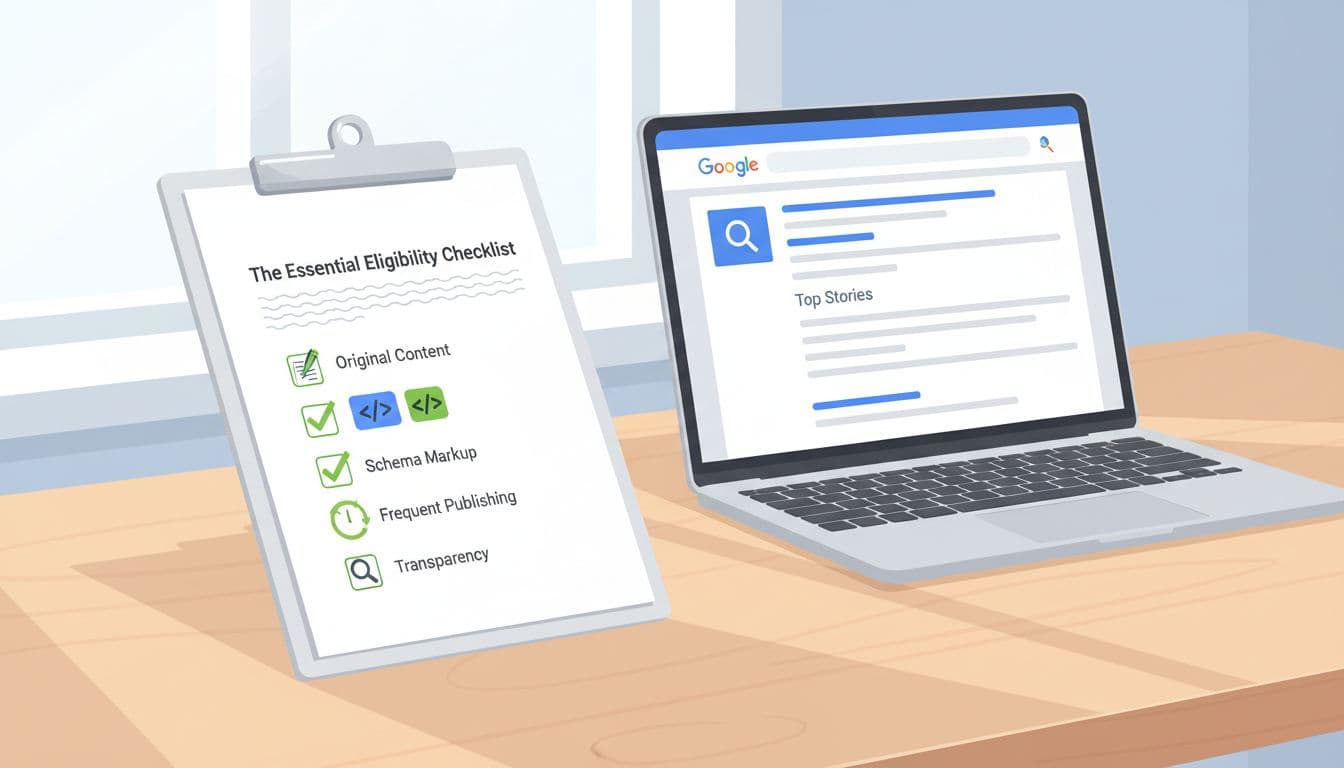
Think of Google Top Stories eligibility like a three-part inspection: the publication, the article page, and the reader experience. Miss one area and the whole thing wobbles.
Here’s a quick checklist you can use in editorial and dev stand-ups:
- Original reporting and clear value: Publish genuinely new information, first-hand coverage, or useful synthesis with proper sourcing.
- Strong editorial standards: Separate news from opinion, correct errors quickly, and avoid sensational headlines that don’t match the story.
- Transparency and accountability: Prominent bylines, author bios, About page, and contact details (including editorial contact). Our E-E-A-T proof kit sets out exactly what to put on each.
- Consistent publishing pattern: A steady rhythm (daily or several times weekly) signals an active newsroom.
- Clean URLs and stable article pages: One unique URL per story, with sensible structure and no confusing duplicates.
- Visible timestamps: Show published and updated dates clearly, especially for developing stories.
- Image readiness: Use high-quality lead images and keep them crawlable. Avoid blocking images behind scripts or restrictive rules.
- Policy compliance: Follow Google’s content and spam policies, especially around deceptive practices.
Your infrastructure can quietly sabotage all of the above. Slow servers, unstable caching, or a theme that shifts layout on mobile can hurt performance and engagement. If you’re improving reliability, consider proven hosting options such as WordPress hosting or the Hostinger referral plan (pick one based on your stack and traffic). If design is the bottleneck, a managed rebuild via an IONOS web design service can be faster than endless theme patching.
Technical setup essentials: schema, sitemaps, crawling, speed
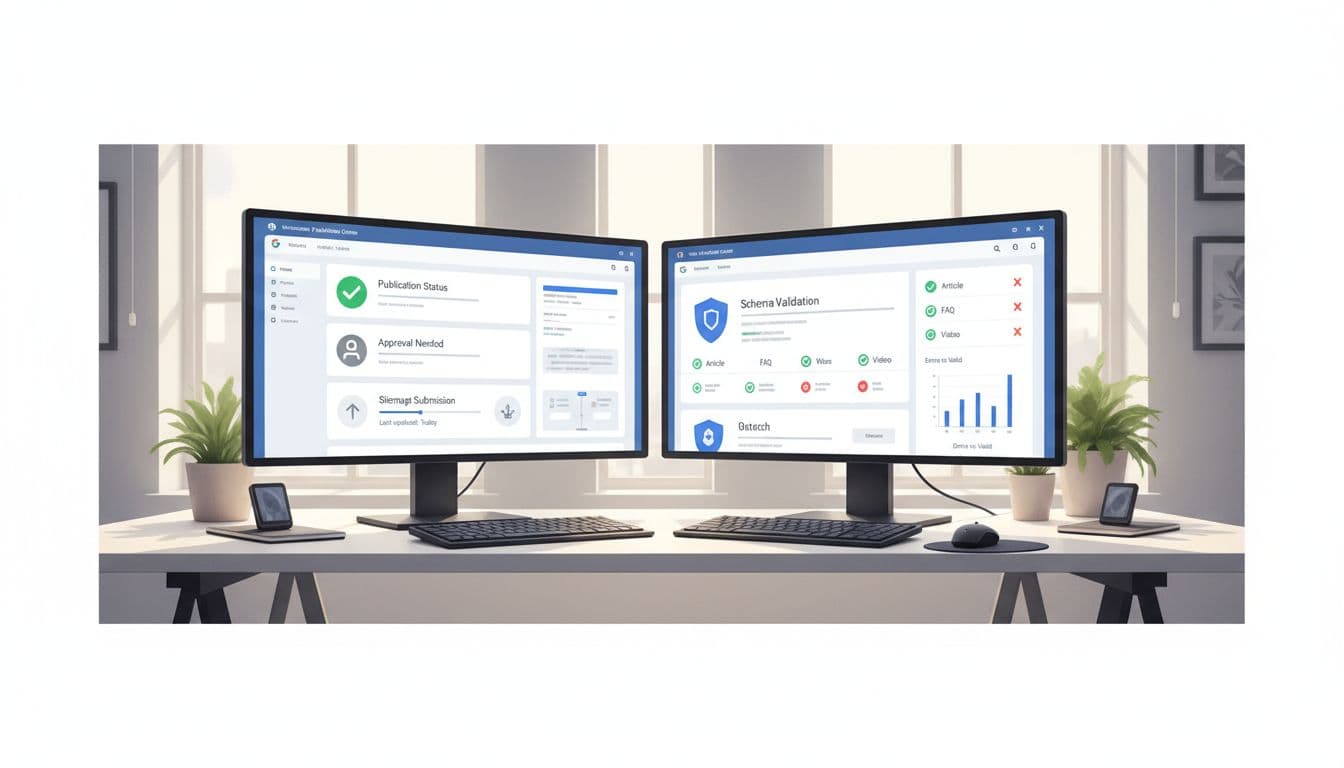
Your content can be brilliant, but Google still needs to parse it cleanly. The technical layer is where many Top Stories attempts fail, because the issues are invisible until you audit them.
Structured data is a core piece. Most news publishers should use NewsArticle schema with correct properties (headline, image, datePublished, dateModified, author, and canonical consistency) — our JSON-LD templates for publishers and Article schema debug checklist cover both the markup and the validation. If you want a schema-focused reference, this guide to NewsArticle schema markup for Top Stories eligibility explains the practical differences that matter in 2026.
Next comes discovery. Make sure Googlebot can crawl your articles quickly and repeatedly. That means no accidental blocks in robots.txt, no “soft 404” templates, and no JavaScript-only rendering that hides key elements.
A Google News sitemap is still a helpful signal for fast indexing, especially when you publish frequently. Submit it in Search Console, monitor errors, and keep the sitemap clean (only news URLs, correct dates, no outdated entries). If you want the discovery loop faster still, IndexNow notifies participating engines the moment you publish.
Here’s a simple way to prioritise fixes:
| Area | Treat as required | Treat as strongly advised |
|---|---|---|
| Crawl access | Googlebot allowed, no blocked assets | Server logs reviewed weekly |
| Structured data | Valid NewsArticle on articles | Rich image metadata and consistency checks |
| News sitemap | Accurate, up-to-date, submitted | Automated validation and alerting |
| Performance | Mobile-friendly, stable layout | Core Web Vitals improvements and image optimisation |
| Canonicals | Correct canonical per story | Strict duplicate handling across tags and feeds |
The takeaway: get the “required” column solid first, then polish. If you’re promoting stories after publish, structured campaigns through IONOS online marketing can also help initial traction, which often correlates with faster pickup for fresh queries.
Editorial workflow that keeps you eligible all year

Eligibility isn’t a one-time setup. It’s closer to keeping a shop tidy during opening hours. Google surfaces sites that publish reliably, correct mistakes, and maintain consistent page quality.
Build a lightweight publishing routine:
First, standardise your article template. Every story should ship with a byline, timestamps, a lead image, and a short “what happened” summary near the top. Editors can enforce this with a pre-publish review, even on busy days.
Next, treat updates as part of reporting. When a story develops, update the article, add a clear “Updated” timestamp, and keep the URL stable. That approach supports readers and helps Google understand freshness without creating duplicate pages.
Also, keep your internal linking sensible. News sites often create orphan pages in the rush to publish. A tool like Link Boss for internal linking can help teams spot gaps and strengthen topical connections without turning every paragraph into a link farm.
AI can support speed, but only if humans stay in charge. Use it for outlines, summaries, or headline variations, then edit hard for accuracy and tone. If you want tools that focus on publishable drafts, options like RightBlogger AI writing tool or SEOengine.ai writing assistant can help, but they don’t replace reporting, sourcing, or fact checks.
Finally, don’t waste your returning audience. A newsletter is a steady traffic engine that can lift repeat engagement and brand searches over time. If you’re building one, beehiiv for newsletters is a straightforward option for publisher-style sends.
For a wider view of what publishers are focusing on this year, this industry perspective on publisher priorities in 2026 is a useful read.
Conclusion
Google Top Stories eligibility in 2026 is achievable when you treat it like a system: credible reporting, clear accountability, and a site Google can read without friction. Tighten your templates, validate your technical basics, and publish with consistent standards. Once those habits stick, Top Stories becomes less of a lottery and more of a repeatable outcome.