
Listen to this post: How to Create Simple Routines for Young Children (Ages 2 to 6)
It’s 7:42am. One sock has vanished. The toast has popped up cold. Your child is suddenly deeply upset about the “wrong” spoon, and you can feel the day speeding away before it’s even started.
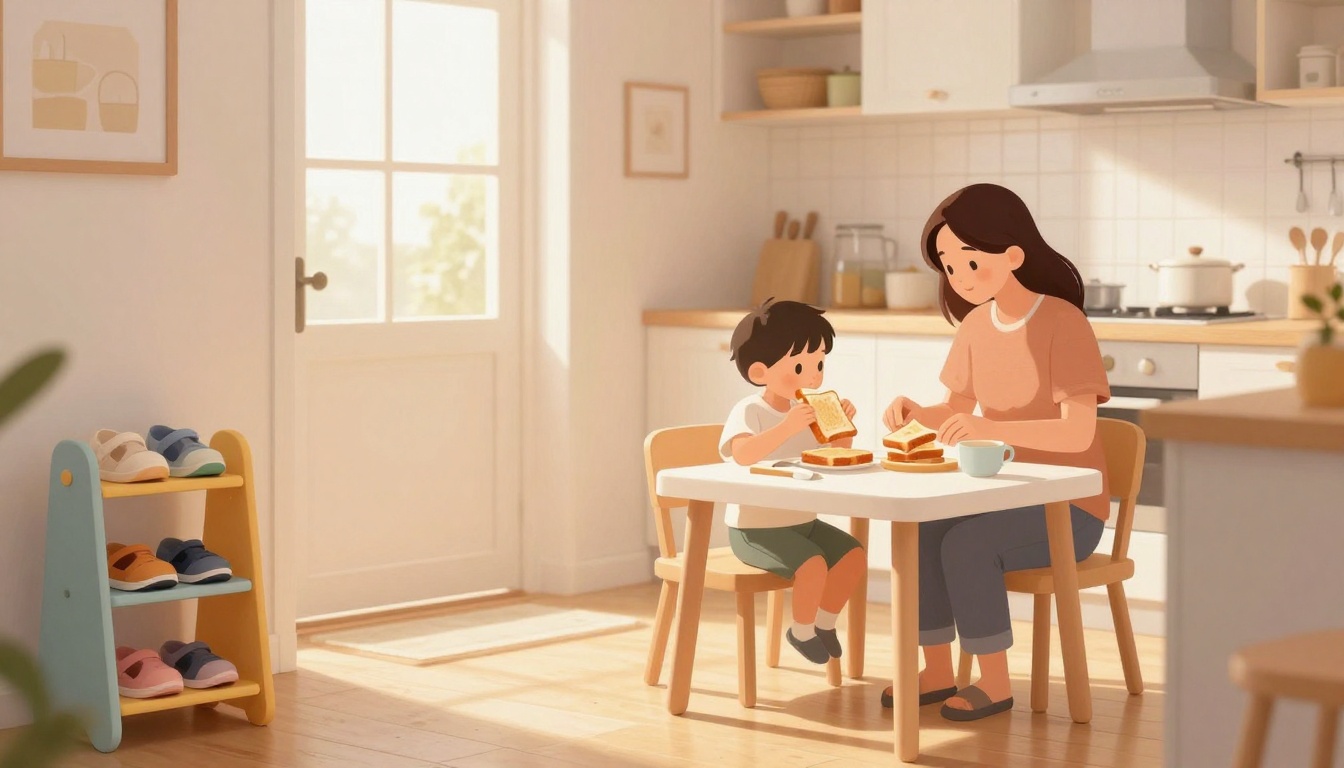
Now picture the same morning with a steady beat. Not perfect, not quiet, not magical. Just predictable. Shoes by the door, breakfast in the same place, a familiar order that your child can follow even when they’re half-awake and wobbly.
That’s what simple routines are for. They’re a repeatable order of small steps, not a strict timetable. For children aged 2 to 6, routines build safety, cut down meltdowns, and give them daily chances to practise life skills (without you turning into a full-time referee). This guide gives you a practical plan you can start today, using short blocks, pictures, and gentle transitions.
Start small, keep it steady: what makes a routine work for young children
A routine works when it feels like a path your child can walk, even on the messy days. Young children don’t need a packed schedule. They need a simple order that happens often enough to feel familiar.
Think “predictable but flexible”. The routine is the shape of the day, not a set of rules carved in stone.
A few guiding rules make routines far easier to keep:
- Same order most days (even if the timing shifts).
- Fewer steps than you think. Four steps can be plenty.
- Mix active and calm so your child doesn’t bounce from chaos to demands.
- Protect sleep and quiet time, because tired kids struggle with everything.
- Let play do the heavy lifting, since play is how young children process the world.
Everyday moments can also carry learning without feeling like lessons. Bath time can include body words and turn-taking. Tidy-up can include sorting, counting, and “where does this go?” language. Meal times can include manners, chat, and choices.
If you want more background on why routines support children’s development, PBS Kids for Parents explains the role of routines in daily life in a clear, parent-friendly way.
Predictable, not perfect: the “same order” trick
For young children, the order matters more than the clock.
A simple morning order might be:
Wake, wash, dress, breakfast, play.
If breakfast is at 7:30 one day and 8:10 the next, your child can still relax because they know what comes next. The brain likes patterns. Patterns mean fewer surprises. Fewer surprises mean fewer fights.
Flexibility is still part of real family life. It’s fine to bend the routine for:
- Sick days
- Visitors
- Travel
- Nursery holidays
- Big family events
The key is how you return. The next day, you just start again, calmly. No big speech, no guilt, no “we’ve ruined everything”. You’re not starting over from zero, you’re stepping back onto the path.
Use anchors first: wake-up window, lunch, bedtime
If your days feel slippery, begin with three anchors. Anchors are the points that stay mostly the same, even when everything else moves.
Good anchors for ages 2 to 6:
- Wake-up window (for example, “we get up between 6:30 and 7:00”)
- Lunch (or midday meal time)
- Bedtime (start bedtime routine at roughly the same time)
Anchors help you plan, but they also help your child feel held by the day. When children know when they’ll eat and sleep, their bodies settle. Their behaviour often follows.
A weekend tip that saves Mondays: keep bedtime close to normal. A very late bedtime can turn Monday morning into a swamp of tears and slow shoes.
Build a simple daily rhythm for ages 2 to 6 (with easy examples)
Instead of a strict schedule, use blocks. Blocks are chunks of time with a purpose, like “morning getting-ready” or “outdoor play”. They’re easier to stick to because they don’t collapse if one thing runs late.
As a rough guide:
- Ages 2 to 3 do best with shorter blocks (10 to 30 minutes).
- Ages 4 to 6 can manage longer blocks (20 to 60 minutes), with breaks.
A flexible day rhythm might look like this:
| Day block | Typical length | What it can include |
|---|---|---|
| Morning routine | 20 to 45 mins | Wash, dress, breakfast |
| Active play | 30 to 60 mins | Dancing, building, outside |
| Snack and calm | 10 to 20 mins | Snack, book, puzzle |
| Outing or home play | 45 to 90 mins | Park, errands, messy play |
| Lunch | 20 to 40 mins | Meal, chat, help clear |
| Nap or quiet time | 30 to 90 mins | Sleep or rest time |
| Afternoon play | 45 to 90 mins | Craft, pretend play, outside |
| Dinner and wind-down | 60 to 90 mins | Tidy-up, dinner, bath |
| Bedtime routine | 20 to 40 mins | Wash, teeth, story, sleep |
Try to alternate active and calm blocks. Add outdoor time daily if you can, even if it’s a short walk to spot buses or collect leaves. Many families notice smoother behaviour after fresh air, especially late morning or mid-afternoon.
For more ideas on what a daily schedule can look like in real homes, Parent.app offers a practical guide to daily schedules for young children.
Morning routine that doesn’t drag on (wake-up to first play block)
Mornings often fall apart because there are too many decisions. Keep the chain short and repeat it the same way.
A simple step chain:
- Toilet or nappy
- Get dressed
- Teeth
- Breakfast
- First play block
That’s it. When you add “find shoes, pick outfit, choose snack, argue about cup, hunt for jumper”, it turns into a maze.
A small trick that boosts co-operation is giving one tiny job. It gives your child a sense of control without handing them the steering wheel.
Try one of these:
- Put pyjamas in the basket
- Carry their plate to the sink
- Choose socks from two options
- Feed the pet (with you watching)
At breakfast, use a simple “plan for the day” script. Keep it short, and say it the same way most days:
“After breakfast: play. Then snack. Then we’re going to the park.”
You’re not asking permission. You’re painting the order, like pointing at stepping stones across a puddle.
Midday reset: lunch, tiny chores, nap or quiet time
Midday is where many families burn out. Children have used up their “coping fuel”, and adults are often trying to juggle lunch, work messages, and cleaning.
Even when naps fade, quiet time still matters. It’s not a punishment. It’s a reset button.
A short wind-down routine can be:
Toilet, story, song, lights low.
Use the same three or four steps every day. Repetition does the calming for you.
For non-sleepers, offer a quiet-time choice that stays in one place:
- A basket of picture books
- Soft toys and a blanket
- A simple puzzle
- A drawing pad and crayons
Set the boundary clearly: quiet time is still quiet. You can say it kindly and mean it firmly:
“It’s rest time. You don’t have to sleep, but your body stays calm.”
If your child struggles with settling, shorten quiet time at first. Ten minutes of calm is better than forty minutes of battles. Build from there.
Evening routine for calmer bedtimes (and fewer battles)
Evenings can feel like a slippery slope. One more cartoon becomes two. A late snack turns into running around. Then bedtime feels like a cliff edge.
A calmer evening starts earlier than you think. Aim for an evening flow that repeats:
Tidy-up, dinner, calm connection, bedtime steps.
“Calm connection” can be ten minutes on the sofa with a book, a short chat, or a gentle game. It’s a way of filling your child’s attention cup before you ask them to separate for the night.
Keep bedtime steps short and in the same order:
Wash, teeth, pyjamas, 1 to 2 books, lights out.
If you want a health-focused view on why consistent routines help, Children’s Health outlines benefits of structure and simple tips that align well with this approach.
Make routines easier with visual schedules, smooth transitions, and child-sized choices
Most routine problems aren’t about the routine. They’re about the handover from one thing to the next.
Young children live in the moment. Leaving a fun moment can feel like losing it forever. That’s why transitions trigger tears, stalling, and “I can’t” behaviour.
You can reduce power struggles with a few simple tools:
- Picture charts
- “Now and next” language
- Warnings and timers
- Songs and repeated phrases
- Limited choices that don’t change the plan
If your child finds transitions hard, your tone matters as much as your words. Calm and firm is the sweet spot. Not a debate, not a barked order, more like a steady signpost.
Picture charts and “now and next” language
Visual schedules work because they take your words out of the air and put them somewhere your child can see. They also stop you repeating yourself until you feel like a broken toy.
Keep it simple: 3 to 5 pictures per routine.
Good routines to visualise:
- Morning (dress, teeth, breakfast, shoes)
- Bedtime (bath, teeth, pyjamas, story, sleep)
You can draw stick figures, print icons, or cut pictures from old leaflets. Let your child help choose or colour them. When they have a hand in making it, they’re more likely to use it.
Pair the chart with “now and next” language:
“Now bath, next teeth.”
Point to the pictures as you speak. The pointing is doing part of the work.
Transition helpers: warnings, clean-up songs, and visual timers
Transitions go better when your child can see them coming. Warnings act like gentle brakes, not a sudden stop.
Use tactics like these:
- Time warnings: “Five minutes, then we tidy.”
- Turn warnings: “Two more turns, then snack.”
- A clean-up song: same song, same moment, most days.
- A visual timer: your child watches the colour or sand run out.
Keep your script steady. Long explanations often invite arguments. Short phrases land better.
If your child finishes early (or you need two minutes to make lunch), keep a “quiet basket” ready. A few calm items prevent the sort of chaos that starts with a missing crayon and ends with someone climbing the sofa.
Choices that prevent a fight (without handing over the day)
Choices work when they are real and limited. They don’t work when they are fake (“Do you want to go to bed now?” when you don’t mean it) or huge (“What do you want for dinner?” with ten options).
Good child-sized choices:
- “Red cup or blue cup?”
- “Hop or walk to the bathroom?”
- “This book or that book?”
- “Brush teeth first or put pyjamas on first?”
Two options is often enough. Too many choices can swamp young children and create more tears, not less.
Fix common routine problems, and know when it’s working
Routines don’t remove all big feelings. They reduce the number of surprise moments that spark them. When something goes wrong, change one thing at a time. If you overhaul the whole day, it’s hard to tell what helped.
Common pain points include refusal, stalling, tantrums at transitions, mornings running late, and bedtime bouncing. These don’t mean your routine is broken. They mean your child is practising, loudly.
For a broader look at how daily routines support preschoolers and reduce meltdowns, First Things First summarises the benefits in a parent-friendly way.
When your child refuses: keep steps tiny and praise the start
Refusal often means the task feels too big, too boring, or too sudden. Make the step smaller than you think it needs to be.
Try one-step prompts:
- “Socks on.”
- “Teeth brush.”
- “Bum on the chair.”
Use first-then statements that stay calm:
“First teeth, then story.” “First shoes, then outside.”
Praise the start, not just the finish. Young children respond to the feeling of momentum.
“You started brushing. Good job.” “You put your arm in the sleeve. Nice work.”
If a consequence is needed, keep it simple and predictable. Not angry, not long.
When you see setbacks, treat them like weather. A rainy day doesn’t mean the season has failed. It means today needs a coat.
Signs your routine is working (and how to tweak it gently)
You’ll feel success before you can measure it. The house might still be noisy, but the noise changes. Less arguing, more “what’s next?”
Signs your routine is working:
- Fewer meltdowns at change times
- Your child can say what’s next (even if they grumble)
- Bedtime settles faster, with fewer repeated trips
- Mornings feel less rushed
- You feel more steady, even when things go wrong
When it needs tweaking, adjust one block before changing the whole day. Small changes are easier for children to absorb.
A simple tweak plan:
- Shorten one activity that always drags on
- Move quiet time earlier if afternoons are tough
- Add outdoor time before a tricky transition
- Simplify bedtime steps if it’s turning into a long performance
If you want more examples of day structures and meal-time planning that fit around family life, Nurture Life shares a daily schedule idea with realistic blocks.
Conclusion
Simple routines are small paths your child learns to walk each day. They don’t remove every wobble, but they give your child a steady order to hold onto, especially when they’re tired or overwhelmed. Start with one routine (bedtime is often the easiest), keep it for a week, then add another.
Tonight, pick your three anchors, then choose one transition tool to try tomorrow (a timer, a warning phrase, or a picture chart). Keep it small, keep it steady, and watch how predictability changes the mood of your home.