
Listen to this post: Simple Evening Habits That Make Mornings 10x Easier
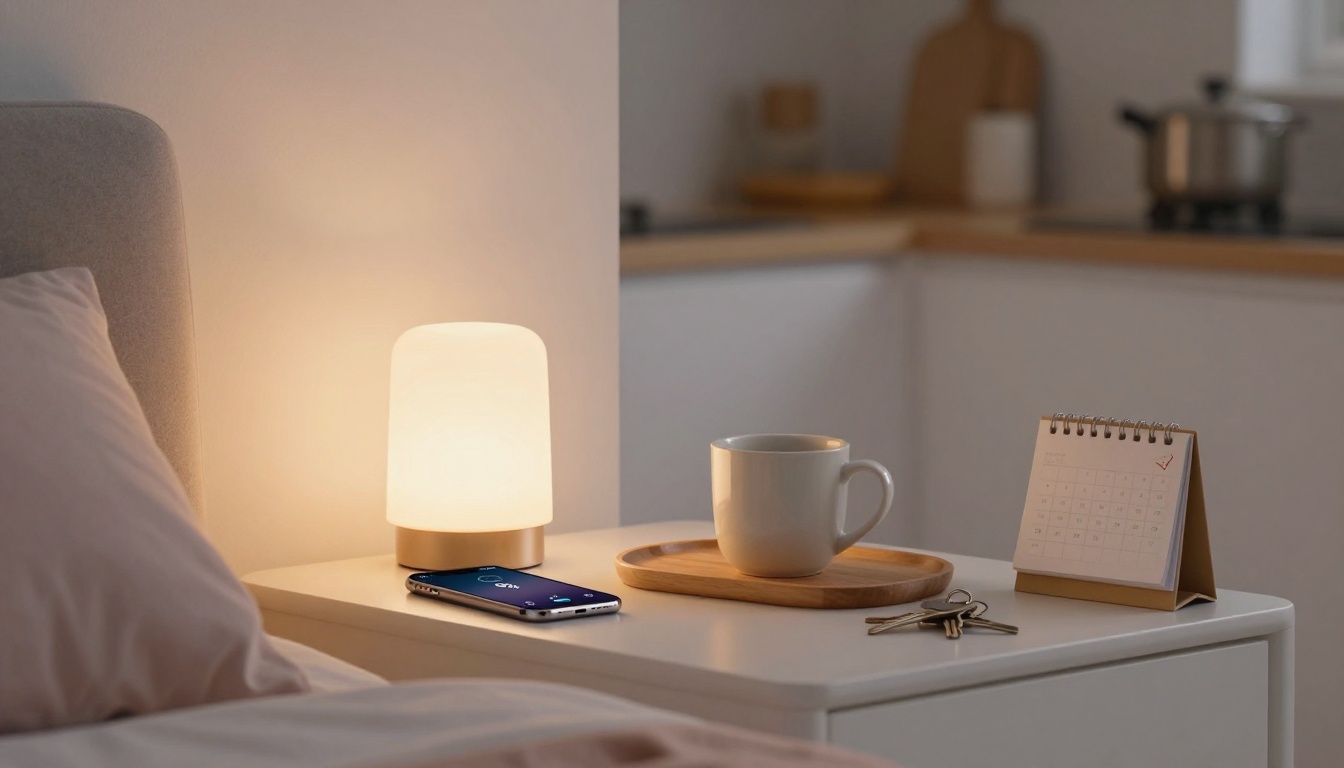
You wake up already behind. Your phone’s on 9 percent, your keys have vanished, and the only clean mug is hiding in the dishwasher you forgot to run. You try to move faster, but you keep looping back, bedroom to hallway to kitchen, like a pinball.
That rushy feeling isn’t a personality trait, it’s often a setup problem.
Calm mornings are built the night before, in small choices that remove friction before it appears. This isn’t about building a perfect evening routine or turning your home into a showroom. It’s about giving Morning You a few quiet gifts, so you can wake up with less stress, fewer decisions, and more time.
Below are simple, low-effort evening habits that make mornings feel easier without adding guilt to your day.
Make tomorrow easy with a 10-minute evening reset
Think of your evening reset like clearing a runway. You’re not deep-cleaning the house, you’re removing the stuff that will trip you up when you’re half-awake and time is tight. A well-thought-out evening routine for better sleep can set the stage for a more restful night. This might include winding down with a book, dimming the lights, or practicing relaxation techniques. By fostering a calming environment, your body will be primed for sleep, making it easier to transition into rest.
Most hard mornings aren’t caused by one big problem. They’re caused by tiny delays that stack up: searching for a pass, realising you’re out of milk, scrolling for too long, then trying to choose clothes in a panic. That pile-up creates decision fatigue, the worn-out feeling that makes every small choice feel heavier than it should.
A 10-minute reset breaks that chain. It’s a short loop you can repeat most nights:
- return essentials to one spot
- set up your first food and drink
- clear one surface (even just the kitchen counter)
- check the one thing you must not forget (meeting, school item, gym kit)
If you want extra ideas, this piece on evening habits for a calmer morning is a useful reminder that it’s the boring basics that change your day.
You’re not trying to “win” the evening. You’re just making tomorrow less annoying.
Do a fast ‘launch pad’ for keys, bag, and phone
Pick one place by the door and make it the home base. A small tray, a bowl, a hook, a shelf. It doesn’t need to be pretty; it needs to be reliable.
Aim to park the things that cause the most morning chaos:
Keys and wallet, your travel card or pass, work bag, gym kit, headphones, and a portable charger (or charging cable). If you use lip balm, hand cream, or a spare hair tie, this is a good spot too.
Here’s the one-sentence rule that makes it work: if you touch it, it goes back to the pad.
That rule matters because the launch pad isn’t storage, it’s a guarantee. In the morning, you don’t want a treasure hunt. You want one reach, one grab, out the door.
If you live with other people, label spaces like “Mum keys” or “Sam’s pass”. It sounds basic, but it stops the nightly shuffle where everyone swears they left things “right there”.
Set up breakfast and drinks before you sleep
Morning hunger makes people impulsive. When you’re rushed, you grab whatever’s fastest, then you spend the commute wishing you’d eaten something real.
You can take the pressure off with a small set-up that costs almost nothing and takes two minutes.
Three flexible options:
1) The kettle and mug set-up: fill the kettle, put your mug and tea or coffee out, leave a spoon ready. It’s hard to overstate how calming it feels to make your first drink without rummaging.
2) The fridge breakfast: prep overnight oats, or portion yoghurt and fruit. Even just washing grapes and leaving them in a bowl counts.
3) The “pack while you clear” habit: as you put dinner away, build tomorrow’s lunch at the same time. It turns one kitchen tidy into a double win.
For families, set out bowls and spoons, and fill water bottles before bed. It turns the morning into a simple assembly job instead of a full production.
For more gentle ideas that don’t feel like a boot camp, Olive has practical tips on building a calmer night in their guide to a mindful evening routine.
Protect your sleep so you wake up clear-headed
The easiest way to make mornings feel better is to stop starting them in a deficit.
Across the UK in January 2026, the most common “better mornings” trend isn’t some complicated ritual. It’s the return to basics: steadier sleep timing, less late-night scrolling, and simple wind-down habits. Some people frame it as syncing with your body clock, but you don’t need an app to do the main bit: go to bed at a time your body can get used to.
You don’t have to be perfect. You just need fewer nights where you fall asleep by accident, phone in hand, mind buzzing.
A helpful rule of thumb that’s doing the rounds is the 10-3-2-1-0 idea: avoid caffeine 10 hours before bed, avoid heavy food 3 hours before, stop work 2 hours before, avoid screens 1 hour before, and skip the snooze button in the morning. Don’t treat it like law. Treat it like a menu. Pick what’s realistic tonight.
Pick a realistic bedtime earlier, not at night
Most bedtime plans fail because they’re made when you’re already tired.
When your brain is worn out, it makes worse choices. You keep watching “one more” episode. You scroll because it’s easy. You start tidying a drawer at 11:40 pm like that’s urgent.
So choose your bedtime target earlier in the day, when you’re not negotiating with yourself.
Do the simple maths:
- aim for about 8 hours asleep (some people need a little more, some less)
- add 30 to 60 minutes for washing, winding down, and falling asleep
If you need to wake at 7:00 am, a 10:30 pm lights-out target is more realistic than hoping you’ll “just be good” at midnight.
A small trick that works: set an alarm for “start winding down”, not just “wake up”. That one alarm is like a tap on the shoulder from your future self. It changes the evening from endless time into a gentle countdown.
Swap the last hour of scrolling for a calm routine
Phones are brilliant at stealing time in thin slices. Five minutes turns into forty, and your brain stays switched on. If you want mornings to feel less foggy, reducing screens close to bedtime is one of the simplest changes you can try.
You don’t need an elaborate self-care list. Pick two calm activities you can repeat most nights, so it becomes automatic.
Good options:
- reading a paper book
- a warm shower
- light stretches
- wiping the kitchen counter and setting the launch pad
- a few lines of journalling (not a life story, just a brain dump)
Try this mini-script for a repeatable wind-down:
- plug your phone in to charge outside the bed area
- do your bathroom basics (wash, brush teeth)
- set out clothes and your “tomorrow list”
- 10 minutes of a calm activity
- lights out
If your mind races at night, you’re not broken. You’re often just carrying too much unsorted stuff. A short “write it down and close the notebook” habit can help your brain stop trying to hold everything at once. Oxford CBT’s tips on building healthier morning and night patterns can help if you want a clearer framework, see their guide to a healthy morning and night routine.
Make mornings smoother before you even wake up
A rough morning often isn’t about willpower. It’s about too many choices arriving at once.
What do I wear? Where’s my clean top? Did I reply to that email? What’s the first thing I should do? When your brain meets ten questions at 7:12 am, it panics, then it stalls.
Evening prep is like setting out signposts on a dark road. You’re not controlling the whole journey, you’re just making the next turn obvious.
The goal is to reduce the “thinking tax” in the first half-hour of your day, so you can move through it without friction.
Choose clothes and a first-task plan, then stop thinking about it
Choosing clothes in the morning is a sneaky time thief. You’ll try something on, reject it, then start the whole process again. That’s before you’ve even had water.
At night, pick an outfit and make it complete: underwear, socks, and a layer for the weather. If you commute, include your coat, scarf, or umbrella by the door.
Place it where you’ll see it first. A chair, a hook, the end of your bed. The point is to remove the “what should I wear?” question entirely.
Then set a simple first-task plan. One clear first step calms your nervous system because it stops you hovering.
Examples that work:
- make your first drink
- take meds and drink water
- 5-minute stretch
- walk the dog
- open curtains and get daylight
Once you’ve chosen, stop thinking about it. You’ve already decided for tomorrow.
If you want extra inspiration for small night habits that make mornings feel less grim, Glamour has a relatable list of night-time habits for better mornings that leans practical rather than preachy.
Write a short ‘tomorrow list’ that fits on a sticky note
Long lists don’t calm you down. They just show you all the ways you could fail.
A sticky note forces a better question: what actually matters tomorrow?
Use the 1-3-5 method:
- 1 big thing (the main task that moves life forward)
- 3 medium things (important but not massive)
- 5 small things (quick actions, admin, calls)
Keep it honest. If your “big thing” is a stressful meeting, your medium tasks should be light. If you’re travelling, your list might be mostly small, practical items.
Two rules make this powerful:
Rule one: if it isn’t on the note, it isn’t for tomorrow morning. Your morning is not a free-for-all.
Rule two: add one time anchor, like “leave the house at 08:10”. That single line protects your morning from expanding until it bursts.
If your brain likes to spin at night, you can also add a parking line underneath: “Not tomorrow: …” and write one thing you’re letting go of.
Becoming Minimalist has a simple take on the same idea of night-before prep if you want more examples, see things to do before bed.
Conclusion
Easier mornings don’t come from waking up with superhuman discipline. They come from small evening choices that remove friction: a quick reset, better sleep protection, and a little morning prep done while you still have energy.
Pick just one habit to try for the next seven nights. Make it almost embarrassingly easy, like setting a launch pad or filling the kettle. Once it sticks, stack a second habit on top.
Your mornings will still be mornings. Some will be messy. But with a few simple evening habits, they won’t feel like a daily emergency. Progress beats perfection, every time. Incorporating morning habits for successful people can set a positive tone for the rest of your day. These habits, which may include meditation, exercise, or a healthy breakfast, can enhance your focus and productivity. By making small adjustments to your morning routine, you can develop a strong foundation for achieving your goals.