
Listen to this post: The New Era of Missile Defence and Hypersonic Weapons
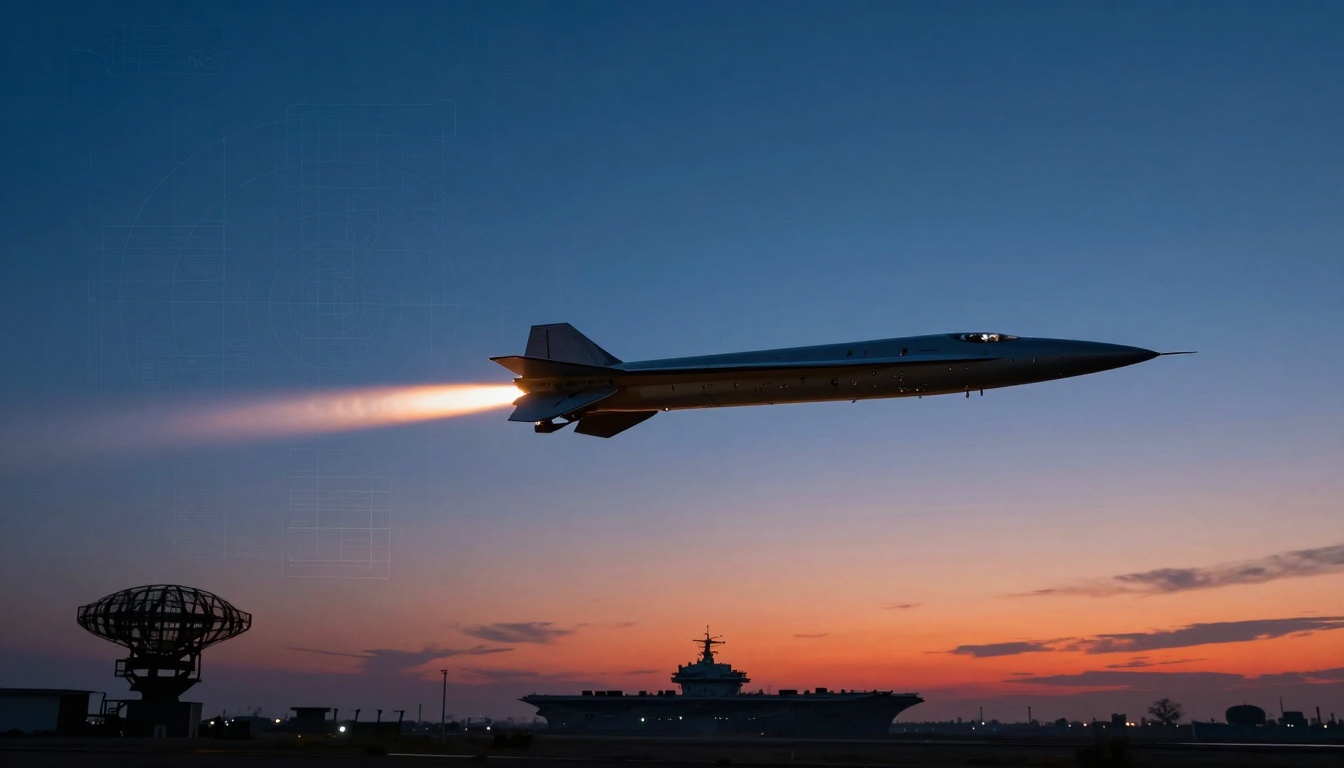
Picture a missile slicing through the night sky at five times the speed of sound. It zips over 3,800 miles per hour, twists in mid-air like a sparrow evading a hawk, and shrugs off radar locks. These hypersonic weapons define a fresh chapter in warfare. Traditional missile shields, built for slower threats, now struggle to keep pace.
In January 2026, the US notched key wins. Lockheed Martin and GE Aerospace tested a rotating detonation ramjet engine, proving it can push missiles farther and cheaper with liquid fuel and detonation waves. The Pentagon backs this surge with a $3.9 billion slice of its $7 billion hypersonic budget. Rivals like Russia and China already field such arms. Can nations match this pace?
This piece breaks it down. We cover US hypersonic programmes, fresh defence counters, and the steep challenges ahead. Stay sharp as skies grow tense.
The US Leads the Charge in Building Hypersonic Missiles
The US pours cash into hypersonics to counter foes. Army, Navy, and Air Force programmes hit milestones in early 2026. They share tech like the Common Hypersonic Glide Body, which skips through the upper air to dodge defences. Budgets top $2 billion for these alone. Factories ramp up for mass output.
Take the Army’s Long Range Hypersonic Weapon, or Dark Eagle. Ground teams fire it from trucks. It boosts to space then glides at Mach 5 plus, covering over 1,700 miles. Live tests from Hawaii nailed end-to-end flights. Fielding starts now, wrapping by early year end with $513 million fuel. Soldiers train on launchers tied to command centres.
Navy’s Conventional Prompt Strike mirrors it for ships and subs. Virginia-class boats add modules from 2028; USS Oklahoma leads. Zumwalt destroyers pack 12 rounds after gun swaps in 2025. They sail hypersonic-ready this year. Air Force eyes the Hypersonic Attack Cruise Missile for B-52 bombers by 2027, backed by $803 million.
New players like Kratos join via MACH-XL. This fast-tracks cheap prototypes with Zeus boosters and gliders. Ground tests prove thrust from ramjets. These speedsters close gaps with rivals. Ready for threats that outrun old gear?
Dark Eagle and CPS: Ground and Sea Powerhouses
Dark Eagle launches from remote sites. Its glide body weaves at blistering speeds, hard for radars to track. The Army fields batteries soon, per recent Janes reports.
CPS fits Zumwalt hulls snug. Picture destroyers slicing stormy waves, hatches pop, flames roar as missiles streak skyward. Shared glide body cuts costs. Subs tuck eight per tube from 2028. These pairs pack punch on land and sea.
HACM and New Engines: Air Strikes Get Faster
HACM swaps the axed ARRW. Scramjets scream from bomber bays, hitting 20 plus per B-52 sortie. It eyes fighters too, ready by 2027.
January ramjet tests lit liquid fuel with spinning blasts. Efficiency soars; range stretches without big boosters. More flights loom this year. Air power turns supersonic hunts into blitzes.
Defence Systems Step Up to Stop Hypersonic Threats
Shields evolve fast. The US layers sensors, killers, and beams to snag hypersonics in flight. Glide Phase Interceptor leads with $200 million in 2026 funds. It strikes mid-glide, high above Earth. Navy Aegis ships upgrade baselines fleet-wide. THAAD proves itself in combat; tweaks chase faster foes.
Lasers emerge as ammo-free zappers on future battleships. Europe chips in €168 million for interceptors and ranges. Space eyes spot launches early. Kratos builds test plants for rapid trials. Budgets swell to $30 billion total defence pot.
Think HBTSS satellites feeding data down. DARPA’s Glide Breaker experiments nail turns. Can lasers fry these firebirds mid-dive? Tests blend old iron with new light.
GPI and Aegis: Catching Them Mid-Flight
GPI waits outside atmosphere for gliders. It homes on wobbling paths radars miss.
Aegis pairs SM-6 shots with CPS cues. Rear Adm. Trinque noted seamless ties at a January symposium. Ships form moving walls against swarms.
Lasers and THAAD: Close-Range Firepower
THAAD smashes terminals. Lockheed boosts seekers for hypersonic heat.
Directed-energy beams fire endless bolts. Navy fits Trump-class hulls; EU plots ground units. Cheap shots per zap stretch dollars far.
Big Hurdles Remain in This Arms Race
Hypersonics pose fiends. Speeds slash warn times to seconds. Twists spoof trackers; plasma sheaths blind eyes. Defences must stack boost-glide-terminal kills.
Gaps linger in data and tests. No fresh arms pacts ease tensions.
| Challenge | Fix in Works |
|---|---|
| Short Reaction | Space sensors like HBTSS |
| Manoeuvres | Glide Breaker experiments |
| Heat/Plasma | Upgraded seekers, lasers |
By late 2026, mass tech eyes global nets. Progress races risks.
Safer Skies on the Horizon?
Hypersonics reshape battles as US weapons and missile defences advance amid snags. Dark Eagle fields, ramjets ignite, interceptors prime. Budgets and tests like 2026 engines signal momentum.
Watch Pentagon spends and trials close. Follow CurratedBrief for tech alerts. If shields outpace spears, tense skies turn secure. What shift comes next?