
Listen to this post: How Drones, Cheap Missiles and AI are Rewriting Military Strategy
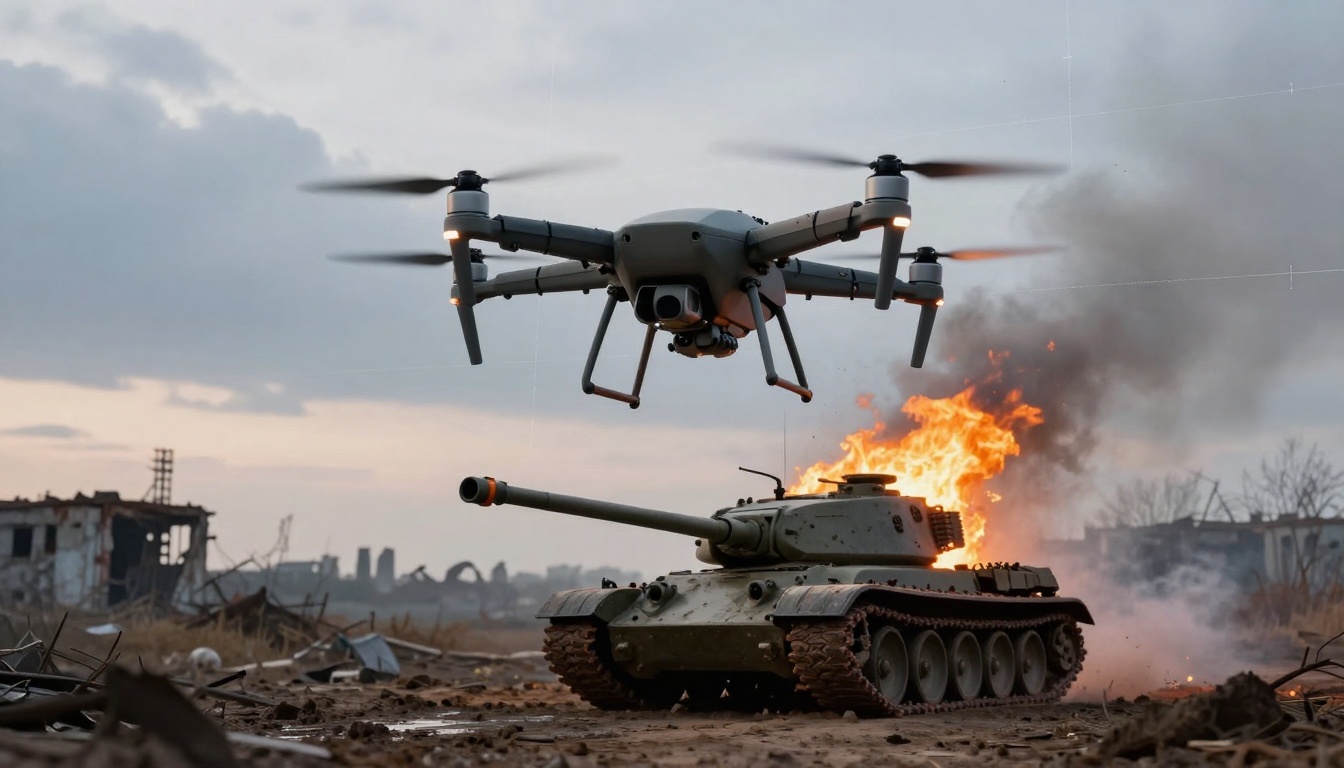
Picture this: a tiny drone costs just £400. It hovers over Ukraine’s muddy front lines near Pokrovsk. Below sits a Russian tank worth millions. The drone dives. Seconds later, the tank erupts in flames. No pilot in sight. Just cheap tech ending a behemoth.
Old armies built power on tanks, jets, and artillery. Now they crumble against gadgets anyone can assemble in a shed. Ukraine’s war shows it clear. Drones rule the skies from Donetsk to Gaza. Vehicles stay hidden or die. In the Middle East, similar scenes play out with Houthi strikes on ships. Cheap tech flips the script. Add AI, and drones hunt alone. They spot, chase, strike. No human needed.
CurratedBrief tracks these shifts in tech and geopolitics. Wars grow fast, cheap, smart. Armies adapt or vanish.
Cheap Drones Dominate the Battlefield Like Never Before
Drones buzz over Ukraine like angry hornets. Vehicles dare not move. They draw fire and explode. Near Pokrovsk, unmanned ground robots now handle 90% of supply runs. Trucks once rolled in convoys. Now they invite death from above.
Russia fires over 142,000 drones since the invasion. Ukraine fights back with its own swarms. In January 2026 alone, Russia launched 242 drones and 36 missiles in one night. They target power plants and grids. Cold snaps worsen it. Batteries fail. Drones ice up. Ukraine loses three per target instead of one.
A machine-gun land drone held a trench for 45 days. No soldiers risked lives. Just metal and code. Skies swarm with threats day and night. The cost gap stuns. A £400 drone kills a £4 million tank. The US Army plans 10,000 small drones a month by late 2026.
How does this change life on the front? Soldiers breathe easier. Robots take the hits.

Photo by Osman Özavcı
From Sky Scouts to Tank Killers
Flying scouts drift high. They spot tanks, troops, ammo dumps. Data feeds back live. Then kamikaze drones strike. They crash with explosives.
Both sides mass-produce them. Ukraine crafts thousands weekly. Russia leans on Iran for parts. Loitering munitions wait like vultures. They circle, then dive on fresh targets. Think cheap missiles with wings. No pilots lost. Just results.
Ukraine’s low-cost interceptor drones rewrite air defence rules. They chase threats mid-air.
Ground Robots Step Up for Risky Jobs
Unmanned ground vehicles roll into fire zones. They drop supplies, ammo, even medical kits. One held a position alone for 45 days near Bakhmut. Machine gun barked. Enemy stalled.
Future roles grow. Ammo drops under drone cover. Medevac runs sans risk. Air drones spot paths. Ground bots follow. Troops stay back, direct from screens. Robots bear the mud, blasts, cold.
AI Turns Drones into Smart Hunters
AI wakes drones up. They fly solo now. Pick targets. Dodge jams. In Ukraine, AI locks on vehicles despite Russian signals. Spot to strike takes 30 seconds. Humans lag behind.
Imagine a swarm eyeing your position. It decides strikes. No orders needed. Drones chase through smoke. AI spots tank from truck. US Navy tests drone boats. They swarm ships. Counter-drone budgets soar.
January 2026 brings chills to ops. Cold cuts drone flights. Yet AI adapts. Ukraine hit a Russian drone factory in Taganrog with home-made missiles. Assembly lines burned.
In Ukraine, a new arsenal of killer AI drones emerges. Pilots like Lipa send quads that hunt alone.
Russia tests Geran-5 drones with 90kg warheads. Oreshnik missiles loom, nuclear-ready. Ukraine counters with swarms.
Beating Jams and Going Autonomous
Electronic jams blind drones. Not anymore. Fibre-optic lines guide them immune. AI handles navigation. It IDs friends, foes in chaos.
Ukraine deploys these now. Drones weave through signals. Lock and boom. No pilot strain. Real tests in Donbas prove it.
Swarms That Overwhelm Any Defence
Hundreds launch at once. AI coordinates. They split, feint, strike multiples. Radars overload. Defences crack.
Big powers test them. US, China, Russia. Scale terrifies. One swarm equals a squadron. Adapt or drown.
Army and Navy push AI and drones forward.
New Strategies for a Drone-Filled World
Big convoys end. They shine like beacons. Armies split into small teams. Stealth rules. Electronic shields jam incoming threats.
Robots lead charges. Troops follow safe. Air battles rage with drones. Land sees robot clashes. Seas host boat swarms.
Pilots pair with loyal wingmen. Drones fly beside jets. Supplies drop by air bot. No trucks needed.
Global powers race. Ukraine’s robot army eyes 2026 dominance. Yet infantry holds ground.
Russia pounds Ukraine’s grids in winter 2026. Houthi drones hit Red Sea ships. Adapt now. Smarter tech may cool hot wars.
Conclusion
Drones, cheap missiles, AI make wars quick and brutal. Tanks hide. Soldiers direct from afar. Armies rethink or fade.
Ukraine proves it. Russia barrages energy nets. Cold hampers all. Yet tech surges.
Follow CurratedBrief for fresh takes on tech in geopolitics. Which clash tests this next? Gaza? Taiwan?
Humans still call shots. Machines amplify might. Stay sharp as skies fill with wings. What role for us in robot fights?