
Listen to this post: Urban Mega-Projects: Who Really Benefits from Shiny New Cities?
Picture this: a 170-kilometre mirror slicing through the Saudi desert, skyscrapers piercing perfect blue skies, and streets buzzing with nine million happy residents. Projects like NEOM’s The Line promise shiny new cities that fix old problems. Governments tout them as bold fixes for traffic jams, pollution, and dull economies.
Yet cracks appear fast. In January 2026, The Line stands at just 2.4 kilometres built, with zero residents and timelines stretched to 2045. Costs spiral, workers suffer, and locals lose homes. These urban mega-projects sparkle in ads but often leave debt and empty towers. Leaders chase prestige, but who pockets the real gains?
Indonesia’s Nusantara capital shifts from crowded Jakarta to jungle green space. Saudi Arabia bets on NEOM to escape oil dependence. The pull feels strong: fresh starts, tourist magnets, job booms. But history shows most flop. Delays hit 80 per cent of big builds, overruns double budgets. Do these shiny new cities serve people, or just egos?
Why Leaders Bet Big on Building from Scratch
Leaders dream large. They see tired capitals choked by smog and slums. A blank canvas offers control: wide boulevards, green parks, smart tech from day one. Saudi Crown Prince Mohammed bin Salman pushes NEOM to swap oil rigs for tech hubs. Indonesia picks Nusantara to dodge Jakarta’s floods and sink.
Prestige drives them. A gleaming city screams success on the world stage. Investors flock, loans flow easy. Governments lock in power with grand visions that drown out complaints. Take Masdar City in Abu Dhabi. It started as a zero-carbon dream in 2006. Now it hums with solar panels and startups, but at triple the price and half the size planned.
These bets aim to shift economies. Oil nations fear dry wells; packed cities fear collapse. A new build pulls cash from abroad. China funds Nusantara roads; Saudi funds lure Western firms. Leaders paint pictures of jobs for youth, homes for all. Reality lags, but the pitch sells bonds and headlines.
Common threads run deep. Most mega-projects chase legacy. Egypt’s new capital east of Cairo boasts Africa’s tallest tower. Leaders tie names to stone. Voters cheer at first. Cash pours in. But bonds mature, and cracks show.
Vision 2030 and Beyond: Prestige Plays
Saudi’s Vision 2030 spotlights NEOM. The Line would house nine million in a car-free tube of glass and steel. Nusantara plans a jungle capital for 1.9 million by 2045, with mangrove buffers.
Governments win big here. PR gold flows: front-page photos, summits hosted. Saudi gains clout beyond oil. Indonesia sheds “flood-prone” tags. Yet 2026 brings hits. Nusantara delays to 2029 amid graft probes. Officials admit rushed plans drained funds. Does image beat reality for leaders?
Power sticks too. New cities let rulers pick allies for contracts. Tribes move out; loyal firms move in.
Famous Builds That Fell Short of the Hype
Promises fade under sun and rain. NEOM shrinks, Hudson Yards echoes empty. Songdo sits half-full. Eko Atlantic fights waves it helped spawn. These tales warn of hype over substance.
Costs explode first. Budgets double or triple. Delays stretch years into decades. Songdo in South Korea burned $40 billion over 20 years. Offices stand vacant; debt burdens locals. Hudson Yards in New York cost $25 billion. Its vessels gleam, but shadows chill streets below. No affordable flats materialise.
Environments suffer. Wetlands vanish for Songdo’s towers. Eko Atlantic’s walls spur erosion, worsening Lagos floods. NEOM evicts tribes, kills birds with mirrors. Workers toil in heat; strikes erupt.
Here’s a quick look at key flops:
| Project | Original Cost | Current Status (2026) | Main Failures |
|---|---|---|---|
| NEOM The Line | $500 billion | 2.4km built, no residents | Scaled back, overruns |
| Hudson Yards | $25 billion | Empty offices, shadows | No affordable housing |
| Songdo IBD | $40 billion | Half occupancy | Debt, isolation |
| Eko Atlantic | $6 billion+ | Floods worse | Erosion, evictions |
Patterns repeat. Bold renders lure cash. Ground truth bites back.
NEOM’s The Line: A Mirror City That Cracked
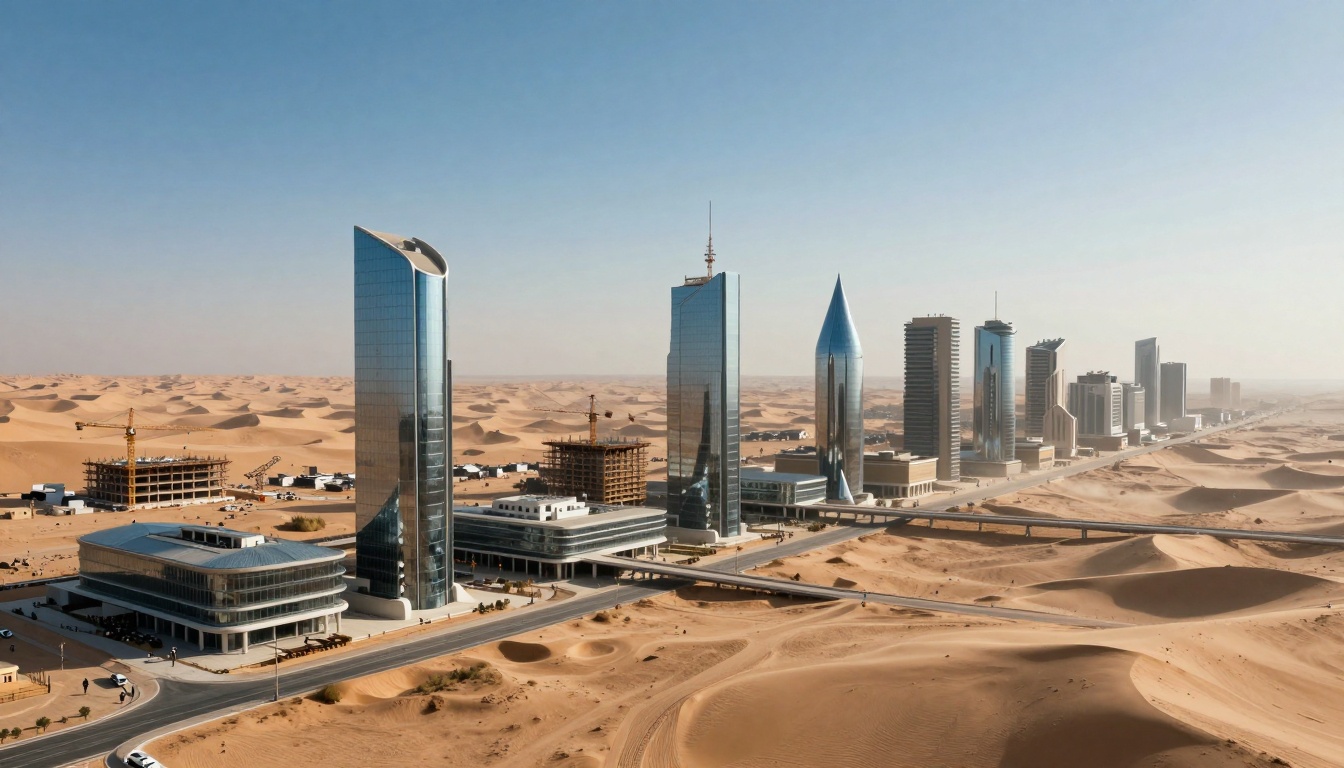
Desert winds whip sand over half-built bones. The Line dreamed 170 kilometres of mirrored walls, 500 metres tall. AI ran it all, no cars needed. $500 billion tag, 21,000 worker deaths reported, 20,000 Huwaitat tribe members evicted.
Engineering buckles. Tunnels flood; birds smash glass. By 2026, just 2.4 kilometres rise. Phase one eyes late 2026 finish, but tankers haul water now. Reports call it a likely failure. Visions crack under weight.
Hudson Yards and Songdo: Empty Towers Tell the Tale
Hudson Yards towers over Manhattan. $25 billion bought luxury and blight. Shadows block sun; traffic snarls worse. Offices yawn empty post-pandemic. No cheap homes for workers.
Songdo drained wetlands for smart grids. $40 billion later, floods hit hard. Residents feel cut off; half the flats sit idle. Environment pays: lost habitats, poisoned runoff. Both show dreams scaled back to skeletons.
Who Cashes In While Locals Pay the Price
Workers strike in 50C heat. Tribes pack tents for nowhere. Taxpayers foot bills that balloon. Yet firms feast on contracts. Urban mega-projects reward the connected.
Developers grab billions upfront. Fees roll in, flops or not. Saudi funds pay pals; bailouts follow. Governments bask in photo ops. Elites snag sea-view pads. Locals? Evicted, indebted, flooded.
Nusantara razes rainforest; Eko Atlantic buries fishing spots. Imagine your home bulldozed for a tower you’ll never afford.
Human toll mounts. Strikes in NEOM kill momentum. Debt in Songdo strains budgets. Who benefits? Not the displaced.
Developers and Elites: The Real Prize Winners
Contracts flow fat. Saudi sovereign funds dish billions to loyal builders. Fees paid, even as digs halt. Nigerian tycoons build Eko mansions amid floods.
PR polishes images. Developers tout “green” wins; elites host galas. Investors bail with profits. Contrast hits hard: firms cash cheques, locals dodge bulldozers.
Time for Smarter City Dreams
Mega-projects follow grim stats. Over 80 per cent overrun costs; most shrink scopes. Leaders gain headlines, developers gain fortunes. Locals lose homes, jobs stay scarce, environments scar.
NEOM’s tiny stub, Hudson’s ghosts, Songdo’s debts paint the picture. Prestige blinds to real needs.
Shift to people-first plans. Retrofit old cities: add trams, green roofs, fair homes. Costs stay low; gains spread wide. Jakarta fights floods with dykes, not jungles. New York fills Yards with mixed flats.
Demand proof before shovels hit dirt. Watch cash trails; guard green space. Shiny new cities tempt, but fixes hide in steady upgrades.
What if we built for locals, not legacies? Your city could thrive without the wreckage. Share thoughts below; let’s push for better.