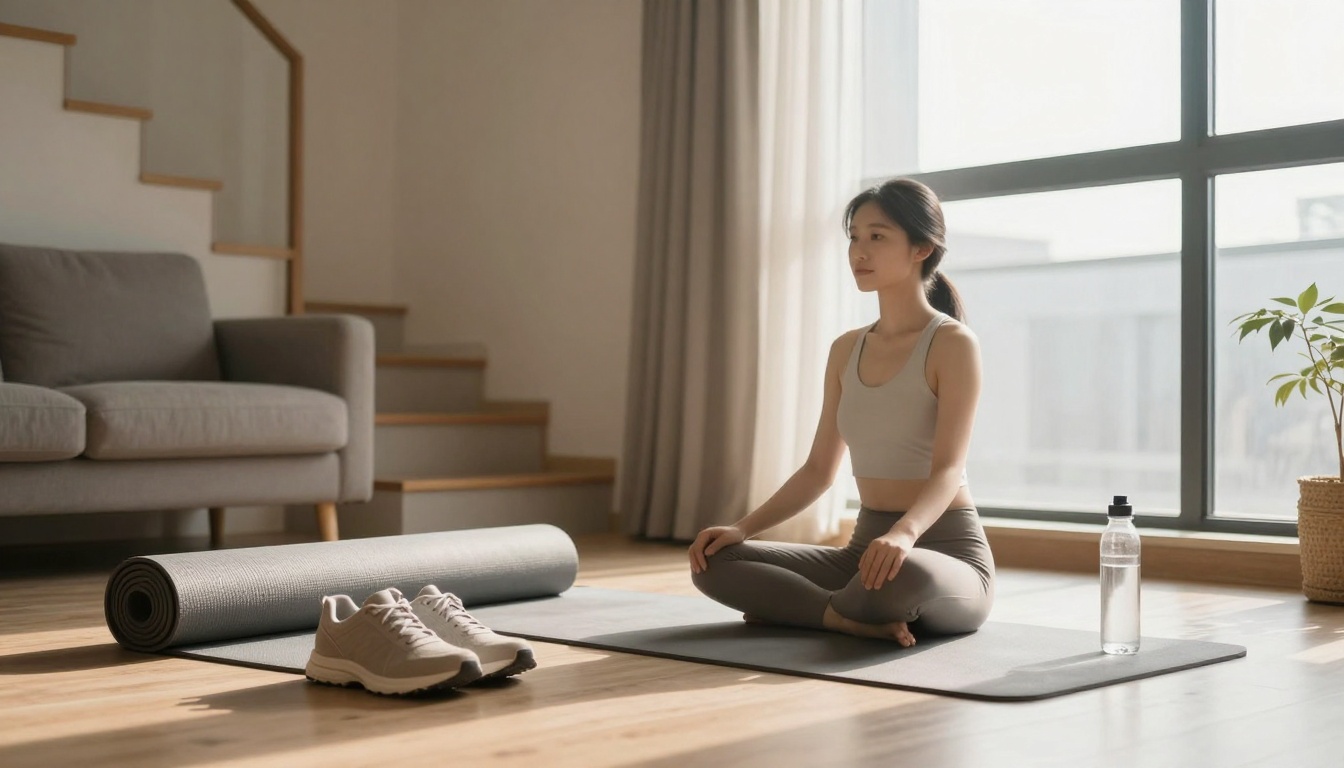

Listen to this post: How to Start Exercising When You’re Out of Shape (and Make It Stick)
You know that moment on the stairs when your legs feel heavy and your breath turns loud, like it’s trying to catch up with you. Or the way your lower back complains after you’ve been sat too long, as if your body’s gone stiff in protest.
If you’re out of shape, it can feel like exercise is something other people do, people with matching sets and endless energy. But this is the truth: starting small is still starting, and consistency beats punishment every time.
Before you begin, a quick safety note. If you have a long-term condition, chest pain, dizziness, recent surgery, you’re pregnant, or you’ve got a joint injury that flares up, it’s sensible to check with your GP or clinician first. You’re not “being dramatic”, you’re being smart.
Start where you are, not where you think you should be
Being out of shape isn’t a flaw. It’s a starting point, like turning up to a class halfway through the year. You don’t get told off for missing the first term, you just begin with what you know today.
The biggest trap is trying to “make up for lost time”. That’s how people go hard for five days, wake up sore, and quietly stop. Your job in the first month is simpler: build a habit your body doesn’t fear.
Here are a few grounded ways to choose a starting level without overdoing it:
Use your “currently” baseline: What do you do on an average day right now? If you mostly sit, your first win is simply adding short movement breaks.
Pick the easiest version you won’t skip: If you hate running, don’t start with running. Start with something you can repeat without a pep talk.
Aim to finish feeling capable: The best beginner session ends with “I could do a bit more”, not “I never want to do that again”.
If you want a credible overview of beginner-friendly choices, Heart Research UK’s guide to exercise choices when starting out is a helpful read.
A quick self-check to choose the right intensity
You don’t need fancy gadgets to get intensity right. You need a few simple checks you can repeat each time.
The talk test: You should be able to speak in short sentences while moving. If you can only gasp single words, ease off.
The effort scale (out of 10): Most sessions should feel like a 4 to 6 out of 10. You’re working, but you’re not in a fight with your own lungs.
The next-day check: Mild muscle soreness is normal. Sharp pain is not. If you limp the next day or your joint feels “wrong”, that’s a sign to scale back.
Stop and get medical help if you notice chest pain, a faint feeling, or severe shortness of breath that doesn’t settle. Also stop if you get joint pain that changes how you walk, or pain that gets worse during the session.
Make it tiny on purpose so you actually do it
Tiny starts feel almost too easy, which is the point. You’re building trust with your body, not trying to prove something.
Try “micro-start” options like:
7-minute walk after lunch: No kit, no plan, just out and back.
5 minutes of easy strength while the kettle boils: Two moves, slow reps, done.
One song of dancing in the kitchen: It counts. Your heart doesn’t care where the beat came from.
A good starter target is 5 to 10 minutes, 3 to 4 days a week. That’s enough to create a routine, and small enough that a busy day can’t easily steal it.
The easiest workouts when you’re out of shape (low-impact, low-stress)
If exercise has felt like punishment in the past, choose options that are kind to your joints and your confidence.
Most beginners need three pieces, kept simple:
Cardio for stamina (so daily life feels less breathless).
Strength for tasks (stairs, shopping bags, getting up from the sofa).
Mobility for stiffness (hips, back, shoulders, ankles).
You can do all three at home, with zero drama.
Walking plans that don’t feel like training
Walking is underrated because it looks too normal. But it builds stamina, supports joints, and it’s easy to scale.
A gentle progression:
- Week 1: 10 minutes per walk
- Week 2: 12 to 15 minutes per walk
- Then: add 2 to 5 minutes per week until you reach 25 minutes
Keep your pace honest. You want breathing to be faster but controlled, like you’re warmed up, not chased.
A few tips that save beginners from pain and frustration:
Comfortable shoes: they don’t need to be expensive, they need to feel stable.
Flat routes first: save hills for later.
Small posture check: tall chest, relaxed shoulders, easy arms.
If walking hurts (knees, hips, feet), try a lower-impact swap: cycling, swimming, an elliptical, or gentle step-ups on a low stair (holding the banister).
If you like a structured plan with coaching vibes, Couch to Fitness offers free sessions designed for beginners. If running is your long-term goal, the NHS Couch to 5K running plan is still one of the most accessible programmes in the UK, but it’s fine to build a walking base first.
Beginner strength moves you can do without a gym
Strength training doesn’t need a barbell to be useful. You’re teaching muscles to switch on again, and that pays off fast in daily life.
Pick 4 to 6 moves from this list:
Chair squats (sit-to-stands): Sit down slowly, stand up without using hands if you can.
Swap: higher chair if knees complain.
Wall push-ups: Hands on wall, body straight, lower and push away.
Swap: hands higher if wrists feel sore.
Glute bridges: Lie on your back, knees bent, lift hips, squeeze gently at the top.
Swap: smaller range if your back feels tight.
Band rows (or towel rows): Pull elbows back, squeeze shoulder blades.
Swap: loop a towel around a door handle you can safely hold, and pull gently.
Bird-dog: On hands and knees, extend opposite arm and leg, pause, switch.
Swap: just legs if balance is hard.
Short plank (10 to 20 seconds): Hold a straight line, breathe.
Swap: plank with hands on a table or sofa.
Start with 1 to 2 sets of 8 to 12 reps for the moves with reps. Rest as needed. Go slow and stay in control. A smooth rep done well beats ten rushed ones.
Modifications that keep you consistent:
For knees: reduce depth on squats, use a chair, and keep steps smaller.
For wrists: use fists or do moves on forearms, or elevate hands on a bench.
For balance: keep one hand near a wall or chair, no shame in support.
If you want a broader beginner guide that covers pacing and planning, Healthline’s beginner workout guide lays out the basics clearly.
Mobility for tight hips, back, and shoulders
Mobility is the oil in the hinge. Without it, walking feels stiff and strength feels awkward.
Try this 5-minute routine after a walk or before bed:
Ankle circles: 20 seconds each direction, each foot.
Hip hinges: hands on hips, push hips back gently, 8 slow reps.
Gentle spinal twist: seated, rotate slowly, 20 seconds each side.
Chest opener against a wall: forearm on wall, turn away slightly, 20 seconds each side.
Calf stretch: heel down, knee soft, 20 seconds each side.
Stretching should feel mild, like tension easing. If you feel sharp pain, stop and adjust.
A simple 4-week beginner routine you can repeat
You don’t need a perfect plan. You need a repeatable one.
This routine uses 3 to 4 workout days, mixing cardio, strength, and mobility, plus rest. Recovery is part of getting fitter, not a bonus for “being good”.
Your week, mapped out (no guesswork)
Start at 10 to 15 minutes per session in Week 1. Gradually build towards 20 to 25 minutes by Week 4, if your body is coping well.
| Day | Session | What it looks like | Time target |
|---|---|---|---|
| Day 1 | Easy cardio | Walk or cycle at talk-test pace | 10 to 15 mins |
| Day 2 | Full-body strength | 4 to 6 moves, slow reps | 10 to 15 mins |
| Day 3 | Rest or mobility | 5-minute mobility routine | 5 to 10 mins |
| Day 4 | Easy cardio | Same as Day 1 | 10 to 15 mins |
| Day 5 | Strength | Repeat Day 2 or change 1 to 2 moves | 10 to 15 mins |
| Day 6 | Mobility or fun movement | Gentle stretch, easy dance, casual walk | 10 to 20 mins |
| Day 7 | Rest or gentle walk | Keep it easy | 10 to 20 mins |
Busy week? Keep the pattern, just shrink the time. A ten-minute walk still protects the habit.
How to progress without injury or burnout
Progress should feel almost boring. That’s a compliment.
Use these rules:
Change only one thing at a time: add time, or add reps, or slightly increase pace. Not all three.
Use a 2-week check: if you finish sessions and feel fine the next day for two weeks, add a small bump (2 to 5 minutes of cardio, or 1 to 2 reps per set).
Protect recovery: rest days matter. Sleep helps. A bit more protein helps too. Keep it simple, you’re not training for the Olympics.
If you want another perspective on easing in gently, Juniper’s guide to starting exercise when you’re out of shape has practical reminders about building gradually.
Stick with it when motivation fades (because it will)
Motivation is a fair-weather friend. Some days you’ll feel keen. Some days you’ll feel like a phone with 3 percent battery.
When motivation drops, systems matter more than willpower.
Remove the friction: clothes, time, place, and shame
Most people don’t fail because they’re lazy. They fail because starting feels like a hassle.
Try these small fixes:
Clothes ready the night before: remove one decision.
A default time: after coffee, after lunch, after work, pick one.
A rain plan indoors: march on the spot, step-ups, or a short strength circuit.
Start at home if the gym feels scary: confidence grows in private, then travels with you.
And about shame: it lies. It tells you everyone’s watching. Most people are thinking about their own lives, their own aches, their own playlists. Your only comparison is yesterday’s you.
Music and podcasts help. Walking with a friend helps too, because conversation makes the minutes pass faster.
Track the right wins so you feel progress fast
If you only track the scales, you might miss the best changes. Your body improves in quiet ways first.
Look for wins like:
Less puffing on stairs
Walking further without thinking about it
Better sleep
Lower stress after a rough day
Looser hips and shoulders
More steady energy in the afternoon
Keep a simple log, written in your notes app:
Minutes moved: 10, 12, 15
Effort out of 10: 4, 5, 6
One sentence: “Felt stiff at first, better by the end.”
This kind of tracking builds proof. Proof beats hype.
Conclusion
Getting back into exercise when you’re out of shape doesn’t need a grand overhaul. It needs a small start, repeated often, with patience. Keep sessions easy enough that you can return tomorrow, and let consistency do the heavy lifting.
Do this today: choose 10 minutes, pick either a gentle walk or three strength moves, then schedule the next session before the day slips away. The first week is the hardest because it’s new, but it’s also the week that changes everything.