
Listen to this post: How to Eat Healthier Without Counting Calories (A Calm, No-Tracking Approach)
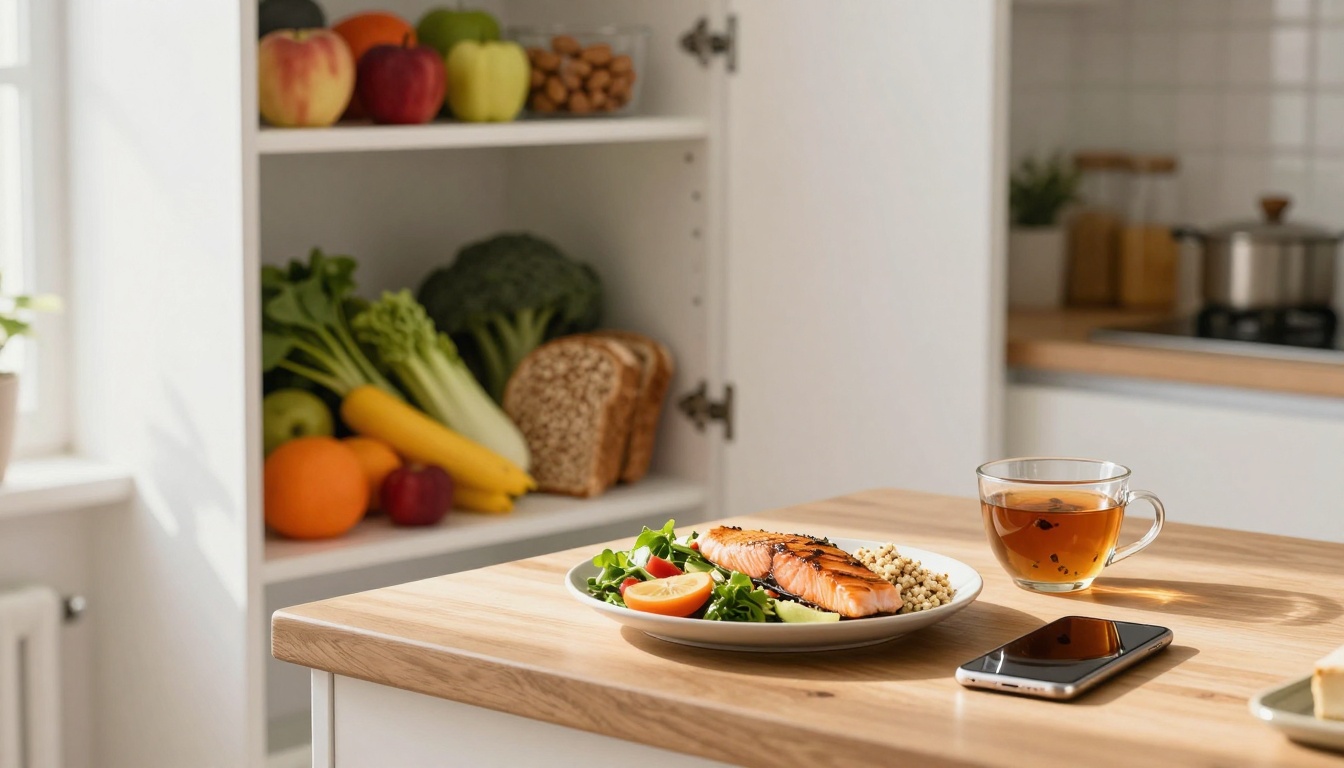
You’re standing in the kitchen, staring at a snack cupboard that feels like a negotiation. Your phone’s there too, full of apps, numbers, and graphs that somehow make lunch feel like a test.
If calorie counting has left you tired, snappy, or guilty, you’re not alone. The good news is you can eat healthier without counting calories, and still feel steady, satisfied, and in control. One simple way to do this is to focus on your meals and snacks. By choosing to eat more whole foods daily, you can nourish your body while enjoying a variety of flavors and textures. This shift not only improves your health but also helps mitigate cravings for less nutritious options.
In this post, “healthier” means: more whole foods, more fibre and plants, steadier energy, better mood, and meals that support long-term heart and gut health. It doesn’t mean perfect. It doesn’t mean banning chocolate. It means building patterns that hold up on a normal Tuesday.
Build meals that work without numbers
The easiest way to stop counting is to start building. Think of meals like getting dressed for the weather. You don’t measure the thickness of your jumper, you choose what fits the day.
A no-count method has three jobs:
- It keeps you full for long enough to get on with life.
- It gives you a reliable mix of nutrients.
- It still leaves space for food you enjoy.
Eating patterns like Mediterranean-style and DASH-style eating tend to work well because they lean on plants, fibre, and simple staples, rather than strict tracking. The NHS Eatwell approach is a good reference point if you want a visual guide (without turning food into homework): Healthy eating when trying to lose weight (NHS).
Use the plate method (half plants, a quarter protein, a quarter whole grains)
Picture your plate like a simple map. You don’t need scales, an app, or a calculator.
- Half the plate: veg and fruit (mostly veg)
- A quarter: protein
- A quarter: whole grains or starchy carbs
- Add a small amount of fats (more on that in a moment)
This works because fibre (from plants) adds bulk and helps you feel full, while protein helps you stay satisfied for longer. You’re not “eating less”, you’re eating in a way that holds you steady.
Here’s what it looks like in real meals:
Pasta night:
Roast peppers, courgettes, onions, mushrooms, plus a tomato sauce (half plate). Add chicken, lentils, or tuna (quarter). Use wholewheat pasta if you like, or regular pasta with a bigger veg portion (quarter).
Curry:
Pile in spinach, cauliflower, peas, and peppers (half). Add chickpeas, tofu, fish, or chicken (quarter). Serve with brown rice, basmati, or a small naan (quarter).
Jacket potato:
Big side salad and chopped veg (half). Top the potato with beans, cottage cheese, tuna, or leftover chilli (quarter). The potato is your starchy quarter.
Stir-fry:
Frozen stir-fry veg makes this easy (half). Add eggs, prawns, tofu, or chicken (quarter). Serve with microwave brown rice or noodles (quarter).
The fats rule (no measuring): add roughly a thumb-sized portion of fat most meals. That could be olive oil, nuts, seeds, avocado, or a bit of cheese. Fat isn’t the enemy, it’s part of what makes meals satisfying, and it helps you absorb certain vitamins. The trick is keeping it intentional, not accidental.
Choose protein that keeps you full, without weighing it
Protein is the “quiet helper” when you’re trying to eat healthier without tracking. It stops the snack spiral, and it makes simple meals feel complete.
A simple portion guide:
- For most meals, aim for a palm-sized portion of protein.
- If you’re very active, growing (teens), or your meal is very veg-heavy, you may want a bit more.
Budget-friendly, UK-friendly protein options:
- Beans and lentils (tinned or dried)
- Eggs
- Greek yoghurt or skyr
- Tinned fish (mackerel, sardines, tuna)
- Chicken (thighs are often cheaper and tastier)
- Tofu and tempeh
- Lean mince or turkey mince (when you want a familiar meal)
Small ways to “add protein” without changing your whole life:
- Porridge with Greek yoghurt stirred in after cooking (plus berries).
- Toast topped with eggs or cottage cheese (add tomatoes or spinach).
- Salad upgraded with chickpeas or tinned mackerel.
- Soup bulked out with red lentils (they cook down and thicken it).
If you often feel hungry an hour after eating, don’t blame willpower. Check your meal has a clear protein source. Many “healthy” meals fail because they’re basically dressed-up carbs.
Swap foods that quietly wreck your diet (and don’t miss them)
Some foods don’t look like a big deal. They slip in, don’t fill you up, and still leave you searching the cupboard later. These are the quiet diet wreckers, not because they’re “bad”, but because they’re easy to overdo without noticing.
The biggest wins usually come from:
- Sugary drinks
- Ultra-processed snacks that vanish in minutes
- High-salt packaged meals that don’t satisfy for long
You don’t need to quit treats. You just want treats to be a choice, not a default setting.
A strong starting point is cutting sugary drinks, because it reduces excess sugar without you having to track anything. You can keep the “treat” feeling and drop the constant sweet sip. In addition to that, consider incorporating herbs and fruits into your water for enhanced flavor, making it more appealing to drink throughout the day. Tips for increasing daily hydration can also include setting reminders to take water breaks or carrying a reusable bottle to track your intake. Emphasizing a consistent routine will help you stay on top of your hydration goals.
Start with drinks and snacks, they add up fastest
If your day includes juice, fizzy drinks, sweet coffees, or energy drinks, this is the fastest place to make a change that actually sticks.
Drink swaps that still feel like something:
- Water with lemon, lime, or cucumber
- Sparkling water with a splash of juice (more fizz, less sugar)
- Unsweetened tea or coffee (add milk if you like)
- Lower-sugar hot chocolate, made with milk and less powder
For a practical NHS-aligned overview of balanced changes, this short leaflet can be useful when you want simple guidance without obsession: How to lose weight in a healthy way (NHS PDF).
Snacks are where many people either feel in control or feel like the day “went wrong”. The fix isn’t to snack less, it’s to snack smarter.
Snack pairings that actually fill you up (think: fibre plus protein or fat):
- Banana or apple plus nuts
- Greek yoghurt plus berries
- Hummus plus carrots or peppers
- Cheese plus an apple
- Wholegrain crackers plus tuna or peanut butter
A tiny environment trick that works: keep the better option at eye level. Put fruit on the counter. Put yoghurt at the front of the fridge. Hide the biscuits behind the cereal. You’re not relying on willpower at 4 pm, you’re making the “good enough” choice easier.
Make fibre your secret weapon (aim for 30-plus plant foods a week)
Fibre is the unsung hero of eating healthier without calorie counting. It supports gut health, helps with regular digestion, and often leads to steadier hunger.
If “eat more fibre” feels vague, borrow a clearer goal: aim for 30 different plant foods in a week. It’s about variety, not perfection. A plant point can be:
- Fruit and veg
- Beans and lentils
- Whole grains (oats, brown rice, wholemeal bread)
- Nuts and seeds
- Herbs and spices
If you want a friendly explainer of what counts, this is a good one: Plant points explained (BBC Food). For a deeper gut-focused breakdown, here’s another solid reference: Plant points: how to get 30 a week & why.
A screenshot-worthy checklist to boost plant variety without extra effort:
- Frozen mixed veg
- Frozen berries
- Oats
- Lentils (tinned or dried)
- Mixed beans (tinned)
- Spinach (fresh or frozen)
- Onions and garlic
- Tomatoes (tinned count)
- Mixed nuts and seeds
- Herbs and spices (curry powder, cumin, basil, cinnamon)
This is where “healthy” starts to feel easier. Meals get bigger, tastier, and more filling, without you having to negotiate with yourself.
Eat like a human, hunger cues, routines, and a plan for real life
Healthy eating often fails for a boring reason: life gets busy. You miss lunch, then you’re starving, then you eat whatever’s quickest. That’s not lack of discipline, it’s a lack of structure.
A calmer approach is to build light routines that guide you back, even after a messy day:
- A few repeatable meals for weekdays
- A simple shopping framework
- A “good enough” plan for eating out
- Small movement habits that support appetite and cravings
A short walk after meals can help with blood sugar and that heavy, sleepy feeling. It doesn’t need to be a workout. Even ten minutes counts, especially after dinner.
If you’re looking for a structured, NHS-linked programme style approach (without fixating on daily numbers), this is a useful read: NHS Trusted Meal Plan (Second Nature).
Slow the meal down and stop eating when you’re comfortably full
When you stop counting calories, your body becomes the feedback system again. The problem is many of us eat like we’re trying to beat a timer.
Try these cues, just for one meal a day:
- Sit down to eat, even if it’s a quick meal.
- Put your phone away for the first five minutes.
- Chew well enough that you can actually taste it.
- Pause halfway through and ask, “Do I want more, or am I just on autopilot?”
Instead of numbers, use a simple word scale:
- Starving
- Hungry
- Satisfied
- Stuffed
Aim to stop at satisfied. Not stuffed, not still hungry. Satisfied is the sweet spot where your next hour doesn’t turn into a snack hunt.
A helpful habit is leaving a few bites when you feel “good enough”. Not as a rule, just as practice. It teaches your brain that food is available again later, so it doesn’t need to panic-eat now.
Make your week easier with a “mix-and-match” shopping list
When people say they “fell off track”, it’s often because there wasn’t much to work with at home. A mix-and-match list gives you building blocks for plates, wraps, bowls, and quick dinners.
Use this simple framework:
2 proteins
- Eggs
- Greek yoghurt
- Tinned mackerel
- Chicken thighs
- Tofu
- Tinned lentils
2 whole grains or starchy carbs
- Oats
- Wholemeal wraps
- Microwave brown rice
- Potatoes (skins on)
- Wholemeal bread
6 plants
- Bagged salad
- Frozen broccoli
- Frozen mixed peppers
- Spinach
- Onions and garlic
- Berries (frozen is cheaper)
2 easy sauces
- Salsa
- Pesto
- Curry paste
- Passata
- Tahini and lemon
2 snacks
- Nuts
- Hummus
- Fruit
- Cheese portions
Time-savers that don’t feel like “diet food”:
- Pre-chopped veg (if it means you’ll use it)
- Frozen berries for breakfast
- Batch-cook once (chilli, lentil soup, traybake) and use leftovers for lunches
This kind of planning isn’t strict. It’s like keeping the kettle filled. You’re just making it easier to do what you already want to do. When you’re ready to share your thoughts with the world, having some blogging tips for new writers can provide guidance. They can help you find your voice and connect with your audience more effectively. Embrace the process, and remember that improvement comes with practice.
Eating out and takeaway can fit too. A simple rule is to add what’s missing:
- If it’s pizza, add a side salad or veg.
- If it’s a curry, choose one with veg and add a yoghurt dip.
- If it’s a sandwich meal deal, add fruit and swap the sugary drink.
You don’t need a perfect order, you need a supportive one.
Conclusion
Eating healthier without counting calories isn’t about ignoring nutrition, it’s about choosing a method you can live with. Build plates using a simple visual structure, swap the sneaky culprits like sugary drinks and low-filling snacks, and use routines that hold up when life gets loud.
Pick one change for the next seven days, not ten. Make it easy to repeat, then let it become normal.
Health is a pattern, not a perfect day, and your next meal is always a fresh start.