
Listen to this post: How to Eat Healthier Without Counting Calories (A Calm, No-Tracking Approach)
You’re standing in the kitchen again, half-hungry, half-tired, staring at a packet like it’s a maths exam. Apps want numbers, labels want rules, and your brain wants a break.
Here’s the good news: you can eat healthier without counting calories. You can build meals that give steadier energy, fewer cravings, and a lighter mood, without turning lunch into homework. In this post, “healthier” means more whole foods, more fibre, better protein, and a plate that supports long-term heart and gut health.
No perfection required. No banned foods. Just small habits that actually stick.
Build meals that work without numbers
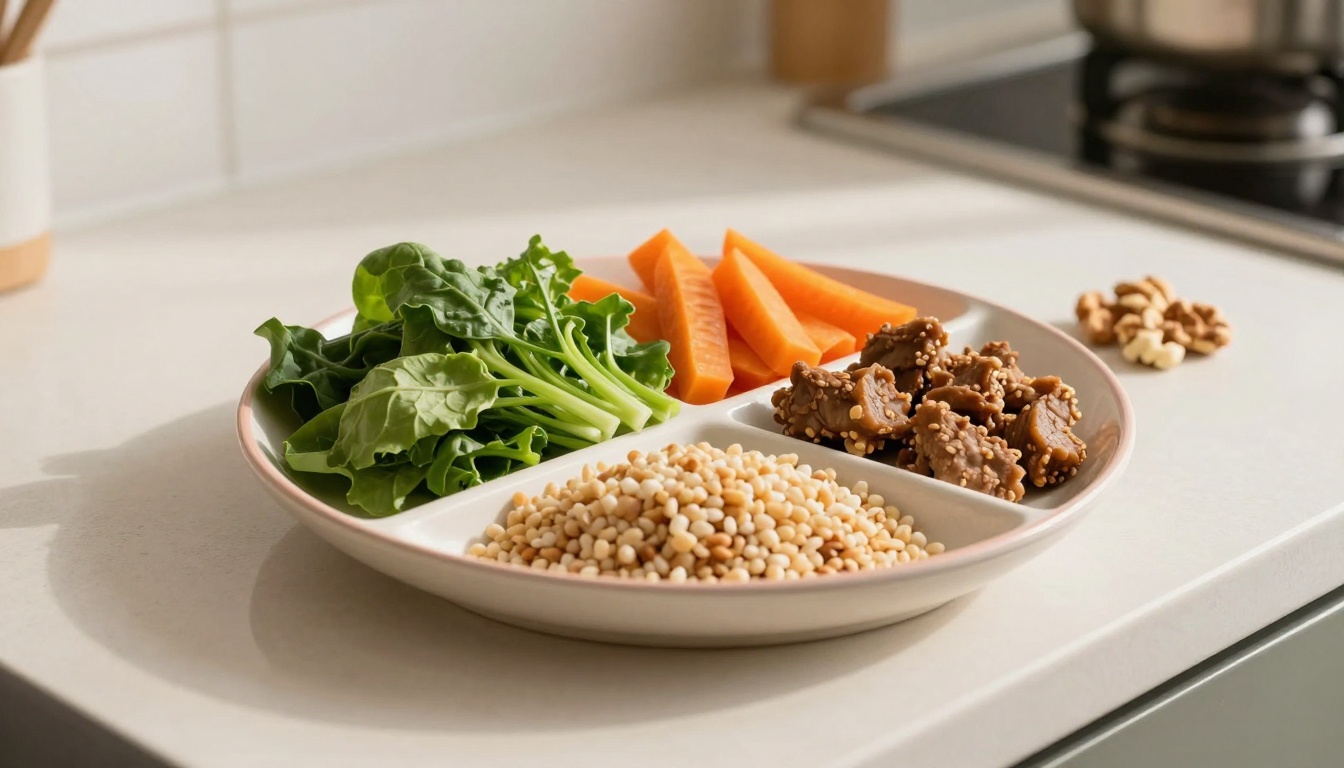
If you want a method you can use today, use pictures instead of maths. The most reliable “no-count” approach is the plate method, which also lines up with UK-style advice like the Eatwell Guide. It’s simple, flexible, and it works whether you cook from scratch or rely on the supermarket.
It also matches patterns like Mediterranean and DASH-style eating, which are well-supported because they focus on plants, fibre, and minimally processed foods rather than strict tracking.
Use the plate method (half plants, a quarter protein, a quarter whole grains)
Think of your plate like a simple map:
- Half: veg and fruit (mostly veg)
- A quarter: protein
- A quarter: whole grains or starchy carbs (ideally high-fibre)
Then add fats with a light touch: a thumb-sized amount of olive oil, nuts, seeds, or avocado.
This works because fibre helps you feel full and keeps digestion moving, while protein helps you stay satisfied for longer. You end up eating “enough” without sliding into snack mode an hour later.
Quick real-life examples (no scales, no apps):
- Pasta night: wholewheat pasta, tomato and veg sauce, a palm of chicken, lentils, or prawns, plus a big side salad.
- Curry: chickpea and spinach curry, brown rice, yoghurt on the side, and a sprinkle of toasted seeds.
- Jacket potato: baked potato, tuna or beans, loads of mixed salad, and a thumb of olive oil in the dressing.
- Stir-fry: frozen mixed veg, tofu or egg, noodles or rice, and a handful of cashews.
If your plate doesn’t look perfect, that’s fine. You’re aiming for a pattern, not a photo shoot.
Choose protein that keeps you full, without weighing it
Protein is the quiet hero when you don’t want to count calories. It steadies hunger, supports muscle, and makes meals feel “done”.
Easy options across budgets:
- Beans and lentils (tinned counts)
- Eggs
- Greek yoghurt or skyr
- Tinned fish (sardines, mackerel, tuna)
- Chicken or turkey
- Tofu or tempeh
A simple portion guide: a palm-sized serving at most meals. If you’re very active, still hungry, or lifting weights, you may need more, your body will tell you.
Easy ways to add protein to meals you already eat:
Porridge: stir in Greek yoghurt after cooking, add nuts and berries.
Toast: top with eggs, cottage cheese, or peanut butter plus sliced banana.
Salad: add chickpeas, tinned lentils, or leftover chicken.
Soup: blend in white beans, or serve with a yoghurt bowl and seeds.
If you often feel hungry at 4 pm, it’s rarely a willpower issue. It’s often a protein issue.
Swap foods that quietly wreck your diet (and don’t miss them)
Some foods don’t look “bad”, but they push you off course because they’re easy to overeat and don’t keep you full. The biggest wins usually come from three places: sugary drinks, ultra-processed snack foods, and high-salt ready meals.
You don’t have to quit treats. You just need fewer of the “stealth” ones that leave you hungrier than when you started.
One change that often makes a fast difference is cutting sugary drinks. It’s one of the simplest ways to reduce excess sugar without tracking anything.
Start with drinks and snacks, they add up fastest
Drinks first, because you don’t miss them as much as you think.
Try swaps that still feel like a treat:
- Water with lemon, lime, or frozen berries
- Sparkling water with a splash of juice
- Unsweetened tea or coffee (add milk if you like)
- Lower-sugar hot chocolate, or cocoa with warm milk and cinnamon
Then fix snacks. The goal isn’t “less”, it’s more filling.
Snack pairings that work:
- Fruit plus a small handful of nuts
- Yoghurt plus berries
- Hummus plus carrots or peppers
- Cheese plus an apple
A tiny environment trick helps more than motivation: keep the better option at eye level in the fridge or cupboard, and put the rest somewhere awkward. Make the easy choice the default. By creating an environment that encourages better choices, you can also apply this principle to your travel planning. For instance, when searching for cheap flights to New York City, focus on options that pop up first, as they tend to get your attention quicker. This way, you’ll be more likely to book that affordable getaway instead of getting sidetracked by less desirable options.
Make fibre your secret weapon (aim for 30-plus plant foods a week)
If you want one nutrition habit that improves a lot of things at once, choose fibre and variety.
The “30 plants a week” idea isn’t about going vegan or eating rabbit food. It’s a variety count, and it includes beans, lentils, whole grains, nuts, seeds, herbs, and spices. If you want a practical UK-friendly explanation, the BBC has a useful piece on how to eat 30 plant points a week. As you explore new eating habits, consider incorporating blogging tips for beginners in 2026 to share your journey. With the rise of social media, documenting your transition can inspire others to embrace a plant-based lifestyle. Engaging with communities online can also provide support and fresh ideas to keep your meals interesting.
More plants tends to mean a happier gut, steadier hunger, and meals that feel bigger without extra effort. For more background on why variety matters, this overview of plant points and how to reach 30 a week is a clear starting point.
A simple checklist you can repeat weekly:
- Frozen mixed veg
- Mixed beans (tinned)
- Berries (fresh or frozen)
- Oats
- Lentils
- Spinach
- Onions and garlic
- Fresh herbs, dried herbs, and spices
You don’t need to hit 30 every week. Aim to improve your “plant range” over time, like adding colours to a palette.
Eat like a human, hunger cues, routines, and a plan for real life
Healthy eating usually fails on busy days, not because you don’t care, but because you’re rushed, tired, or eating from the packet. Behaviour and environment matter as much as ingredients.
This section is about making food fit your life, not the other way round.
A small habit that helps many people: a short walk after meals. Even 10 minutes can ease that heavy, sleepy feeling and may help with cravings later. If you want more gut-friendly habits in one place, The Guardian’s round-up on gut health rules, including eating slowly and plant variety is worth a look.
Slow the meal down and stop eating when you’re comfortably full
You don’t need “mindful eating” as a big project. You just need a few brakes.
Try these cues:
- Sit down to eat when you can
- Put your phone away for the first five minutes
- Chew properly, then pause halfway through
Use a simple words-only check-in: starving, hungry, satisfied, stuffed. Aim to stop at satisfied, not stuffed. Leaving a few bites when you feel “good enough” is a skill, not a moral test.
If you grew up with “clear your plate”, this can feel strange at first. It gets easier fast.
Make your week easier with a “mix-and-match” shopping list
When life gets busy, decisions are the enemy. A small framework saves you from last-minute beige dinners.
Aim for:
- 2 proteins
- 2 whole grains or starchy carbs
- 6 plants
- 2 easy sauces
- 2 snacks
UK shop-friendly examples:
Proteins: eggs, Greek yoghurt, tinned mackerel, tofu, tinned lentils
Whole grains/starches: oats, microwave brown rice, wholemeal wraps, potatoes
Plants: spinach, peppers, onions, tomatoes, mixed frozen veg, berries
Sauces: pesto, curry paste, salsa, tahini, passata
Snacks: hummus, nuts, fruit, popcorn, yoghurt
Time-savers that still count as real food: pre-chopped veg, frozen berries, microwave grains, and one batch-cooked pot (chilli, lentil soup, or traybake) that covers two meals.
Eating out or ordering takeaway can still fit the plan. Use the same plate idea: add a veg side, pick a protein-based main, and stop when you’re comfortably full. You don’t need a “perfect” choice, just a better one.
Conclusion
Eating healthier without counting calories comes down to three calm moves: build balanced plates, swap the biggest culprits (especially sugary drinks and snack traps), and lean on simple routines when life gets messy. Choose one change to try for the next seven days, then keep the one that feels easiest. you can also explore healthy eating tips without tracking by focusing on whole foods and mindful eating habits. Incorporating more fruits and vegetables into your meals can provide essential nutrients and help you feel satisfied. Remember that small, consistent changes can lead to lasting improvements in your overall well-being.
Health isn’t a perfect day of eating. It’s a pattern you repeat, even when the week isn’t kind.