
Listen to this post: How Religious Movements Shape Politics in Africa, Asia and the Americas
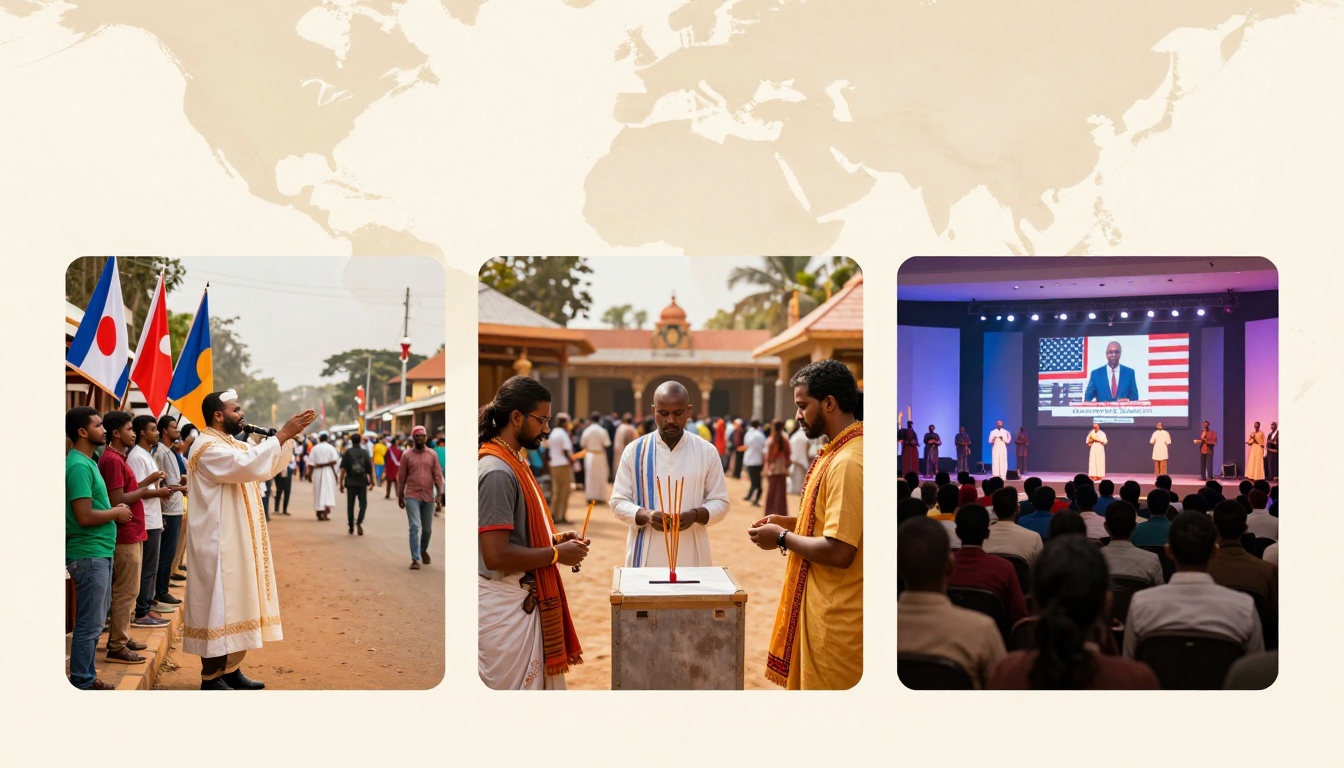
Picture a vast crowd in Antananarivo, Madagascar. A church leader stands tall amid chants and banners. Parishioners wave flags as they demand fair elections after years of unrest. This scene captures a truth: religious movements do far more than guide prayers. They rally voters, challenge rulers, and mould laws across Africa, Asia, and the Americas.
These groups fill gaps left by weak states. They offer moral guides in tough times. From youth protests to ballot boxes, faith stirs action. This article looks at real cases from 2023 to 2026. You’ll see churches broker peace in Africa, temples fuel laws in Asia, and evangelicals tip US votes. CurratedBrief tracks these global shifts to help you grasp fast-changing events.
Ahead, explore stories that show faith’s grip on power. Why do pastors sway Nigerian polls? How do Hindu groups reshape India? Get ready for patterns that predict 2026 battles.
Faith Groups Step In to Shape Africa’s Political Shifts
Africa’s religious leaders act as bridges in shaky politics. Churches and traditional faiths step up when trust in governments fades. They host talks, fight graft, and push for health aid. From 2023 to 2026, these efforts rebuilt communities and nudged elections.
In nations hit by poverty and unrest, faith groups draw crowds. Pastors preach against corruption. Imams call for unity. This mix turns sermons into strategies.

Photo by Fakhri Baghirov
Madagascar’s Churches Bridge Protests to New Elections
Youth frustration boiled over in Madagascar by late 2024. Protests targeted President Andry Rajoelina’s rule amid economic woes. Churches, led by the FFKM council, stepped in. Protestant and Catholic leaders met protesters and officials.
They calmed streets and set terms for talks. Faith filled voids as state control slipped. Pastors urged youth to back clean polls. By early 2025, these efforts eased tensions. Churches hosted forums where rivals shook hands.
This role built trust. People saw faith as fair brokers. Elections loomed with less fear of chaos. FFKM’s work showed religion’s pull in fragile spots.
Christian Leaders Demand Health Funds and Honest Leaders
In December 2025, the African Christian Leaders Conference gathered voices from ten nations. Leaders like Rev. Francis Mkandawire and Bishop Matthew Kukah spoke out. USAID cuts hit hard, so they pressed for local health funds.
Malaria fights topped their list. They linked faith to action: clean leaders serve God. Calls hit corruption too. Pastors vowed to back honest candidates in 2026 votes.
Church-state ties grew stronger. Conferences sparked youth drives. Leaders trained voters on graft risks. Results? More funds flowed to clinics. Faith nudged policies toward care.
For deeper views on Africa’s religious sway, check this piece on church power.
Nigeria’s Yoruba Ways Redefine Power Sharing
Yoruba traditions in Nigeria offer fresh takes on rule. Ifa divination guides choices. Scholar Ayodeji Ogunnaike notes oriṣa worship stresses harmony over fights.
Priests read signs for leaders. This curbs rivalry. In 2024 polls, these ideas spread. Communities picked shared power models. Faith eased ethnic clashes.
Broader roles shine in protests against jihadists. Churches back climate pleas too. Religion rebuilds bonds where states fail.
Asia’s Religious Forces Drive Laws and Clashes
Asia blends faith with state power fast. From 2023 to 2026, movements pushed laws and sparked rows. Islam grows in pockets. Hinduism ties to parties. Minorities face squeezes.
Nationalism rises. Governments fund mosques or temples. Clashes follow. Yet interfaith bids persist.
Sharia Gains Ground in Philippines’ Muslim Region
Bangsamoro Autonomous Region in Muslim Mindanao, or BARMM, saw shifts post-2022 peace. By 2025, election violence delayed polls to 2026. Abu Sayyaf links stirred fears.
A new Sharia court loomed. Christians worried over rights. Moro leaders tied faith to growth. Mosques rose amid aid.
Tensions cut freedoms. Yet faith aided local rule.
Malaysia’s State Islam Targets Minorities
Malaysia poured $500 million into dakwah by 2025. State Islam pushed conversions. Pastor Raymond Koh’s 2017 case lingers; no justice yet.
Churches face blocks. Families split over faith switches. Minorities feel the chill.
Pressures mount on non-Muslims.
India’s Hindu Push Closes Churches
BJP’s Hindu nationalism surged. Anti-conversion laws hit Uttar Pradesh and others by 2026. Church attacks rose.
RSS rallies framed Hindus as victims. Temples built fast. Polls leaned on identity.
Pew Research maps this religious nationalism. Churches shut. Fears grow.
Buddhists favouritism marks Sri Lanka. China curbs all faiths.
Religious Waves Tip Scales in the Americas’ Power Plays
Americas see faith boost populists. Evangelicals and Pentecostals sway votes on morals. From 2023 to 2026, they shaped wins and laws.
US and Latin trends mirror: churches rally for “saviours.”
US Evangelicals Rally Behind Political Saviours
In 2024, evangelicals backed Trump hard. New Apostolic Reformation pushed dominionism. Prayers and votes via Turning Point USA clinched seats.
They eye abortion bans. Christian nationalism builds on decades of church nets. Moral pushes define platforms.
Latin America’s Pentecostal Surge in Elections
Brazil’s Bolsonaro leaned on evangelicals post-2022. Policies hit family values. Argentina’s Milei courted Pentecostals after 2023 win.
Colombia and Mexico saw surges. Churches sway on crime and ethics. Studies show evangelicals transform votes.
Liberation theology echoes in Venezuela protests. Faith fills voids like elsewhere.
Faith sparks divides yet demands ethics. Patterns hold: religion plugs state gaps, stirs rows, calls for right. Look to 2026 polls in India, Philippines, Africa. Evangelicals may push harder in US midterms.
Spot these forces in news. They shape your world. Share views below. Subscribe for global briefs. Dialogue can bridge rifts. Hope lies in talks that honour all faiths.
(Word count: 1492)