
Listen to this post: How ‘Might-Is-Right’ Foreign Policy is Changing International Law
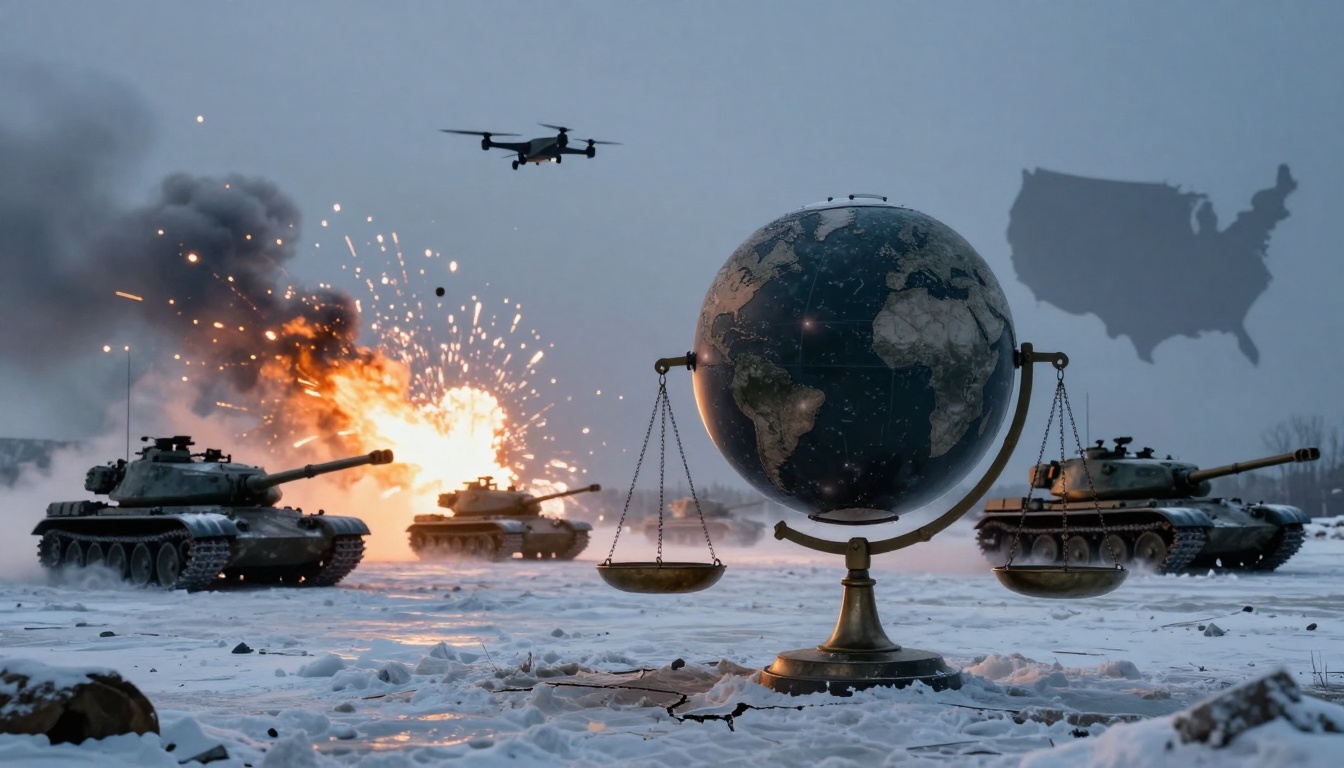
Russian tanks rumble through Ukraine’s frozen fields in early 2026. Explosions light up the night as drones swarm overhead. The International Criminal Court issued an arrest warrant for Vladimir Putin years ago over child deportations. He laughs it off and keeps fighting. This is might-is-right foreign policy in action. Big nations flex their armies, cash, and sway to dodge rules that bind everyone else. Leaders act like playground toughs, pushing past borders and pacts. These steps quietly reshape international law. Norms crack under the weight of raw power. Will small countries pay the price?
Spotlight on bold moves by Russia, the US, and China
Major powers test limits with fresh actions from 2024 to 2026. Russia digs in on Ukraine. The US drops old deals when they pinch. China builds outposts in hot seas. Each skips treaties and courts. UN rules fray as a result.
Russia bulldozes rules in Ukraine
The 2022 invasion drags into 2026. Russian troops push slow gains near Pokrovsk and Kupiansk amid winter snow. Ukraine strikes back with drones on oil sites in Penza and Belgorod. Russia fires 242 drones and 36 missiles in one January blitz, killing in Kyiv and wrecking power grids. Zelenskyy calls an energy crisis.
Putin faces the ICC warrant, but it means nothing. In December 2025, he signed a law letting Russia ignore foreign and international court rulings, like Putin’s new law on court rulings. He claims a “sphere of influence” over neighbours. This spits on the UN Charter’s no-force clause. Frontline clashes set a grim example. Smaller states watch and worry.
US picks and chooses global pacts
The US under Trump eyes deals that suit. Past moves set the tone: threats to buy Greenland from Denmark, a naval blockade off Venezuela, exits from the Iran nuclear pact and Paris climate accord. Sanctions hit ICC staff probing US actions in Afghanistan.
In 2025-2026, Trump pushes Ukraine peace talks. Russia rejects them flat. The pattern holds: ditch rules that bind. It’s like quitting a club when you lose a vote. Trust in the US-led order slips. Allies question commitments. Trump’s impact on global rules shows the strain. Power fills the gap left by pacts.
China asserts control in Asian waters
China pours sand into the South China Sea, building islands despite a 2016 tribunal loss. Vast fleets patrol claimed reefs. UN sea treaties get no nod. Taiwan faces daily threats: jets buzz the island, ships circle close.
In 2026, China aids Russia’s war machine with drone parts, no new grabs reported yet. But self-reliance grabs standards in tech bodies. Cooperation pacts crumble. Picture grey hulls slicing blue waves, flags snapping in wind. Neighbours like Philippines protest. Beijing shrugs. Force carves new maps.
The cracks forming in international law’s foundation
International law wobbles as big players ignore it. UN resolutions pass but lack teeth; vetoes block action. Court rulings gather dust. The ICC warrant on Putin? Russia thumbs its nose. Treaties on war crimes and sea lanes tear at edges.
A chain starts. Russia hits Ukraine’s power plants, breaking humanitarian rules. UN notes 97% of 2025 civilian deaths from such strikes. Smaller nations copy or band together. Global South groups, with Kenya and South Africa plus 125 others, push back on old powers. Israel-Gaza adds fuel: aid blocks test famine laws.
Imagine your town facing endless raids with no court to call. Peace suffers when might beats right. Norms against force collapse, experts warn. Coalitions form, but chaos brews. Law’s house sits on shifting sand. Smaller voices grow louder, yet power holds sway for now.
What lies ahead for a rule-based world
Chaos could spike with more border tests. Or pushback builds: new alliances enforce pacts. Spot these patterns in news feeds. Grasp why fights like Ukraine linger past 2026.
Stay sharp on CurratedBrief for daily briefs. Support fair rules through votes and shares. Hope flickers if nations unite.
In the end, might-is-right tactics from Russia, the US, and China chip away at law’s core. Putin ignores warrants; Trump picks pacts; China claims seas. Shared rules, not fists, build true strength. Picture law as a sturdy bridge over stormy waters. What global flashpoint will you track next? Keep eyes open.