
Listen to this post: The New Era of Satellite Internet and Its Geopolitical Consequences
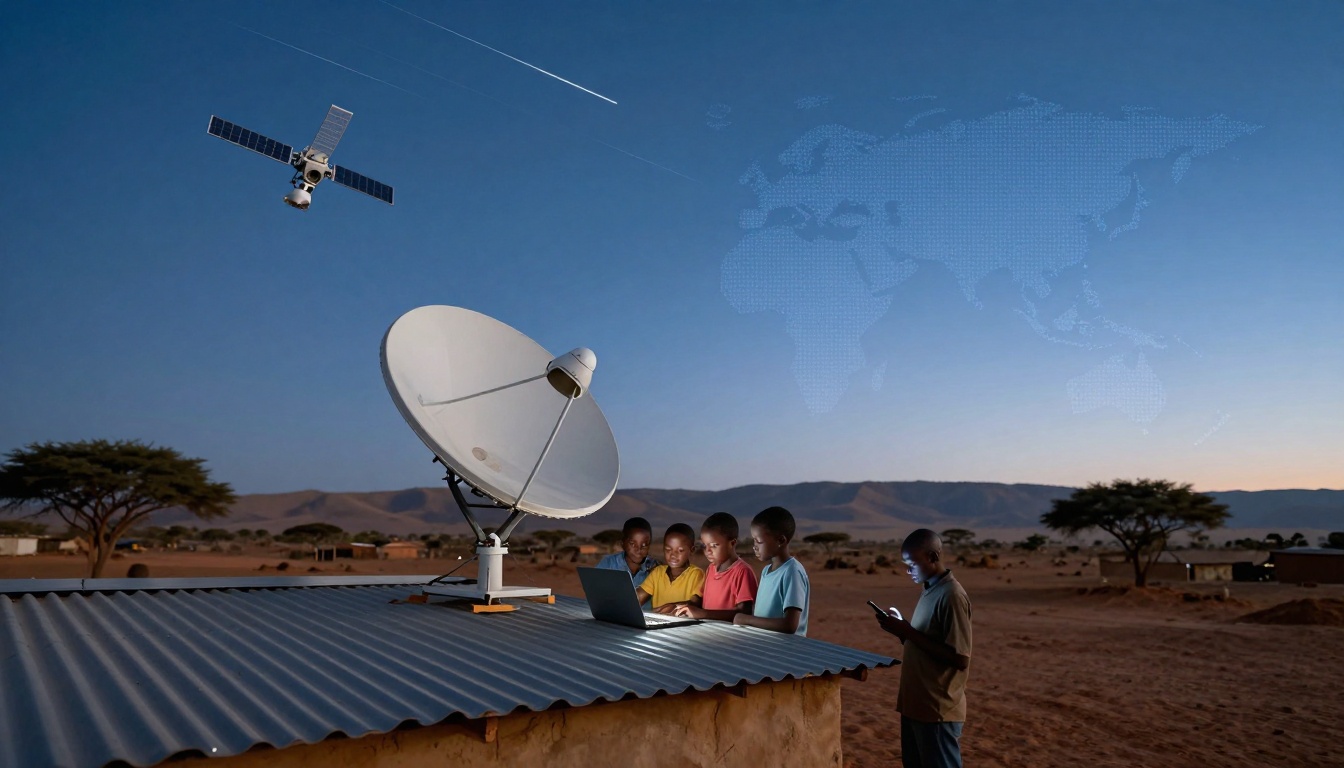
Picture a dusty village in rural Kenya. Children huddle around a single laptop, streaming lessons from Nairobi. A farmer scrolls crop prices on his phone, no fibre cables in sight. Satellites high above make this possible. Old-school satellites in high orbits lagged with delays. Now low-Earth orbit ones zip data fast.
Satellite internet flips the script. Starlink leads with over 9 million users by late 2025. Amazon’s Kuiper and Eutelsat’s OneWeb follow. They blanket Earth in coverage. Yet this boom sparks rows. Who controls the signal? In Ukraine, it armed troops. In Iran, it dodged blackouts. Europe frets over US sway. Brazil eyes Chinese options. Nations clash for sky power. This piece unpacks the tech wins and the global tussles ahead.
Low-Orbit Satellites Bring Fast Internet to Forgotten Places
Low-Earth orbit satellites hug the planet at 550 kilometres up. They beam data quick, unlike high-orbit giants at 36,000 kilometres with big lags. Signals bounce fast. Users grab speeds of 50 to 150 Mbps. Latency sits at 20 to 40 milliseconds. Rural spots, ships at sea, planes in flight all connect.
Starlink blankets 155 countries. It serves homes short on broadband. A farmer in Wales checks live grain bids. His yields rise. Schools in Scottish Highlands run video calls. The market hit 11.8 to 15 billion dollars in revenue last year. Projections top 22 to 24 billion in 2026. Kuiper tests at 400 Mbps in betas. OneWeb targets firms with steady links.
Costs drop with rivals. Yet rain fades signals. User caps limit binge watches. Space junk looms as thousands launch. Still, blacked-out regions light up. Africa jumps from 37 per cent coverage. Lives change.
Starlink Sets the Pace with Rapid Expansions
SpaceX rules the pack. Nine million subscribers by December 2025. That’s up from 4.6 million a year prior. Direct-to-cell tech adds 5G from space. Starship hauls 100 satellites per go. Low orbits cut collision scares. The fleet dodged 144,000 threats.
Think of it as a bustling sky motorway. Data races along. Expansions hit 42 new spots in 2025. US nods let the fleet grow. Rural users cheer gigabit dreams by late 2026.
Rivals Step Up to Challenge the Leader
Amazon’s Kuiper orbits 180 satellites so far. Full service needs more. It eyes remote homes. Viasat and Hughesnet stick to older tech at 100 to 150 Mbps. Telesat’s Lightspeed promises firm ties.
China’s Qianfan joins the fray. Starlink faces new rivals in the satellite internet market. Prices fall as they pile in. Users win better deals.
Satellites Become Weapons in Modern Conflicts
Troops in Ukraine’s mud hug Starlink dishes. Drones spot foes. Blackouts hit in 2022. Yet signals hold. News flows out. Rebels in Sudan tap the same in 2023 clashes. Fighters sync attacks. No ground lines needed.
Iran’s streets boil in 2022 protests. Officials kill networks. Starlink slips through. Videos flood social media. Around 50,000 terminals keep Iranians linked. Voices rise. Cyber hacks strike too. Viasat went dark before Ukraine’s invasion. Russia eyed the mess.
These tools smash info blocks. Wars drag on with constant comms. Soldiers eye the sky, tense. Will the beam cut? Remote Africa gains most. Coverage climbs. Villages share war news. Yet leaders fear the power shift. Rebels arm up cheap.
Dishes hide easy. Governments rage. Starlink toggles service. Ukraine begged for more. Sudan fights rage without pause. The sky turns battleground.
Nations Fight Back to Protect Their Skies
Sovereignty bites hard. Brazil chats China deals to skip US grip. Bolivia nods along. Europe crafts IRIS² with 272 satellites. Jobs stay home. Data flows free of foreign switches.
Russia builds Zorky, a Starlink twin. China spreads Digital Silk Road. Africa grabs 24 satellite pacts. Space gets crowded, and low-Earth orbit policy breaks. Regs jam launches. Orbits split: US camp versus rest.
Data rules spark rows. New Zealand frets kill-switches. Nations hoard spectrum. Benefits shine, but control slips. Starlink expands amid geopolitical turmoil.
Europe and Russia Build Their Own Networks
Europe’s IRIS² guards digital freedom. Eutelsat owns OneWeb. Italy weighs Starlink buys amid rival strains. Russia pairs Sovereign RuNet with Zorky. No US middleman.
China’s Push Counters US Dominance
Qianfan swells fast. Belt and Road sells sats to Brazil, African states. Ties knit surveillance webs. US sway fades.
A Connected World with Strings Attached
Satellite internet wires the globe. Remote spots thrive. Yet it fuels an orbital scramble. Starlink’s nine million users show the pull. Rivals chase. Conflicts twist the tech into tools. Nations forge counters.
By 2030, the market hits 24 billion dollars. Tensions mount. Watch leaders balance open access against sky grip. How will power tilt? Fair links for all seem possible. Check CurratedBrief for fresh takes on these shifts. What side wins the stars?