
Listen to this post: The Arctic Opening: Trade Routes, Resources and New Security Risks
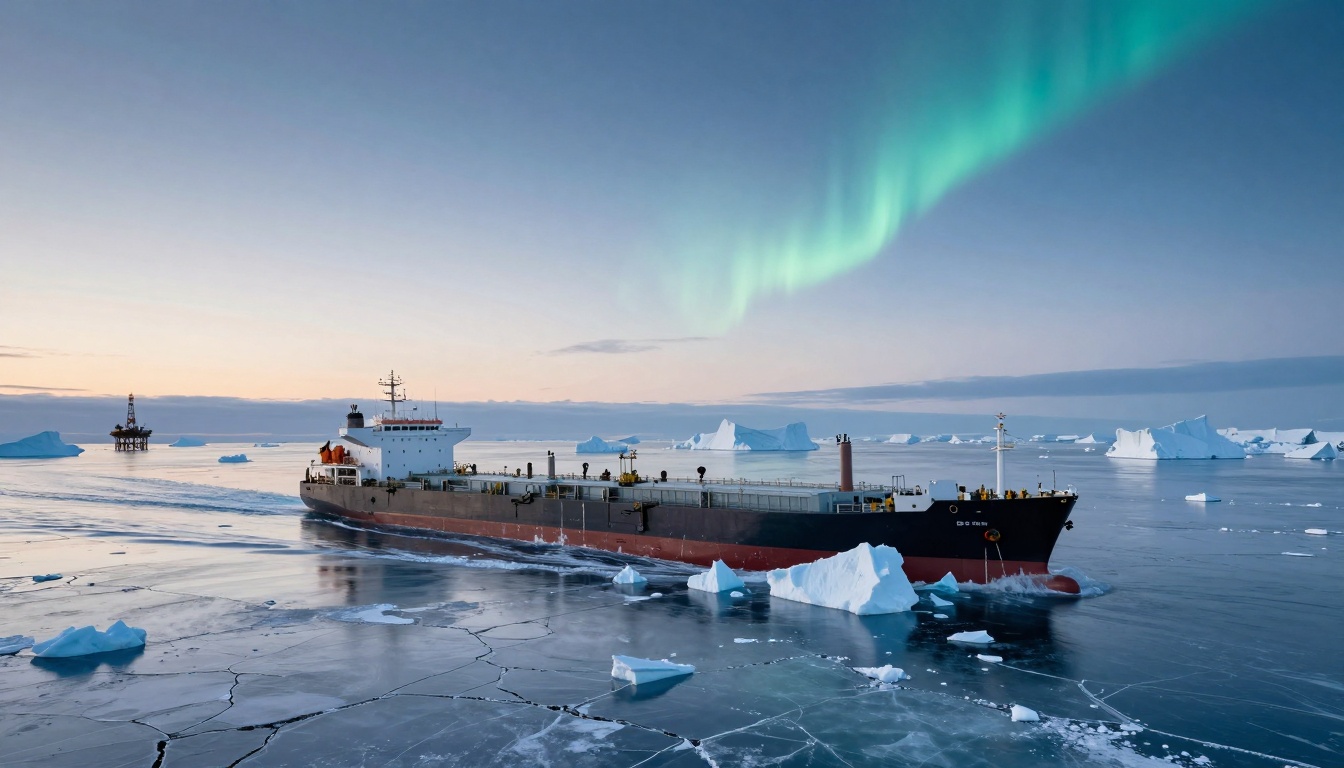
Ice cracks under the hull of a massive tanker. Waves lap at chunks of white that once blocked the way north. Ships now slice through waters that stayed frozen for centuries. Climate change melts Arctic sea ice at a rapid pace. This shift unlocks paths once thought impossible.
The Arctic opening brings big changes. Shorter trade routes cut travel time. Vast resources lie ready for harvest. Yet dangers lurk in the cold shadows. In 2025, the Northern Sea Route handled 103 transits and 3.2 million tons of cargo, mostly tankers bound for distant ports. That’s a record that shows real momentum.
This post breaks it down. New routes like the Northern Sea Route and Northwest Passage promise speed gains. Resources such as oil, gas and fish draw crowds. Security risks simmer as nations eye the prize. What does this mean for global trade and peace?
New Trade Routes Slash Distances but Face Ice Hurdles
Ships save weeks on these paths. The Northern Sea Route hugs Russia’s northern coast. It links Europe to Asia faster than the Suez Canal. Picture a tanker from Japan to Rotterdam. The old route takes 40 days. This one drops it to 30, burning less fuel along the way.
Yet ice fights back. Even in summer, floes block progress. Shallow spots snag deep drafts. No ports dot the remote shores. Russia leads with icebreakers, but costs stay high. Studies predict more open water by mid-century. Ice melt varies year to year, though. Tough conditions cut the 2025 season short.
First big runs tell the tale. In 2025, tankers carried crude oil eastbound. Containers hit records too, with 15 voyages. China joined the flow. Bulk carriers tested ore hauls. Savings tempt shippers. A trip via Suez faces pirates and chokepoints. Arctic paths dodge those traps.
Imagine the map. The Northern Sea Route arcs over Siberia, 5,600 miles long. The Northwest Passage weaves through Canadian islands, even shorter at 5,000 miles. Both beat southern rivals by 40 percent. Traffic grows, but hurdles remain. Icebreakers escort convoys. Satellites guide through fog.

Photo by Dmitriy Ryndin
Northern Sea Route Speeds Up Russian Trade
Russia controls this vital lane. Nuclear icebreakers like the Arktika clear paths. The best window runs from July to October. Peaks hit in September with thin ice.
Growth surged from trial runs to 2025 volumes. Transits reached 103, cargo at 3.2 million tons. Tankers dominated, hauling 1.8 million tons of oil. Containers added 400,000 tons, linking Russia and China. Fuel savings beat Suez by 30 percent.
Plans call for doubles, but ice slows the pace. See the Northern Sea Route 2025 season report for details on tough conditions.
Northwest Passage Challenges Canadian Waters
Canada claims these channels as internal waters. Traffic picked up since 2013. Yachts and fishing boats lead the pack. From 2020 to 2024, 117 transits occurred, mostly local craft.
Seasons stay short, two months at most. Ice clogs inlets. Storms whip up fast. Legal rows rage. The US calls it international straits. Voyages feel wild. Skippers hug rocky shores, eyes on radar for bergs.
Check this explainer on Northwest Passage shipping for legal stakes.
Rich Resources Draw Ships to Arctic Depths
Treasure hides under the waves. Oil fields hold billions of barrels. Gas reserves rival Qatar’s. Minerals like nickel and rare earths tempt miners. Fishing fleets eye new grounds.
Routes make it real. Tankers use the Northern Sea Route to ship energy south. The Northwest Passage aids Canadian mines. No major projects kicked off in 2026. Better access boosts resupply runs. Bulk cargo like ore fills holds.
Remote spots raise costs. Harsh weather sinks rigs. Spills threaten wildlife. Jobs bloom in ports like Murmansk. Prices for metals dip with steady supply. Think of crews hauling iron from Greenland mines, waves crashing over decks.
Economic ripples spread. Local towns see cash flow. Global markets get stable feeds. Environment watches close. Rules tighten on drilling.
Oil, Gas, and Minerals Beneath the Ice
Energy giants eye vast fields. The Arctic holds 13 percent of undiscovered oil. Gas adds 30 percent. Rare earths power green tech.
Routes cut resupply time. Icebreakers tow barges to rigs. No big extractions ramped in 2026. Access eases old loads. Read about Greenland rare earths and security.
Fishing Grounds Expand with Open Waters
Ice retreat opens cod runs. Shrimp swarm new bays. Fleets from Norway and Russia push north.
Traffic swells with trawlers. Northwest Passage sees more hooks. Stocks strain under pressure. Quotas rise, but fights brew over shares.
Security Tensions Heat Up in the Cold Arctic
Cold waters turn hot spots. Russia guards the Northern Sea Route with patrols. Canada asserts Northwest claims. China funds polar ships, eyes trade lanes. NATO boosts presence near borders.
Military vessels prowl. Spies track moves. No clashes hit headlines yet. Rising ships spark collision fears. Remote rescue lags hours away.
Who owns the roof of the world? Overlaps fuel talks. Bases sprout on islands. Submarines lurk under ice. Trade pulls one way, power plays another.
Balance hangs thin. Nations sign pacts, but trust frays. Watch for bolder sails.
Russia and China Stake Their Claims
Russia builds the world’s top icebreaker fleet. It sets NSR rules, fees and escorts. China calls it the Polar Silk Road. Beijing sends research ships, tests containers.
Ties grow tight. Joint drills test hulls. Sanctions crimp wider use.
NATO Steps In Amid Border Fights
Canada patrols its passage. Denmark eyes Greenland bases. US Navy sails close. NATO drills near the line.
Border rows simmer. Greenland’s resources draw bids. Troops train in snow.
The Arctic opening reshapes maps. Trade routes like the Northern Sea Route carry 3.2 million tons in 2025. Resources beckon with oil and fish. Security risks rise as Russia, China and NATO circle.
Traffic doubles by mid-century if ice keeps thinning. Rules must keep pace. Pacts on search and rescue top the list. Nations need clear lanes for all.
Trade booms offer shared wins. Peace demands steady hands. Will co-operation win, or will claims clash? Keep eyes north. The stakes chill the blood.