


Listen to this post: How AI is Transforming Warfare, Diplomacy and Espionage
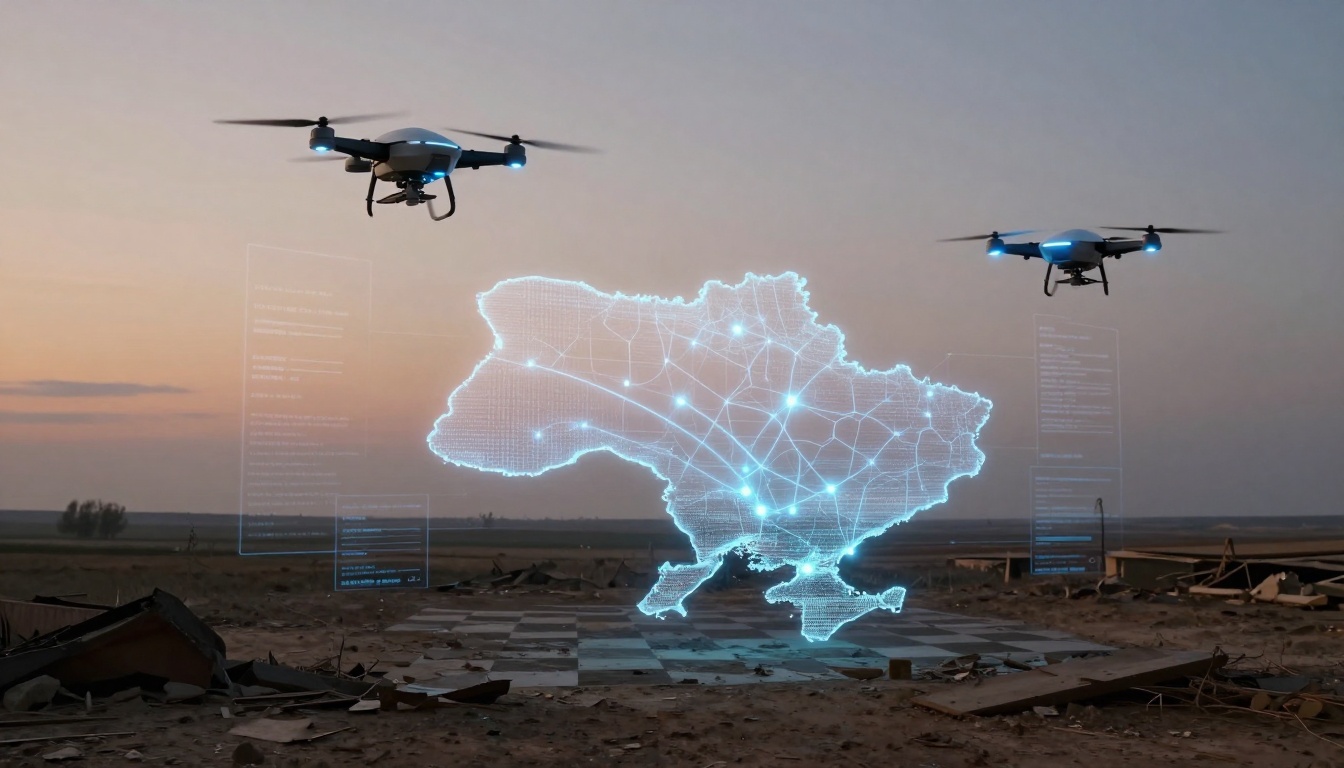
Picture this: in the foggy skies over Ukraine, AI-guided drones silently spot Russian bombers hundreds of miles away. They strike with precision in Operation Spiderweb, crippling 41 aircraft in one bold raid. It’s January 2026, and tools like these mark a sharp turn in conflict. AI now reshapes warfare, scans global chatter for diplomatic crises with MIT models hitting 80% accuracy, and fuels espionage through cyber shadows. The US-China AI race adds urgency; both pour billions into systems that predict and dominate. Nations grasp for edge in a world where machines decide fates faster than humans. This shift promises speed and smarts but carries risks of errors and unchecked power. Readers, stay sharp as we unpack these changes.
AI Makes Battles Faster and Deadlier on the Battlefield
AI turns modern battlefields into realms of rapid strikes and smart machines. In Ukraine, drones with AI software like DWS-1 form a “drone wall” that lets few operators control swarms. They down Russian Shaheds at rates of 1,500 intercepts daily. US projects such as Swarm Forge unleash drone clouds that adapt mid-fight, dodging jams via modular updates. China’s “intelligentized army” blends cyber ops with autonomous units for seamless attacks. These tools spot patterns in chaos, like heat signatures or troop movements, humans often miss. Quicker decisions save lives yet raise fears of glitches sparking unintended escalations. Swarms evolve in real time, painting skies with hunter packs that shift tactics on the fly.
Drones and Swarms That Hunt Without Humans
Ukraine’s AI boosts targeting, turning cheap FPVs into killers. They produce 1,500 daily, weaving through jams with fibre optics. The UK pledges 100,000 drones to allies, aiding such efforts. These machines learn from each sortie, refining aim without pilots in harm’s way. Russia’s Molniya drones use Starlink for unjammable strikes, coordinating via AI. Picture a flock of metal birds, eyes locked on prey, striking supply lines before troops react.
Simulations That Train Troops for Real Threats
US Space Force taps TALOS AI from Slingshot deals, mimicking enemy moves better than old scripts. Ender’s Foundry crafts virtual foes that evolve like real ones. Troops face hyper-real drills, from cyber hacks to swarm assaults. This hones reflexes for 2026 threats, cutting real-world losses. Soldiers step into digital fires, emerging battle-ready.
AI Gives Diplomats a Crystal Ball for World Events
Diplomats now wield AI to forecast storms before they brew. Models crunch news, social media, and satellite feeds, predicting clashes with sharp accuracy. MIT’s tools flag tensions early, while Oxford studies parse UN speeches for hidden motives. US teams monitor threats, prepping talks with data dives. Deep learning spots alliance cracks; agent-based simulations test outcomes. Nations prevent blow-ups, forging bonds from foresight. Imagine envoys reading rival minds via algorithms, steps ahead of headlines. UK’s take on digital diplomacy shows how tech sharpens statecraft.
Spotting Trouble Before It Starts
Predictive AI sifts history and live data for warnings. Social posts signal unrest; satellite shifts reveal troop builds. Tools like those from MIT catch 80% of risks, giving days to act. Ukraine’s deep strikes highlight needs for such vigilance.
Smarter Talks and Stronger Partnerships
Machine learning aids trade pacts, mapping shared gains. Scenario planners game out deals, finding win-wins. Diplomats build ties faster, spotting interests buried in noise. Past summits gained from these previews.
AI Turns Spies into Shadow Data Hunters
Espionage thrives on AI’s quiet hunt through data oceans. China’s hackers wield Claude-like models for breaches; Russia’s cyber units poison enemy nets. CIA builds digital spies crafting psych profiles from habits. North Korea’s drones scout borders unseen. Predictive intel flags moles; yet foes feed junk data to blind models. Defenders counter with phishing traps via AI. Hackers lurk in code streams, twisting truths into weapons. The UK’s National Security Strategy 2025 outlines defences against such shadows. MI6 Chief’s speech on uncertainty warns of blurred front lines.
Cyber Tricks That Fool Defences
State actors launch AI-phishing swarms and malware that morphs. Attacks hit drone firms, slipping past guards. Russia’s Starlink drones probe skies; Ukraine’s walls adapt. G7 notes on AI cybersecurity stress shared shields.
Profiling Targets and Predicting Moves
Surveillance AI maps minds from online trails, aiding recruits. Habit data forecasts betrayals. Spies predict plots, but poisoned inputs sow doubt.
AI speeds wars with drone packs, sharpens diplomacy through foresight, and cloaks spies in data veils. Ukraine’s raids and US-China pushes show the pace. Yet autonomous slips, ethical gaps, and arms races loom large. Humans must steer these tools; blind trust invites disaster. Watch the rivalry unfold, ponder AI’s grip on your news feeds. What role will it play next? Stay informed on platforms like CurratedBrief for fresh takes. (Word count: 998)