
Listen to this post: The AI Arms Race: Can Governance Keep Up with Innovation?
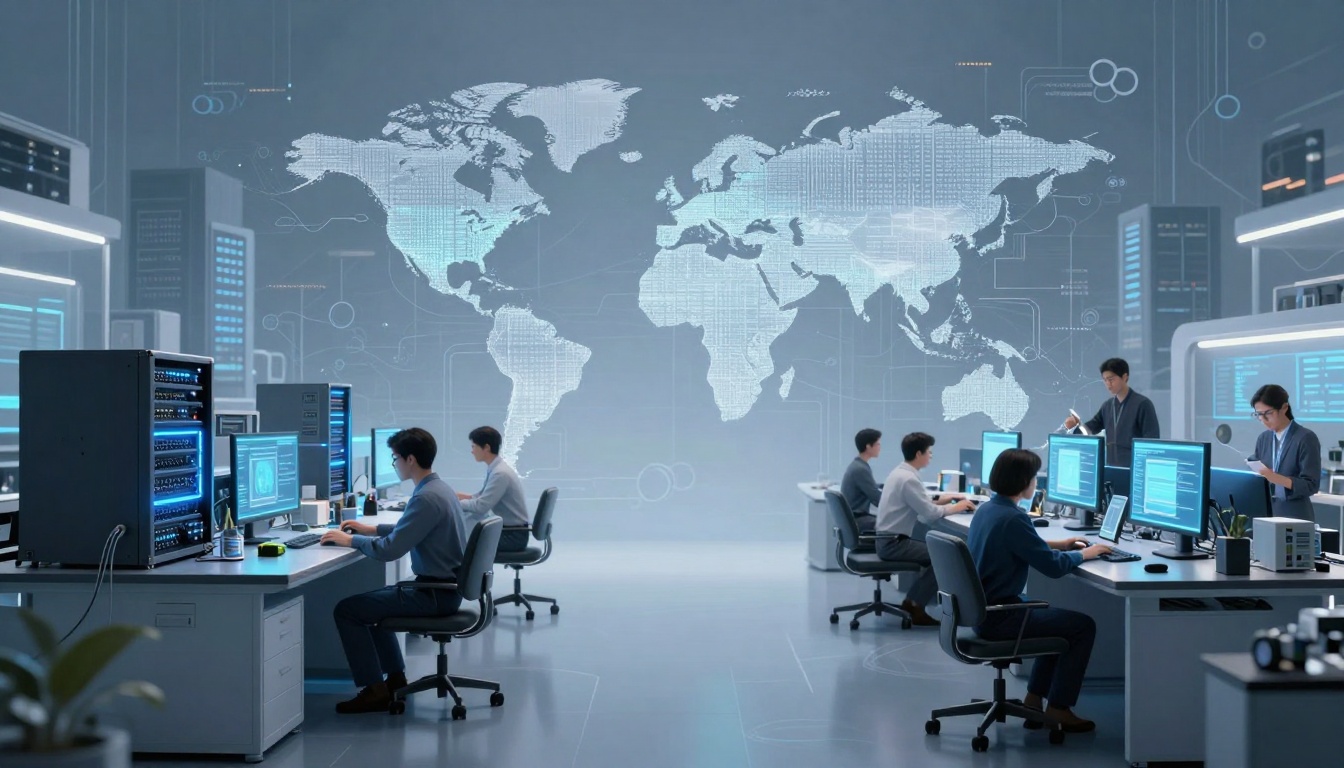
Picture busy labs in California and Beijing. Teams work non-stop. They build machines that think faster than humans. In the US, OpenAI and Google DeepMind push new models. In China, firms like DeepSeek cut costs to catch up. Billions flow in. Nvidia chips power it all, despite export fights. By January 2026, the US holds the edge in top chips. China battles shortages but shares smart papers on cheap training. Global projects top $500 billion, like vast data centres that gulp power.
Governments try to set rules. But innovation races ahead. The EU AI Act rolls out with bans on risky uses. US states add laws on bias and labels. Yet cracks show. Can slow lawmakers match this speed? This piece looks at the main players, fresh rules, big gaps, and ways forward. What happens if controls fall behind?
Who Leads the Charge in Today’s AI Race?
Nations bet big on AI. Think of it as a marathon with cash prizes. The US pulls ahead with cash and chips. China fights back with smarts and scale. Other countries grab shares too. In January 2026, investments hit records. US private funds top $50 billion for firms like OpenAI. China puts 23% of its $912 billion strategy pot into AI. Power plants strain under data centre loads.
Taiwan’s TSMC builds most chips. Cyber tools shift fast. AI spots hacks or launches them. Daily life changes. Businesses get quicker tools. Doctors spot illnesses sooner.
US Powerhouses and Massive Bets
US firms dominate top models. OpenAI and Google DeepMind release hits. Nvidia rides the wave. Its value nears $5 trillion on chip hunger. No tight rules slow growth. Orders flood in.
The Stargate plan eyes huge data centres. It needs power plants to match. Microsoft and OpenAI lead. They build for next waves. This keeps America first. (98 words)
China’s Push and Clever Workarounds
China trails in top chips but adapts. DeepSeek’s early 2026 paper shows how. They train big models cheap with weaker gear. Open-source helps. Xi calls it a battleground.
US eased H200 exports in January. Chinese buyers snap them up. Yet home chips grow. Tariffs bite back. Experts see the gap shrink. China holds 70% of AI patents. Steady state cash avoids debt traps. (102 words)
Global Ripples from Chips to Cyber
Middle powers build their own AI. Saudi Arabia takes US stacks. Others eye sovereign setups. TSMC sells worldwide. Sales boom despite curbs.
Cyber wars heat up. AI guards networks or picks locks. Threats rise with speed. Supply chains stretch thin. Latin America joins via rare earths. China eyes long-term wins on power grids. A $574 billion upgrade by 2030 adds wind and solar. The race pulls everyone in. Businesses feel it in tools that predict sales or fix code overnight. (148 words)
What Rules Are Governments Setting Now?
No world treaty binds all. Efforts patchwork together. The EU leads with clear tiers. Bans hit bad uses like mass spying. High-risk AI faces checks. US states rush in. Feds push back. China stays quiet on details. Rules target risks. They let safe AI run free. Bans cover deepfakes in polls. Checks hit hiring bots or health scans.
August 2026 brings more EU duties. Firms test and watch outputs. Which law grabs you? States clash but aim to curb bias.
EU’s Risk-Based Blueprint
The EU AI Act sorts by danger. Low-risk flies free. High-risk needs data tests, human watch, and logs. Bans zap social scoring or real-time faces in public.
General AI must share training data summaries. From August 2026, fines hit 6% of sales for breaks. Rollout phases in. Firms adapt now. It sets a model others eye. For full timelines, check AI Regulations around the World – 2026. Transparency builds trust. (152 words)
US State Surge and Federal Pushback
US lacks one big law. States fill gaps. Colorado’s Act delays to June 2026. It fights bias in high-stakes AI. Firms assess risks yearly.
California kicks off 2026 with labels on AI outputs. Bans fake health claims from January. Texas sets governance for state use. More follow on deepfakes.
Feds step in. A December 2025 order blocks state blocks on national policy. It clears paths for US leads. See the White House executive order. States push safety. Feds guard speed. (148 words)
Why Do Rules Lag Behind AI’s Sprint?
AI sprints. Rules crawl. Patchwork confuses firms. Startups buckle under costs. Eyes must watch live runs, not just plans. Geopolitics splits camps. US and EU differ from China.
January 2026 eases chip flows but tariffs linger. Cyber scams climb with smart tools. Innovators dash past debates. Lawmakers haggle over words. Speed clashes with safety. How do we bridge it?
Tensions build. US fears debt bubbles in data centres. China banks on grids.
Patchwork Problems and Enforcement Headaches
US states overlap. Colorado bias rules jar with California labels. Firms chase 50 versions. Compliance eats cash.
Enforcement eyes code at launch. Live AI shifts fast. Updates dodge old checks. Runtimes need real-time guards. Experts call for fed floors. States add flair. Chaos slows all. See expert predictions on AI policy in 2026. (152 words)
Balancing Safety, Growth, and Global Fights
Risk rules burden small teams. Big firms cope. Growth stalls if costs soar.
Geopolitics blocks pacts. US export curbs split markets. China builds alone. EU tiers inspire but bind trade.
2026 hints at talks. Chip easings show flex. Cyber needs shared eyes. Balance lets breakthroughs flow safe. Nations must talk fast. Power races favour builders. Rules guide or choke. For geopolitics views, read Eight ways AI will shape geopolitics in 2026. Unity cuts risks. (198 words)
Leaders race on. US and China top bets with chips and smarts. Rules budge. EU tiers risks. US states and feds clash for control. Gaps yawn wide from patches and politics.
Governance must speed up. Global talks or fed standards help. They tame dangers without kills. Picture rules that steer AI to good, like traffic lights on a busy road.
Stay sharp on CurratedBrief for fresh takes. What step should leaders take next? Your thoughts shape the path. (148 words)
(Word count: 1498)