
Listen to this post: Sahel Crises: How Coups, Jihadists and Climate Combine into a Perfect Storm
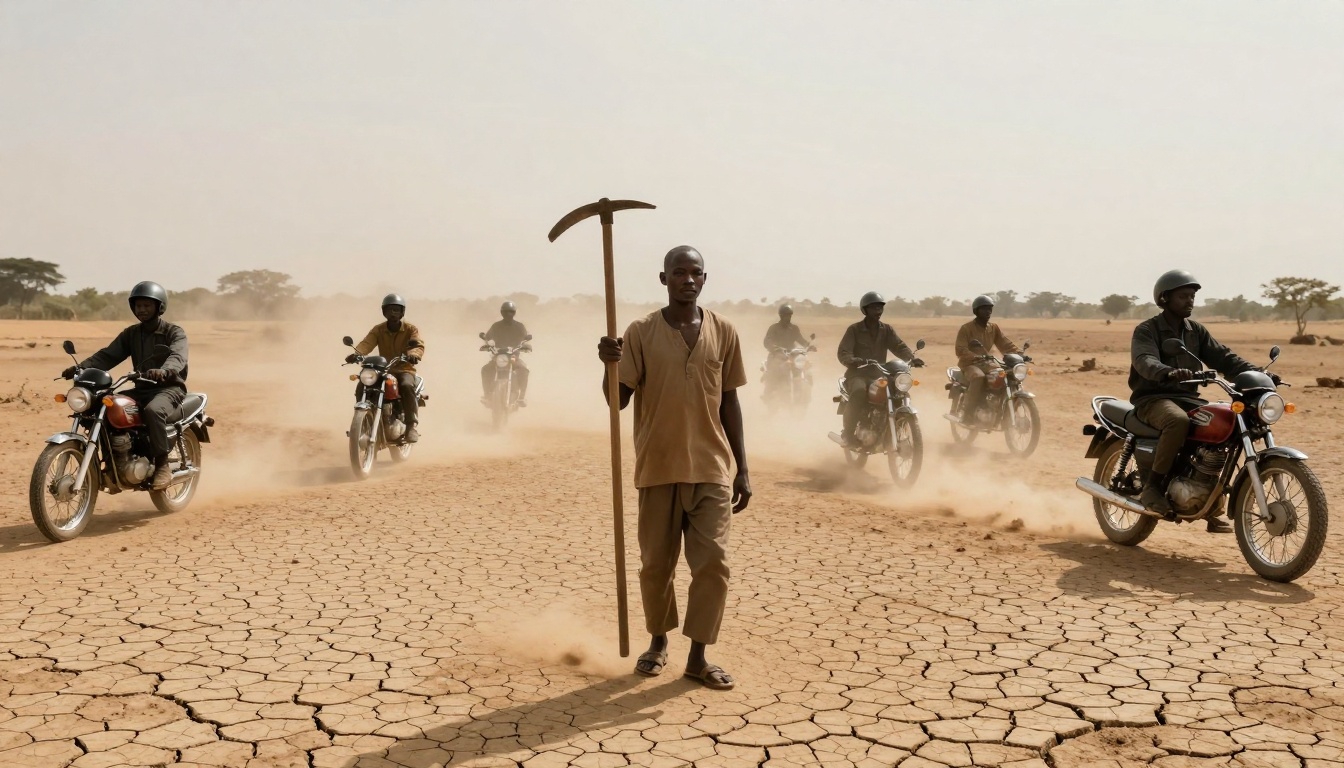
Picture a farmer in Burkina Faso. Armed men surround him on motorbikes. The earth cracks under his feet, dry as bone. He clutches his hoe, eyes on the dust. This is life in the Sahel, a belt of land south of the Sahara Desert that stretches across Africa. It holds 80 million people in countries like Mali, Burkina Faso, Niger, and Chad.
Coups topple governments one after another. Jihadist groups spread fear in remote villages. Climate change brings endless droughts that kill crops and spark fights over water. These forces feed on each other. They trap people in a cycle of hunger and violence. It’s early 2026, and the storm grows stronger. juntas promise safety but deliver chaos. Extremists grab empty spaces. Dry land pushes desperate men to join them. This article breaks down each threat and shows how they clash.
Why Coups Have Gripped Sahel Nations
Soldiers in pick-up trucks rumble into capitals. Crowds cheer at first. They promise to fix things. But weak rule follows. Since 2020, armies have seized power across the Sahel. Leaders kick out French and US troops. They turn to Russia for help. juntas form the Alliance of Sahel States, or AES, in 2023. By late 2025, they launch a joint force to fight back.
Mali saw two coups in 2020 and 2021. Burkina Faso had back-to-back ones in 2022. Niger fell in 2023. Chad joined the trend in 2021. These takeovers end old ties. They spark more unrest. Governments lose grip on rural areas. Soldiers focus on cities, leaving borders open.
In early January 2026, Burkina Faso stopped a big plot. Security forces caught plotters on 3-4 January. They aimed to kill President Ibrahim Traoré, hit a drone base, and let invaders in. Captain Prosper Couldiaty confessed. Links pointed to exiled leader Paul-Henri Sandaogo Damiba and Côte d’Ivoire. Rallies backed Traoré in Ouagadougou. On 7 January, Prime Minister Robert Beugré Mambé quit with his team. They stay until replacements arrive. Such threats show juntas face fights from inside too.
Weak control breeds disorder. AES unites Mali, Burkina Faso, and Niger after they quit ECOWAS. Sanctions bite. Supplies run short. Armies train with Russian gear but struggle. People hope for order. Instead, power grabs weaken the fight against bigger foes.
For details on military takeovers and insecurity, check this OECD report on coups and jihadism in the central Sahel.
Key Takeovers and New Leaders
Mali kicked off the wave. In August 2020, Colonel Assimi Goïta led the first coup. He struck again in May 2021 after a shaky handover. Goïta rules with a firm hand.
Burkina Faso followed fast. January 2022 saw Paul-Henri Sandaogo Damiba take charge. He lasted eight months. Captain Ibrahim Traoré ousted him in September 2022. Traoré pushes anti-West changes.
Niger’s turn came in July 2023. General Abdourahamane Tchiani grabbed power after arresting President Mohamed Bazoum. Chad’s army named Mahamat Idriss Déby president in April 2021 after his father died in battle.
Each leader vows security. Yet violence rises. Armies split. Rural zones slip away. The pattern repeats: cheers fade to fear.
Jihadists Thrive in the Disorder
Night falls on a Sahel village. Motorbike engines growl. Fighters in black turbans raid homes. They kill, loot, and vanish. Groups like JNIM and ISGS fill gaps left by coups. They control up to half of Burkina Faso’s countryside. Armies chase coups more than these foes.
Jihadists hit hard in 2025. JNIM, tied to al-Qaeda, killed over 300 in Burkina Faso. They blockaded Mali’s Djibo and took towns like Diapaga. ISGS, linked to Islamic State, targets soldiers. No big attacks mark January 2026 yet. But the threat lingers. AES plans major operations from December 2025.
Coups distract troops. Western forces leave voids. Jihadists recruit hungry youth. A herder loses his flock to drought. He grabs a gun for pay. Fear grips markets. Women hide children at dusk. Track the spread of violent extremism in the Sahel here.
Villagers whisper of ghosts on bikes. Governments blame each other. AES vows joint strikes. But borders bleed violence.
JNIM and ISGS: Who They Are and Where They Strike
JNIM stems from al-Qaeda in the Islamic Maghreb. It formed in 2017. Leaders like Iyad Ag Ghali eye big cities. They strike Mali’s centre, Burkina Faso’s north, and Niger’s borders.
ISGS grew from Islamic State in the Greater Sahara. It kills troops and locals. Strong in Mali’s north and tri-border zones with Burkina Faso and Niger. IS Sahel Province, or ISSP, overlaps in Burkina Faso.
These groups hold rural swaths. JNIM dreams of capitals. ISGS bleeds armies dry. Motorbikes let them hit and run.
Deadly Attacks That Shook the Region
May 2025 saw JNIM massacres in Burkina Faso. Over 300 died in Barsalogho and nearby spots.
In Mali, JNIM sieged Djibo. They blew up 40 fuel tankers. Fighters took Farabougou. Border clashes killed soldiers near Niger and Mauritania.
Niger lost bases to ISGS raids. Tuareg rebels joined fights in Mali’s north. Civilians bore the brunt. Thousands fled. 2025 toll topped prior years.
Climate Change Turns Land into Battleground
Fields lie barren. Herds shrink. Rivers turn to mud. Droughts shrink farms in the Sahel. Desert creeps south. Families fight over wells. Millions go hungry. They trek to cities or join fighters for food.
Juntas battle on empty stomachs. Troops lack fuel. Locals blame leaders for dry taps. Climate woes date back years. Patterns hold into 2026. A Timbuktu report notes weather strains mix with politics.
Herders clash with farmers. Guns replace talks. Desperate men sign up with jihadists. They promise protection, deliver chains. Explore how climate fuels extremism in the Sahel.
Weak states offer no aid. Rains fail. Crops rot unseen.
Droughts, Hunger, and Forced Moves
Droughts hit hard. Lake Chad shrank 90% since 1960. Sahel temps rise fast. Floods follow dry spells in spots.
Hunger drives wars. In 2025, 4 million faced famine in Burkina Faso alone. People migrate. Camps swell near cities.
Recruiters prey on the young. A boy with no goats takes jihadist cash. States cut farm aid amid coups. Resource fights spark nightly raids.
When Coups, Terror, and Dry Earth Collide
Coups pull armies from fronts. Jihadists rush in after West leaves. Climate swells their ranks with starving recruits. AES binds juntas but strains under sanctions. Shortages hobble plans.
The cycle nears towns. Ouagadougou rallies hide rural screams. Djibo starves under siege. Dry fields breed more guns. Violence loops: coups breed jihad, thirst feeds both.
What snaps it? AES ops test unity. Russia aids flow slow. Locals tire of blood. Cities watch borders close in. The storm brews perfect chaos.
Caught in the Storm
The Sahel faces a trap. Coups topple order. Jihadists sow terror. Droughts grind hope. People endure amid the mess.
Watch AES strikes ahead. Aid must reach farms. Local grit shines through plots and raids. Global eyes matter on this belt.
Dawn breaks over a dusty horizon. A farmer plants seeds anyway. Stay informed. This fragile zone tests us all. What step comes next for 80 million souls?