
Listen to this post: Why Young People Everywhere Are Protesting (and What They Want)
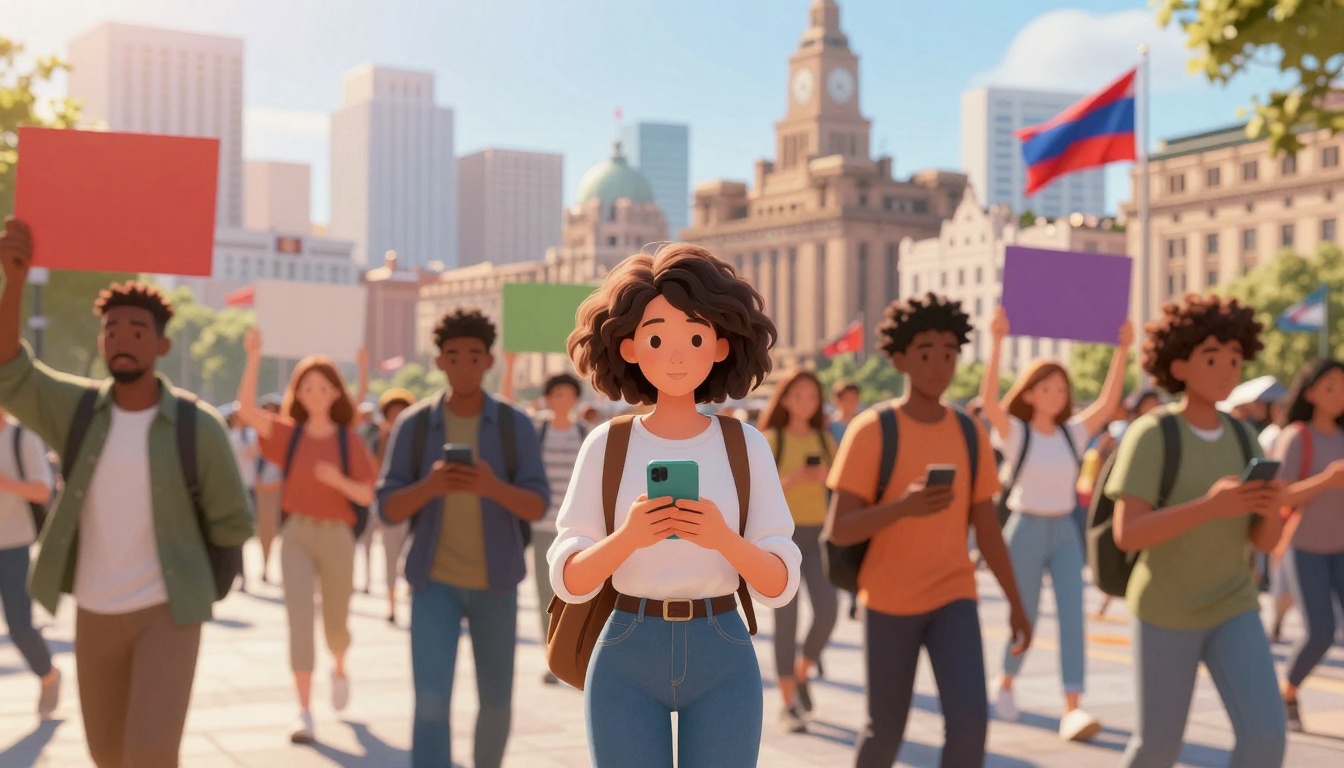
At first it looks like a handful of students outside a government building, cardboard signs, hoarse chants, a few phones held high. Then more people arrive. A friend texts a friend. A video jumps from one timeline to another. Within hours, the crowd spills into side streets, then main roads, until the whole city is moving like a single body.
Scenes like that have played out across continents, in different languages, with different flags, and different local spark points. Yet the feeling is familiar: young people protesting because the basics of life feel harder than they should, and because the people in charge don’t seem to face consequences.
This isn’t only about one law, one election, or one scandal. It’s about corruption, high costs, job worries, and politics that feel closed off. And it’s about what comes after anger: what young protesters are asking for, in plain terms, and why it’s so hard to get.
Why protests are spreading so fast across borders

Photo by cottonbro studio
A protest in one country used to feel far away. Now it can land in your pocket before breakfast. A clip of police pushing a crowd, a leaked document, a minister laughing off a question, it travels fast, and it carries a message: “This could be us.”
What connects today’s youth-led protests is less a single ideology and more a shared set of pressures. Many young people are trying to build adult lives in a period shaped by price shocks, unstable work, weaker public services, and politics that often rewards loyalty over competence. Add social media, and a local fight becomes a global story within minutes.
Recent reporting has tracked how these movements rise quickly, often led by Gen Z and young millennials who are tired of waiting for gradual change. For broader context on this wave, see CFR’s analysis of global Gen Z protests. The details vary by country, but the emotional logic is similar: if the system feels rigged, then staying quiet feels like surrender.
The speed comes from cause and effect. A government ignores a complaint, people film it, the clip spreads, anger sharpens, more people turn up next time. Then another country sees it and recognises the pattern: high costs, bad jobs, officials who act untouchable. Protests aren’t “copy and paste”, but the confidence is contagious. Once you’ve seen a crowd force the powerful to listen somewhere else, it becomes easier to imagine it at home.
The daily squeeze, expensive rent, weak wages, and few good jobs
For many young people, life feels like walking up an escalator that’s moving down. You can study, work two jobs, keep your spending tight, and still not get ahead.
Housing is often the sharpest edge. A room in a shared flat can swallow half a pay packet. Deposits drift further out of reach. Even in places with growing economies, wages don’t always keep pace with rent, food, and transport. That gap creates a specific kind of stress: not “I want more”, but “I can’t start”.
Work adds another weight. Short-term contracts, gig shifts, unpaid internships, and “entry-level” roles that demand years of experience can make the future feel like a closed door. Youth unemployment is high in many countries, but even where jobs exist, they can be low paid and unreliable. People fear being stuck, even with qualifications.
Then there’s technology anxiety. New tools and AI promise higher output with fewer staff. In plain terms, that sounds like fewer stable roles, more competition, and employers pushing harder. It’s not the only reason young people protest, but it deepens the sense that the future is being negotiated without them.
A trust crash, corruption, unfair perks, and leaders who feel untouchable
If the daily squeeze is the fuel, the trust crash is the spark. Many protests begin with a moment that shows contempt, a vote rushed through, a scandal brushed off, an obvious lie repeated on camera.
Corruption isn’t always a suitcase of cash. It can be a cousin getting the job, a contract handed to a friend, a public service starved while officials receive perks. It’s also the slow drip of broken basics: power cuts that ruin food in the fridge, buses that don’t come, hospitals that run out of supplies, schools that can’t pay staff on time. When public money goes missing, ordinary life becomes harder.
Young people don’t only want someone to blame. They want proof that rules apply to everyone, including ministers, police chiefs, and business allies of the state. That’s why accountability shows up again and again as a demand, in places as different as South Asia, Africa, and parts of Europe. For a quick reference on how this pattern has been documented, Britannica’s overview of Generation Z protests gives useful background.
What young protesters are really asking for (beyond a viral slogan)
A chant is short because it has to be. Real demands are longer, messier, and easier to argue over. Still, across many movements, the asks tend to cluster around two things: fair rules and a liveable future.
It helps to think of protests as a public job interview for the state. Young people are saying, “Show us you can do the basics.” That includes paying attention to inflation and wages, but it also includes the plumbing of public life: honest budgets, functioning services, and elections that feel meaningful.
In Bangladesh, protests that began around public sector job quotas grew into a wider push for political change, with elections promised for 2026 (as widely reported). Elsewhere, protests have flared over taxes, censorship, and everyday services like water and electricity. A strong example of this human, ground-level anger is described in The Guardian’s interviews with activists from Gen Z protest movements, where people talk less about ideology and more about dignity and fairness.
Under the noise, the message is often practical: stop stealing, stop lying, stop wasting years of our lives. Give us a fair shot.
Fair rules and clean government, audits, resignations, and real consequences
One of the loudest demands is also the simplest: end impunity. Young protesters often talk about corruption the way you’d talk about mould in a flat. You can paint over it, but it comes back unless you fix the source.
That’s why movements ask for actions that can be measured, not only promises. The language differs by country, but common calls include transparent budgets people can actually read, public audits of big projects, independent investigators with power to prosecute, and limits on perks for officials. In some cases, protesters want resignations, not as theatre, but as a signal that failure has a cost.
The core fear is “nothing changes”. A minister apologises, a committee is formed, a few months pass, and the same people return to the same routines. Visible consequences matter because they reset expectations. If a public official can lose their job for wrongdoing, the next official may think twice. If elections are fair, parties can’t take voters for granted.
Young people also push back against systems that feel designed to lock them out, such as unfair hiring, nepotism, or laws used to weaken opponents. They may not agree on the ideal political model, but many agree on basic rules: one law for all, honest counts, and open information.
A livable future, affordable housing, better services, and a path to stable work
If clean government is the “how”, a liveable future is the “why”. People don’t risk arrest just to make a point. They do it because the day-to-day is unbearable, or because the future feels stolen in slow motion.
This part of the agenda is grounded in ordinary needs. Young protesters often ask for cheaper basics (food, fuel, transport), housing supply that matches real demand, and renter protections so people aren’t one landlord decision away from chaos. They talk about “a room you can afford”, not abstract market theory.
Public services matter too, because they shape whether life is workable. Safe streets, reliable electricity and water, buses that turn up, clinics with medicines, schools that don’t collapse into strikes, these are not luxuries. They are the scaffolding of a stable life.
Work is the final pillar. Many movements want job programmes that lead to real pay, not “training” that ends with a certificate and no prospects. That can mean apprenticeships tied to employers, fair recruitment, and prompt payment. It can also mean cracking down on wage theft and dangerous conditions, issues that hit young workers hard.
If you want a sense of how protesters describe these motivations in their own voices, The Christian Science Monitor’s reporting on why Gen Zers are taking on governments captures the mix of frustration and determination without reducing it to a trend.
How these movements organise, and why they can be powerful and fragile
Modern protests can swell quickly because organising has changed. You no longer need a union hall, a printing press, or a party office. You need a group chat, a shared map point, and enough trust to show up.
That speed is powerful, but it has trade-offs. Leaderless movements are harder to crush by removing one figurehead, yet they can struggle to negotiate, set priorities, or defend themselves against false stories. Many young organisers are learning in real time how to stay open enough to grow, but structured enough to last.
There’s also a safety layer that doesn’t always make headlines. People share tips on what to wear, how to move in crowds, and how to record events. They also warn each other about misinformation, fake accounts, and edited clips designed to inflame tensions. This isn’t paranoia, it’s basic self-defence in a media environment where attention is a weapon.
From group chats to the street, fast organising with loose leaders
A lot of organising now happens in the same places young people already live socially: TikTok, Instagram, Discord servers, WhatsApp groups, student societies, and workplace chats. One person posts a time and place. Others copy it, translate it, add local details, and spread it again.
These networks also create shared protest “templates”. You’ll see the same kinds of posters, the same chant rhythms, the same hand signals for safety. Symbols travel because they’re easy to repeat, and because they help strangers recognise each other as allies.
Loose leadership has a clear upside. If authorities try to intimidate organisers, there isn’t always one person to target. The downside arrives when protest energy needs a next step. Without agreed spokespeople, it’s hard to sit across a table and say, “Here are our terms.” That can lead to confusion, splits, or moments when outsiders claim to speak for the movement.
Crackdowns, smear campaigns, and the risk of burnout
Governments rarely watch a growing protest and do nothing. Common responses include police force, arrests, legal threats, pressure on universities or employers, and attempts to limit the internet or key platforms. There are also softer tactics: smear campaigns that label protesters as foreign-backed, criminal, or “spoilt”, even when their demands are basic.
The human cost is heavy. People lose sleep, miss work, get scared, and carry stress home. Some stop going out after seeing friends detained. Others keep showing up until they burn out, then disappear from the movement without anyone noticing.
What helps protests last tends to be unglamorous. Clear goals that can be explained in one breath. Mutual care, such as checking in on people and sharing practical help. Credible voices who can speak to media when needed, without turning the movement into a personality cult. And a plan for small wins, because victories keep people going.
The strongest movements often balance urgency with patience. They accept that change is slow, while refusing to accept that nothing can change.
When the streets go quiet, the real test begins
Young people are protesting because the basics feel broken, and because closed-door politics doesn’t feel like politics at all. Behind the chants are simple expectations: work should pay, housing should be possible, services should function, and leaders should answer for failure.
Meaningful progress has a few clear signs. Transparent reforms that can be checked, not only announced. Practical steps on jobs and housing that show up in monthly budgets and local projects. Strong action that reduces corruption, including prosecutions when evidence is clear. A safer civic space where protest doesn’t lead to disappearances, smear trials, or blanket censorship.
The hard truth is that protests can win attention faster than they can win policy. Still, the wave of youth-led protests has already changed what many governments can get away with, and what young citizens will tolerate. The next chapter won’t look the same everywhere, but the question will: when the crowd goes home, will the system finally move?