
Listen to this post: How Trump’s second term is reshaping the global order in 2026
In January 2026, the signs are hard to miss. Talk of fresh tariffs is back in boardrooms, border policy headlines are sharper, and allies sound less like family and more like customers negotiating a contract. At home, the pitch is familiar: protect US jobs, tighten the border, pump more energy, and make other countries “pay their share”. Abroad, governments are reacting in real time, adjusting plans that used to rely on steady American habits.
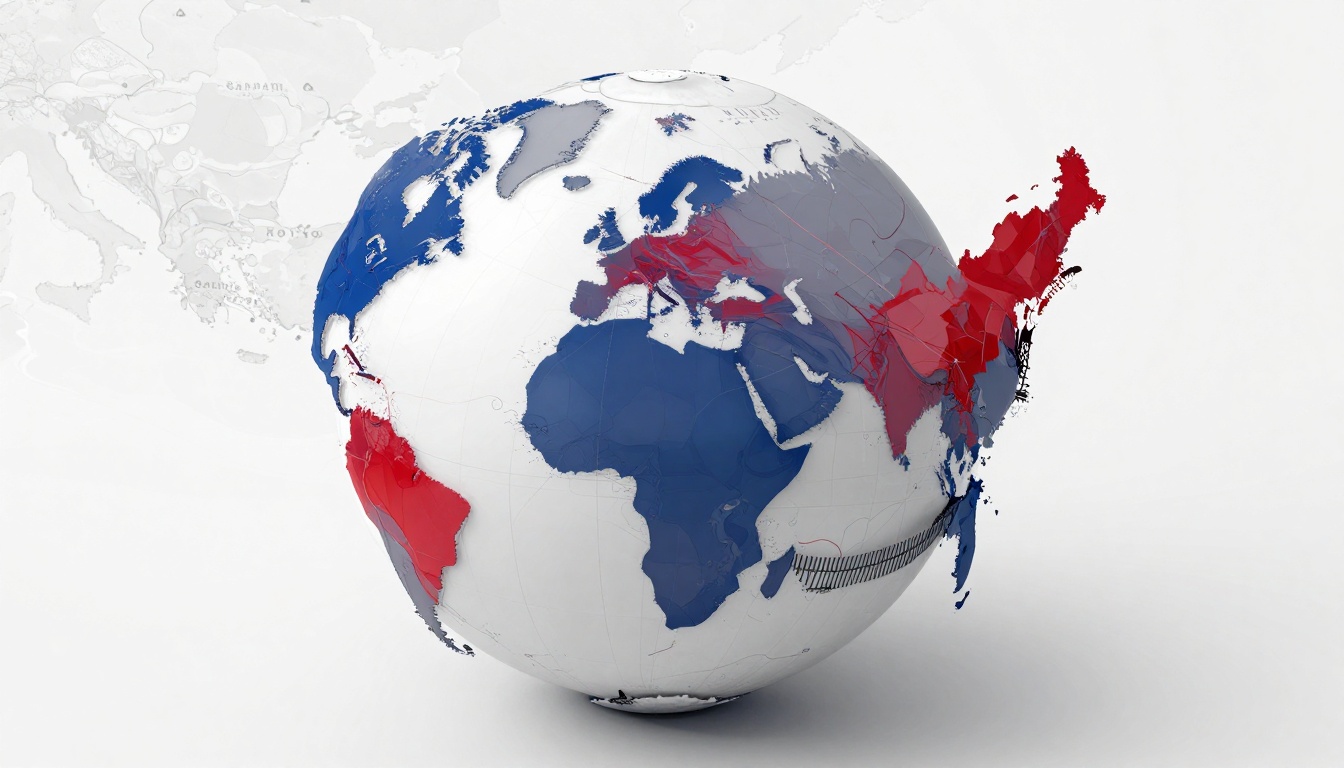
That’s what people mean by the global order. It’s the set of rules, deals, and unwritten routines that shape trade, security, and diplomacy. It decides whether goods flow smoothly, whether alliances feel dependable, and which countries get to set standards for new technology.
This piece explains what’s changed so far in Trump’s second term, why other countries are responding the way they are, and what to watch next as 2026 unfolds.
Trade is turning into a pressure tool, and it is changing who trusts who
Trade policy used to be sold as a long game: stable rules, predictable access to markets, slow negotiations. In 2026, it’s often treated more like a pressure valve. Raise it, watch who flinches, then bargain.
A tariff is a tax on imports. If the US adds a 20% tariff on a product, that product usually becomes more expensive in the US, unless the exporter cuts its price or a middle firm absorbs the hit. A retaliatory tariff is the response: the other country taxes US exports in return. The obvious damage is higher prices and disrupted sales. The quieter damage is uncertainty, because companies start planning for the next surprise.
That uncertainty matters because modern trade runs through a supply chain, the linked steps that move a product from raw material to factory to shipping to shop shelf. When the rules wobble, each link starts adding padding: more inventory, more alternative suppliers, more “just in case” spending.
Reporting this month has framed tariffs as central to the administration’s approach, while also noting political limits when prices rise quickly for consumers, especially on everyday goods (see the BBC’s reporting on tariff disruption in 2026). That tension, between using tariffs as a weapon and avoiding a cost-of-living backlash, is shaping the pattern of 2026 trade moves.
Tariffs, retaliation, and the return of deal-making by threat
The basic loop is simple. Washington signals higher import barriers, markets react, partners threaten retaliation, then talks begin with a clock ticking. The leverage comes from fear as much as from the tariff itself.
The first pain often lands on:
- Importers, who must decide whether to pay the tariff, change suppliers, or pass costs on.
- Exporters, who can lose US sales overnight if the new price is too high.
- Consumers, who see a slow creep in prices, or sudden jumps when stock runs low.
Some domestic producers may gain in the short term if competing imports become pricier. But even those winners face a risk: if a tariff disappears after a deal, the new investments may look less smart.
In early 2026 coverage, analysts have also described a practical brake on tariff escalation: when inflation and household bills become the headline, tariff plans can soften or shift to narrower targets. The wider effect is still real, because the threat alone changes behaviour. A factory site decision that would’ve taken five years can move in five months, if a firm starts believing market access will depend on political mood.
For a broader snapshot of how Trump’s foreign policy posture is being interpreted by other capitals, TIME’s Davos coverage is useful context (see foreign policy gambits reshaping the world).
How companies and countries are re-routing trade in 2026
When firms don’t trust stable rules, they build new routes. Two terms are everywhere in 2026:
Near-shoring means moving production closer to the customer market, often to reduce shipping risk and speed up delivery.
Friend-shoring means moving production to countries seen as safer partners, places less likely to be hit by sudden restrictions.
The logic is easy to picture. If your business depends on one faraway supplier, a tariff threat is like a storm warning. You might still sail, but you’ll also look for a second boat.
Second-order effects follow:
- Smaller countries get more attention because they can become “neutral” manufacturing sites.
- Regional trade blocs matter more, because firms prefer clusters where rules are more consistent.
- Global trade starts to look less like one web and more like several tight knots.
The result is not the end of globalisation, but a more cautious version of it. Companies keep trading across oceans, but they try to make sure one election can’t shut the tap.
Alliances are getting more transactional, especially across Europe and NATO
Alliances run on paper and on belief. The paper is the treaty text, the belief is the day-to-day confidence that help will arrive when it’s needed. Trump’s second-term approach has pushed allies to think harder about the difference.
When the US signals “support, but on stricter terms”, it changes incentives. Defence spending targets become more than a friendly nudge; they become a test of loyalty. Shared planning becomes a negotiation over invoices. Even when policy doesn’t formally change, the tone can still shift the calculations of capitals across Europe.
Strategists have described this as a move towards bilateral bargaining rather than broad alliance management, with knock-on effects for how European countries plan procurement and readiness (Foreign Affairs has mapped the likely contours in second-term foreign policy consequences).
The most important change is psychological. If allies think support is conditional, they start building options that don’t depend on one phone call being answered.
Security guarantees feel less automatic, so Europe builds back-up plans
A formal treaty is a promise on paper. Confidence is the sense that the promise will be honoured quickly, even when it’s messy, expensive, or unpopular. In 2026, many European governments are trying to reduce the gap between the two.
That shows up in practical priorities:
- Air defence and anti-drone systems, because the threat is visible and urgent.
- Ammunition stocks, because wars are won by supply as much as by strategy.
- Joint procurement, because buying together can be faster and cheaper than each country acting alone.
These steps aren’t necessarily anti-American. They’re a hedge. If the US stays fully committed, Europe is stronger. If the US becomes less predictable, Europe is less exposed.
This also changes diplomatic posture. Countries that once waited for Washington to set the rhythm are more willing to coordinate inside Europe first, then bring a formed position to the US. Transactional alliances create transactional partners.
Ukraine and the message it sends about US staying power
Ukraine remains a live signal, not just a conflict. Many governments watch it as a test of whether US attention and funding stay steady from one year to the next.
In early 2026 reporting, the administration’s stated aim has been to end the war on terms favourable to US interests, but outcomes have been constrained by battlefield realities and the limits of pressure on both sides. Foreign Policy has described the broader challenge set facing the White House this year, including trade and security strains (see biggest challenges in Trump’s second year).
Even without insider details, the incentives are plain:
- If partners fear US support may fluctuate, they plan for shorter timelines and higher risk.
- If rivals sense wavering commitment, deterrence weakens at the margins.
- If aid packages become more contested, peace efforts can turn into a waiting game, with each side hoping politics changes first.
Perception doesn’t need to be fully accurate to have impact. In foreign policy, what leaders believe other leaders will do often matters as much as what’s written down.
Energy, borders, and tech rules are exporting a US model to the rest of the world
Not every global shift starts with a summit. Sometimes it begins with a domestic policy change that spreads outward, like dye in water.
In 2026, three areas are doing that: energy, borders, and technology rules. Each one sends signals that other countries must respond to, even if they don’t like the signal.
Energy affects prices and bargaining power. Border policy affects labour markets and remittances, the money migrants send home that supports families and local economies. Tech rules affect who gets access to the tools that will shape productivity, surveillance, and military capability.
A useful way to think about it is simple: if the US changes the “default settings”, other countries either copy those settings, fight them, or build their own system.
More US fossil fuels changes bargaining power, and it complicates climate politics
When the US pushes for more coal, oil, and gas production, it can increase supply over time. More supply often means lower prices, or at least softer spikes when crises hit. That sounds technical, but it changes diplomacy fast.
If energy is plentiful, importers have more choice. Some producers lose leverage, because buyers can shop around. Others respond by offering discounts, long contracts, or political concessions to keep market share.
There’s also a climate tension that plays out in daily decisions. Many countries still have emissions targets and renewable plans. But cheap fossil fuel can slow the shift, especially where voters care more about bills than long-term goals. It can also split coalitions: one group pushes fast decarbonisation, another quietly enjoys the price relief.
The politics at home matter here too. Early 2026 coverage has emphasised economic pressure and cost-of-living concerns as a constraint on policy choices. When leaders feel that pressure, energy abundance becomes a domestic tool as well as a foreign one.
The global order angle is straightforward: energy changes who feels secure, who feels squeezed, and who can demand what at the negotiating table.
AI exports and standards are becoming another arena for competition
Trade isn’t only about steel and soybeans. It’s also about which countries get to use the best chips, models, and cloud systems. To “export an AI tech stack” means exporting the full set of tools needed to build and run advanced AI:
Chips (the hardware), software frameworks (the building blocks), cloud services (the rented computing power), and rules (what’s allowed, and for whom).
Standards matter because they shape the market. If one group sets the privacy rules, safety tests, and access conditions, their firms gain an advantage and their values travel with the technology. If access is restricted, rivals look for workarounds, or they build parallel systems with different norms.
In a more transactional world, allies may feel pressure to align with US standards to keep access to key inputs. That can tighten blocs, even outside formal alliances. It can also create awkward trade-offs for countries that want strong AI tools but don’t want to choose sides.
Academic work on second-term foreign engagement has framed this period as a shift away from the older “rules-first” style and towards harder bargaining across regions (see analysis of second-term geostrategy). In tech, that bargaining shows up as access, restrictions, and conditional cooperation.
Conclusion: a world that’s learning to live with more uncertainty
Trump’s second term is reshaping the global order in three clear ways: trade is being used as leverage, alliances are treated more like transactions, and domestic US choices on energy, borders, and tech are setting rules that others must react to.
For readers tracking 2026, a simple watch list helps cut through the noise:
- Tariff announcements and any retaliatory tariffs from major partners
- NATO spending signals and new procurement moves in Europe
- Ukraine funding votes and public timelines for support
- US energy output trends and big moves in oil and gas prices
- AI export rules, chip controls, and cross-border tech standards
- Migration enforcement changes and knock-on labour effects
The grounded takeaway is this: most countries aren’t waiting for certainty. They’re hedging. They’re forming smaller coalitions, shifting supply chains, and building back-up plans that assume the next change could come fast. The question for 2026 isn’t whether the global order is changing, it’s how quickly everyone else learns to operate in the new weather.