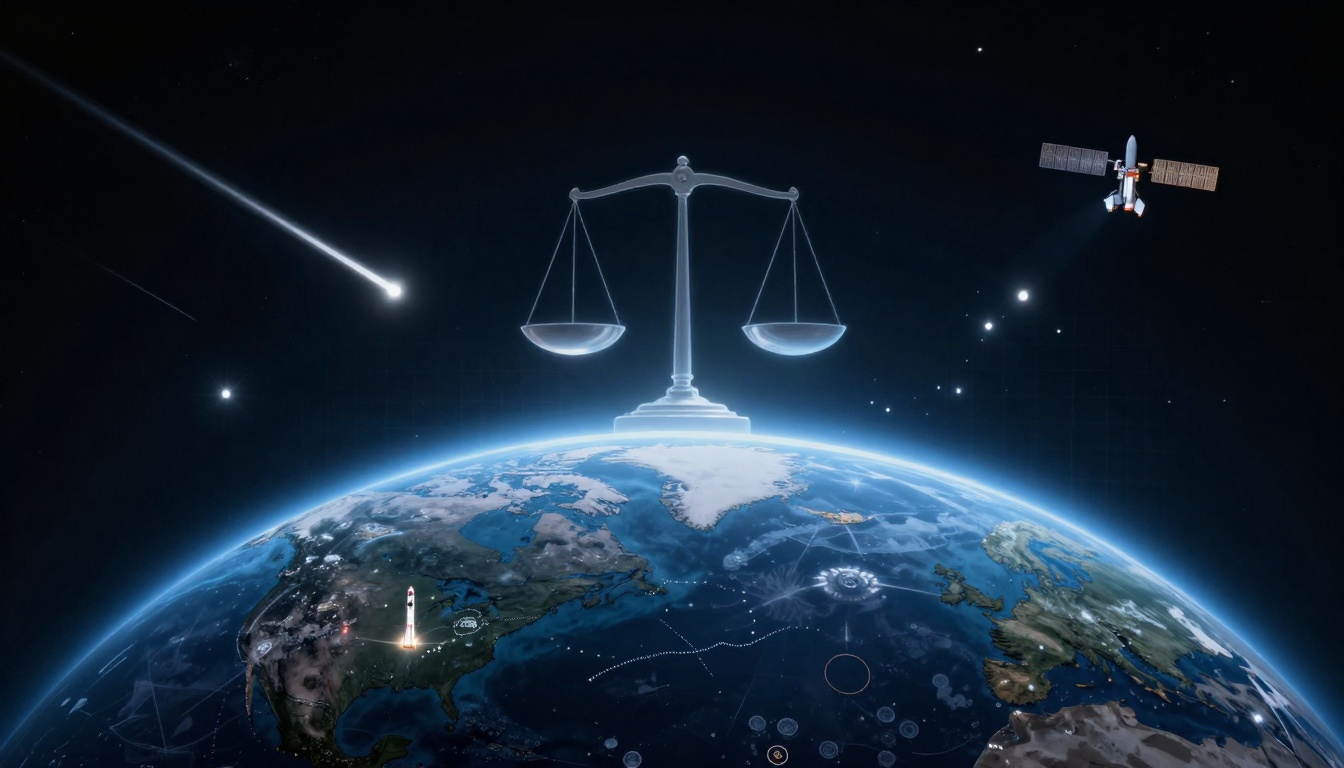

Listen to this post: Space Governance in 2026: Rules for a Rocket-Filled Sky
Picture this: fiery trails streak across the night sky from pads in Florida, California, and now Scotland’s wild north. SpaceX just notched its seventh launch of 2026 with NROL-105 on 16 January, hurling spy satellites into orbit from Vandenberg. That’s atop Starlink batches firing off weekly, like the 29 birds on 12 January from Cape Canaveral. China lobbed a Long March 6A rocket skyward on 13 January, while India and UAE gear up. SpaceX alone hit 134 launches in 2024 and eyes 600 total soon. Private firms and nations pump rockets aloft at a blistering pace. Orbits cram with satellites, debris, and ambitions.
This rush spells trouble without solid rules. Who owns lunar water? What if junk collides and sparks a chain reaction? Space governance must catch up fast to keep the peace up there. Nations cling to old treaties, but firms like SpaceX rewrite the script. We’ll unpack the boom, shaky pacts, brewing risks, and paths forward. Buckle up; the stars demand order.
The Rocket Boom Reshaping Our Skies
Rockets roar from more spots than ever. SpaceX dominates with Falcon 9s slicing through clouds, while China’s Long March family thunders from Taiyuan and Wenchang. India’s PSLV preps payloads, and UAE eyes its slice. Private outfits outstrip governments. Launches doubled in five years. Orbits swell past 10,000 active satellites, mostly Starlink. Without controls, skies turn into a jammed motorway at rush hour.
Fiery plumes light deserts and coasts. Vandenberg’s SLC-4E hosted Starlink Group 17-20 just days ago. Cape Canaveral’s SLC-40 awaits more on 18 and 28 January. This frenzy boosts internet, spying, and science. Yet crowded paths breed crashes. Stats show 36,000 tracked objects zip at 28,000 km/h. One bump could doom missions worth billions.
SpaceX Leads the Charge
SpaceX owns the launch throne. It boasts 597 successful Falcon flights, blending Starlink hordes with national security hauls like NROL-105. That 16 January liftoff sent proliferated spy sats for the US National Reconnaissance Office, part of 12 such runs since May 2024. Boosters land for 25th flights, slashing costs.
Crewed hops loom to Haven-1 stations. Elon Musk’s fleet reshapes access. One firm launches more than most nations combined. Picture boosters touching down like eagles on perches amid cheers. This pace forces regulators to sprint.
Nations Catch Up Fast
China fires Long March 6A on 13 January from Taiyuan, mission Y27 bound for orbit. Another brews for 25 January from Wenchang. India plots SUPARCO shots, perhaps 25 January over the Yellow Sea. UAE builds launch chops amid desert sun.
These powers chase SpaceX’s shadow in a global scrum. They loft weather sats, spies, and telecom birds. Tensions simmer as orbits fill. Nations demand seats at the rule table, but firms already pack the house.
Treaties Trying to Keep Pace
Old pacts strain under the load. The Outer Space Treaty from 1967 binds 118 nations to peaceful use. No flags on asteroids, no nukes in orbit. States answer for their companies’ messes. Yet it skips debris cleanup or mining rights. Gaps yawn wide as rockets multiply.
Newer deals patch holes. Artemis Accords hit 60 signatories by January 2026, welcoming Portugal last. They greenlight lunar digs if nations share data. For deeper UK views on future space regulation, check Regulatory Horizons Council insights. Rules lag launches, but talks heat up.
What the Outer Space Treaty Covers
Signed amid Cold War fears, this pact bans nuclear arms in space. No country claims Moon or planets; all for humanity. States supervise private firms, footing bills for damages. Think of it as a cosmic no-trespassing sign.
It spurred Apollo and Salyut. Today, 118 parties uphold it. Flaws emerge with Starlink swarms. No clauses on traffic jams or junk. Russia and China push updates amid US leads. Basics hold, but details fray.
Artemis Accords Step In
NASA’s brainchild unites 60 nations for Moon returns. Non-binding, they stress safety zones, debris removal, and open data. Portugal joined fresh in 2026. No invite for China or Russia; it’s Western-led.
Accords back resource use, like ice for fuel. Signers pledge interoperability. Critics call it Moon club rules. Still, it fills treaty voids on habitats. As rockets flock to lunar south pole, these norms guide the land rush.
Troubles Brewing in Orbit
Orbits teem with peril. 130 million debris bits whirl, from paint flecks to dead sats. More rockets mean more junk. Kessler syndrome looms: one smash births a storm, sealing low Earth orbit. Tracking falters beyond 10 cm objects.
Militarisation heats up. US Space Force eyes foes. China and Russia test anti-sat weapons. Lasers blind sats; missiles blow them. Treaties curb nukes but not these toys. Resource hunts add fuel; Moon water tempts all.
What if a Starlink collides with a spy bird? Chains of wrecks could blind GPS. Urgent fixes beckon, like global air traffic control for space. See Belfer Center ideas on Outer Space governance.
Junk Piling Up Fast
Debris multiplies with each launch. NROL-105 added stages; Starlink sheds fairings. 36,000 items tracked, millions unseen. Speed turns bolts into bullets.
Collisions scar the International Space Station yearly. India’s 2019 ASAT test birthed 400 bits. China’s 2007 blast lingers. No owner cleans up. Rockets worsen the pile; urgent sweeps needed.
Arms Race Above Earth
Space Force budgets soar for jammers and killers. Russia zaps sats with signals. China drills missile intercepts. India joins the fray.
Treaty bans WMDs, not kinetics. Tests scar orbits. Geopolitical pushes contest rules, per CIGI analysis on space ambitions. Peace hangs by threads as spies swarm.
Blueprints for a Safer Space Future
Chaos looms without fixes: firms clash over slots, nations hoard resources. Or picture unity. Global traffic systems plot paths like Heathrow radars. AI dodges junk in real time.
New pacts must rope in companies. UNOOSA leads talks on liability. Include SpaceX at tables. UK pioneers with SaxaVord spaceport in Shetland, firing rockets north. It tests rules firsthand.
Hope glints. Bird & Bird tracks 2025-2026 legal shifts. Norms for mining, disposal, and sharing emerge. Rockets unite us; smart governance lets all thrive.
Rockets paint our skies, but space governance must match their fire. From NROL-105’s glow to Starlink’s web, the boom demands action. Old treaties bend; new ones forge ahead. Watch UNOOSA forums and Artemis growth. Push for rules that bind firms and flags alike.
Imagine orbits clear, Moon bases shared. Join the call: demand fair skies. What role will your nation play? United, we claim the stars safely. Thanks for reading; share your thoughts below.