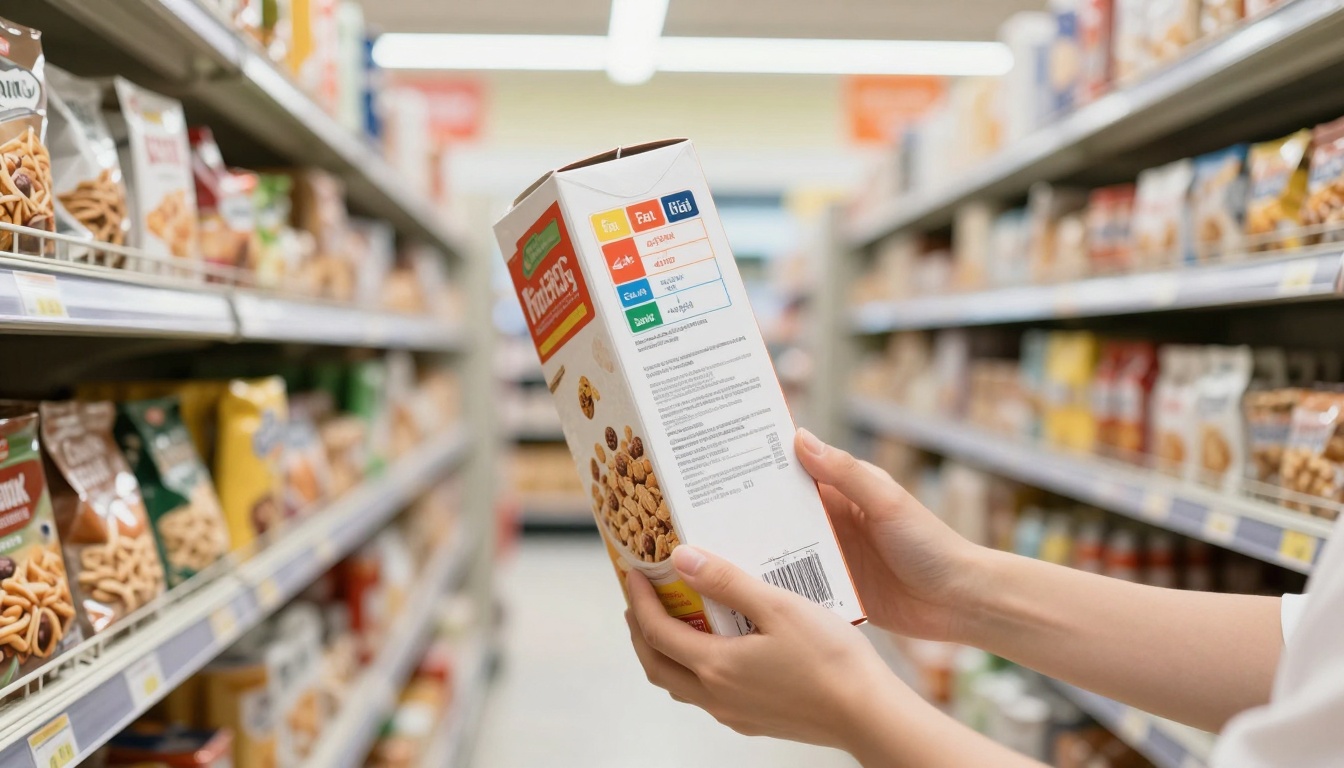

Listen to this post: How to Read Food Labels and Actually Understand Them
You’re in the supermarket aisle, one hand on the trolley, the other turning a pack over like it’s a puzzle box. You’ve got five seconds before someone squeezes past, and the label feels like it’s written for a chemistry exam.
Here’s the promise: you can learn a simple method to read almost any UK food label in under a minute. You’ll spot sugar, salt, and the marketing that tries to distract you. Front-of-pack traffic lights help, but the back label is where the real story sits. to effectively communicate with your audience, start your blog with clear goals. By establishing a focused direction, you can create content that resonates and drives engagement. This clarity will not only enhance your writing process but also attract readers who share your interests. Creating a cozy reading corner tips for apartments can transform any small space into a personal sanctuary. Consider incorporating soft lighting, comfortable seating, and a well-curated selection of books to enhance your reading experience. Adding personal touches like plants or artwork can also make the corner uniquely yours, inviting you to spend more time immersed in your favorite stories.
Start with the front of pack: quick clues in 10 seconds
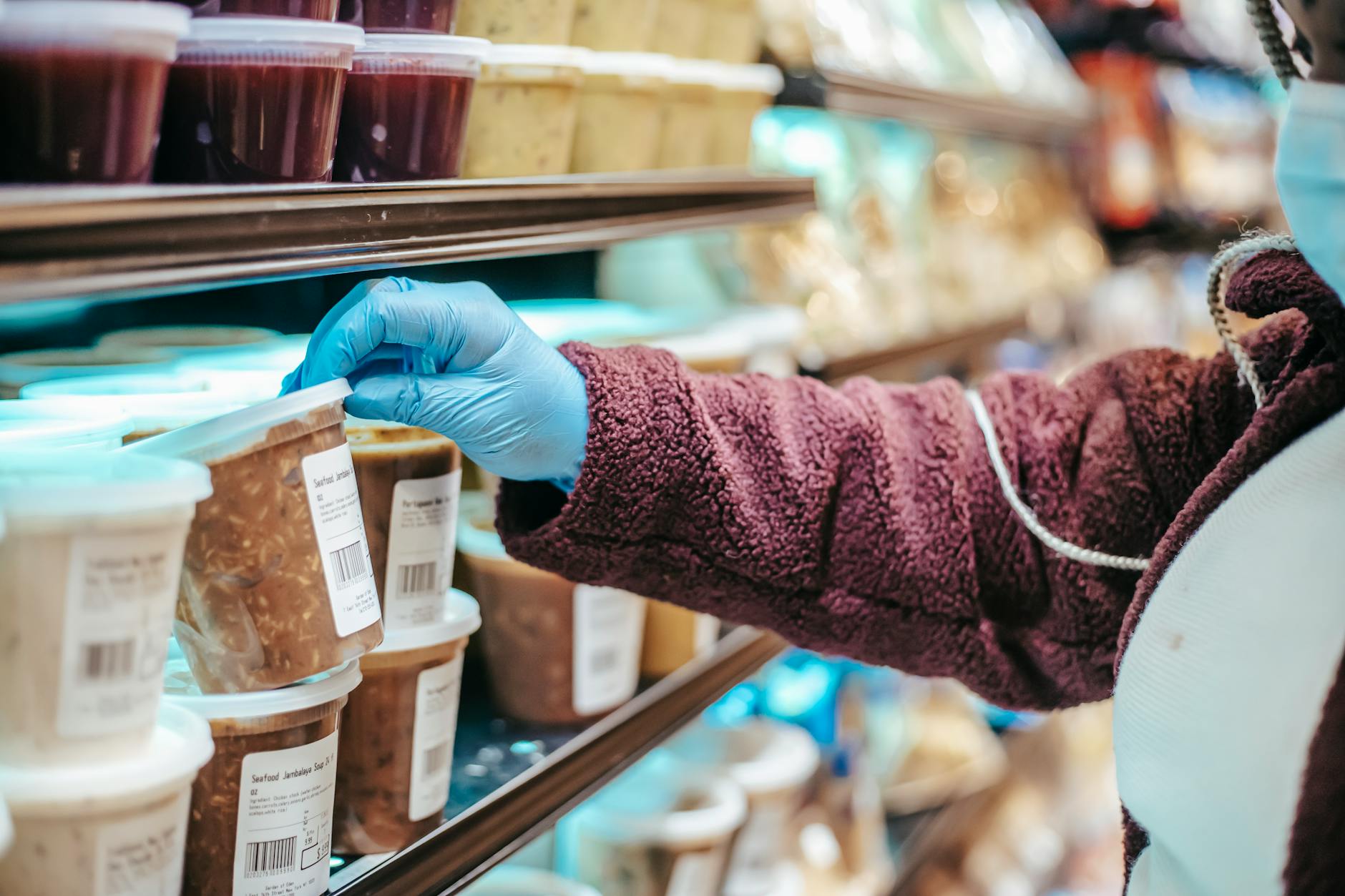
Photo by Laura James
Front-of-pack labelling is the bit designed for fast choices. It’s not perfect, but it’s useful when you’re tired, hungry, or shopping with kids.
In the UK, you’ll often see:
- Traffic-light colours for fat, saturates, sugars, and salt
- Calories per portion
- Big claims in bold (the “halo” words)
Treat the front like a film trailer. It can hint at what’s inside, but it’s not the full plot.
How to use traffic lights without getting tricked
Traffic lights show whether a food is low (green), medium (amber), or high (red) in:
- fat
- saturates
- sugars
- salt
Most traffic lights are based on per 100g, not “per serving”. That matters, because 100g of cereal is a mountain, while 100g of cheese is very normal.
A simple rule that works in real life: more greens is better, but one red doesn’t always mean “never”. It means “know what you’re buying”.
Example: a flavoured yoghurt might show amber or red for sugars, yet still be a decent choice if it’s a proper portion, with protein, and you’re not having sugary snacks later. Compare it to the one next to it. The better option often has fewer reds and fewer ingredients.
For a clear explainer of the UK system, the NHS guide is easy to follow: how to read food labels.
Marketing words that sound healthy but can mislead
Some words are legal, some are vague, and some are just mood lighting for your shopping basket. Common ones to watch:
“Low fat”: Often means more sugar or starch was added to keep taste and texture.
“No added sugar”: Can still be sweet from fruit juice concentrate or dried fruit.
“High protein”: Helpful for some people, but it doesn’t cancel out high sugar.
“Natural”: Doesn’t guarantee healthier, it’s not a nutrition badge.
“Wholegrain”: Good sign, but check it’s not mostly refined flour.
“Light”: Might mean lighter in calories, or just a lighter taste. You still need the numbers.
Think of these as adverts. Confirm them using the ingredients list and nutrition table before you trust them.
Read the nutrition table like a pro: per 100g vs per portion
The nutrition table is where you get the hard facts. It usually shows values per 100g and per portion, sometimes with a percentage of Reference Intake (RI).
RI is based on an average adult diet, and it won’t fit everyone. If you’re smaller, very active, pregnant, or managing a condition like diabetes, your needs can differ. Still, RI is a handy “quick maths” tool for most shoppers.
If you want extra context from a UK charity that focuses on day-to-day shopping, this guide is practical: Understanding food labels.
Per 100g is your best comparison tool
Per 100g is the level playing field. It lets you compare two brands, two pack sizes, and two “health” claims without getting pulled around.
A quick example:
- Two pasta sauces might both claim “rich Italian tomatoes”.
- Sauce A has 3.2g sugar per 100g.
- Sauce B has 7.8g sugar per 100g.
Even before you look at ingredients, you’ve learned something. Sauce B is likely sweeter, and maybe more processed.
When comparing similar foods, start with per 100g for:
- sugars
- saturates
- salt
- fibre (higher is usually better for everyday choices)
Portion sizes can be wishful thinking
Portions on packs can be… optimistic. Brands can choose serving sizes that make the numbers look calmer.
Cereal is the classic trap. The label might say a portion is 30g. Many bowls at home are 50g or more.
Do a fast check:
- If you eat double the portion, you eat double the sugar, salt, and calories.
- If you pour “a bit extra”, assume it’s 1.5 portions.
You don’t need perfect maths in the aisle. You just need honesty about what you’ll actually eat.
Decode the ingredients list: where the truth hides
The ingredients list is written in weight order, from most to least. That means the first three ingredients are your headline.
Also, for UK shoppers, allergens must be highlighted (often in bold) for 14 main allergens, such as milk, eggs, peanuts, tree nuts, soya, and cereals containing gluten. “May contain” warnings matter too, especially if you have severe allergies, because they flag cross-contamination risk.
For the official basics on what labels must show, the Food Standards Agency has a clear overview: check the label.
The first three ingredients tell the main story
A calming way to read the list is to ask one simple question: is this mostly food, or mostly “mix”?
Try it on these common items:
- Granola bars: If the first ingredients are glucose syrup, sugar, and refined wheat flour, it’s a sweet snack in a health costume.
- Pasta sauces: If tomatoes are first, great. If sugar and starch show up early, it’s likely a sweeter, thicker sauce.
- Flavoured yoghurts: Milk and live cultures near the top is a good base. Sugar near the top tells you it’s closer to pudding.
This isn’t about fear. It’s about knowing what you’re paying for.
Spot added sugars and salt under different names
Added sugar doesn’t always introduce itself as “sugar”. Look for:
- glucose, fructose, sucrose
- syrup (glucose syrup, rice syrup)
- honey, agave
- maltodextrin
- fruit juice concentrate (it still behaves like sugar in the body, even if it sounds wholesome)
Salt can also hide. You’ll see:
- salt
- sodium (not as common on UK packs, but it appears)
If a snack, sauce, or ready meal has salt in the first few ingredients, it’s worth pausing. Salt adds up fast across a day, especially with bread, spreads, soups, and condiments.
Use a simple 60-second label checklist for smarter choices
Once you’ve got a routine, labels stop feeling like a wall of tiny print. You start to read them the way you read road signs, fast, calm, and with purpose. understanding data cleaning techniques can enhance your ability to interpret information quickly. This skill is particularly valuable in data-driven environments where clarity is essential. As you become more proficient, the process becomes second nature, allowing you to focus on analysis rather than mere comprehension.
This matters even more in January 2026. Front-of-pack labels are still common, allergen labelling remains a key safety issue, and the UK has tightened rules around advertising less-healthy foods to children (so the noise may shift, but the products are still on shelves). Your best defence is still your own label skills.
A quick checklist you can follow every time
- Scan traffic lights (aim for more green and amber).
- Check per 100g for sugars, saturates, and salt.
- Look at fibre and protein (fibre is often the missing piece).
- Do a portion reality check (will you eat more than the “serving”?).
- Read the first three ingredients (that’s the main recipe).
- Confirm allergens (bold ingredients, plus “may contain”).
If you want “best for” swaps that usually pay off:
- Higher fibre: choose wholegrain versions where the first ingredient is wholegrain flour or oats.
- Lower salt: compare sauces and soups per 100g, it varies a lot.
- Less added sugar: pick yoghurt that’s plainer, then add fruit yourself.
When labels matter most: kids, allergies, and “healthy” snacks
Some products are built to look virtuous, and these are the moments labels matter most:
- lunchbox snacks (bars, yoghurts, flavoured drinks)
- protein bars and “fitness” foods
- smoothies and juice drinks
- ready meals and instant noodles
- sports drinks
If you manage allergies, don’t guess. Check bold allergens every time, even on familiar brands, because recipes change. For foods that aren’t pre-packed (like bakery items), ask staff and take your time.
Conclusion
Food labels aren’t there to ruin your appetite. They’re there to give you the facts, once you know where to look. Practise on three items in your cupboard today, and you’ll feel the difference next time you shop. Compare per 100g, treat portions with suspicion, read the first three ingredients, and treat front-of-pack claims like adverts until the numbers back them up. Once you have a routine, reading food labels becomes quick, and oddly satisfying.