
Listen to this post: “Polycrisis” Explained: Why Everything Feels Connected and Overwhelming
Your phone lights up before you’ve even made tea. A flood warning. A price rise notice. Another data breach. A headline about conflict, and a thread arguing about it. By lunchtime, you’ve absorbed more threat signals than your grandparents might’ve heard in a month.
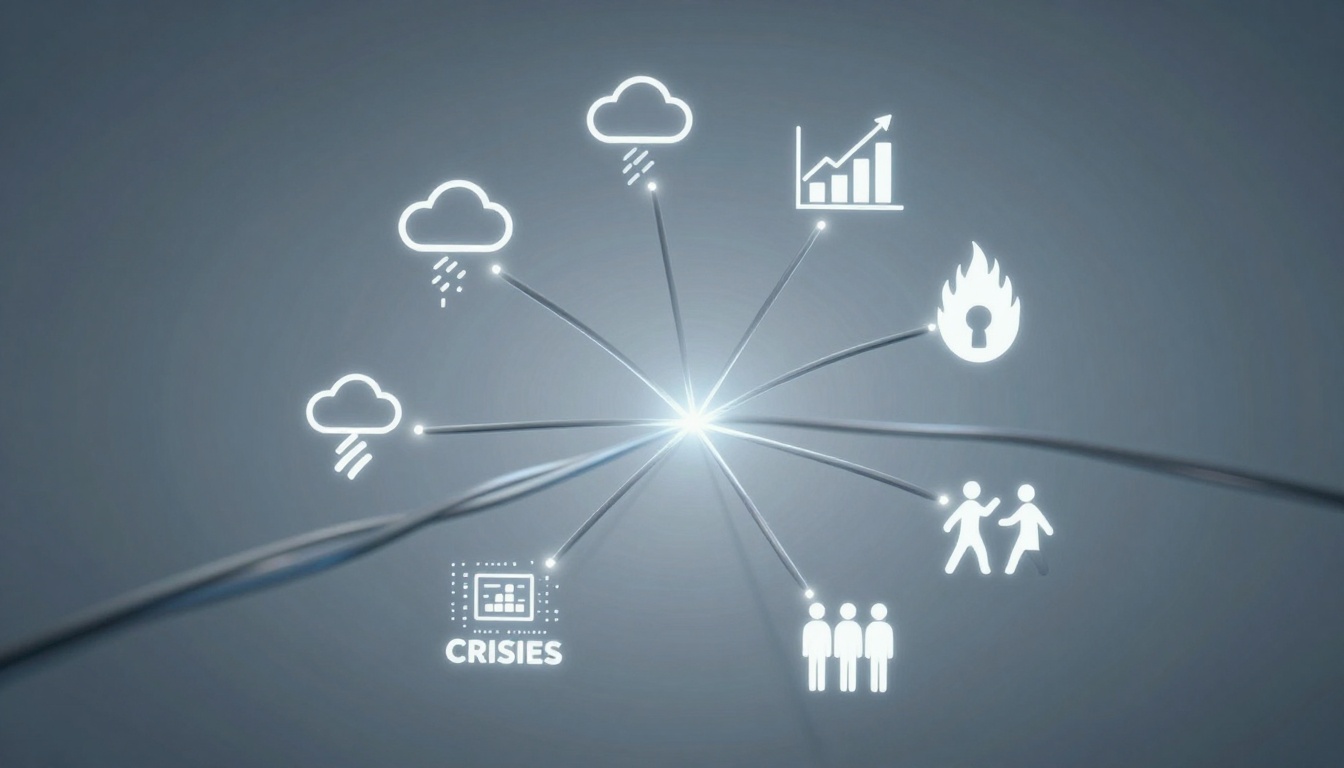
That piled-up feeling has a name: polycrisis. It means many crises happening at once, in ways that make each other worse.
This piece gives you a clear definition, plain examples you’ll recognise, and a steadier way to think about what’s happening. Not to pretend it’s fine, but to stop the noise from stealing your judgement.
Polycrisis in plain English, and why it’s more than “a lot going on”
Picture a pair of headphones pulled from a pocket. The problem isn’t just that they’re tangled. It’s that when you tug one knot loose, another tightens. That’s a polycrisis.
A normal rough patch can be stressful, but it often stays in one lane. A polycrisis jumps lanes. It’s when the economy, climate, politics, health, and tech problems don’t just arrive together, they interact, creating knock-on effects and loops.
The idea isn’t brand new. The French thinker Edgar Morin wrote about linked crises in the 1970s. The word has since been used more widely by researchers, journalists, and leaders trying to describe why modern shocks seem to spread so fast. The Stockholm Resilience Centre has a helpful explanation of how crises combine and amplify each other in lessons from 50 years of global shocks.
So what makes a polycrisis different from “multiple problems”?
- Shared links: the same pressure point (energy, shipping, data systems) touches many areas.
- Cascades: one shock moves through the system like a row of dominoes, except the dominoes loop back.
- Clashing fixes: solving one issue can cause pain somewhere else (or solve today and worsen tomorrow).
Two takeaways worth keeping:
- If everything feels connected, you’re not imagining it.
- Simple answers often fail because the problem isn’t simple.
Three signs you’re looking at a polycrisis, not separate emergencies
1) Problems hit at the same time.
A heatwave lands during a cost-of-living squeeze. A strike happens when supply chains are already slow. Even if each issue has its own cause, the timing means they stack. Households and governments run out of slack.
2) One shock spreads into other areas.
A disruption in shipping doesn’t stay in shipping. It can change the price of food, medicine, and building materials. It can change business confidence, then hiring, then spending on the high street.
3) A solution in one place creates pain elsewhere.
Stricter security can reduce cyber risk but slow services and trade. Rapid energy shifts can lower emissions over time but raise bills in the short term if the change is badly managed. In a polycrisis, trade-offs get sharper, faster.
Feedback loops and systemic risk, explained without the maths
A feedback loop is when an effect circles back and strengthens the cause. Think of a microphone too close to a speaker. It squeals because the sound keeps feeding itself.
Systemic risk is when a failure in one part threatens the whole system, like a power cut that stops card payments, which blocks fuel sales, which stops deliveries, which empties shelves.
Here’s one loop you can picture:
Heatwave reduces crop yields, food prices rise, anger grows, protests disrupt transport, supply gets tighter, food access worsens, and the next shortage hits harder.
That’s why “small” shocks can become big. Modern life runs on connected networks: energy grids, finance, health services, logistics, and information. When one network stumbles, others can trip over it.
Why everything feels connected right now (and why your brain can’t get a break)
There are practical reasons today’s crises link up so easily. Supply chains stretch across borders. Energy markets move on global news. Finance reacts in seconds. A rumour can reach millions before a correction is even written.
There are also human reasons it feels unbearable.
We live inside alert systems. Work chats, school messages, breaking news, and social feeds all use the same trick: make everything feel urgent. Time gets compressed. A drought becomes a video clip. A market wobble becomes a live counter. You don’t get the old gaps, the quiet days when a story faded before the next one arrived.
That’s where permacrisis comes in. It’s not a technical term so much as a lived one. It’s the feeling that “normal” never returns, that you’re always catching up, always bracing for the next hit. You can be safe in your own home and still feel under siege, because your attention is constantly rented out to threats.
For more context on how researchers and development experts discuss the “age of polycrisis”, the Institute of Development Studies lays out the concept in a plain-language opinion piece.
The real-world wiring: how energy, food, money, and tech pull on the same rope
Start with energy. If conflict, sanctions, or shipping problems tighten supply, prices can rise quickly. Higher energy costs then show up in places people don’t expect:
- Food gets pricier because fertiliser, farming, refrigeration, and transport all need energy.
- Small businesses pay more to run fridges, ovens, lights, and delivery vans.
- Households cut back, which hits local spending and jobs.
Now add money. When living costs rise, debt feels heavier. When debt feels heavier, people delay big purchases and businesses hold off on hiring. That can slow growth, which can make politics more tense, which can make markets more jumpy. It’s one rope, pulled from different ends.
Tech adds speed. AI can scale misinformation, scams, and impersonation. Cyber attacks can target the boring plumbing of society: hospitals, councils, suppliers, payment systems. Even when the physical world is stable, the digital layer can create sudden chaos.
The attention trap: why nonstop updates make the world feel even worse
Constant exposure changes how you read reality. Your brain is built to notice threats, not to measure probabilities. If you see ten frightening stories a day, it starts to feel like danger is everywhere, all the time.
Nonstop updates also flatten context. A rare disaster and a recurring problem can look equally urgent when both appear as red banners on a screen. That leads to fatigue, then numbness, then doom-scrolling, then more fatigue.
Two framing habits help without turning life into a self-help project:
- Zoom out to trends: ask, “Is this a one-off, a cycle, or a long-term shift?”
- Limit breaking-news windows: check once or twice a day, not every ten minutes.
You’re not ignoring the world. You’re choosing when the world gets to speak.
A quick tour of today’s polycrisis, with examples people recognise
As of January 2026, many analysts describe a period of higher, overlapping risk. You can see that framing in resources that track geopolitical and economic pressure points, such as Eurasia Group’s Top Risks for 2026 and broader commentary like TIME’s argument that 2026 could mark a “new world disorder”.
The point isn’t to collect scary headlines. It’s to notice the connections.
Mini-story 1: Extreme weather meets the weekly shop.
A flood doesn’t just wreck roads. It can knock out warehouses, delay deliveries, and reduce crop output. When supply tightens, prices rise. When prices rise, stress rises. That stress shows up in kitchens, not just in climate charts.
Mini-story 2: Housing, insurance, and local stability.
In places hit by repeated storms, fires, or flooding, insurance can become expensive or hard to get. That affects mortgages, building repairs, and whether people can stay put. It also pushes costs onto councils and emergency services, which were already stretched.
Mini-story 3: Debt pressure collides with politics.
When budgets are tight, every change feels personal. Fuel costs, rent, and food prices become political flashpoints. Governments then face pressure to act fast, sometimes with less room to plan well. Quick fixes can ease pain now but store trouble for later.
Mini-story 4: Health strain isn’t only about hospitals.
Even without a new global pandemic, health systems can buckle under staffing gaps, winter surges, delayed care, and mental health strain. Add heatwaves, poor housing, or displacement, and health becomes tied to climate and the economy in direct, daily ways.
Mini-story 5: Information stress becomes social stress.
AI-generated fakes and targeted rumours don’t just confuse people. They can weaken trust in elections, public health advice, and emergency warnings. When trust drops, it’s harder to coordinate a response to anything, from storms to security incidents.
A polycrisis is greater than the sum of its parts because each part adds force to the others. It’s like pushing a shopping trolley with one wonky wheel while the floor slopes downhill.
Climate shocks don’t stay in the weather report

Photo by Ron Lach
When people think “climate crisis”, they often picture polar bears or far-off islands. But the shocks that change lives are closer: heat that makes sleep hard, floods that shut schools, fires that turn skies orange, storms that break roofs and budgets.
Those shocks travel.
A heatwave can cut harvests, raise food prices, and increase hospital admissions. A flood can damage homes, push up rents, and force families to move. A fire season can strain insurers, then raise premiums, then make rebuilding harder. Migration, whether across borders or within a country, can create pressure on housing, services, and politics.
The climate story isn’t only about nature. It’s also about systems under strain, and how quickly that strain spreads when safety margins are thin.
When money stress meets geopolitics and tech, the impacts multiply
Cost-of-living pressure has a nasty habit of turning every other issue into an argument. If energy prices jump, transport costs follow. If transport costs rise, food and goods rise. If goods rise, wage demands rise. If wages rise in some sectors but not others, resentment grows.
Now add geopolitics. Tensions can reshape trade routes, export rules, and supply confidence. Businesses might stockpile, or pull back, or move operations. Each choice has side effects.
Then add cyber risk. A single breach can freeze payroll systems, disrupt ports, or knock out appointment bookings. The damage isn’t only financial. It’s the feeling of fragility, the sense that everything depends on log-ins and invisible networks.
This is also where crossed goals show up. More security can mean more checks, slower services, less openness. Faster energy change can mean short-term price swings. In a polycrisis, there’s rarely a free win. Understanding that doesn’t fix it, but it stops you expecting magic.
How to stay clear-headed in a polycrisis world (without pretending it’s fine)
You can’t solve a web by yanking at every strand. But you can choose where to place your effort, and where to stop feeding panic.
A practical approach is to separate action into three buckets: what you control, what you can influence, and what you should simply track. This stops you mixing global fear with local decisions.
It also helps to watch for link points, not just headlines. Energy, food, housing, and data systems are common hinges. If one is wobbling, others may follow. You don’t need to become an expert. You just need a calmer mental model.
If you want a broader scan of how writers are framing early 2026 pressures, Bryan Alexander’s post on seeing early 2026 through a polycrisis lens is a useful read.
Use the “circles” method: what you can control, influence, and just track
Control means your direct choices.
Your budget, sleep routine, fitness, subscriptions, and whether you keep basic supplies. It includes checking privacy settings and using strong passwords.
Influence means you can nudge outcomes with others.
Your workplace policies, your kids’ school, your building management, your neighbourhood group, your union, or your local councillors.
Track means stay informed without trying to steer it.
Global conflicts, central bank decisions, shipping disruptions, and international climate negotiations. You can’t pull the levers, but you can notice patterns and prepare.
The goal is not control. It’s clarity.
Build resilience in boring ways that actually work
These aren’t dramatic, but they hold up in messy times:
- Build one extra income skill (writing, spreadsheets, basic coding, trades, sales).
- Reduce high-interest debt where you can, even slowly.
- Keep a simple home kit (torch, batteries, basic first aid, a few days of staples).
- Support your mental health early (sleep, talking, boundaries with news).
- Practise information hygiene (pause before sharing, verify sources, watch for deepfakes).
- Add security back-ups (password manager, two-factor authentication, recovery emails).
- Strengthen local ties (swap favours, share tools, know who to call).
Boring steps don’t remove risk. They give you grip when the ground shifts.
Conclusion
A polycrisis is a web of crises that amplify each other, which is why life can feel heavy, fast, and confusing. When energy, food, money, health, and tech problems interact, the result isn’t just “more problems”. It’s a system that can lurch from one knock-on effect to the next.
You don’t have to track everything to respond well. Understanding the links helps you choose better actions, spot trade-offs sooner, and avoid panic thinking.
Pick one link in your own life to strengthen this week: finances, information habits, or community. Small steadier choices won’t fix the world overnight, but they can make the world feel less like it’s happening to you.