
Listen to this post: The New North-South Divide: Green Tech Haves and Have-Nots
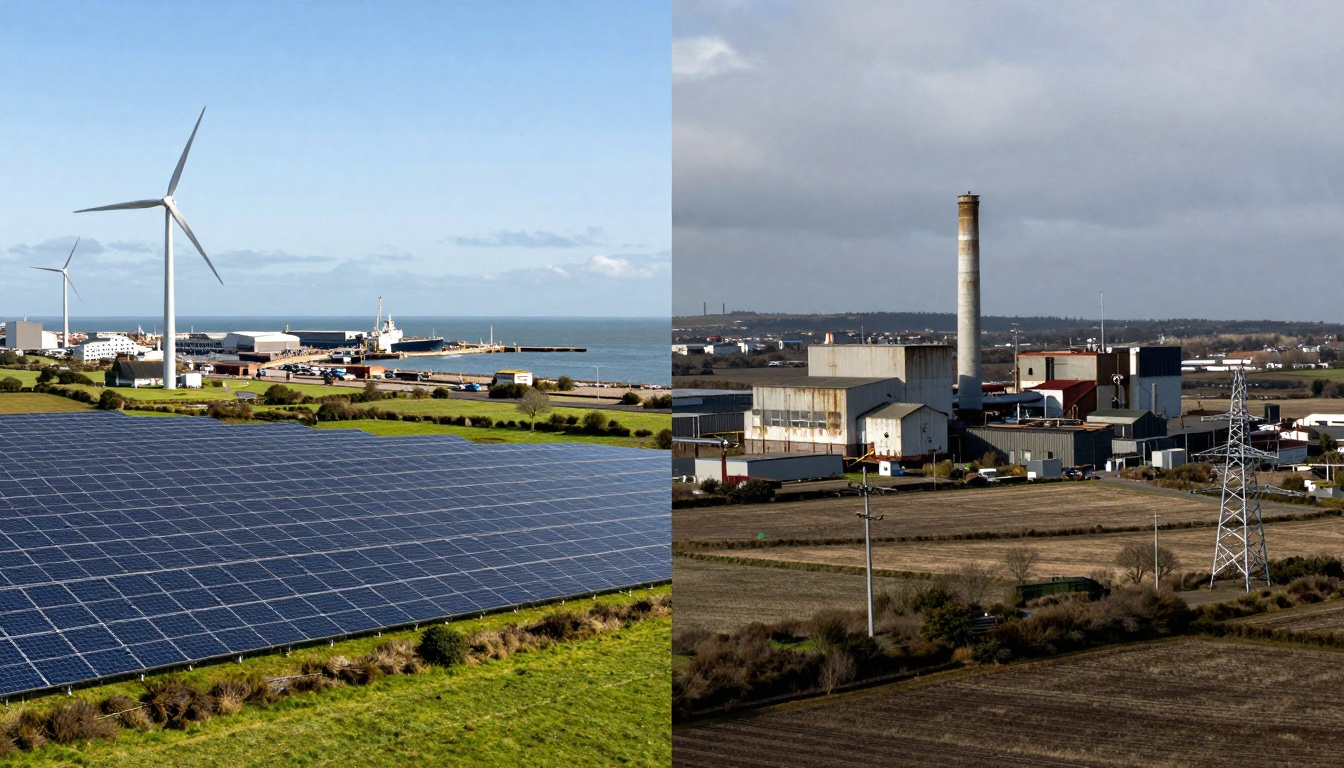
Picture this: vast solar farms stretch across sunlit fields in southern England. Workers swarm the sites, installing panels that hum with promise. Jobs flow in, firms set up shop, and local economies buzz. Now shift north. Rusty factories dot empty landscapes. Fields lie idle, grids creak under strain, and green projects stall. Britain’s old North-South divide sharpens in a fresh form. Green tech splits the haves from the have-nots along these lines.
Could green tech widen Britain’s oldest split? Recent funding patterns show southern regions snag most clean energy cash. Government plans push for 2030 clean power goals, yet the North misses out. Southern ports and fields draw billions. Northern sites wait on upgrades. This gap risks deeper inequality. Jobs, growth, and power stay southbound.
Solar thrives near London thanks to quick grid links. Offshore wind near southern coasts booms too. Up north, poor roads and old wires block progress. Think of the scrapped £500 million A1 upgrade in Northumberland. Cash pours into southern tunnels instead. Real trends from 2026 reports underline this skew. The divide grows unless leaders act.
Roots of Britain’s North-South Economic Split
The North-South split runs deep in Britain. For decades, the North faced job losses as factories shut. Coal mines closed. Steel works faded. Manchester and Liverpool rebuilt slowly. Wages stayed low. Growth lagged.
London and the South East pulled ahead. Finance hubs sprouted. Tech firms clustered. Universities drew talent. More cash flowed to roads, rails, and homes. By 2025, southern GDP per head topped northern by 40 per cent.
Infrastructure tells the tale. The Thames Tideway Tunnel eats £4.2 billion to fix sewers. It creates thousands of jobs nearby. Up north, the A1 dual carriageway upgrade vanished from budgets. Drivers crawl past potholes. Freight slows. Businesses shy away.
Stats paint the picture. In 2024, transport spending hit £12 billion south of a line from the Wash to the Bristol Channel. The North got £4 billion. HS2 trimmed northern legs. Result? Firms pick southern sites for speed.
People feel it. Northern youth chase jobs south. Towns hollow out. Southern villages swell with commuters. The gap feeds resentment. Politicians promise levelling up. Cash trickles.
History echoes today. Post-war booms favoured the South. Thatcher-era shifts killed northern industry. Blair’s cash boosted London. Now green tech tests the fix. Without balance, the split hardens.
Northern Growth Strategy details show pleas for more. Yet patterns hold. The North chases catch-up.
Green Tech Boom Leaves the North in the Dust
Clean energy races ahead. Wind turbines spin offshore. Solar arrays blanket roofs. Britain eyes net zero by 2050. Government sets Clean Power 2030 targets: double offshore wind to 43-50GW, triple solar to 45-47GW. Firms hunt sites. Jobs promise 500,000 by decade end.
Southern spots win big. Ports near East Anglia host turbine bases. Firms like Ørsted pour billions. Grids connect fast. Talent pools ready. Result? Projects launch quick.
The North stumbles. Old grids buckle. Ports need dredging. Roads jam. Firms eye south for ease. Funding skews same way. Recent auctions award southern leases first.
January 2026 data flags the tilt. South claims most solar approvals. Batteries pair with panels. North pushes wind, but delays bite. AR7 auction adds 7.5GW, yet grid queues slow northern builds.
Jobs follow cash. Southern firms train locals in panel installs. Wages rise. Northern factories rust as green skips them. Growth widens the chasm.
Southern Regions Lead the Green Charge
South East and East Anglia dominate. Dogger Bank wind farm off Yorkshire borders pulls south cash too. But core wins stay south. Solar farms dot Kent fields. Firms relocate HQs to Oxford for battery tech.
Government’s Solar Roadmap eases rules. Approvals double to 45GW. Great British Energy funds school roofs. Jobs spike 20 per cent in renewables here.
Ports like Thames handle turbine parts. Links to Europe speed imports. Investors flock. IPPR North report notes south’s early low-carbon edge, though North stirs.
Northern Challenges Block Green Progress
North East eyes offshore giants. Blyth and Tees ports prep. Yet grid lags hobble. Carbon capture waits funds.
Cuts hurt. A1 snub strands freight for wind gear. Skills gap widens. Youth train south. Lloyds pledges £1 billion, but scale pales southern pours.
North East investment pitch draws crowds. Still, projects stall. Divide deepens.
Fixing the Divide: Plans and Next Steps
Government floats fixes. Local Power Plans let communities pick energy sites. North East Mayor funds £15 million training hubs. AR7 eyes northern ports for 16GW wind.
Gaps yawn. No ring-fenced northern pot matches southern billions. Critics slam vague levelling up. IPPR calls Mayoral Industrial Strategies for green manufacturing.
Targeted cash works. Pump £2 billion into northern grids. Subsidise port upgrades. Train 100,000 in renewables. Link unis to firms.
What if the North caught up? Ports like Humber rival southern hubs. Jobs flood in. Wages even out.
Private cash stirs. Lloyds backs North East firms. National Wealth Fund eyes clean tech. Hydrogen trials span regions.
Push skills. Free courses in turbine repair. Apprenticeships for solar. Communities own stakes in farms. Profits stay local.
Balance needs will. Tie 2030 goals to regional quotas. Audit spends yearly. North’s wind potential halves UK needs on gusty days. Unlock it.
Hope glimmers. Investor summits pack Newcastle. North’s clean future key per reports. Act now for fair shares.
Conclusion
Green tech redraws Britain’s map. South grabs solar and wind leads. North fights with wind promise but grid woes. Roots run deep; fixes demand bold cash and plans.
Act to bridge the North-South divide. Shared wins build a stronger UK. All thrive on clean power.
Watch CurratedBrief for updates. Share your thoughts: how to level the green field? United effort powers ahead.