
Listen to this post: Is the “Global South” a real bloc or just a catchy phrase?
The phrase “Global South” keeps popping up like a headline shortcut. It’s there in climate rows, trade talks, arguments about debt, and speeches at the UN. Sometimes it sounds like a team name, as if half the world has decided to move in step.
But is it really a group that acts together, with shared plans and shared red lines, or is it a label that smooths over huge differences? When a minister says “the Global South demands…”, who are they speaking for, and who’s quietly not in the room?
This matters because words shape expectations. If you think it’s a bloc, you expect unity. If it’s a phrase, you should expect bargaining, splits, and shifting partnerships.
What the “Global South” means, and what it leaves out
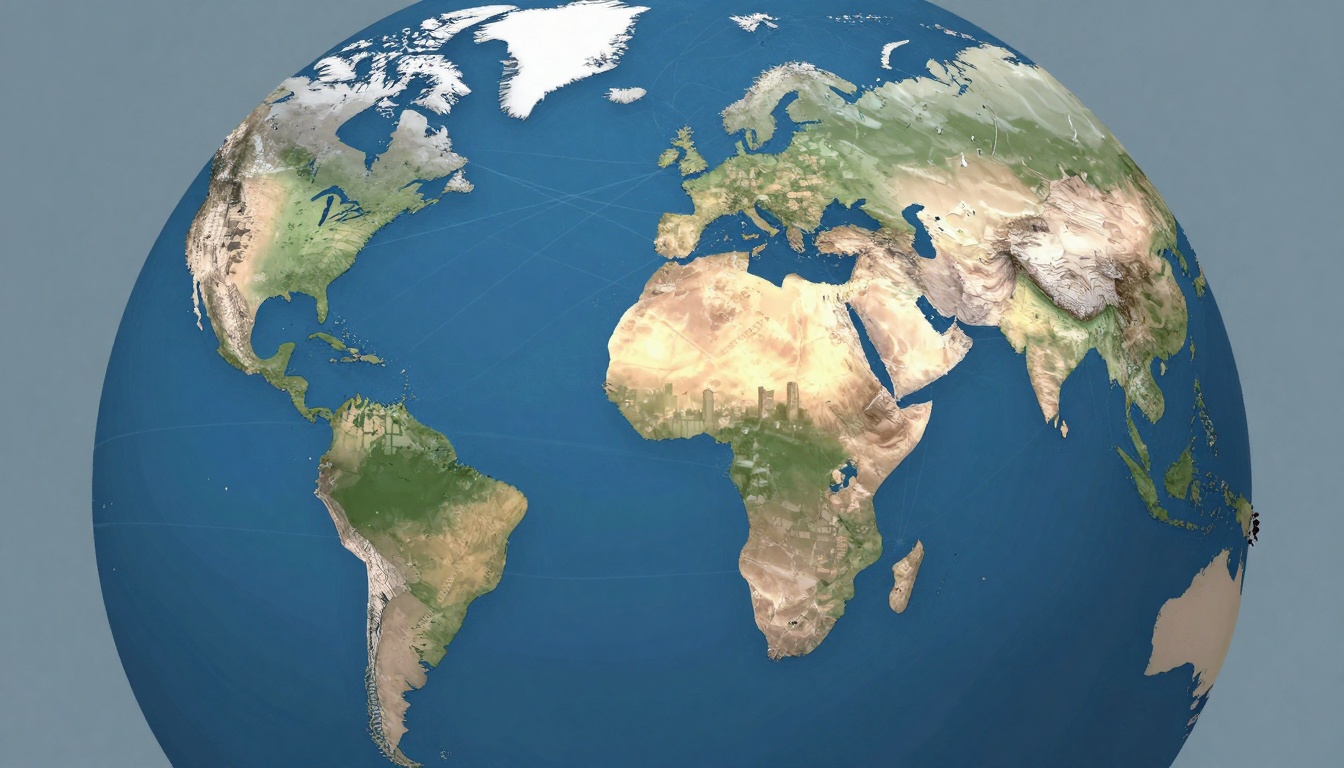
“Global South” is best understood as a loose label, not a membership card. It points to countries that, in general, sit lower in global income rankings, had colonial rule, and still feel that big decisions are made elsewhere. The term bundles together parts of Africa, Latin America, the Caribbean, much of Asia, and the Pacific, plus a long list of smaller states that rarely set the rules but are often asked to live with them.
That’s already a warning sign. A label that includes India, Haiti, Indonesia, and Botswana can’t behave like a single country. Geography doesn’t help much either. Australia is in the southern hemisphere but often classed with the “North”. Singapore is close to the equator but has high income and strong institutions. The “South” here is about power and position, not latitude.
Historically, the phrase partly replaced “Third World”, a Cold War term that carried baggage. It also grew out of the old North-South framing linked to the Brandt Line, a simplified way to show a wealthy “North” and a poorer “South”. That picture can still help readers, but it can also mislead. There are “Norths” in the South (global finance hubs, high-tech centres, oil-rich monarchies). There are “Souths” in the North too (poorer regions and communities with weak political voice).
So the term leaves out just as much as it includes. It can hide class divides, regional rivalries, and the fact that many governments in the “South” disagree on core questions like trade, energy, and security. Still, the label sticks because it describes something real: a shared feeling that the rules were written without them, and still don’t work for them.
From “Third World” to today’s headlines
“Third World” began as a Cold War idea. The “First” was the US-led camp, the “Second” was the Soviet camp, and the “Third” was everyone who didn’t want to be a pawn. That fed into the Non-Aligned Movement, where states tried to keep room to manoeuvre.
After the Cold War, “Third World” started to sound dated, and often insulting. “Developing countries” became common, but that also sounded like a one-way ladder with a single destination. “Global South” arrived as a softer phrase, with a hint of shared history and shared treatment in global forums.
An everyday example shows how language changes meaning. Calling a country “developing” can sound like a technical status report. Calling it part of the “Global South” turns the same country into a political actor, someone with a claim, a grievance, and a bargaining position.
A label built on shared gaps in power, not shared maps
What really holds the idea together is the gap between rule-makers and rule-takers. Think about:
- Trade rules: who writes them, whose standards become “global”, whose exports get blocked first.
- Debt: who borrows in a currency they don’t control, and who sets the interest-rate mood music.
- Technology: who owns patents, chips, and platforms, and who pays rent to use them.
- Institutions: who has more votes, louder voices, and better staff networks at the UN, IMF, and World Bank.
That’s the core of it. The “Global South” is less a place on a map and more a shared experience of negotiating from the cheaper seats.
When it behaves like a bloc: moments of real coordination
The “Global South” becomes most real in rooms where votes are counted and texts are negotiated line by line. It doesn’t act like a bloc because everyone loves each other. It acts like a bloc because, on some issues, coordination pays.
In practice, that coordination usually looks like coalitions, not command. There’s no single capital giving orders. Instead, countries cluster in groups, agree minimum demands, and try to stop being picked off one by one. They issue joint statements, trade support on unrelated topics, and use numbers to gain attention.
You can see why this matters in UN settings. One country can be ignored. Dozens speaking with one voice are harder to brush aside. That’s also why “bloc” language is tempting. It gives a sense of weight.
Recent news often frames this in the language of alignment, as countries test how far they can push back against Western pressure without cutting themselves off from trade and finance. Reporting on South Africa’s foreign policy choices, for example, shows the balancing act in public view, including how joint military exercises can strain ties with the US while signalling independence to domestic audiences (BBC reporting on South Africa’s strained ties with the US).
BRICS and “BRICS+” also sit in this space. For some leaders, BRICS is a megaphone for “southern” interests. For others, it’s a club where a few large states set the tone. Either way, it’s a platform where demands for reform, finance, and representation can be amplified, even when members disagree on plenty else.
G77 and NAM, the long-running coalition machines
Two older groups explain how “Global South” coordination works.
The G77 started in 1964 as a group of developing countries working together in the UN system, especially on trade and development. Despite the name, it grew far beyond 77. The point isn’t the number, it’s the method: draft common positions, bargain as a pack, and try to shape agendas rather than only react.
The Non-Aligned Movement (NAM) formed in 1961, rooted in the wish to avoid being dragged into great-power blocks. NAM has always been broad and messy, but that breadth is also its strength. It gives smaller states a megaphone and a meeting place.
Both are less like armies and more like trade unions. They don’t erase differences. They help members show up with shared lines when it matters, and they create habits of coordination that can be re-used in new fights.
Climate talks, debt, and trade, the issues that pull countries into the same tent
Climate politics is where “Global South” unity is easiest to spot. Many poorer countries contributed less to historical emissions, yet face sharper risks. That creates a clear argument for climate finance, support for adaptation, and funding for “loss and damage”.
This isn’t just theory. In January 2026 reporting and briefings, “Global South” coordination continues to focus on money promised versus money delivered, and on the terms attached to help. There’s also a push for leadership from countries outside the usual Western centres. Colombia, for instance, has announced a First International Conference for the Phase-Out of Fossil Fuels in April 2026, linked to discussions among countries backing a fossil fuel non-proliferation idea. That kind of initiative shows how states sometimes try to lead, not only demand.
Debt sits right beside climate. High borrowing costs can swallow budgets that should pay for floods, droughts, and health systems. When countries negotiate as a group, they can press for fairer terms, quicker restructuring, and more predictable finance.
Trade is a third magnet. When tariffs, sanctions, or “green” border rules appear, many governments in the South worry about being priced out just as they’re trying to industrialise. The result is coalition behaviour: shared objections to rules seen as one-sided, plus shared demands for technology access and transition support.
Why it often isn’t a bloc: the splits that matter
If the “Global South” were a single bloc, it would move like one. It doesn’t. Most of the time, it behaves more like a busy market. People trade, compete, form quick alliances, and walk away when the price isn’t right.
The first split is money. Some states are oil-rich, cash-heavy, and can fund big projects. Others are debt-stressed, one shock away from crisis. Those differences change how governments see climate timelines, energy policy, and sanctions. A country living on oil exports hears “phase-out” as lost revenue. A small island hears it as survival.
The second split is politics and institutions. Democracies, one-party states, military-led regimes, and fragile governments don’t negotiate the same way, and they don’t take the same risks. Even when they sign the same statement, their reasons can be miles apart.
The third split is region and rivalry. Neighbours compete for markets, water, borders, and influence. A “South” label doesn’t cancel local history. Sometimes it sharpens it, because external powers can offer deals that reward one side.
Then there’s security. Wars and great-power rivalry don’t always produce neat sides any more. Many states practise multi-alignment, building ties with the US, China, the EU, the Gulf, and Russia at the same time, depending on the issue. That’s not confusion. It’s a strategy to avoid dependence.
You can see this in how “South” countries respond differently to Western pressure, even at high-profile gatherings. The politics around hosting and boycotting major summits shows that shared language about co-operation can sit alongside deep disagreement about values, alliances, and who sets the agenda (BBC report on a G20 summit in South Africa).
Big differences in money, security, and what each country needs
A simple way to understand the splits is to compare needs:
- Commodity exporters often want stable prices, open shipping lanes, and fewer restrictions on what they sell.
- Manufacturing hubs want supply chains, investment, and access to rich consumer markets.
- Small island states want climate funding fast, plus insurance-style support after disasters.
- Large states often want status, seats at top tables, and room to build their own spheres of influence.
- Fragile states may prioritise aid and security help over long-term reforms.
These interests collide. Take trade deals. A deal that looks like opportunity for one country can look like a threat for another, depending on what it produces and how protected its farmers and factories are. The EU’s long-running push for a deal with the Mercosur bloc, finally reaching agreement after decades of talks, shows how trade creates winners, losers, and loud domestic fights on both sides (BBC coverage of the EU-Mercosur trade deal).
So when a headline says “the Global South wants X”, treat it like a weather forecast. It might be broadly right, but local conditions can be very different.
China and India, part of the story, but not the same as everyone else
China and India are often spoken of as “southern leaders”. They are large, influential, and can offer alternatives: loans, markets, tech partnerships, and diplomatic support. They also have their own interests, which don’t always match those of smaller states.
That’s why some governments welcome their rise as a counterweight, while others worry it can feel like swapping one powerful centre for another. A rising power can act like a champion in one meeting and a hard-nosed creditor or competitor in the next.
BRICS is a good example of both promise and friction. It can widen the stage for non-Western voices, yet it can also expose divides inside the “South”. Past disputes over membership, including arguments that left some countries angry, show that these clubs are political, not automatic family reunions (BBC reporting on Venezuela and a BRICS membership dispute).
For 2026, India’s role as BRICS chair has been framed as a chance to focus on “Global South” priorities. Even if that ambition is sincere, it won’t remove the basic truth: large states lead when it suits them, and smaller states follow only when the deal feels fair.
So, is “Global South” useful, and how should readers use it?
The term is useful if you treat it like a shorthand for power gaps. It helps explain why so many countries push for reform in global finance, fairer trade terms, and more say in institutions built after the Second World War. It also captures a shared memory of extraction, unequal treaties, and being told to wait your turn.
It becomes misleading when it’s used as if it describes a single foreign policy. There is no “Global South position” on every war, every sanction, every trade rule, or every rights debate. Often, you’ll see unity on process (more voice, more money, fewer double standards) and splits on substance (who pays, who cuts emissions, who hosts bases, who gets access to minerals).
If you want a live test of this, watch what happens in the run-up to major climate meetings in 2026. Briefings point to the Bonn talks in June as another place where poorer countries will push for clearer funding commitments, while also arguing among themselves about trade measures, transition speed, and energy pathways.
Used carefully, “Global South” can sharpen your reading of the news. Used lazily, it becomes a fog machine.
A simple checklist for spotting real unity versus marketing language
- Is there a joint vote or joint text? Statements backed by a named group matter more than a vague “South says”.
- Is a formal coalition involved? G77, NAM, regional blocs, or a clear negotiating group signals real coordination.
- Is there a shared demand with a price tag? Climate finance, debt relief, or tech transfer tends to bring unity.
- Is the issue zero-sum? Sanctions, wars, and security choices often split countries fast.
- Who benefits most? If one big power gains while others pay the cost, unity won’t last.
- Are key regions missing? If major players sit out, the “bloc” claim is usually overstated.
Conclusion
The “Global South” is real as a description of uneven power, and of countries that often bargain from the same weak side of the table. It becomes a bloc only in certain rooms, on certain topics, and often for practical reasons rather than shared identity.
Expect more coordination where the incentives line up, climate finance, debt rules, payment systems, and tech standards. Expect stubborn splits where money, security, and rivalry bite, energy policy, regional conflicts, and great-power courting.
Next time you see the phrase in a headline, don’t accept it as a solid wall. Picture it as a crowd in a busy station. Sometimes it moves together through one narrow gate. Most of the time, it heads in many directions at once.