

Listen to this post: GA4 AI Search Attribution For Publishers Using UTM Rules
AI assistants are sending readers your way, yet GA4 often files those sessions under “Referral” or, worse, “Direct”. That’s frustrating when you’re trying to prove the value of being cited in AI answers.
The fix isn’t magic, it’s GA4 AI search attribution done with clear UTM rules, plus a small amount of GA4 configuration. When you do it well, your team can finally compare AI-driven visits against organic search, newsletters, and social, with confidence.
Why AI traffic goes missing in GA4 (and why UTMs change the story)
AI traffic is slippery because it doesn’t always behave like classic search. A reader might see your brand inside an AI answer, think about it, then return later via a different route. GA4 credits the last session it can “see”, not the influence that happened earlier.
Referrers also get stripped more often than people expect. In-app browsers, privacy layers, copy-pasted links, and certain assistant experiences can all remove or muddy the referral data. As a result, your “AI impact” gets scattered across Direct, Organic Search, and generic Referrals. That’s why trend analysis matters more than perfect precision — and why it helps to first isolate what AI Overviews are doing to your click-through rate in Search Console. This is echoed in practical guidance like how to set up AI traffic tracking in GA4, which focuses on consistent reporting rather than chasing a flawless number.
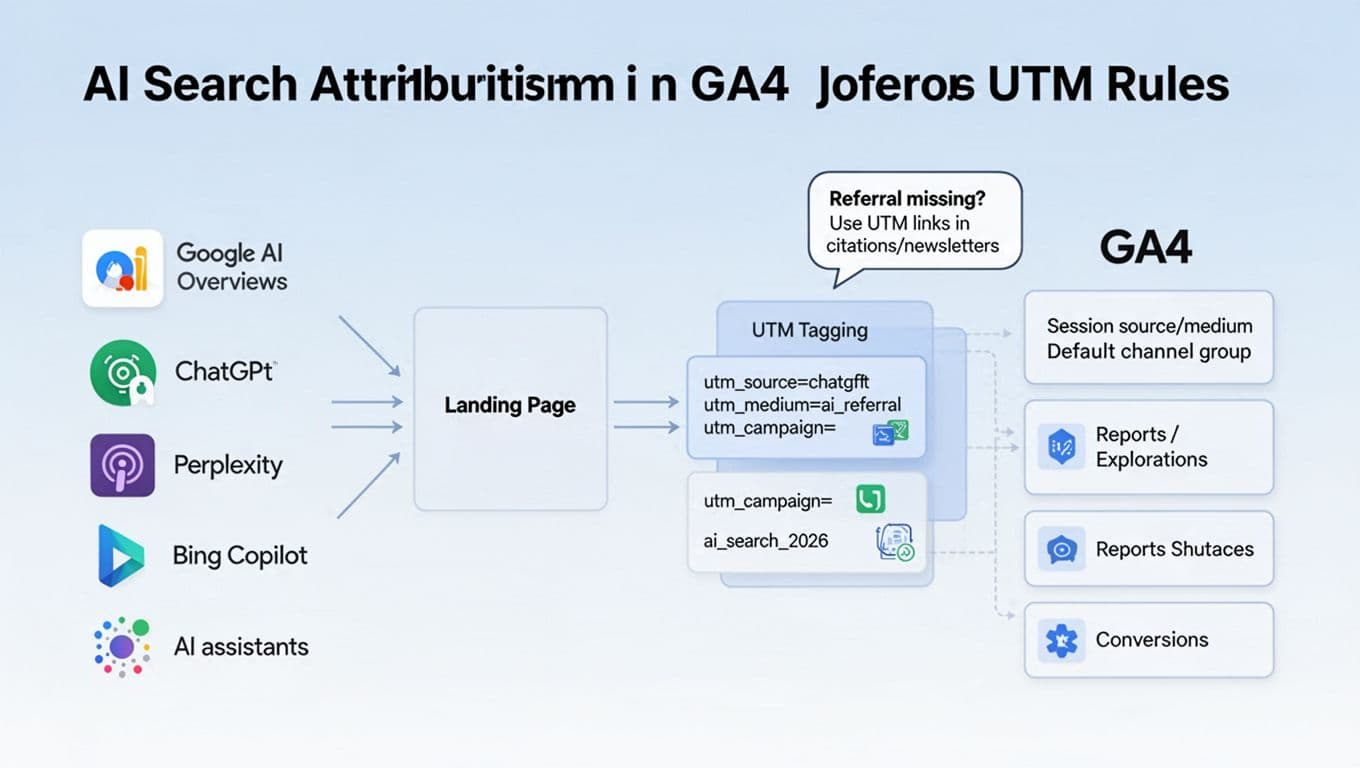
UTMs help because they turn “unknown” into “labelled”. You won’t be able to append UTMs to links inside Google AI Overviews (you don’t control those URLs), but you can:
- tag AI-related links you do control (newsletters, syndication, partner placements, share links)
- create a consistent GA4 channel rule that buckets any
utm_medium=ai_referralsessions into one recognisable stream - separate “AI assistant referral” from “AI-tagged distribution” without guessing
If a click arrives with no referrer, UTMs can be the only clue you get. Treat them like luggage tags on a busy airport carousel.
A practical UTM rulebook for AI assistants (publishers can actually stick to)
The fastest way to lose attribution is inconsistent naming. Mixed case, random mediums, and vague campaigns will splinter your reporting. Set a rulebook once, then enforce it everywhere.
Start with three simple rules:
- Lowercase everything (
chatgpt, notChatGPT). - Reserve
utm_mediumfor grouping, not storytelling (keep it stable). - Use
utm_campaignfor the “why”, such as a series, quarter, or initiative.
Here’s a sensible baseline that works for most publishers:
| Use case | utm_source | utm_medium | utm_campaign | When to use it |
|---|---|---|---|---|
| AI assistant link you control | chatgpt | ai_referral | ai_search_2026 | Links shared in AI-facing placements or partner tools |
| AI assistant link you control | perplexity | ai_referral | ai_search_2026 | Same structure, different source for clean breakouts |
| Owned distribution for AI experimentation | newsletter | ai_referral | ai_snippet_test | When testing summaries, prompts, or “share packs” |
| Citations in partner content | partner_site | ai_referral | syndication_feb_2026 | When a partner republishes or quotes you with your link |
Keep utm_medium=ai_referral consistent so GA4 can group it reliably. If you want more detail, put it in utm_content (for example, sidebar_link, top_citation, author_box).
A quick warning: UTM mistakes are common, and they compound over time. The issues are laid out well in using AI to audit GA4 attribution and UTM parameters, but the simplest prevention is a shared naming sheet plus a link builder.
If you publish at volume, an internal linking tool like Link Boss for internal linking can also help keep AI-cited pages well connected, so visitors land and keep moving.
Set up GA4 reporting so “AI search” becomes a real channel
UTMs only matter if GA4 reports them clearly. The goal is to make AI traffic easy to find in standard reports and consistent in explorations.
Build your setup in this order:
- Agree your AI mediums: pick one main value (for example
ai_referral). - Create a custom channel group in GA4 that includes sessions where
Session mediumexactly matchesai_referral. - Add a second rule for known AI referrers (when UTMs aren’t present), such as sources containing ChatGPT or Perplexity domains, where available.
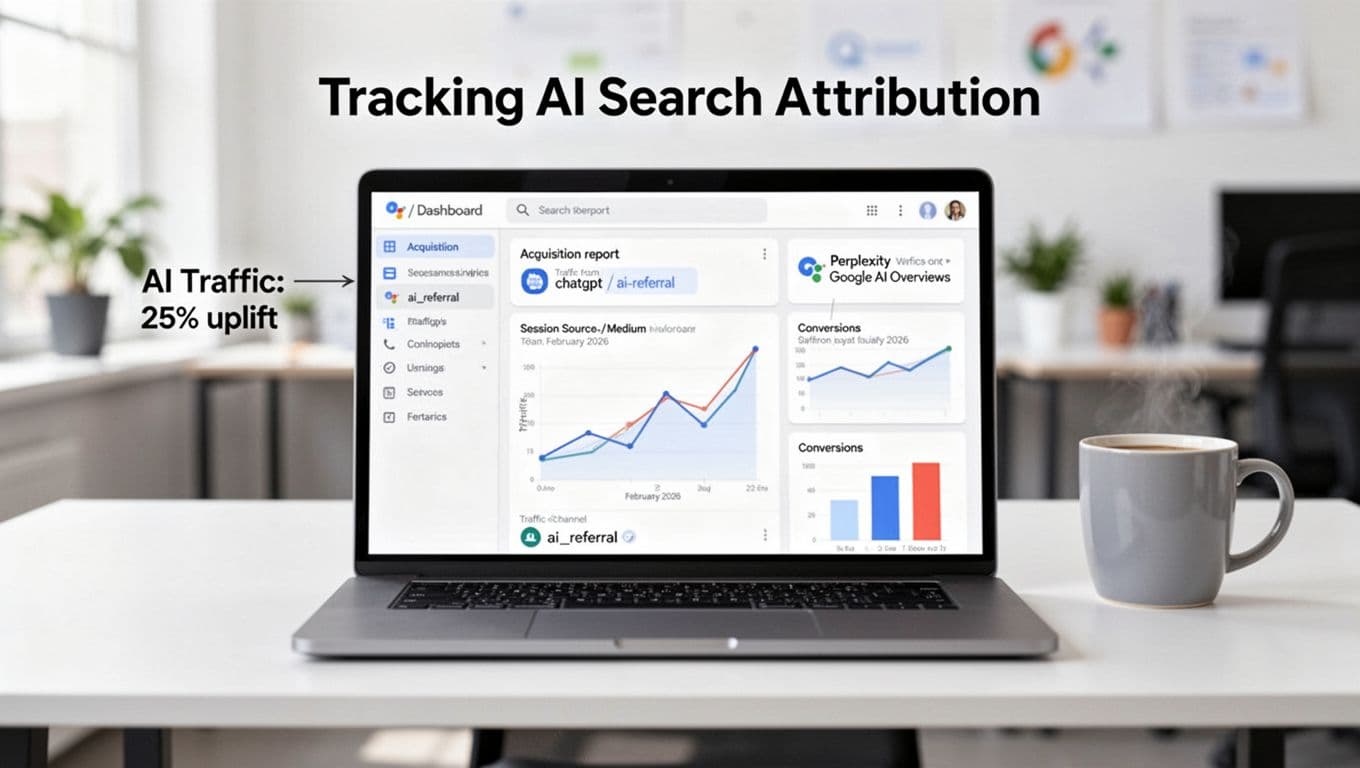
- Report with two views: Acquisition (channel group) for trend lines, and Explorations for page-level performance. Pair this with a single Looker Studio dashboard for AI Overviews in Search Console so visibility and outcomes sit side by side.
This matters even more now because GA4’s attribution controls keep changing. In early February 2026, GA4 rolled out a fix that corrected a bug where some paid search conversions were misattributed as organic when tracking signals didn’t persist across pages (as reflected in current industry reporting). GA4 also now supports separate attribution settings per conversion in many setups, which helps publishers treat “newsletter sign-up” differently from “membership purchase”.
For measurement ideas that go beyond basic clicks, see how to measure AI Overview and AI tool impact and how to track AI-generated clicks in GA4. Both reinforce the same point: you need clean buckets first, then you can judge engagement and conversions.
Where publishers should place UTM links (so they actually get clicked)
UTMs only work when they’re on links you control. That sounds obvious, yet many publishers only tag paid campaigns and ignore the rest.
Prioritise these placements because they generate repeatable, trackable clicks:
- Newsletters and alerts: If you run your newsletter on beehiiv, tag “Read more” links with
ai_referralwhen the issue promotes AI-friendly explainers and evergreen guides. - Syndication and partner bios: Give partners pre-tagged canonical links to use when they quote you.
- Author profile pages and media kits: Add tagged links for “best guides” and “start here” pages.
- Social repost packs: When your team shares “AI summary” carousels or threads, use one consistent campaign name.
Also keep the plumbing solid. If your site is slow, attribution wins won’t translate into revenue. Consider reliable infrastructure such as WordPress hosting or Hostinger hosting, then pair it with practical growth support like IONOS online marketing or a refresh via IONOS web design service when your templates hold back conversions.
Finally, content still matters. If you’re scaling output, tools like RightBlogger AI writing tool and SEOengine.ai writing assistant can help you ship more test pages, then you can measure which topics attract AI-driven readers.
Conclusion
AI assistants won’t wait for your analytics to catch up. With a simple UTM rulebook and a clear GA4 channel setup, GA4 AI search attribution becomes something you can trust, not guess. Set your naming rules, tag the links you control, and review results monthly. Then ask one hard question: which pages turn AI visitors into subscribers, members, or loyal readers?
Measurement is only half of it. To earn the citations in the first place, see how AI Overviews choose their sources, plus our publisher checklists for ChatGPT Search, Perplexity and Bing Copilot.