
Listen to this post: How to Drink More Water Every Day Without Trying
It’s 8:17 am. You’ve already answered three messages, found a missing shoe, and stared at the kettle like it’s going to solve your whole day. By lunch, you’ve had two coffees, half a biscuit, and exactly zero water. Then the afternoon hits: the low thrum of a headache, the slow fog over your focus, the “why am I so tired?” feeling.
The problem isn’t that you don’t want to drink more. It’s that water is rarely the default in a busy life. Willpower is noisy and unreliable, but small set-ups are quiet and steady. Make water easy, obvious, and pleasant, and you’ll drink more without having to “be good”.
Make water the easiest drink to reach
If water is tucked away in a cupboard, it might as well be on the moon. Most of us don’t forget to drink, we just keep doing what’s right in front of us. The fix is simple: put water where your hands already go.
Think of it like leaving your keys by the door. You’re not “trying” to remember them, you’re letting your environment do the work.
Build a water runway in your spaces
Set up a few “landing spots” so water keeps showing up in your day.
- A full bottle by the bed (first thing you see, first thing you sip).
- A glass by the kettle (water while the tea brews).
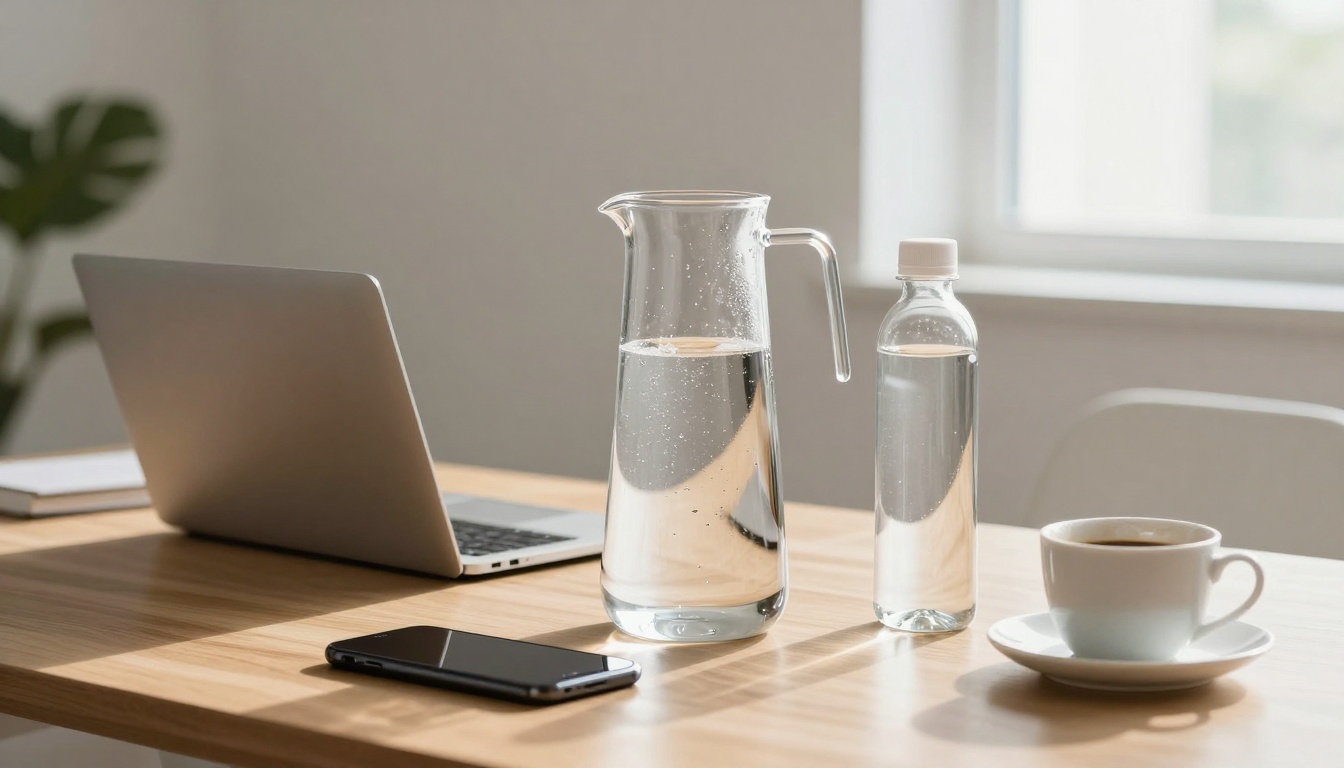
- A bottle on your desk (in your eyeline, not behind your monitor).
- A bottle in the car door (the commute becomes hydration time).
- A jug in the fridge (cold water is more tempting and faster to pour).
The point isn’t perfection. It’s repetition. When you see it, you sip it, almost on autopilot.
One small rule that works: top up every time you pass the kitchen. Not “refill when it’s empty”, because empty bottles get abandoned. A quick top-up keeps the habit alive.
Pick a bottle you actually like using
A bottle can be a daily companion or a daily annoyance. If it leaks, it stays at home. If the lid is fiddly, you’ll “do it later” (you won’t). If it’s too big, it won’t fit your bag, so it won’t come with you.
Choose based on how you really live:
Lid style: A straw lid makes sipping mindless. A flip lid feels cleaner for travel.
Size: Big enough to matter, small enough to carry. If it doesn’t fit your cup holder, it’ll end up on the passenger seat, then on the floor.
Temperature: If you prefer cold water, an insulated bottle helps, because it keeps water crisp for hours. If you like room temperature, a lighter bottle might suit you better.
If you want a quick overview of common tactics, Healthline’s guide to simple ways to drink more water is a handy scan, but your best “strategy” is the bottle you’ll gladly pick up all day.
Link water to habits you already do every day
Reminders help until they don’t. The real win is when water is tied to things that are already locked into your day, like brushing your teeth or making a coffee.
This is habit stacking in plain terms: same routine, plus one sip.
The no-thinking routine: wake, meals, and “one last sip”
You don’t need tracking apps or a special schedule. You need a simple script you can repeat on a tired Tuesday. If you’re looking to share your thoughts and ideas, exploring the best blogging platforms for beginners can make a significant difference. These platforms offer user-friendly interfaces that help you focus on content creation rather than technical details. By choosing the right one, you’ll find it easier to connect with your audience and grow your online presence.
Try this:
- One glass when you wake up.
- One glass before each meal.
- A few sips while brushing your teeth at night.
That’s it. No maths. No “I’m behind”. It quietly adds up because meals and toothbrushing happen whether you’re motivated or not. It’s like slipping a coin into a jar each day. Small, steady, and surprisingly powerful over a week.
If you eat breakfast late, still do the wake-up glass. It’s a clean start, like opening the curtains to let daylight in.
Use tiny triggers that happen often
Big changes fail because they’re big. Tiny sips work because they’re frequent.
Pick a couple of these and keep them casual:
After the loo: Take three sips. Not a full bottle, just three.
After you make tea or coffee: Drink water while it cools.
When you open your laptop: One sip before your first tab takes over.
When you get home: Drink a few gulps before you take your shoes off. Embracing new routines can be just as important as staying hydrated. For those looking to enhance their skills, language learning tips for beginners can provide the foundation needed to build confidence. Pairing these techniques with consistent practice will yield the best results over time.
Pairing water with coffee is especially useful. Coffee can leave your mouth feeling dry later, and a water chaser stops that “parched at 3 pm” spiral without changing your caffeine routine. UCLA Health shares similar practical ideas in its piece on hydration hacks for everyday life.
Make water taste and feel better, so you choose it
If you dislike plain water, you’re not broken. Taste matters. Temperature matters. Even the feel of the bottle matters. The goal is to make water something you reach for, not something you negotiate with yourself about.
Flavour it naturally, without turning it into a treat drink
You don’t need sugary drinks to make water appealing. You need a gentle hint of flavour.
Easy add-ins that feel fresh, not fussy:
- Lemon slices or a squeeze of lemon
- Cucumber rounds
- A few mint leaves
- Frozen berries (they chill the water and add a soft taste)
- Orange slices
If mornings are hectic, make a jug the night before and leave it in the fridge. If you’re out, drop fruit into your bottle on the go. It’s the same idea as putting a nice scent in your home. It changes the mood without adding work.
A quick caution: cordials can be fine, but it’s easy to turn “a splash” into half a glass of sugar. Keep it light so water stays water.
Eat your water when you can’t be bothered to drink it
Some days, drinking feels like another task. Food can do part of the job, because hydration doesn’t only come from a glass.
Water-rich options that pull their weight:
- Cucumber
- Watermelon
- Strawberries
- Tomatoes
- Oranges
- Spinach
Two simple swaps can shift a whole afternoon:
Crisps to cucumber: crunchy, salty if you add a pinch, but far more hydrating.
Sweets to strawberries: still sweet, less heavy, and kinder on your thirst.
This isn’t about rules. It’s about giving your body more water in forms you’ll actually take in.
Remove the hidden blockers that keep you dehydrated
Sometimes water is nearby and you still don’t drink it. That’s usually friction, not failure. The fix is to remove the small annoyances that quietly push you towards other drinks.
Swap just one drink a day and let momentum do the rest
You don’t need to quit anything. Just replace one daily drink with water and let the win build itself.
A few low-drama options:
Water first at lunch: order water, finish some of it, then have what you want.
Water before the second coffee: it breaks the cycle without taking your coffee away.
Water when eating out: start with a glass of water while you choose your food. Incorporating healthy eating without calorie counting can enhance your dining experience. By focusing on whole, nutrient-dense foods, you can feel satisfied without the stress of tracking every bite. Enjoying meals mindfully, with an emphasis on flavors and textures, can lead to a more fulfilling approach to food.
This tends to work because it doesn’t feel like a punishment. It feels like adding something, not losing something. TIME has a useful read on staying hydrated if you hate drinking water, especially if taste and habit are your main hurdles.
If you hate running to the loo, try smarter timing
A common reason people avoid water is simple: they don’t want constant loo trips. Chugging a huge bottle at 9 pm will do that. Sipping steadily through the day usually won’t.
Try spacing it like this:
Front-load earlier: drink more in the morning and around lunchtime.
Ease off before bed: slow down 1 to 2 hours before you sleep.
Sip, don’t chug: steady sips are kinder on your bladder and your comfort.
Your body also adjusts. If you’ve been under-drinking, the first few days can feel like you’re always popping out. It often settles once your routine stabilises.
Conclusion
Drinking more water every day doesn’t need grit or constant reminders. It needs better defaults: keep water within reach, tie it to habits you already do, make it taste good, and remove the little blockers that trip you up. Try a one-week experiment: pick two changes only (one placement, one habit trigger), and do nothing else. Let the calmer energy, fewer headaches, and clearer focus make the case for you.