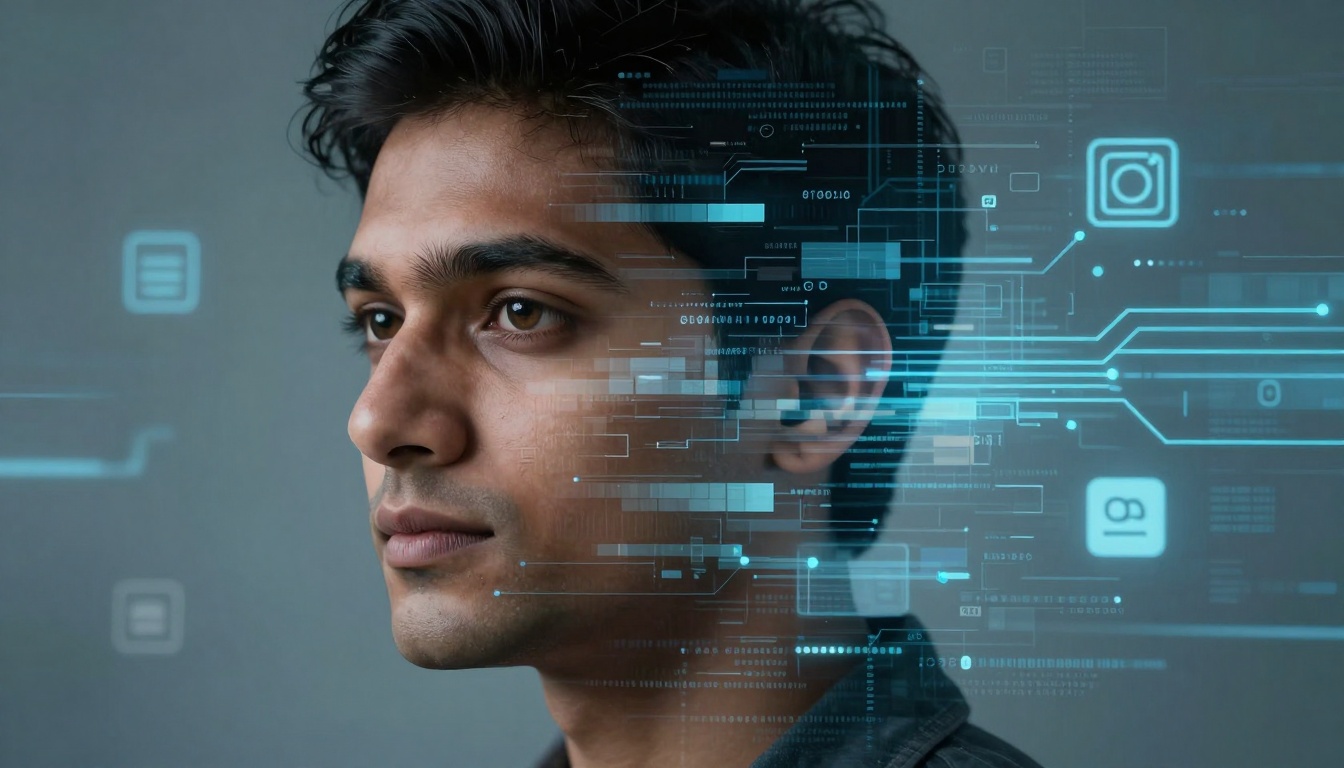

Listen to this post: Deepfakes and misinformation: how to detect fakes and defend yourself in 2026
Your phone lights up with a clip that looks like breaking news. The camera shakes, the audio crackles, the face is familiar. A friend has already added, “This is mad, share before it gets taken down.”
You hit play, your stomach turns, and your thumb hovers over Share. Then a second thought lands: what if it’s fake?
That’s the point of deepfakes. They are AI-made video, audio, or images that can copy a real person’s face or voice well enough to fool the eye, the ear, and the gut instinct. In January 2026, the cost of making them has dropped, the tools are faster, and the risks now sit in everyone’s pocket: scams, fake news, harassment, and a slow breakdown in trust.
This guide explains how deepfakes push misinformation, how detection works (and where it breaks), and what to do next, as a person, a workplace, or a comms team.
Why deepfakes make misinformation harder to stop
For years, “I saw it” meant something. Video felt like proof, audio felt like a confession. Deepfakes punch a hole in that old rule.
The problem isn’t only that fakes look real. It’s that they change the whole rhythm of belief:
- Trust flips: a convincing clip can override common sense.
- Speed wins: the fake spreads in minutes, the correction takes hours.
- Scale explodes: one person can generate many versions for different audiences.
- Real-time is here: video-call deepfakes can mimic a person live, not just in a polished edit.
Security teams have been warning that identity threats will grow fast in 2026, as deepfakes mix with other attack methods like account takeovers and social engineering, outlined in reporting such as MSSP Alert’s look at 2026 identity threats. The takeaway is simple: the fake doesn’t need to be perfect, it only needs to be believable long enough to cause damage.
How deepfakes spread faster than corrections
Deepfakes travel like sparks in dry grass. Platforms reward quick reactions, short clips, and strong emotion. A fake that hits anger, fear, or shock gets sent before anyone checks where it came from.
Corrections struggle because the first version people see tends to stick. Even when a debunk arrives, many brains file it under “damage control” and move on. It’s not because people are stupid. It’s because attention is limited, and first impressions feel personal.
Everyday examples show how this works:
- A fake celebrity apology, cut into a 12-second clip, shared for laughs, then repeated as “proof”.
- A fake “breaking news” segment, with a logo copied from a real channel, reposted without context.
- A fake voice note in a family group chat, urgent and shaky, asking for help “right now”.
Deepfakes don’t only trick people. They also wear people out. When everything might be fake, some stop trying to tell the difference.
Where the biggest harm shows up: scams, markets, politics, and harassment
Deepfakes hurt in a few clear places, each with its own pattern.
Scams and fraud: Real-time impersonation has moved from theory to reported cases. One widely covered incident involved a staff member joining a video call and seeing what appeared to be senior colleagues, only to be tricked into sending huge transfers (often referenced as the Hong Kong deepfake case, linked to the Arup incident). This style of attack is why “video approval” is no longer safe by itself.
Family emergency voice clones: A short voice clip from social media can be enough to copy tone and rhythm. The caller sounds like your child or partner, crying, asking for money, begging you not to hang up.
Markets and business reputation: A fake CEO clip can jolt staff, spook customers, and swing sentiment. Even if the price doesn’t move, confidence does. The clean-up is time-consuming, public, and expensive.
Politics and civic trust: A fake clip dropped the night before an election doesn’t need to convince everyone. It only needs to confuse enough people, or drag the news cycle into arguing about what’s real.
Harassment and sexual deepfakes: Non-consensual explicit fakes are used to shame, blackmail, or push people out of jobs and communities. It’s personal harm, built at industrial speed. For a sense of how these scams and impersonation tactics are being talked about going into 2026, Mea’s deepfake threats to watch in 2026 is a useful overview.
Deepfake detection: signs, tools, and what still fails
There isn’t one magic “deepfake test”. Good detection works in layers, like checking a banknote: feel, look, tilt, then verify with the issuer.
The hard truth is that strong fakes can beat casual checks, and even beat automated detectors sometimes. That’s why detection has to sit beside verification steps (who posted it, where it came from, and whether it matches other trusted sources).
Here’s a simple way to think about detection:
| Layer | What you check | Why it can fail |
|---|---|---|
| Source check | Who posted it, when, and why | Accounts get hacked, screenshots hide origins |
| Visual and audio cues | Face, hands, lighting, voice rhythm | Better models reduce obvious glitches |
| Context check | Location, timeline, other coverage | Old clips get recycled as “new” |
| AI detection tools | Pixel, motion, and sound patterns | False positives and false negatives happen |
| Provenance (media receipts) | Whether it has trusted creation history | Not all media is signed yet |
Quick checks anyone can do before sharing
You don’t need a lab to slow down a lot of misinformation. You need a repeatable habit.
A practical checklist:
1) Check the source account Look for the original upload, not a re-post of a re-post. If the account is new, renamed, or full of recycled clips, treat it as untrusted.
2) Watch the face, then watch the hands Deepfakes often focus on the face. Hands, jewellery, and small details can drift.
Look out for:
- Lip-sync that feels “soft”, like the mouth lags behind the words.
- Lighting that changes across the face but not the room.
- Teeth and tongue that look too smooth or too uniform.
- Glasses that blur strangely at the edges.
- Earrings or necklaces that jump position between cuts.
3) Listen for audio clues AI voices can sound clear in a way that feels wrong for the setting.
Common tells:
- Audio that is too clean for a “phone recording”.
- Odd breathing, or breathing that doesn’t match emotion.
- Rhythm that feels like perfect punctuation, then sudden stumbles.
- A voice that copies the sound but not the personality (wrong humour, wrong phrasing).
4) Use the emotion rule If the clip makes you feel urgent or furious, pause. Strong emotion is often the hook. Save it, then verify it.
A good personal standard: don’t share “breaking” clips until you can find the same claim from at least one trusted outlet, or a primary source.
How AI detectors and forensic teams spot fakes
Automated deepfake detection looks for patterns humans don’t notice. It can analyse:
- Tiny pixel artefacts and texture mismatches
- Unnatural face motion (micro-movements, blink timing, head turns)
- Audio features (spectral patterns, synthetic harmonics)
- Cross-checks between voice and lip movement
The smarter systems do multimodal detection, meaning they compare video, audio, and even text metadata together. That matters because a deepfake that looks fine might still have audio oddities, or a metadata trail that doesn’t make sense.
Research tools exist that help test detection models. One example often referenced in academic and evaluation work is Deepfake-o-Meter, which provides a way to compare detectors. Treat these tools like a smoke alarm, not a judge. They can flag risk, but they can’t deliver certainty.
If you want a plain-language walk-through of how detection methods are being packaged for security teams, Paladin’s deepfake detection guide (2026) lays out common approaches without pretending there’s a perfect solution.
The limits matter:
- False positives: real videos can be flagged, especially low-quality clips.
- False negatives: the best fakes can pass, especially after edits and re-uploads.
- Adaptation: attackers change methods when detectors improve.
This is why the UK and others keep running public tests and challenges around detection performance. For example, ID Tech’s note on the UK deepfake detection challenge (2026) shows how much effort is going into measuring what works under pressure.
Content provenance and labels, when you can trust them
Guessing is tiring. Provenance aims to reduce guessing.
Think of provenance as a media receipt. It’s a tamper-evident record that can show where a photo or video came from, what device made it, and what edits happened. One of the main standards in this space is C2PA content credentials, which can attach a history to media so viewers and platforms can check it.
If a clip has trustworthy credentials, it becomes easier to confirm it. If the credentials are broken, that’s a warning sign.
The catch is important: missing credentials don’t prove something is fake. Many cameras and apps still don’t sign content. Provenance helps most when newsrooms, public bodies, and major platforms adopt it widely and keep it consistent.
Defence that works: habits and systems that stop deepfakes causing harm
Deepfakes succeed when a single moment of belief triggers a big action: sending money, sharing a password, posting a clip, or naming a suspect.
So defence isn’t about “spotting every fake”. It’s about building checks that make it hard for a fake to cause harm.
The best defences share one idea: verify out-of-band. That means confirming through a separate, trusted channel, not the one used by the attacker.
For individuals: a simple playbook for the next suspicious clip or call
When something feels off, use a three-step habit: stop, save, verify.
Stop Don’t reply in the same thread. Don’t argue in comments. Don’t share “to warn people”. That still spreads it.
Save Take screenshots, save the link, note the account name, and record the time. If it becomes harassment or fraud, details matter.
Verify (out-of-band)
- Call a saved number from your contacts, not a number in the message.
- If it’s a family “emergency”, ask a question a stranger won’t know.
- Set up a private family code word for money requests or travel emergencies.
- Never send money, gift cards, or bank details based on a voice call alone.
Many scams now use celebrity deepfakes to pull people into investment fraud and crypto traps. Seeing how easily people can be pulled in can sharpen your instincts. This report on an Elon Musk deepfake scam shows the emotional shape of these schemes: friendly authority, urgent opportunity, and a smooth path to payment.
Protect your own media too:
- Keep long, clean voice clips limited on public accounts.
- Tighten privacy settings, especially for stories and highlights.
- If you post video often, consider visible watermarks for personal clips (it won’t stop cloning, but it can reduce re-use without context).
- Report suspected deepfakes in-platform, even if you’re not sure.
For workplaces: payment controls, identity checks, and training that blocks impersonation
Businesses lose money when one person can approve a big action alone. Deepfakes exploit that weakness.
Build controls that assume voice and video can be faked:
Payments and finance
- Two-person approval for high-value transfers.
- Vendor bank detail changes confirmed via known contacts, using a stored phone number.
- “Urgent” requests treated as high-risk by default, even if they look like the CEO.
Account access
- Use security keys or authenticator apps where possible.
- Treat voice approval as weak. A deepfake can copy it.
- Lock down help-desk resets with extra checks.
Hiring and remote onboarding
- Use liveness checks during identity verification.
- Add anti-injection checks to reduce replay and screen-based tricks.
- Train recruiters that “great camera quality” isn’t proof.
If you’re mapping authentication strategy for 2026, it helps to read viewpoints focused on what deepfakes can and can’t do against modern identity checks, such as Keyless on deepfakes and authentication in 2026.
A short training script that works because it’s plain:
“Video is not proof. Verify first.”
Repeat it in finance, HR, IT, and exec admin teams, because those roles are targeted most.
For leaders and comms teams: respond fast without amplifying the fake
When a deepfake targets a brand or public figure, the first hour matters. Panic posts can spread the fake further.
A simple incident response mini-plan:
1) Capture evidence Save the original links, screenshots, and re-uploads. Note where it’s spreading.
2) Alert the right people Legal, security, HR (if harassment is involved), and the exec sponsor for crisis comms.
3) Publish a short, factual statement Say what you know, what you don’t, and where updates will appear. Avoid repeating the false claim in detail.
4) Share verified links Point people to official channels and time-stamped updates. If you can, publish signed official media so the public can verify it later.
5) Coordinate takedowns Report to platforms, and if needed, contact partners and media outlets with the verified correction.
Sometimes it helps to post the real clip or transcript. Sometimes it doesn’t. If the fake is graphic, or if repeating it could cause more harm, keep the correction tight and focus on verification sources.
Conclusion
Deepfakes will keep improving, but most damage still comes from simple tricks: urgency, authority, and a single unchecked step. The defence that holds up is boring on purpose: verify through trusted channels, especially for money, passwords, and breaking news. Share a short verification checklist with your family or team, then tighten payment and approval steps this week. The next convincing clip will arrive soon, and you’ll want your habits in place before it does.