Listen to this post: Algorithmic Bias: How It Happens and What Can Be Done
A CV goes in, a silence comes out. No interview, no feedback, just a polite email that feels like a door closing somewhere you can’t see.
Or it’s a loan application. You’ve paid rent on time for years, your bank balance looks steady, yet the screen flashes: “Declined”. You start doing the maths in your head, but the decision wasn’t made by a person with a calculator. It was made by software that sorts, scores, and filters at speed.
That’s where algorithmic bias shows up, unfair results that repeat at scale. Not as a one-off mistake, but as a pattern. This piece explains how bias gets into systems, what harm it causes, and what builders, organisations, and everyday users can do to reduce it.
What algorithmic bias is, and why it feels so hard to spot
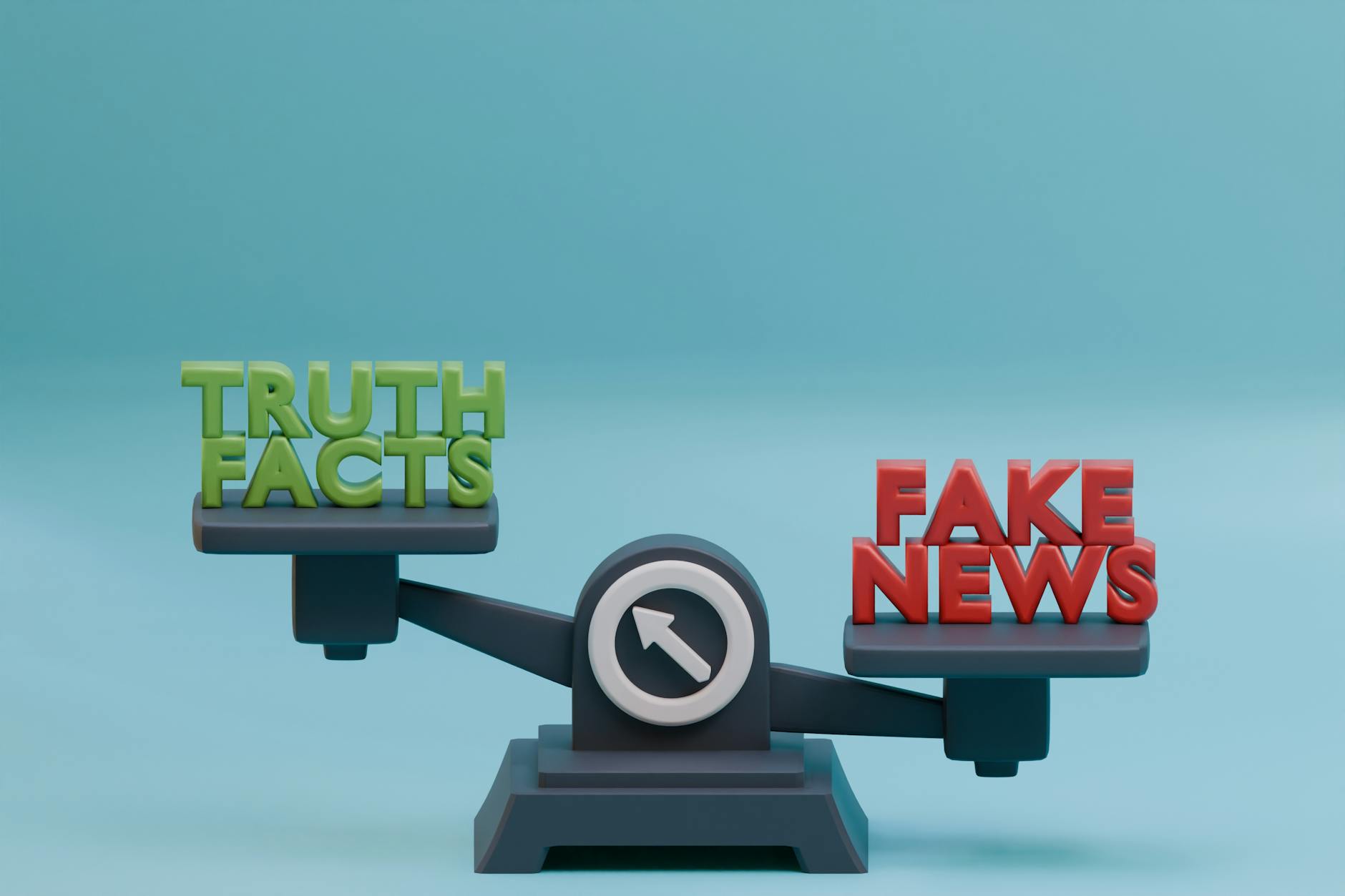 Photo by Hartono Creative Studio
Algorithmic bias is when a computer system produces unfair outcomes, often for certain groups, because of the data it learned from, the goal it was set, or the way people use it.
It’s hard to spot because it hides behind tidy language like “objective”, “data-driven”, or “neutral”. Maths looks clean on the page. But the choices around the maths are human choices: what counts as “success”, which data is “good”, which errors are “acceptable”, and who gets to question the results.
Bias isn’t a computer having opinions. It’s history and judgement smuggled into a process that runs thousands of times a day.
A quick scan of where most people meet it:
- Hiring filters and CV screeners
- Credit checks, fraud scoring, and pricing
- Face ID and identity checks
- Recommendations (news, video, music, shopping)
- Content moderation and account bans
For a broader list of examples and common fixes, this overview is a useful starting point: Bias in AI: Examples and 6 Ways to Fix it in 2026.
Bias vs error: when a system is wrong in a patterned way
All models make mistakes. That alone doesn’t mean bias.
Bias is when the mistakes land on the same people, again and again. The system is not just wrong, it’s wrong in a direction.
Picture a warehouse hiring tool that tries to predict who will be “strong enough”. Instead of measuring strength, it uses height as a shortcut. Tall applicants score well, shorter applicants score poorly. Many women are filtered out before anyone meets them, even if they’re perfectly capable of the job.
That’s the key point: bias often comes from a shortcut that “works” on average, but fails unevenly.
Fairness also has more than one meaning. In some settings, “fair” might mean equal access to opportunities. In others, it might mean equal error rates across groups, so one group isn’t punished by false rejections. The right definition depends on the decision being made, and what harm looks like in real life.
High-stakes uses where bias can hurt the most
Some uses are annoying when they go wrong, like a music app recommending the same track on repeat. Others can change a life.
Hiring: Qualified people get screened out early, then never get a chance to show up in person.
Lending: Some borrowers face higher interest, lower limits, or blanket declines, even when their true risk is similar.
Housing: Tenant screening can push people into worse homes, longer commutes, or unstable living.
Policing and security: A false match can lead to stops, searches, or suspicion that lingers.
Healthcare: People can be under-triaged, misclassified, or offered support too late.
When an algorithm sits between you and a vital service, the cost of being misread gets steep quickly.
How algorithmic bias happens: data, design choices, and how people use the results
Bias usually enters through three doors: data, design, and deployment. Any one of them can tilt outcomes. The worst cases stack all three.
A system can look fair in testing, then drift into unfairness over time. It can work well in one city, then fail badly in another. It can be accurate overall, yet still treat some groups as “high risk” because the inputs are uneven.
Biased or incomplete data: when the past trains the future
Training data is a record of what happened before. If the past was unequal, the data will be too.
Common data issues include:
Skewed coverage: Some groups are missing or under-represented. The model learns more about people it sees often, then guesses badly for people it rarely sees.
Biased labels: Sometimes the “ground truth” is not truth at all. It’s a decision made in a flawed system. If arrest records are used as a signal for “crime”, the model inherits patterns from policing, not just behaviour.
Proxy variables: The model may not be told someone’s race or disability, but it can infer a lot from postcode, school, device type, job gaps, or even writing style. Proxies can recreate the same unequal outcomes while looking “blind” on paper.
Unequal measurement: What gets recorded often reflects power. Some communities are over-measured (more surveillance, more checks), while others are under-measured (less access to services, fewer official records).
The takeaway is simple: better data isn’t just more data. It’s more representative data, with clear notes about what’s missing.
Design problems: what you choose to predict can bake in unfairness
Bias can be designed in, even with clean data, just by choosing the wrong target.
One classic trap is picking a target that’s a poor stand-in for what you really care about. In healthcare, for example, using “health spend” as a proxy for “health need” can go wrong if some groups have historically received less care or faced barriers to access. The model learns that lower spend means lower need, when it might mean unmet need.
Design choices that often create unfairness:
- Problem framing: Should this be automated at all, or is it a judgement call that needs a person?
- Feature choice: Which signals are allowed in, and which are too close to protected traits?
- Optimisation goals: Are you optimising for speed, profit, or accuracy, without measuring harm?
Fixing one fairness issue can also create another if you don’t test carefully. Changing thresholds might reduce false rejections for one group, but increase false approvals elsewhere. That’s not a reason to do nothing, it’s a reason to measure the trade-offs openly.
A practical walkthrough of real-world challenges and mitigation approaches is here: Addressing AI Bias: Real-World Challenges and How to Solve Them.
Deployment traps: over-trust, feedback loops, and “used outside its lane”
Even a well-tested model can cause harm when it’s used carelessly.
Over-trust happens when a score looks precise, so people treat it like truth. A hiring manager might stop reading CVs once the “fit score” appears. A clinician might rely on a risk flag without checking context.
Feedback loops are even nastier. If a policing model sends more patrols to one area, that area produces more stops and more reports. The data grows, the model becomes more “confident”, and the cycle tightens. The system doesn’t just reflect reality, it shapes what reality looks like in the dataset.
Out-of-lane use is common. A model trained on one country’s accents may struggle elsewhere. A system trained on office workers may fail on shift workers. A tool built for triage may get used as a final decision-maker because it’s cheaper.
Monitoring after launch matters as much as training. Bias can grow quietly, like mould behind wallpaper.
Real-world examples that show how bias plays out
Examples matter because bias is rarely announced. It’s felt in outcomes: who gets picked, who gets blocked, who gets checked twice.
Hiring and work: when past hiring patterns become the rule
Resume screening tools learn from historic hiring. If a company hired mostly men in the past, the data can teach the model that “successful” candidates look male-coded. It might prefer certain job titles, hobbies, or even writing styles that are more common in one group, not because they predict performance, but because they match the old pattern.
A second, growing issue is automated video interview scoring. If the system was trained mostly on a narrow set of speech patterns, it can penalise people with strong regional accents, stammers, neurodivergent traits, or disability-related movement. The risk isn’t just “bias” in the abstract. It’s missed talent, and a workplace that becomes less diverse over time.
If you want a wide set of documented examples across sectors, this guide collects them in one place: 16 Real AI Bias Examples & Mitigation Guide.
Face recognition and identity checks: unequal error rates can become real harm
Face recognition systems can show different error rates across demographic groups. A demo might look perfect when it matches a few volunteers in good lighting. The real world is harsher: low light, odd angles, tired faces, cheap cameras, poor internet.
When error rates are unequal, the impact isn’t shared equally. A false match can mean extra screening at a border. In policing, it can mean a person is treated as a suspect first and a human second.
The lesson here is blunt: “works most of the time” isn’t the same as safe for high-stakes use. If a tool can trigger force, detention, or humiliation, the standard has to be higher than a marketing demo.
Healthcare, credit, and housing: proxies that quietly punish people
In healthcare, proxy targets can warp care. If a model uses past healthcare spend to predict who needs support, it can under-estimate need in groups that historically received less care, even when illness levels are similar. People who already faced barriers then face a fresh barrier, this time stamped with “data”.
In credit and housing, proxies can do similar work. Postcode can act as a stand-in for income, ethnicity, and local opportunity. “Unstable work history” can reflect a gig economy reality, caring duties, or illness, not irresponsibility. These are not minor details. They shape who gets a decent flat, and who pays more for the same money.
It’s also worth tracking the wider risk picture organisations are responding to, from unfair outcomes to reputational damage: Top AI Risks, Dangers & Challenges in 2026.
What can be done: a practical bias-reduction checklist for builders, leaders, and users
Bias isn’t a ghost in the machine. It’s a management problem, a design problem, and a measurement problem.
The good news is that it can be reduced. The hard part is that it takes ongoing effort, not a one-time “fairness pass”.
The actions below follow three stages: before building, during training, and after launch. They also reflect a clear 2025 to 2026 shift: tougher expectations for high-risk AI, more audits, more documentation, and more pressure to prove you tested for harm, not just accuracy.
Before you build: decide if AI is the right tool, then define fairness
Start with basic prompts that force clarity:
Is this a high-stakes decision? If it affects jobs, money, housing, health, or freedom, treat it as high-risk.
Can a person appeal? If there’s no appeal route, don’t pretend the system is “supportive”. It’s making the decision.
What does “fair” mean here? Equal access, equal error rates, or something else? Write it down.
Who could be harmed? Think beyond the average user. Include disability, language, accent, and age.
What data is missing? Name the gaps. Don’t hide them behind confidence scores.
Also, don’t leave this to engineers alone. Bring in HR, legal, domain experts, and people who understand the lived reality of the groups affected. Document limits from day one, so they can’t be quietly forgotten later.
During training: test by group, remove bad shortcuts, and stress-test edge cases
Overall accuracy can be a comforting lie. You need to measure performance by group, then look for gaps.
Practical steps that often work:
- Test false rejects and false accepts separately across groups, not just one headline score.
- Look for proxy variables that smuggle in protected traits (postcode is a common one).
- Re-balance training data so under-represented groups are not treated as an afterthought.
- Adjust thresholds in plain terms, if one group is being blocked far more often for the same real risk.
Keep a simple “model card” style summary, even if you never call it that:
- What it’s for
- What data it learned from
- Known limits and failure modes
- Safe uses and unsafe uses
That document becomes a seatbelt later, especially when someone wants to deploy the model in a new setting.
A quick view of where bias shows up and the types of mitigation teams use is also summarised here: 5 Real-life Examples of AI Bias.
After launch: monitor drift, allow audits, and give people a way to challenge decisions
Once the system is live, reality changes. People change how they behave around the score. Data shifts with seasons, markets, and local events. That’s when drift sets in.
Post-launch basics that reduce harm:
- Ongoing monitoring for error gaps across groups, not just overall performance.
- Logging and traceability so you can reconstruct why a decision happened.
- Independent audits when possible, or at least internal reviews with real authority to pause use.
- Clear notices when automated tools are used, especially in hiring and credit.
- Human review paths that are real, fast, and empowered to override the model.
For organisations, ignoring bias is now a direct business risk. Regulators are showing more interest in documented testing and accountability for high-risk AI, and public trust breaks fast when people feel they were judged by a black box.
For everyday users, the most useful move is to ask for clarity. If you’re rejected, ask what data was used, whether automation was involved, and how to appeal. Even when the answer is vague, the question signals that silent scoring won’t go unchallenged.
Conclusion
Algorithmic bias often comes from data gaps, design shortcuts, and unchecked use. Once it’s in the system, it can repeat harm at speed, quietly, at scale.
The most useful actions are simple to state and hard to dodge: test outcomes by group, document limits, monitor after launch, and give people a real way to appeal. When automated systems sit between people and essential services, “efficient” isn’t good enough.
Look at the automated decisions in your own life, hiring forms, credit checks, identity scans, content feeds. Ask three questions: who was in the data, who was missing, and how do I challenge the result if it’s wrong? That’s how fairness starts to become practice, not just a slogan.