
Listen to this post: The geopolitics of critical minerals: who will control the green transition?
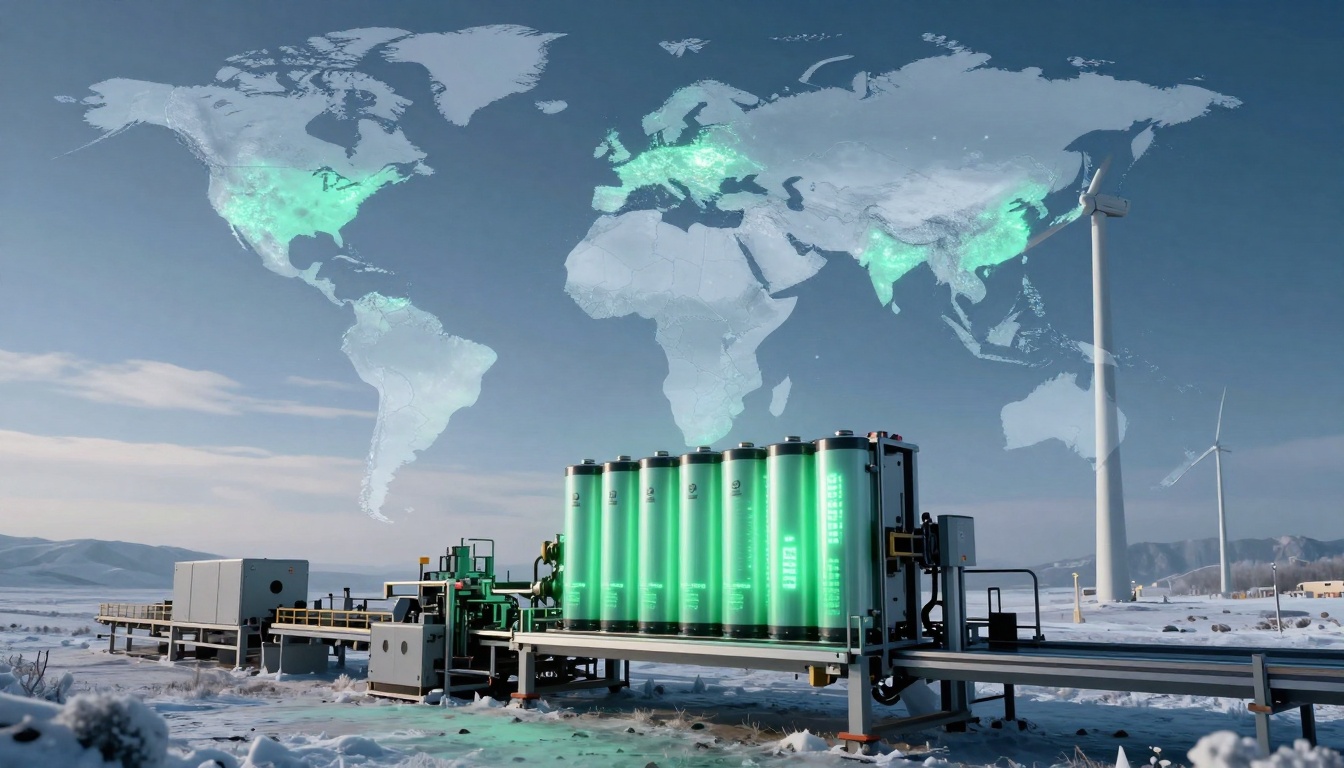
Picture a battery cell on a factory line, warm from the last weld. Or a wind turbine turning in winter air. These clean machines look simple from a distance, but they run on a small set of hard-to-replace rocks and metals. That’s the geopolitics of critical minerals in one image: the future is built from materials that are unevenly spread, slow to process, and easy to interrupt.
“Critical minerals” just means minerals a country needs for key industries, but can’t reliably get at a fair price. The list shifts by region, yet the story stays the same. Control isn’t only about who has the ore underground. It’s about who can mine it safely, refine it at scale, ship it through busy routes, and turn it into magnets, cathodes, and battery-grade chemicals.
In 2026, that supply chain is becoming a new kind of power map, with alliances, export bans, and standards acting like modern borders.
Critical minerals explained, and why the bottleneck is often refining, not mining
When people talk about mineral shortages, they often picture an empty pit and a missing shovel. The real pinch point is usually further along. A mine produces concentrate. Clean tech needs high-purity chemicals and precisely made components. Between the two sits the “midstream”, processing, refining, and specialised manufacturing that can take years to build and permit.
It also helps to separate three words that get mixed up:
- Reserves: what’s known and economic to extract today (not everything in the ground).
- Production: what’s mined right now.
- Processing: what’s refined into battery-grade or magnet-grade material.
Demand is rising fast because net-zero plans aren’t abstract. They translate into EV sales targets, grid upgrades, and more wind and solar. Even if new mines are approved tomorrow, many won’t deliver meaningful volumes until the 2030s. That time lag makes the midstream even more important, because it can sometimes be expanded quicker than a new mine, but still needs skilled labour, reliable power, water, reagents, and long contracts.
A useful way to think about it is baking. Flour is not bread. The oven and the baker matter. In critical minerals, the refinery is the oven.
The short list: what lithium, cobalt, nickel, graphite, and rare earths actually do
These names show up in headlines because they sit inside the most common clean energy hardware.
Lithium is central to most EV batteries today. It’s part of the chemistry that moves lithium ions back and forth as you charge and discharge.
Graphite is used in the anode of most lithium-ion batteries. Even when chemistries change, graphite often stays in the picture, which is why it draws policy attention.
Nickel can increase energy density in certain battery cathodes, which can help drivers get more range from the same size pack. It’s not required for every battery type, but it matters for high-range vehicles.
Cobalt is tied to stability and safety in some cathodes. Many makers try to reduce it, but it’s still used, and its supply is unusually concentrated.
Rare earths (especially neodymium and praseodymium) are used in strong permanent magnets. Those magnets sit inside many EV motors and wind turbines, where they help deliver high power in a compact form.
You don’t need to memorise the list. The point is that each mineral is linked to a specific piece of kit, so a shortage hits real factories, not just markets.
Why processing and midstream capacity shapes power in the green transition
Owning the mine gets you headlines. Owning the refinery gets you influence.
Processing capacity creates “sticky” advantages: trained operators, tuned equipment, quality control routines, and long-term buyer contracts. Once a battery maker qualifies a supplier, switching can be slow and costly. Standards, testing data, and factory approvals act like glue.
China’s role in processing is the clearest example. It has built large-scale capacity across several chains, and that scale feeds on itself. High throughput lowers unit cost, draws in more customers, and supports more investment in tooling and expertise. That’s why governments now talk about “de-risking”, not because ore is rare, but because the midstream is concentrated.
This concentration also turns paperwork into power. If a country sets export rules, or if a buyer sets traceability rules, whole cargoes can be delayed. The refinery sits at the centre of that system.
For more background on how producer nations are trying to move up the chain, see a recent analysis of Chile and Indonesia’s mineral strategies.
Where the minerals come from, and how that creates leverage for a few countries
Mineral supply isn’t a smooth global pool. It’s a patchwork. Some countries dominate mining for a single mineral. Others dominate processing for many. A few locations become chokepoints, a port that ships concentrate, a refinery cluster, a key shipping lane, or a licensing office that can pause exports overnight.

Photo by Q L
In plain terms, concentrated supply creates bargaining power. If your country supplies most of a mineral the world can’t easily replace, you can demand local jobs, higher royalties, better infrastructure, or a share of processing. Buyers know they can’t just “shop elsewhere” quickly.
The map most people hear about looks like this:
- The Democratic Republic of the Congo (DRC) is central to cobalt mining.
- Australia is a major player in lithium mining.
- Indonesia is a major force in nickel, and it has used policy to build domestic processing.
- China is deeply important in processing and downstream manufacturing for several critical minerals.
- Chile and Argentina are key names in lithium brines, with different politics and permitting approaches.
This isn’t just geography. It’s negotiation. The more concentrated the supply, the more every election, strike, permit dispute, or border issue matters to global prices.
The choke points: DRC cobalt, Indonesia nickel, Australia lithium, and China’s processing grip
Think of it as a simple scoreboard written in four lines.
DRC leads in mined cobalt. Australia leads in mined lithium. Indonesia has become a top source of nickel, and has pushed hard into refining. China leads in processing across several chains, including rare earths and graphite, and is a major buyer and investor in overseas projects.
Indonesia is the clearest case study in how a producer country tries to climb the value ladder. By tightening raw export rules and encouraging domestic refining, it has aimed to shift from “dig and ship” to “process and profit”. That can bring jobs and tax revenue, but it can also raise costs for buyers and create new environmental pressures at home.
A useful reminder from reporting this month is that competition now centres on processing. A January 2026 feature on this theme frames it as a race for the materials inside magnets and motors, not just battery metals, see Mongabay’s report on rare earths and the green transition.
Resource nationalism, export bans, and price shocks, how policy moves markets fast
Resource nationalism is when a government uses rules to keep more value from its natural resources at home.
The toolkit is familiar, even if the minerals are new:
- Export controls and outright bans on raw ore shipments.
- Licences that can be tightened, delayed, or linked to local processing.
- Local content rules that force more domestic work before export.
- State-backed firms that shape who wins contracts.
- Stockpiles that smooth shortages for domestic industry.
These moves can change prices quickly. If a key exporter restricts supply, battery makers feel it first through higher input costs and longer lead times. EV makers may respond by changing chemistries, buying forward through long contracts, or passing costs on. The consumer sees it as a higher sticker price, fewer trims, or slower delivery, but the trigger is often a regulation thousands of miles away.
For a wider view of how protectionism is rising around mineral supply, see IOM3’s piece on critical minerals and protectionist policy.
The new power plays: US, EU, and China compete to secure supplies without looking like empire
The politics of minerals is starting to rhyme with older energy politics, but it’s not a simple rerun of oil. For one thing, critical mineral supply chains are longer. A barrel of oil is already a fuel. A tonne of spodumene concentrate isn’t a battery.
The United States and its partners are trying to reduce dependence on Chinese processing and manufacturing, while China seeks to defend its industrial base and secure supply inputs. That rivalry shows up in trade rules, financing, and “friend-shoring”, building supply chains with countries seen as reliable partners.
In January 2026, US policy has again put processed minerals at the centre of national security and industrial strategy, with reported moves aimed at shifting imports and encouraging non-Chinese supply routes. The point is less about one law than the direction: more scrutiny on processed inputs, and more political risk priced into contracts.
The European Union is pursuing a parallel goal. The EU’s Critical Raw Materials Act sets targets for domestic extraction, processing, and recycling by 2030, and pushes diversification through trade and permitting reform. It’s an attempt to avoid a clean-energy version of “single supplier” dependence.
The tension is that everyone wants secure supply, but nobody wants to be accused of strong-arming producer nations. That’s where standards, development finance, and multilateral rules come in.
For context on how trade fragmentation is shaping 2026, see UNCTAD’s January 2026 global trade update.
Industrial policy in action: subsidies, strategic deals, and rules about “clean” supply chains
Industrial policy can sound abstract. In practice, it’s cheques, contracts, and eligibility rules.
Governments use tax credits, grants, and low-cost loans to attract refineries, cathode plants, and battery factories. They use procurement rules to prefer domestic or allied inputs. They also set definitions of what counts as “clean” or “responsible”, and those definitions can decide which suppliers get access to premium markets.
Traceability is becoming a trade advantage. If a buyer can prove where a mineral came from, how it was processed, and that labour rules were followed, they may win subsidies or public contracts. That can improve conditions, but it also means forms, audits, and data systems become a new kind of border.
Law firms and industry advisers increasingly describe mining as policy-driven, not only price-driven. A recent sector overview captures this shift, see White and Case’s 2026 mining and metals outlook.
The fairness test: can producer countries gain jobs and value, not just holes in the ground
A green transition that repeats old extractive patterns won’t hold public support. People living near mines want clean water, safe work, and a share of the upside. Governments want tax revenue that doesn’t vanish into corruption, and infrastructure that lasts longer than a boom cycle.
Local processing can help. So can skills programmes, power generation, rail links, and stronger environmental checks. But the risks are real: unsafe labour, forced displacement, polluted rivers, and violent competition around informal mining sites.
Fairer supply chains are not only moral. They’re practical. Projects face delays when communities oppose them, and buyers face backlash when sourcing looks dirty. Deals that include shared value, transparent royalties, and credible monitoring tend to survive election cycles better than deals that only enrich a few.
Who is most likely to control the green transition, and what could change the answer
By 2030, control will still sit with the players who can process at scale and finance expansions quickly. China is likely to keep an edge in parts of refining and magnet supply, because it already has capacity, experience, and dense industrial clusters. The US and EU are pushing hard to build alternatives, but those projects must clear permitting, secure power, and win customers who need stable pricing.
Australia and Canada may gain more influence through new projects and partnerships, especially where governance is stable. Indonesia will keep trying to turn mineral wealth into industrial depth. Producer nations in Africa and South America will keep bargaining for better terms, and some will succeed, especially when they can offer reliable rules and long-term partnerships.
By 2040, the answer could change. Not because rocks move, but because technology and design can reduce dependence on the most contested materials. The real contest is between two clocks: the clock of climate targets, and the clock of supply chain build-out.
Here’s what to watch if you want early signals of who’s gaining power:
- New refinery openings and qualification by major battery makers.
- Export controls, quotas, and licensing changes in key producer states.
- Big offtake deals (long purchase contracts) tied to financing.
- Recycling mandates and collection systems that actually get feedstock.
The near-term winners are the ones who can refine, finance, and sign long contracts
Geology sets the starting line, but coordination wins the race.
Long-term offtake agreements lock in supply and help projects raise money. Shipping insurance and secure freight routes keep deliveries flowing. Access to low-cost capital decides whether a refinery gets built in three years or never leaves a slide deck.
This is quiet power. It doesn’t look like a military base. It looks like a financing package, a port upgrade, and a signed specification sheet.
The wild cards: recycling, sodium-ion and LFP batteries, and designing products to use less
Recycling is often called an “urban mine”, but it takes time to scale. You need enough end-of-life batteries to feed plants, and you need collection systems that don’t leak materials into scrap streams. Still, once it’s built, recycling reduces import needs and buffers price spikes.
Chemistry shifts can also change pressure points. LFP batteries reduce demand for nickel and cobalt. Sodium-ion could reduce lithium pressure in some uses, though it won’t replace everything quickly. Substitution in magnets and motors could ease rare earth exposure in certain designs.
Design choices matter too. Smaller cars, better public transport, and smarter grids can reduce total mineral demand without cutting quality of life. That’s not a retreat from clean tech. It’s using less material per kilometre moved and per unit of energy stored.
Conclusion
The green transition is not only a climate project. It’s a contest over materials, processing, and the rules that decide who gets paid. Three takeaways stand out. First, critical minerals are now strategic in the same way energy was strategic in past decades. Second, refining and midstream capacity often decides who holds the stronger hand. Third, fairness and sustainability will decide which supply deals last, because public consent is becoming as important as ore grades.
What to watch next: export controls, new refineries coming online, recycling policy with real targets, and major offtake contracts that tie mines to factories. The future won’t be controlled by one country forever, but it will be shaped by whoever can build trust, capacity, and resilience fastest.