
Listen to this post: How Climate Stress Drives Migration from Africa, Asia and Latin America
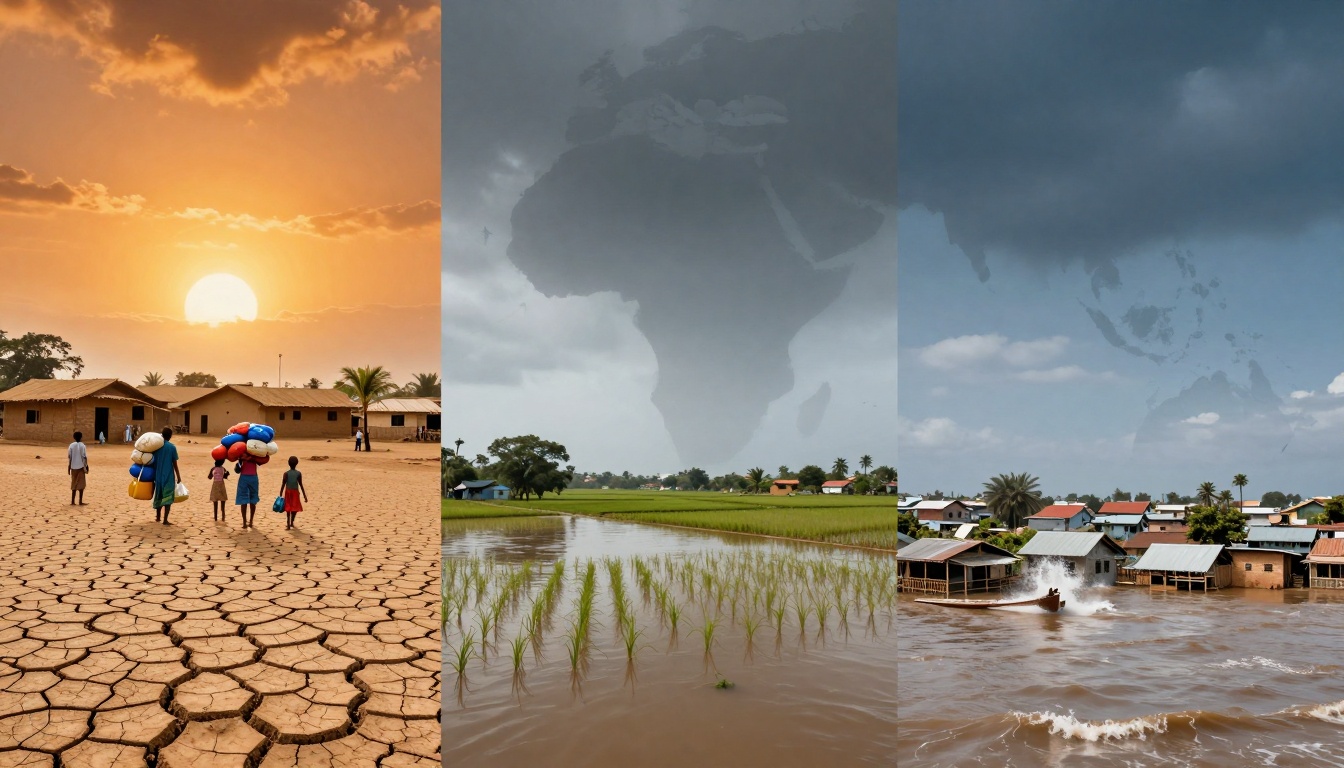
In rural Mali, a family packs their few belongings as drought cracks the earth around them. The sun beats down on fields that once grew millet. Now, dust swirls where crops should stand. Wells run dry after years without rain. This scene repeats across Africa, Asia, and Latin America. Climate stress like droughts, floods, and storms pushes millions from their homes.
By 2050, up to 86 million people in sub-Saharan Africa may move within their countries due to these pressures. Latin America faces over 17 million internal migrants. In Asia, cities like Dhaka could see 3.07 million arrivals. These numbers come from recent studies and match 2024-2025 trends. Sub-Saharan Africa saw 38.8 million internal displacements from disasters, the highest ever. South Asia hit 9.2 million, and the Americas 14.5 million.
This post looks at region-specific causes. It shares real examples from 2025 events, such as floods in Nigeria. It also covers the future outlook. Climate stress threatens global stability. It strains cities, sparks conflicts, and tests borders. Understanding it helps us act.
Why Droughts in Africa Are Uprooting Entire Communities
Prolonged droughts grip sub-Saharan Africa, especially the Sahel in Mali, Niger, Ethiopia, Somalia, and Sudan. Desertification spreads. Farms fail. Water sources vanish. Pastoralists lose livestock. Families walk miles for a bucket of water, then pack up for cities.
In 2025, floods in Nigeria displaced thousands despite the drought theme. Ghana saw similar chaos. These events mix with dry spells to force moves. Most stay within borders. Cities like Accra expect 339,000 climate migrants by 2050. Freetown faces 269,000. The World Bank projects 86 million internal migrants across the region by mid-century. Urban areas buckle under the weight. Slums grow. Jobs scarce. Diseases spread in cramped spaces.
Picture a farmer in Niger. His herd starves. He sells what he can. Then he joins a caravan to the capital. There, he builds shacks from scrap. Kids drop out of school to beg. Conflicts brew over remaining wells. Armed groups exploit the chaos. IOM’s 2025 report on climate and migration details how these shifts fuel tension.
Rural life crumbles. People chase survival in swelling towns.
The Sahel’s Endless Dry Spell and Its Human Cost
In the Sahel, droughts kill crops and cattle. Pastoralists flee with what survives. A herder in Mali watches his goats collapse. He treks south, only to clash with settled farmers over grazing land. Fights turn deadly.
Data shows internal migration surges. Ethiopia and Somalia report millions displaced yearly. Livestock drops by half in bad years. Families split. Men seek work in cities. Women and children stay behind, vulnerable. Violence rises as resources shrink. Recent studies link dry spells to upticks in raids.
One farmer shared his story. “The ground betrayed us. Now we fight for scraps.” These human costs echo across the belt.
Cities Swell as Rural Folks Seek New Starts
West African cities like Accra and Freetown absorb the rush. Projections hit 339,000 for Accra and 269,000 for Freetown by 2050. New arrivals build informal settlements. Water queues stretch for hours. Power cuts worsen.
Daily struggles mount. A mother in Accra sells charcoal from dawn. Her kids share one room with neighbours. Overcrowding breeds malaria. Sanitation fails. Governments strain to provide services. Yet people keep coming. They trade farms for market stalls. Hope flickers amid hardship.
Floods and Rising Seas Chasing Families from Asia
Bangladesh, Pakistan, Vietnam, and Jordan face floods, cyclones, and salt intrusion. Coasts erode. Rivers swell. Crops rot in salty soil. In Dhaka, 3.07 million may arrive by 2050. Karachi expects 2.4 million. Mekong Delta farms drown under sea rise. Amman braces for 554,000.
Most moves stay internal. Cities overload. Slums flood yearly. Six global regions total 216 million potential migrants. Scenes unfold of villages underwater. Fishermen haul boats through fields. Salt crusts paddies white.
In 2024-2025, South Asia saw 9.2 million disaster displacements. Bangladesh averages 110,000 yearly. Climate hits farming hard. One-third of ag GDP could vanish by 2050. Nature study on climate drivers of migration shows temperature shifts push flows.
| Region | Key Driver | Projected Migrants to Cities by 2050 |
|---|---|---|
| Bangladesh (Dhaka) | Floods, cyclones | 3.07 million |
| Pakistan (Karachi) | Floods | 2.4 million |
| Vietnam (Mekong) | Sea rise | Significant internal shifts |
These patterns strain infrastructure.
Bangladesh Coasts Under Water Threat
Cyclones batter Bangladesh coasts. Sea levels climb. Rural folk head to Dhaka. Projections reach 3.07 million by 2050. Women bear the brunt. They farm rice paddies now ruined by salt.
A family huddles as winds howl. Their home floods. They wade to higher ground, then buses to the capital. There, garment factories offer low pay. Kids work too. Health fades in polluted air. Yet they stay. Returning means more storms.
Emotional toll weighs heavy. Mothers lose harvests. Fathers fish empty seas.
Droughts and Storms Sparking Moves Across Latin America
Central America, Mexico, Colombia, and Brazil suffer droughts, heat, floods, fires, and glacial melt. Guatemala and Honduras dry up. Farmers abandon fields. Colombia’s Bogotá expects 598,000 by 2050. Rio de Janeiro 294,000. Curitiba 191,000.
In 2022, 2.2 million displaced. By 2050, over 17 million internal moves. Americas hit 14.5 million displacements in 2024. Eighty percent are women and girls. Dry farms crack. Forests burn. Glaciers shrink, cutting water.
Burning fields choke skies. A Colombian farmer flees smoke. He reaches Bogotá’s edges. Tents sprout. WEF Global Risks Report 2025 warns of rising extremes.
Central America’s Dry Lands and Northern Pull
The Dry Corridor in Guatemala and Honduras starves. Droughts chase families north. They eye US borders. Recent trends show caravans forming. Kids go hungry. Maize fails three years running.
Projections mount. Disasters displace thousands monthly. A father carries his daughter through dust. They join others at the frontier. Walls loom, but hope pulls.
Looking Ahead: Numbers Set to Surge and What We Can Do
Numbers climb if warming tops 1.5°C. Global totals hit 170-216 million. Sub-Saharan Africa leads with 86 million internal shifts. Asia and Latin America follow. 2025 intra-African trends show floods and droughts mixing.
Adaptations work. Drought-resistant seeds help Sahel farmers. Vietnam builds sea walls. Cities plan green spaces and affordable housing. Aid funds early warnings. SEI report on climate migration justice urges fair policies.
Global action cuts emissions. Support resilient crops. Train urban planners. Communities plant trees. Early efforts in Ethiopia restore land. Hope lies in these steps.
Conclusion
Climate stress uproots lives from Mali’s dry fields to Bangladesh coasts and Central America’s corridors. Sub-Saharan Africa’s 38.8 million displacements match Asia’s floods and Latin America’s storms. Projections to 2050 demand attention: 86 million in Africa, millions more elsewhere.
Urgency calls for smart policies. Back adaptations. Fund city growth. Protect the vulnerable. Picture resilient villages with full wells and strong dikes. Families stay put.
What will you do? Learn more. Advocate change. Share this story. Together, we steady the world.