
Listen to this post: How Social Media Pressure Makes Nigerians Lie About Life Abroad
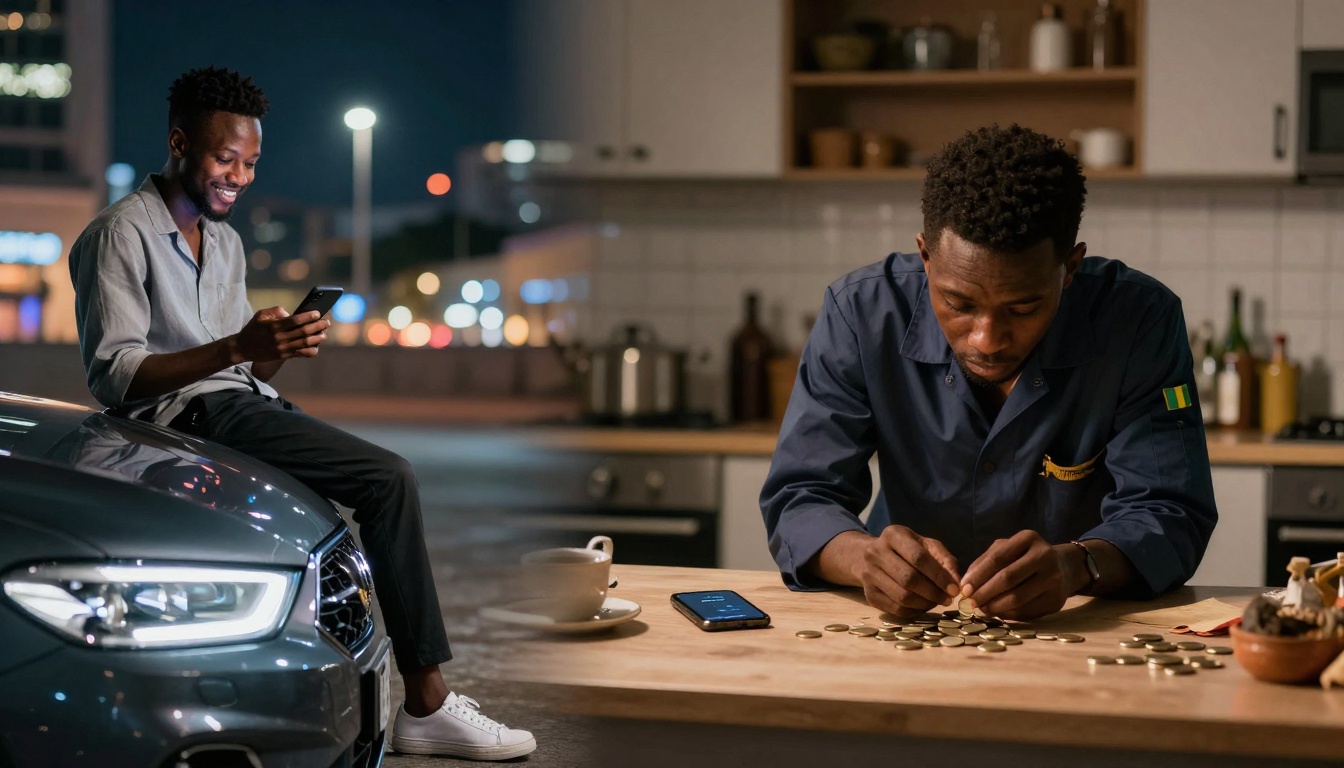
A Nigerian abroad posts a shiny photo at 7:12 pm. A new car bonnet fills the frame, city lights in the background, clean trainers, clean smile. The caption is simple: “God did.”
By 7:30 pm, the same person is back on a late shift, counting hours, counting tips, counting the days to payday. The kitchen at home is tidy because nobody has energy to cook. The phone keeps buzzing with messages from home. “How far?” “Send something.” “You’re enjoying o.”
This is how social media pressure turns “I’m coping” into “I’m winning”. Not because Nigerians abroad are born liars, but because the internet rewards performance, and shame punishes honesty.
This piece explains why Nigerians abroad feel pushed to exaggerate, what they hide, who pays the price, and how to talk about life overseas with more truth and less noise.
Why Nigerians abroad feel forced to look successful online
Some pressure starts before the plane even takes off. There’s the farewell party. The prayers. The aunties and uncles saying, “You’ve made it.” Friends joke that your suffering has ended. People take pictures with you like you’re a celebrity.
So when you land and reality hits, it can feel like you’re not allowed to be normal. Not allowed to struggle. Not allowed to say, “This is hard.”
Social media adds a loudspeaker to that expectation. A private life becomes public proof. Each post becomes a small report card: are you doing well, yes or no?
The “you’ve made it” expectation, family needs, and the shame of struggling
For many Nigerian families, a relative abroad is not just a person, they’re a plan. The hope is simple: new income, stable currency, help with school fees, rent, hospital bills, and emergencies that don’t warn you first.
That’s why remittances are not only money, they’re also emotion. Sending money can mean “I remember you.” Not sending can be taken as “You’ve changed.”
There’s also the fear of gossip. Back home, news travels faster than Wi-Fi. If someone hears you’re sharing a house with three people, sleeping on a mattress on the floor, or working a job you never planned to do, the story can grow teeth. It can turn into, “He’s suffering there,” or, “She has failed.”
And once you admit hardship, you may not be allowed to rest. Some people will ask for proof. Others will mock you. Some will keep demanding money anyway, because they think you’re hiding it.
This is where the lie begins. Not always a big lie, sometimes a small one. “Work is fine.” “Everything is going well.” “Just busy.”
That small lie can feel like a shield.
A sharp read on how entitlement and expectation can build up around one person is Zikoko’s piece, “Everyone Thinks I Owe Them Something”: The Economics of Nigerian Entitlement. It captures the mood many diaspora Nigerians know too well, the sense that your pocket is a public service.
How social media rewards neat stories and punishes messy truths
Instagram and TikTok don’t pay you for honesty. They pay you with attention. Clean stories get likes. Clear success gets applause. Messy details get ignored, or worse, judged.
On a bad day, it’s easy to think, “If I post my real life, will people respect me?” A cramped room, a long bus ride, a rejected CV, a cancelled shift, none of these fit the neat picture.
So people curate. They post the one good day and stretch it for weeks. They crop out the shared toilet. They take photos in bright places because dark corners look like struggle.
This is not only a Nigerian problem, but Nigeria’s online culture can make it heavier. Status matters, and the internet has become a fast way to show it.
From 2025 into 2026, misinformation has also been louder online, which makes exaggeration feel normal. When people see fake giveaways, staged “street interviews”, and made-up stories every day, the line between real and performative gets thinner. TheCable’s fact check roundup, Top misinformation trends on Nigerian social media in 2025, shows how quickly false narratives spread and how easily people accept them when they fit a feeling.
If the whole feed feels like a film set, some people start acting.
The common lies, half-truths, and photo tricks people use to look “okay” abroad
Many of these stories are not wicked. They’re survival edits. They’re a way to avoid shame, avoid pressure, and buy time until life improves.
But when everyone edits, the truth starts to look like failure.
Below are common patterns people recognise, especially in UK, US, Canada, and parts of Europe.
Money and lifestyle: cars on hire, borrowed spaces, and spending to look rich
A picture can be true and still be misleading.
Someone stands next to a nice car. Yes, the car exists. No, it’s not theirs. It might be a friend’s car, a rental for a weekend, or a car parked outside a restaurant. The point is the message, not the ownership.
The same happens with housing. A tidy flat becomes a set. People film content in a friend’s living room because it has better lighting and nicer furniture. Others record in an Airbnb for a birthday weekend, then post it slowly, one clip at a time, like it’s daily life.
Then there’s the “one designer item” trick. One expensive bag, one luxury belt, one new phone, photographed from every angle. Meanwhile rent is late and the fridge is empty.
This pressure can lead to debt. Credit cards get maxed out. Buy-now-pay-later becomes the quiet sponsor of the lifestyle. You can look rich on Tuesday and panic on Friday.
Even small choices get shaped by the audience. Some people won’t post a normal meal because it looks “too local”. They wait for brunch, then post the one plate that looks like success.
The tragedy is that this performance can swallow the money that could make life easier.
Work and papers: making it sound easier than it is
Work abroad is often painted like a straight line: land, get a job, get papers, buy a car, start living soft. Real life is more like a tangled earphone cord.
Job titles get inflated. A warehouse role becomes “logistics”. A care job becomes “healthcare management”. A part-time gig becomes “consulting”. It’s not always deceit for fun, it’s self-defence. Some people fear being looked down on by old classmates, or being treated like an ATM by extended family.
Many also hide the number of jobs they do. Two shifts become one story. Night work becomes “I’m busy with projects.” They don’t want pity, and they don’t want more demands.
Immigration status and paperwork are another sensitive area. People speak as if visas and residency are simple, because admitting stress can invite questions they can’t answer safely. They say, “I’m sorting it,” and hope nobody asks what that really means.
The reality behind the posts can include:
- Long shifts with little rest
- Cold weather that affects the body and mood
- Language stress in countries where English is not enough
- Lonely routines where work is the only social life
For grounded context on the gap between the “good life” idea and what migrants often face, this piece from The Conversation is worth reading: Nigerians migrate to the UK and US in search of the good life, but this isn’t what they find.
Happiness posts: hiding loneliness, racism, and mental strain
Some lies are not about money. They’re about emotion.
A person can post laughter and still be breaking inside. A smiling selfie can be taken five minutes after crying. A “weekend vibes” video might be the only day off in 14 days.
Loneliness is common abroad, even for people who are “doing well”. Friends are busy. Family is far. Time zones make calls hard. The first winter can feel like living inside a grey bowl.
There’s also the quiet weight of discrimination. Sometimes it’s direct racism. Sometimes it’s the polite kind, where you feel tolerated but not welcomed. People don’t always share these stories because they don’t want to seem ungrateful, or because they fear being told, “So come back now.”
Mental strain can grow in silence: stress, panic, low mood, insomnia. But online, strength is the brand. Nigerians are praised for being “strong”, so some people keep acting strong until they can’t.
And because people back home are watching, the performance becomes a duty. You’re not only living, you’re representing. You don’t want to be the example of “it didn’t work”.
The damage this pressure causes, and how to build a more honest story
When a lie becomes a lifestyle, it doesn’t stay online. It enters relationships, money choices, and mental health.
The cost can be slow, then sudden.
Who gets hurt: the person abroad, their family, and people planning to travel
First, the person abroad gets squeezed. Keeping up an image takes energy. It can push people to spend money they don’t have, work more than their body can handle, and hide problems until they become emergencies.
Second, families get confused and frustrated. If your Instagram shows restaurants and shopping, but you say you can’t send money, it looks like stinginess. That’s when tension starts. Trust drops. Every request becomes a fight. Every “no” becomes a personal insult.
Third, young people planning to travel can make risky plans based on fake success stories. They may sell land, borrow money, or rush into routes that are unsafe, because the online picture looks like a guarantee.
This is how performance can become harm. Not because travel is wrong, but because the story around it becomes dishonest.
Nigeria’s wider online culture also plays a role. When misinformation is common, staged content doesn’t shock people anymore. The International Centre for Investigative Reporting has tracked how false claims and viral rumours shaped big moments in 2025, in Misinformation that trailed major events in 2025. In a space like that, it’s easier for a fake “soft life” to pass as normal.
A better way: honest boundaries, real support, and smarter media habits
Honesty doesn’t mean posting your pain every day. It means stopping the performance that traps you.
For Nigerians abroad, practical steps can help:
Set money boundaries early: Decide what you can send, when, and why. Say it plainly. Repeat it calmly.
Share realistic wins: A new course, a stable routine, savings growth, learning a skill. These are real progress, even if there’s no skyline photo.
Talk privately with trusted people: Not every truth is for the timeline. Find one friend, one sibling, one mentor who won’t use your struggle as gist.
Stop posting to prove: If you notice you only post when you want to silence rumours, that’s a warning sign.
For readers in Nigeria, support can look like this:
Ask caring questions: “How’s your body?” “Are you resting?” “How’s work really?”
Don’t demand proof: Proof turns family love into an interrogation room.
Stop using people abroad as a scoreboard: Someone else’s life is not your measuring stick.
Smarter media habits matter on both sides. Remember:
A video can be staged, and still look real.
One post is not a full life, it’s a moment.
Check sources before you believe stories, because false stories spread fast and shape expectations. A recent discussion on the darker side of online attention in Nigeria is captured in The Dark Side of Social Media Fame in Nigeria, which echoes how visibility can become a trap.
Small changes like these won’t fix everything, but they reduce the pressure that makes lying feel necessary.
Conclusion
A phone screen can show a perfect life in five seconds. Off-camera, the same life can be tired, ordinary, and human.
Social media pressure creates performance, performance creates lies, and lies create more pressure. The cycle only breaks when someone chooses truth, even in small doses.
If you’re abroad, you don’t owe anyone a movie. If you’re at home, your loved one doesn’t owe you a trophy. Choose honesty over applause, and choose support over shame. The most impressive story is not the loudest one, it’s the one that lets people breathe.