

Listen to this post: The 2026 AI Search Playbook, 7 ranking moves that still work (and 3 that don’t)
In 2026, search results often feel like a conversation you didn’t start. AI Overviews are a primary driver of the shift toward Zero-click searches, where Google and other LLM-driven experiences answer first, then send clicks later (sometimes not at all).
That doesn’t mean visibility is gone. It means Answer Engine Optimization is now about being the best source to quote, not just the best page to rank.
This playbook focuses on moves that still earn citations, mentions, and high-intent traffic, plus the habits that now burn time and trust.
Answer Engine Optimization: How AI Search Picks Sources in 2026 (think “citation-worthy”, not “keyword-perfect”)
AI answers don’t “rank pages” the way classic ten-blue-links did. With the shift from traditional ranking to Generative Engine Optimization, they assemble responses from sources that look reliable, complete, and easy to extract. Winning in 2026 is measured by your citation share within AI-generated responses, and it happens when your page reads like a clean reference card, not a sales leaflet.
Three patterns show up again and again across current industry analysis:
- Completeness beats cleverness. If the page covers the full job-to-be-done (definitions, steps, edge cases, limitations), it’s easier to cite as LLM-ready content.
- Entity clarity beats loose wording. AI systems prefer machine-readable content that names the “things” involved (products, standards, roles, locations), then explains how they relate.
- Verification beats vibes. Unsupported claims age badly. AI systems cross-check more aggressively, especially on health, finance, and safety topics.
Our own breakdown of how AI Overviews choose sources goes into the selection logic in detail, with parallel checklists for ChatGPT Search, Perplexity and Bing Copilot. If you need a wider snapshot of what’s changing in practice, see the 2026 trend roundup from State of AI Search Optimisation 2026. For teams watching AI Overviews specifically, this breakdown of new AI Overview ranking signals maps well to what many SEOs are seeing in testing.
The new question isn’t “Can we rank?” It’s “Can the model trust us enough to quote us?”
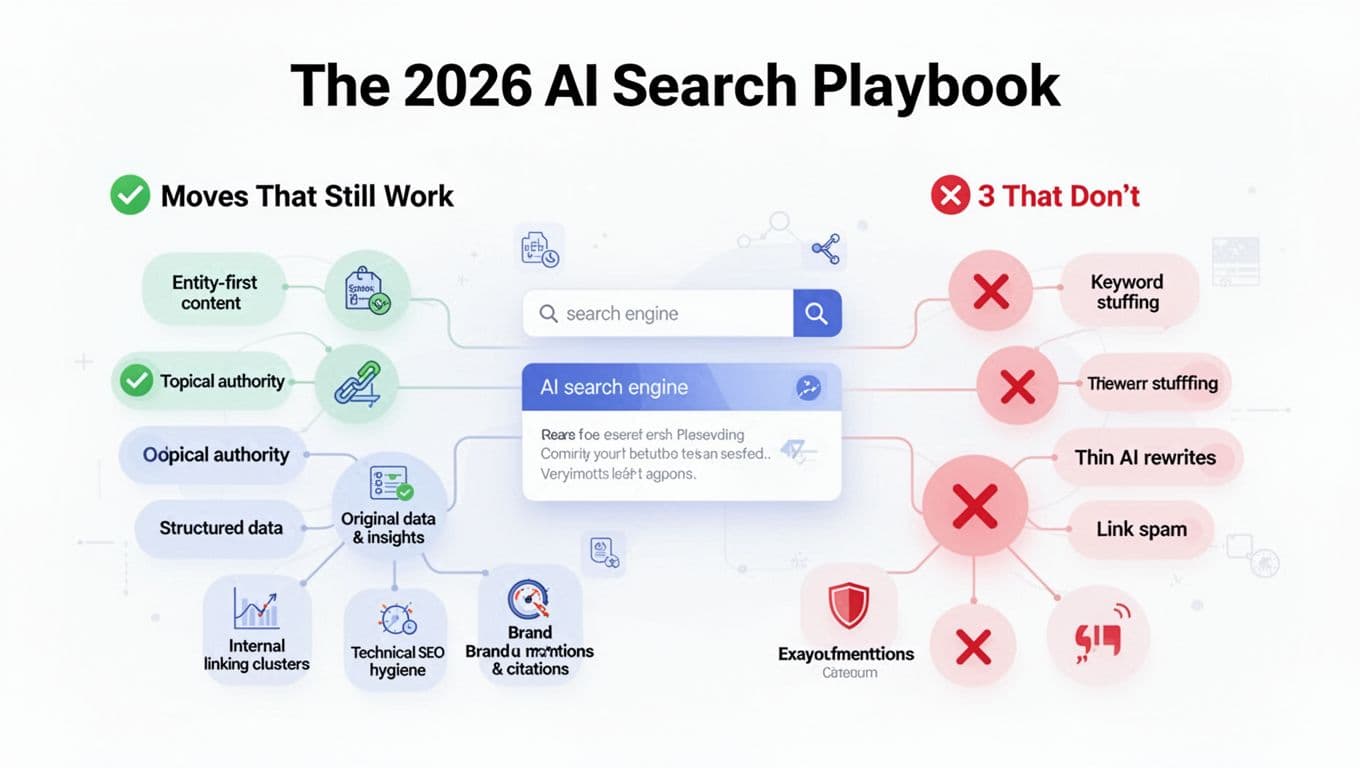
Seven ranking moves that still work for AI Overviews and LLM search
These aren’t shiny tactics. They’re the same foundations, tightened for Retrieval-Augmented Generation systems where extraction and attribution matter more.
-
Entity Optimization (so the model can’t misread you)
Start key sections with explicit nouns, not pronouns. Name the product, system, and constraints early.
Quick example rewrite for entity clarity:
Before: “It supports faster checks and reduces errors.”
After: “Our KYC workflow checks PEP and sanctions lists at onboarding, so compliance teams reduce false positives and manual reviews.” -
Build topical authority with fewer, stronger pages
Large “ultimate guides” often sag under their own weight. In 2026, clustering into tighter topical territory tends to cite better because each page has a single purpose. Keep one hub page, then publish spokes that answer one hard question each (pricing edge cases, implementation steps, comparison methodology, known pitfalls).
Tradeoff: this costs editorial planning, so it’s not worth it for a one-product microsite. -
Add original data and a named point of view
AI answers love numbers, but only when they come from somewhere. Publish small first-party datasets: anonymised benchmarks, time-to-value metrics, returns rate by category, support ticket themes. Add one expert quote with a real name and role. This strengthens E-E-A-T signals with a clear impact on AI Overviews.
If you’re measuring the traffic shift already, this analysis of AI Overviews’ impact on clicks is a useful framing for stakeholders. -
Use Structured Data to reduce ambiguity (not to “hack” features)
Schema Markup doesn’t guarantee selection, but it helps systems interpret page purpose and key elements. Prioritise the basics you can keep accurate: Organisation, Article, Product, FAQ where it’s genuinely Q&A.
Tradeoff: schema that drifts out of sync can harm trust. Automate it only if your content pipeline is disciplined. -
Create internal linking clusters that mirror how people ask
Even without “perfect” topic modelling, you can shape discovery. Use descriptive anchors that match problems, not just product names.
Example hub/spoke pattern:
Hub: “AI search reporting for SaaS”
Spokes: “How to track citations in AI Overviews”, “Why impressions rise while clicks fall”, “Brand query growth playbook”
Tradeoff: if your site has under 30 pages, a simple navigation clean-up often beats a full cluster build. -
Keep technical hygiene boring and strict
AI systems still rely on crawling, rendering, and canonical clarity. Fix index bloat, thin parameter pages, broken canonicals, and slow templates. Also keep author pages, about pages, and update dates consistent, especially in YMYL-adjacent topics. Technical SEO automation can help maintain this hygiene at scale. -
Earn brand mentions and citations beyond your own site
LLMs lean on the wider web’s “chorus”. Aim for mentions in partner docs, industry directories, podcasts, and community roundups to build brand authority. One strong citation can outperform ten weak links, because it reinforces who you are and what you’re known for. If you want an overview of cross-platform tactics, this webinar page on winning AI search in 2026 is a solid prompt list.
Mini checklist for your next content update:
- Put the answer in the first 5 to 8 lines.
- Name entities early (tool, standard, role, metric).
- Add one proof element (data, quote, screenshot description, or cited method).
- Link to one supporting page that deepens the same intent.
Three moves that don’t work now, plus what to track instead
Three moves to stop doing (they waste time or add risk)
-
Keyword stuffing and near-duplicate headings
AI understands paraphrase. Repetition reads like spam, and it weakens clarity for extractive answers. -
Thin AI rewrites of competitor pages
If your page says what everyone else says, it gives the model no reason to cite you. Worse, it can introduce subtle factual errors that damage trust. -
Link spam and synthetic authority
Low-quality link bursts look noisy, not credible. In AI-heavy SERPs, credibility signals compound, and spammy footprints compound too.
Measurement in 2026: track brand visibility across AI platforms, not just clicks
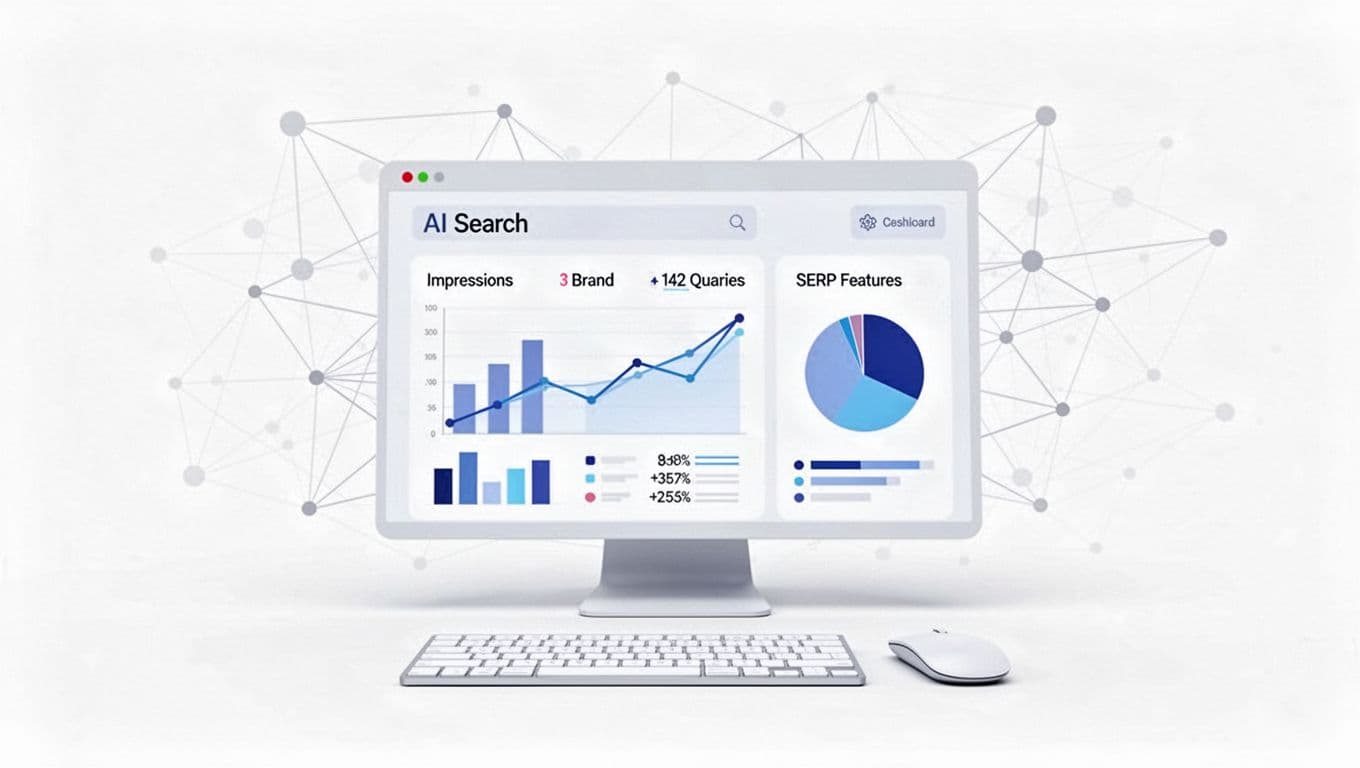
Clicks still matter, but they no longer tell the full story. Add these to your weekly review:
- Impressions on AI-triggering queries, split by intent (informational vs commercial).
- Brand query lift (searches that include your product or company name).
- Citation and mention tracking (when your domain or brand is referenced in AI answers, SERP features, or third-party recaps) — see our guides to building one AI Overviews dashboard and turning unlinked brand mentions into rankings.
- SERP feature presence (AI Overviews, video cards, “Perspectives”, product grids).
- AI Visibility Score (as a key KPI for presence in AI-generated responses).
- Prompt coverage (to measure how well your content aligns with user prompts).
- Conversational queries (performance on natural language and voice searches).
- Conversion quality, not just volume (demo-to-close rate, basket size, return rate, support load).
- Sentiment Tracking (for brand perception in AI answers and features).
- Predictive SEO analytics (to forecast shifts in traffic from evolving AI SERPs).
One-page summary: impact, effort, and risk (10 moves)
| Move | Impact (2026) | Effort | Risk |
|---|---|---|---|
| Entity-first content | High | Medium | Low |
| Topical authority clusters | High | High | Medium |
| Original data and insights | High | High | Medium |
| Structured data (accurate) | Medium | Medium | Medium |
| Internal linking clusters | Medium | Medium | Low |
| Technical SEO hygiene | High | Medium | Low |
| Brand mentions and citations | High | High | Medium |
| Keyword stuffing (don’t) | Low | Low | High |
| Thin AI rewrites (don’t) | Low | Medium | High |
| Link spam (don’t) | Low | Medium | High |
AI answers reward pages that read like trustworthy reference material. So tighten your entities, prove your claims, and publish something only you can publish. For physical entities, local SEO after AI Overviews and maintaining a Google Business Profile are still critical for visibility in AI results. Use Content gap analysis to spot opportunities for Bottom of funnel content that drives conversions.
In this evolving landscape, Voice search optimization and Multi-modal search play key roles, while preparing for Agentic AI agents demands high Assistant recall. Most importantly, measure what the SERP is doing to you, not what you wish it still did. AI search SEO in 2026 focuses less on tricks and more on becoming the source others reference, strengthening AI Overviews, Brand visibility, and Brand authority as core pillars of your strategy.