
Listen to this post: De-Urbanisation or Mega-City Boom? Two Paths for Our Future
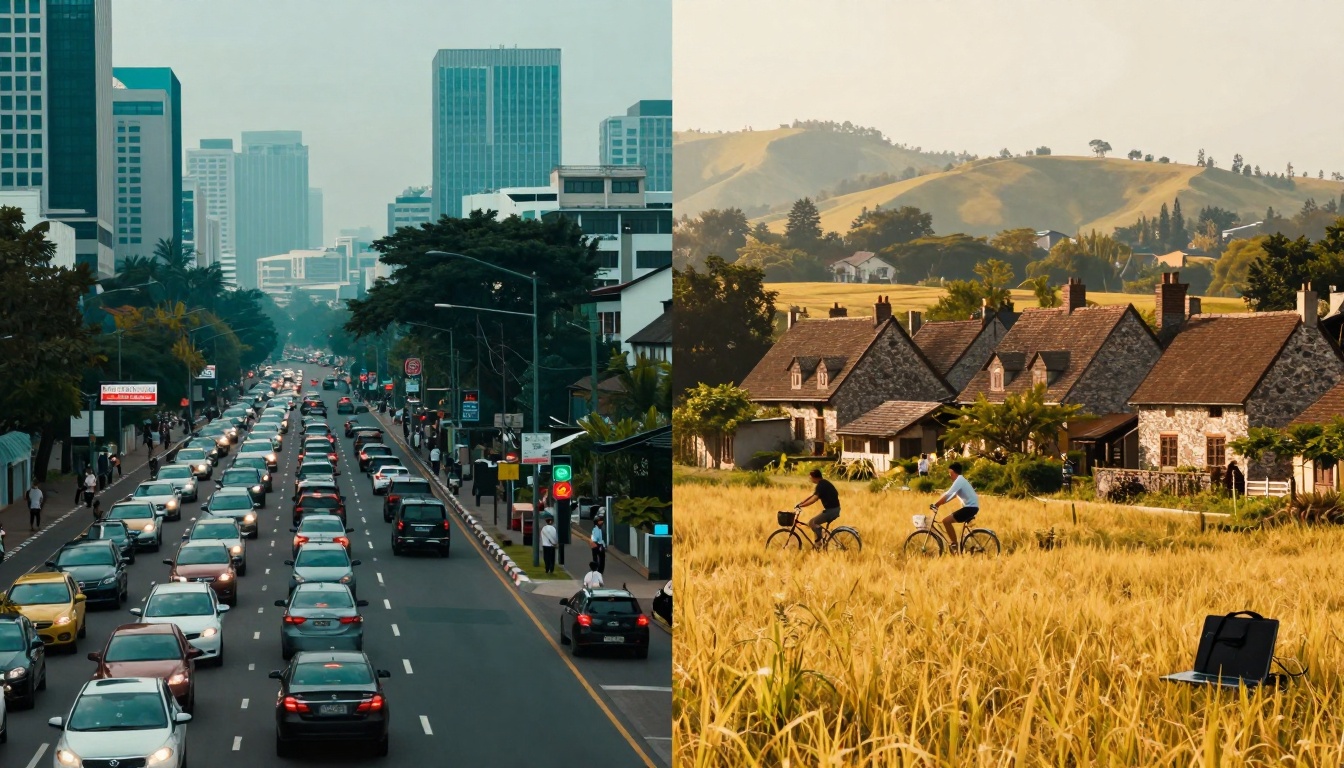
Picture a Jakarta street at rush hour. Horns blare amid thick traffic. Vendors hawk food from carts as skyscrapers pierce the smoggy sky. Now shift to a quiet village in rural France. Sun warms stone houses. Families cycle past fields, laptops tucked in bags for remote calls. Which scene holds tomorrow’s promise?
Cities house 58% of the world’s people in 2025, up from past decades. The United Nations forecasts this will climb to 68% by 2050. Yet signs of de-urbanisation stir too. Around 3,000 cities shrank between 2015 and 2025, a trend that lingers into 2026. Remote work and high costs push some back to the countryside.
These paths clash over jobs, homes, and how we live. Mega-cities like Jakarta, now nearing 42 million souls, draw millions with opportunity. Rural spots gain from tech links and space. For planners, families, and leaders, the choice shapes policies on housing and growth. Will urban giants rule, or will villages reclaim ground?
Why Mega-Cities Are Still Pulling in Crowds
Mega-cities keep growing fast. The world counts 33 such places with over 10 million people each in 2025, more than double from 1990. Asia claims over half. Crowds pack into markets where spices scent the air and neon lights buzz late into night. Skyscrapers rise as symbols of ambition.
What pulls people in? Jobs top the list. Factories hum, offices fill with tech workers. Services follow: top schools, hospitals, shops. Rural areas fade as farms mechanise and young folk leave. The rural share of global population drops to 19% now.
Smaller cities contrast this pull. Some lose people to bigger hubs or empty out from factory closures. Yet mega-centres thrive. They absorb most growth. By 2050, seven nations, India, Nigeria, Pakistan, DR Congo, Egypt, Bangladesh, and Ethiopia, will add over 500 million urban dwellers. That’s half the world’s city boom.
Traffic snarls test patience, sure. But the energy binds people. A street trader in Delhi stacks fruits at dawn, eyes on the day’s earnings. Dreams fuel the move.
For full data, check the UN World Urbanization Prospects 2025 summary.
Jakarta and Asia Lead the Urban Charge
Jakarta tops the list at nearly 42 million in 2025. It overtook Tokyo years back. Asia drives this shift. Expect over 50% of new mega-cities here by mid-century.
Daily life pulses with chaos and colour. Jams stretch for hours on motorways. Night markets glow with satay stalls and chatter. Tech parks sprout in suburbs, luring coders and startups.
This fits the global pattern. Two-thirds of population rise by 2050 lands in cities. Asia and Africa lead. Picture a Mumbai train packed at dawn, workers bound for finance towers. The charge shows no signs of slowing.
Jobs and Services Fuel the Boom
Cities offer what villages lack. Factories need hands; offices seek skills. A factory in Lagos hires thousands, pays steady wages. Rural work dries up as machines till fields.
Schools shine brighter too. Urban kids access labs and tutors. Hospitals stand ready with specialists. Shops line streets, stocked full.
Towns hold 36% of people but slip as hubs grow. Parents pick cities for kids’ futures. A nurse in Manila leaves her farm plot for city shifts and better pay.
Pull factors stack up. Entertainment draws youth: cinemas, clubs, parks. Networks form fast in crowds. One contact sparks a job lead. Rural limits chafe by comparison.
The Quiet Shift: Where De-Urbanisation Takes Hold
Not everyone stays put. De-urbanisation brews in pockets. From 2015 to 2025, 3,000 cities lost residents. High costs and remote work speed the outflow into 2026.
Post-COVID fears of crowds linger. Families seek space. Cities price out middles with rents that eat half pay. Villages offer calm: wide gardens, fresh air, star-filled nights.
Tech bridges the gap. Fibre optics snake to hamlets. A writer taps keys from a Croatian cottage, clients worldwide. Investors eye rural plots for homes or farms.
This shift stays niche. Most flow to cities. But examples multiply. Families unpack boxes in French barns turned offices. Kids play in yards, not high-rises. Quiet roads replace subway rushes.
Europe leads with “smart villages.” Croatia draws nomads with cheap homes and sea views. North America sees edges bloom near farms.
Remote Work and Housing Costs Drive the Exodus
Remote jobs changed rules. Laptops free workers from commutes. The pandemic proved it: screens replace offices. Firms keep staff scattered.
Housing bites hard. North America sits at 80% urban, but cities cost a fortune. A flat in Toronto demands years’ savings. Villages cost half, with land to boot.
Families lead the move. Parents want yards for play. Savings build faster out there. One couple swaps London flat for Welsh hills, Zoom calls intact.
Real Spots Seeing a Rural Revival
Croatia shines. Empty homes fill with digital folk. France builds smart villages: solar panels, co-working sheds amid vines.
Mozambique and Zambia hold rural numbers steady. Investors fund tech farms. North America edges grow: cabins with Starlink dot woods.
These spots blend old and new. A baker in a Portuguese hamlet sells online. Broadband links her to city markets. Revival carves space amid urban pull. For insights on UN trends, see seven key findings from the report.
Future Visions: Urban Giants or Scattered Villages?
Experts split on paths ahead. Cities claim the win: 68% urban by 2050. Europe hits 84%. Greener towers rise with AI traffic control. Polycentric nets spread hubs.
De-urbanisation paints hybrids. Self-sufficient hamlets link by apps. No mass return, but niches expand. Growth stays uneven: Asia booms, rich spots balance.
Policy matters. Planners build resilient cities or fund rural nets. Climate tips scales: floods hit low cities, heat scorers villages.
Picture eco-skyscrapers with vertical farms. Or hamlets dotted with drones for goods. Balance seems likely: giants endure, villages gain perks.
| Trend | Urban Projection (2050) | De-Urban Potential |
|---|---|---|
| Global Share | 68% urban | Rural holds 32%, niches grow |
| Key Drivers | Jobs in Asia/Africa | Remote work, costs |
| Examples | Jakarta at 50M+ | French smart villages |
Projections Point to More Urban Living
Numbers favour cities. Add 982 million urbanites by 2050. Medium cities swell too, over 400 grew fast lately.
Asia and Africa absorb most. Check UN urban prospects overview for maps. Europe stays dense; rural peaks fade.
Hybrid Zones Blur the Lines
Borders fuzz. Tijuana meets San Diego in twin growth. Smart rural webs connect farms to cities.
Villages plug into grids. Drones deliver, sensors farm. Blends offer best of both.
The Mega-City Pull Persists, But Rural Space Grows
Mega-cities lead the charge. Jakarta and kin draw billions with jobs and buzz. De-urbanisation nips at heels, powered by tech and costs. Hybrid living may bridge them.
Think on your place in this. City grind or village calm? Tailor your news on CurratedBrief with My Feed for updates.
Watch Asia and Africa for booms. Track rural tech too. Choices now mould streets and fields ahead. What pulls you? Share below. Tomorrow bends to our steps.