
Listen to this post: Reclaiming Lost Learning: Education Amid Conflict and Climate Crises
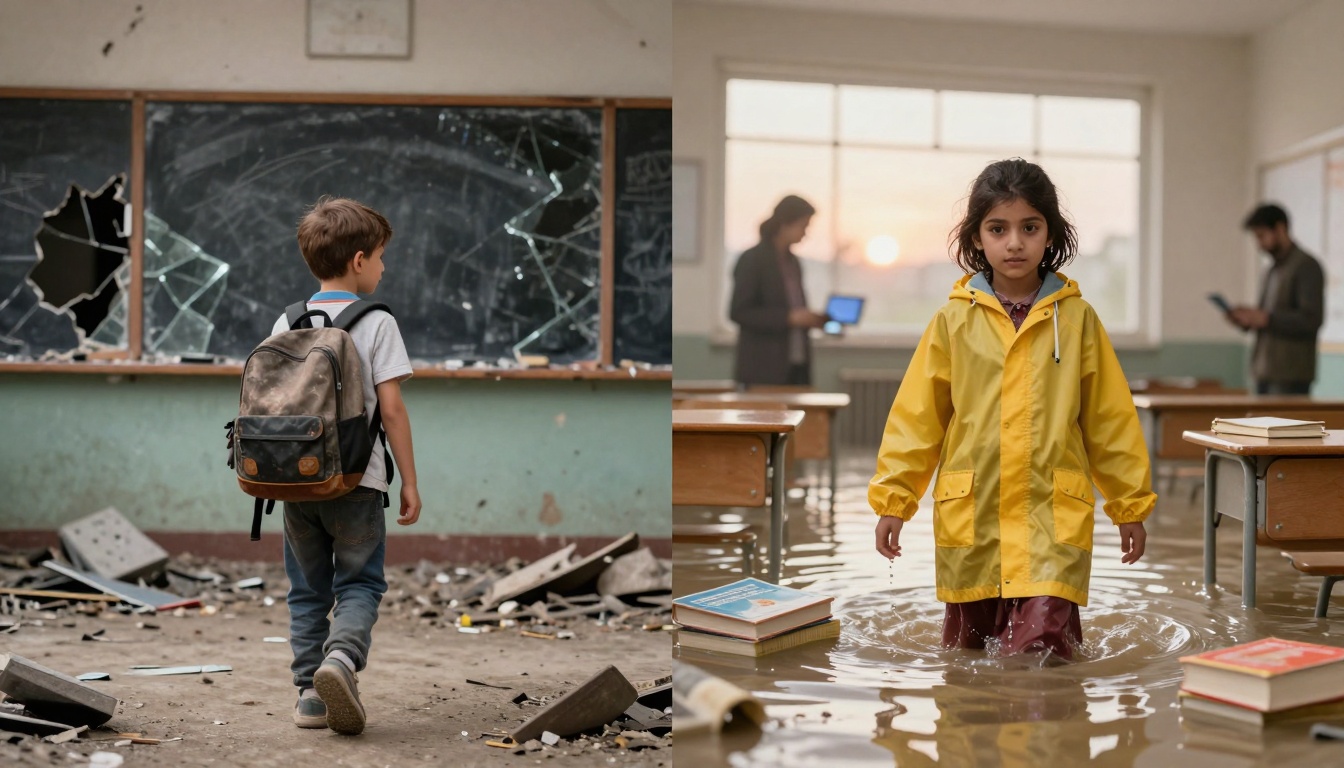
Picture a young boy in Ukraine, backpack slung over his shoulder, picking his way through rubble where his school once stood. Shattered glass crunches underfoot; a blackboard leans crooked against a wall pocked by shrapnel. Nearby, in Pakistan, a girl wades through knee-deep floodwater to reach a desk that’s floated away. These scenes play out daily. Education loss from conflict and climate steals childhoods worldwide.
In late 2025 data, 272 million children and youth aged six to 17 sit out of school. Conflicts drive sharp rises, adding 13 million more in places like Sudan and Myanmar. Climate hits hard too, with floods and heat closing classrooms for weeks. These disruptions trap kids in poverty cycles. They face trauma, dropouts, and dim futures with lost earnings.
Yet hope stirs. Groups like UNESCO push recovery plans. They build safe spaces and use tech to bridge gaps. This piece uncovers the damage from wars and weather, then spotlights paths back to learning.
How Wars Shut Down Schools and Shatter Dreams
Wars rip children from classrooms with brutal speed. In 2025, over 100 million kids in fragile spots missed school, three times the global rate. Attacks surged, leaving millions adrift. Think of desks upended by blasts, blackboards cracked, and playgrounds turned to craters. These losses echo for decades. Kids forfeit skills, jobs, and stability.
Trauma lingers. Children dodge bullets or hide from drones, minds scarred. Dropouts climb as families flee. Boys risk recruitment into militias. Girls marry young or care for siblings. Long-term, each lost year slashes future pay by 10 per cent. Societies pay too, with weaker workforces and unrest.
Ukraine bears heavy scars. Since 2022, bombs have hit over 700 schools. In the east and south, fighting rages fiercest.
Ukraine’s Classroom Battlegrounds
In Ukraine, 115,000 children lost full schooling by mid-2025. Eastern Donetsk and Kharkiv suffer most. Shells pound buildings; one strike levels a wing, scattering books like leaves. Closures drag on for months. Kids cram into bunkers or shift online, but power cuts and fear disrupt lessons.
Parents hustle for safety. Some send children abroad, splitting families. Others huddle in basements for classes. A teacher in Kyiv recalls: “We teach amid air raid sirens. Hearts race, but we press on.” Mental health crumbles. Surveys show half the kids battle anxiety. Dropouts hit 20 per cent in frontline towns.
Rebuilding strains budgets. Funds chase bullets, not books. Yet spirit endures. Temporary modules pop up, pre-fabs with fresh paint. One school in Lviv hosts 500 refugees, desks borrowed from churches. These spots restore routine, a anchor in chaos. Still, full recovery waits peace. Without it, a generation fades.
Gaza and Sudan’s Endless School Closures
Gaza reels from 640 school attacks since October 2023. Most buildings shelter displaced families now, classes in tents amid ruins. Over 660,000 children stay home. In Sudan, conflict since 2023 leaves 17 million out, 75 per cent in some zones. Kids scribble lessons on scraps under trees. Futures hang by threads as hunger bites.
Climate Chaos Forcing Kids Out of Classrooms
Storms and scorchers chase pupils from lessons too. Poor nations lose 18 school days a year to weather woes. In 2025, cyclones battered Madagascar, floods swamped South Asia. Heatwaves bake rooms to ovens, half a year’s learning gone. Desks submerge; roofs peel in gales.
Dropouts spike. Girls quit first, fetching water or minding homes. Test scores plunge five points per extra hot day. Sub-Saharan droughts wither crops and hopes. Pakistan’s rivers burst banks yearly, Bangladesh deltas drown. Families pack up, schools empty.
Imagine flooded floors in Karachi, textbooks sodden mush. Or Dhaka slums where tin roofs turn classrooms to saunas by noon. Pupils fan faces with notebooks, sweat blurring words. These hits compound poverty. Kids labour fields or streets instead.
Floods and Cyclones in Asia and Africa
Pakistan floods shut schools for weeks in 2025, 260,000 kids adrift. Bangladesh sees the same, rivers claiming playgrounds. Madagascar’s cyclones wrecked 500 sites; pupils study outdoors, rain lashing pages. Heat in Africa adds insult, 40C days emptying benches. Scores drop, cycles spin on.
The Deadly Duo of War and Weather
Conflicts and climate collide worst. In Sudan and Myanmar, 85 million face both. Wars displace; floods follow in camps. Projections for 2026 warn more closures as aid thins. Girls and poor kids suffer triple floods in fragile spots. Latin America sees poverty risks soar.
Take Sudan: bombs then deluge camps. Myanmar’s battles meet monsoons. Vulnerable zones overlap, hits multiply. Each storm on war-torn soil doubles damage. UNESCO’s 2025 education highlights track these overlaps. Funding falls, gaps widen.
Paths to Recovery: Rebuilding Lost Learning
Recovery fights back. UNESCO’s coalition aids 400 million with tech and safe spots. Gaza launches virtual campuses; Jamaica rebounds post-storms. NGOs train teachers via apps. Challenges persist: data lags, cash dries. Wins shine through. For details on Gaza damage, check UNESCO’s assessment.
UNESCO Leads the Charge with Tech and Support
UNESCO’s Global Education Coalition connects partners. It offers mental health kits and online tools. The Arab framework for 2025-2030 targets emergencies. See their launch event. Millions re-enroll, futures brighten.
Grassroots Wins Amid the Rubble
In Gaza, universities restart digitally, lectures beamed to phones. Teachers grab NGO kits for trauma lessons. Sudan tents host classes, kids smile at basics. Save the Children’s analysis spotlights such grit. Small steps rebuild big dreams.
Wars and storms steal school years from 272 million kids. Conflicts spike numbers; climate piles on. Yet UNESCO, NGOs, and locals claw back ground with tech, spaces, and will.
What if we all chipped in? Support UNESCO drives, press leaders for aid. Each year in class boosts climate know-how nine per cent. Kids catch up with our push. Hope holds; action seals it.
(Word count: 1,472)