

Listen to this post: The Geopolitics of Water as Rivers Dry and Glaciers Melt
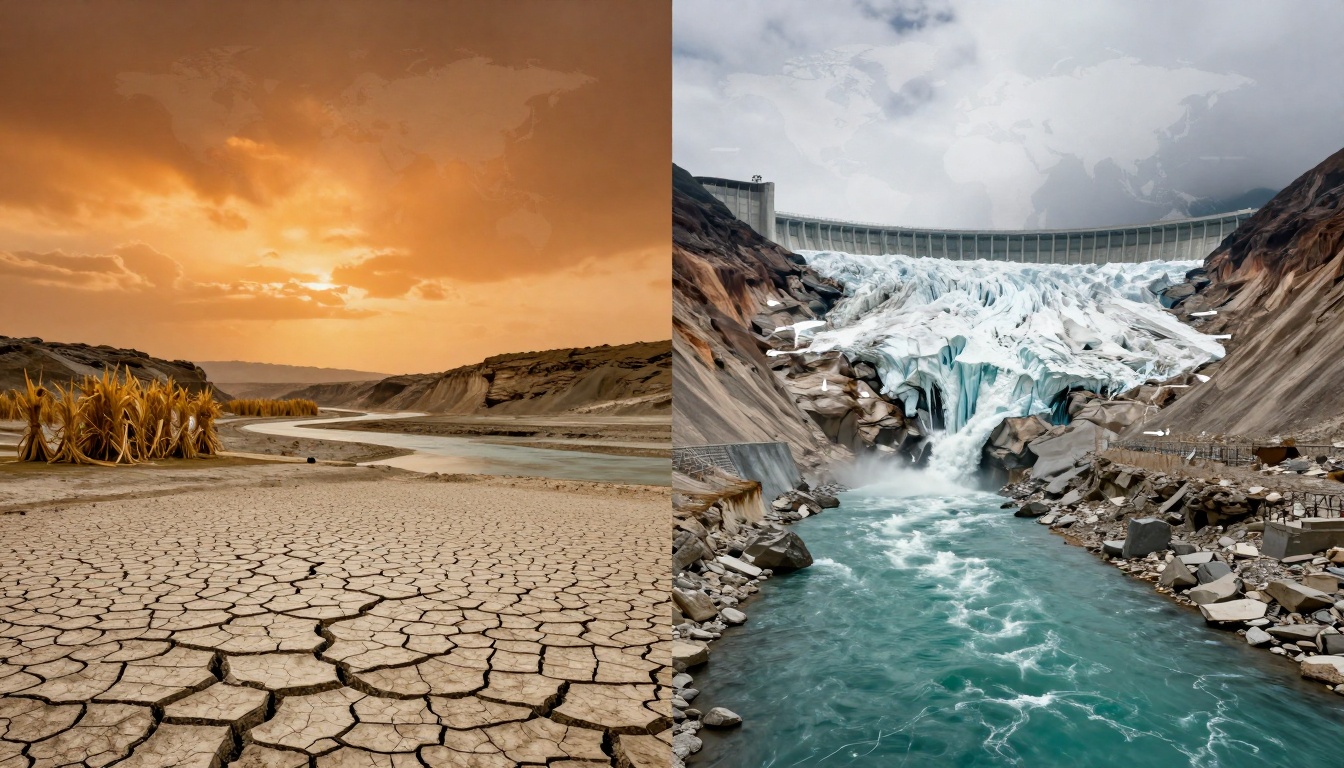
Picture a vast riverbed in Pakistan, cracked and empty under a scorching sun. Farmers gather, eyes fixed on the absent Indus, their crops wilting as fields turn to dust. Across the border, Indian dams hold back the flow. In Egypt, the Nile shrinks, leaving parched lands where cotton once thrived. These scenes play out now, in early 2026, as climate change dries rivers and melts glaciers. Shared waters spark old grudges into new fights.
Two-thirds of the world’s freshwater flows across borders, yet treaties cover few of these routes. Nations upstream grab control, leaving downstream ones desperate. Asia’s Himalayan giants like the Indus, Ganges, and Brahmaputra feed billions. Africa’s Nile sustains Egypt’s lifeblood. The Middle East boils over scraps. Glaciers, those icy storehouses, vanish fast, first flooding valleys then starving rivers for good.
This article maps the science behind shrinking flows, spotlights flashpoints from Pakistan to Ethiopia, and eyes paths to calm the storm. You’ll see how everyday people pay the price and what might stop the clashes.
Rivers Shrinking: The Real Causes at Play
Warmer air chews through glaciers in the Himalayas, Andes, and Alps. These peaks act as water towers for major rivers. Melt speeds up, sending short bursts of floodwater, then long spells of drought. The Indus surges 10% now from extra melt, but faces 29 to 67% glacier loss by 2100. Downstream, Pakistan’s farms thirst.
In the Andes, glaciers feed La Paz and Santiago. They lost half their ice since 1970; cities ration water as taps run dry. Europe’s Alps shrink too, hitting the Rhine and Rhone. Swiss ice dropped 10% since 2022 alone. Bursting glacial lakes flood borders, like those spilling from Nepal into India.
Upstream nations build dams to store this fleeting bounty. They squeeze supplies to those below. Rivers turn unreliable, crops fail, and power plants stall. One stat stands out: the Himalayas hold ice for 1.9 billion people, yet lose 7% yearly.
Farmers in Bangladesh watch the Ganges drop, blaming Indian barrages. Egypt eyes Ethiopia’s massive dam with fury. These changes hit hard where borders meet water.
Glaciers as Nature’s Reservoirs Vanishing Quick
Glaciers store summer melt for dry seasons, like a natural bank. Warmth tips them into chaos. First, extra water boosts hydropower in Nepal or hydropower in the Alps. Then scarcity bites.
Nepal sees glacial lake outbursts, or GLOFs, rush from Chinese slopes into valleys. In 2024, one killed dozens downstream. Swiss glaciers fed the Rhone steady till now; 2025 brought record lows. South Asia’s shrinking glaciers threaten 270 million, painting a grim picture for rivers below.
Melt peaks soon, then rivers dwindle. Nations race to dam the surge, but downstream gets shorted.
Climate’s Uneven Toll on Border Waters
Transboundary rivers carry 60% of global flow. Climate hits them uneven. The Indus gives Pakistan 80% of farm water from Indian soil. Dams there control the tap.
China’s Brahmaputra projects worry Bangladesh; floods rage, then drought parches paddies. Mekong dams in Laos starve Vietnam’s delta. Upstream grabs mean downstream begs.
Pakistan’s 2025 wheat harvest fell 20% from low Indus flows. Egypt relies on the Nile for 90%; any cut spells famine. These shared veins pulse with tension as ice retreats.
Hotspots Where Nations Fight Over Every Drop
Tensions simmer across continents. Pumps run dry, farms collapse, cities ration. In Asia, Africa’s Nile, and the Middle East, water wars brew. People flee barren fields; protests turn bloody. Early 2026 brings fresh strain from real-time shifts.
India suspended the Indus Waters Treaty with Pakistan in April 2025, after a Kashmir attack killed 26 tourists. New Delhi holds it in abeyance until Islamabad curbs militants. Pakistan calls it war; skirmishes flared till May. No data sharing means Pakistan battles blind floods and droughts. Eurasia Group flags it as top risk. Climate change now threatens that fragile India-Pakistan pact.
Morocco’s new Kheng Grou Dam irks Algeria; border troops eye each other. Iran’s taps failed in 2025; protests killed hundreds in “Day Zero”. Andes basins hint at clashes, but no shots yet. Stakes run human: a Lahore tailor shuts shop sans power; Cairo families queue for Nile drops.
Asia’s Tense Waters: Indus and Beyond
India-Pakistan row boils over the Indus. Flows drop as glaciers melt; India eyes diversion. Suspension halts flood warnings; Pakistan’s economy bleeds.
China dams the Brahmaputra; Bangladesh fears dry seasons wipe rice crops. Himalayan surges flood now, drought later. One farmer told reporters: “Our river betrays us.” Tensions rise with each empty canal.
Africa and Middle East Powder Kegs
Ethiopia’s Grand Renaissance Dam chokes Egypt’s Nile share. Cairo drills deserts, fumes at upstream fill. No new fights in 2026, but threats linger.
Morocco-Algeria clash over dammed flows; old borders flare. Iran hit Day Zero; regime cracks down. These spots teeter as heat dries soils.
Paths to Peace: Deals, Tech, and Tough Talks
Hope flickers in shared plans. The UN Water Conference urges data swaps on flows. The “no-harm” rule in treaties bars upstream damage.
AI predicts floods, aids fair splits. Sensors track glaciers real-time. India-Pakistan once shared Indus data; restart could calm nerves.
China joins Mekong talks, easing Laos-Vietnam strain. Tech desalination helps Gulf states. But without action, upstream weapons form.
Push leaders for treaties. Back groups monitoring dams. Data openness beats walls. Realism tempers hope: greed blocks progress unless thirst unites.
In sum, drying rivers and gone glaciers risk global stability. Indus halt, Nile strain, Brahmaputra fears show clashes cost lives. Farms fail, unrest spreads.
Cooperation offers the fix. Renew pacts, share tech, honour borders. Tech aids, but talks seal peace. Will shared thirst unite foes? Picture those Pakistani farmers and Egyptian growers at one table. Act now; the taps won’t wait.
What step will you take to spotlight this fight? (Word count: 1492)