
Listen to this post: Why Experts Say Africa’s Growth Story Is Far from Over
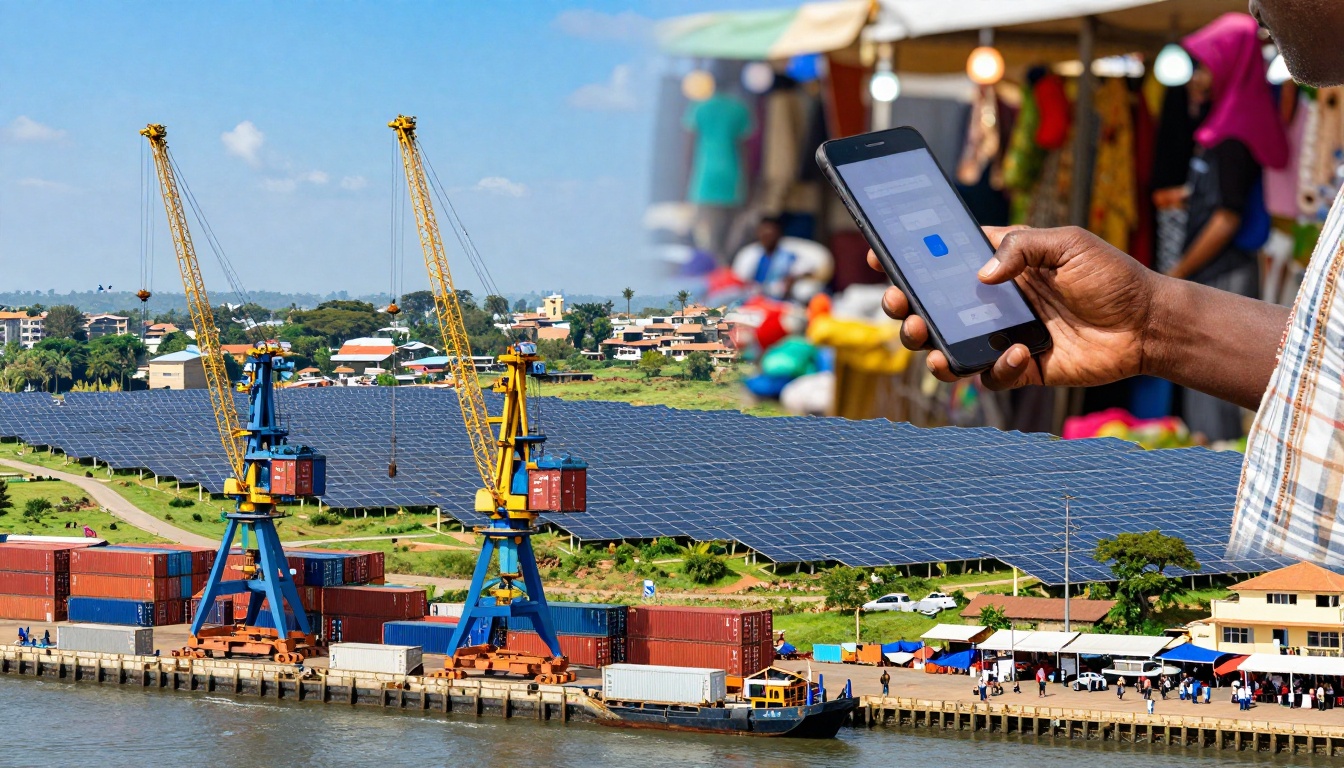
Picture a bustling port in Lagos where cranes lift containers non-stop, or a solar farm in rural Kenya powering homes that once sat dark at night. Add a mobile money stall in Nairobi, where traders send cash across borders in seconds. These scenes capture Africa’s everyday hustle. Experts predict the growth story will continue. The UN sees continent-wide GDP rising by 4% in 2026, with some forecasts at 4.3%. East Africa often leads, thanks to stars like Ethiopia at 7.1%. Growth means real wins for people: more jobs, steadier prices, and services that reach further. Yet risks loom. Still, analysts from the UN to the IMF stay upbeat. They point to solid drivers that keep the momentum alive.
What the latest forecasts say, and why the averages hide the real story
Continent-wide numbers give a snapshot, but they smooth over sharp differences. Think of Africa as a marathon with runners at varied paces: some jog steadily, others sprint ahead, a few pause to tie their laces. West Africa eyes 4.4% growth, North Africa 4.1%. Sub-Saharan spots shine brighter in places. These averages matter, yet they mask why experts focus on pockets of speed.
The baseline outlook: steady growth around 2026, with East Africa often in front
Recent projections paint a steady picture. The UN forecasts 4% GDP growth for Africa in 2026, a tick up from 3.9% this year. Other views push it to 4.3%. Total output could hit $3.32 trillion. East Africa pulls ahead without a full regional tally; Ethiopia’s 7.1% tops lists, fueled by dams and reforms. Rwanda, Guinea, and South Sudan join the fast lane.
For details on these trends, check the UN’s Africa Renewal report on 2026 growth. Egypt aims for 4.5% via fixes at home. Gold boosts West Africa, though oil dips hurt. Southern Africa’s South Africa holds as the biggest economy at $444 billion. Small nations often outpace giants. Experts like these shifts because they signal broad base, not one-off booms.
Why ‘per-person growth’ matters as much as GDP
Raw GDP growth grabs headlines, but per-person gains tell the human tale. Imagine a cake growing larger each year, yet more guests arrive at the table. Africa’s population swells fast, so total growth must outrun it for real lifts in living standards. Sources flag high debt and a $108 billion yearly infrastructure gap as drags.
Jobs add pressure. Millions of young people, perhaps 12 million across key spots, join the workforce each year. Nigeria alone packs 200 million, mostly youth. Without skills or openings, gains stall. Success means not just bigger economies, but pay cheques and training that match. Experts stress this split: GDP up means little if it skips the crowd.
The engines experts keep pointing to: people, phones, power, and production
What fuels this drive? Analysts spotlight four basics: a swelling workforce, tech that connects, reliable energy, and home-grown output. A farmer in Ghana taps his phone to sell crops and get paid instantly, skipping bank queues. A small factory in Tanzania hums on solar panels, churning goods round the clock. A coder in Senegal builds apps for local shops. These threads weave a tough story.
A young workforce can be an advantage, if jobs and skills keep up
Africa’s people under 25 make up over half in spots like Nigeria. This bulge acts as a tailwind for decades. More hands mean more output, if guided right. Picture fields, shops, and offices filled with eager workers boosting farms and firms.
The catch? Jobs and training must follow. Governments push small business aid and formal roles. One clear win: demographics spark potential; smart policy turns it to wages. Experts see this as a 20-30 year edge over ageing rivals.
Tech and mobile money are turning daily life into an economy you can measure
Phones change everything. Mobile money lets traders dodge cash risks, send funds fast, and save bits at a time. Fintech opens credit to street vendors. E-commerce links rural sellers to city buyers. These tools widen markets and lift productivity.
Taxes follow as deals go digital, building public coffers. A market woman in Côte d’Ivoire pays suppliers via app, tracks stock, and grows her stall. No jargon needed: it’s cash flow that sticks.
Energy and renewables are moving from ‘nice to have’ to the backbone of growth
Power unlocks doors. Factories idle without it; cold chains spoil food; schools dim early. Solar, wind, and grids draw cash now. Reforms cut blackouts, spark business trust.
Ethiopia’s Grand Ethiopian Renaissance Dam promises hydro floods. Costs drop, output climbs. A clinic in Mali runs lights and fridges steady. Better juice means jobs stick and firms expand.
Why investors are still placing bets, and what could trip the story up
Cash flows in. FDI climbs on stability and need. China funds roads and plants; Gulf states build ports and green power. EU eyes minerals via Global Gateway. India and Turkey add tech and defence. These bets reshape skylines.
Follow the money: big projects in energy, cities, and transport are reshaping timelines
Large builds matter twice: jobs today, capacity tomorrow. Greenfield deals mean fresh sites and operations. Renewables and infra pull record funds. See the World Bank’s Global Economic Prospects for outlook details.
China’s Ethiopia and Tanzania trips seal zero-tariff pacts. UAE farms and ports rise. Demand stays hot despite gaps.
Debt, prices, and trade rules are real speed bumps, not the end of the road
Risks bite. Debt eats budgets; global credit tightens. Inflation erodes gains; conflicts scar Ethiopia. US tariffs and commodity swings add jolts.
Yet counters build. Reforms ease loads; new partners diversify. Regional trade and local processing, like minerals or food, add buffers. It’s bumps, not brakes.
What to watch next:
- Youth job numbers in key economies.
- Power uptime in factories and homes.
- Inflation trends month by month.
- Cross-border trade volumes.
- Debt deals with fresh lenders.
Back to that Lagos port, now busier with solar-lit warehouses and phone-paid trucks. Experts hold firm for three reasons: steady 4% forecasts, drivers like youth and tech, and investor cash. Two must-haves stand out: jobs that fit skills, and stability that lasts. In 2026, track power reliability, youth hires, price calm, and trade flows. What sign grabs you first? Africa’s story rolls on, full of grit and promise.