
Listen to this post: “Black swan” shocks: Left‑field events experts fear could upend 2026
On a normal Tuesday, the world looks steady. The kettle clicks off, the train arrives, your card payment goes through, and the headlines feel far away. Then something odd flashes on your phone, a video, a voice note, a “breaking” alert, and the day tips. People start queueing. Flights get cancelled. Prices jump before you’ve even finished your tea.
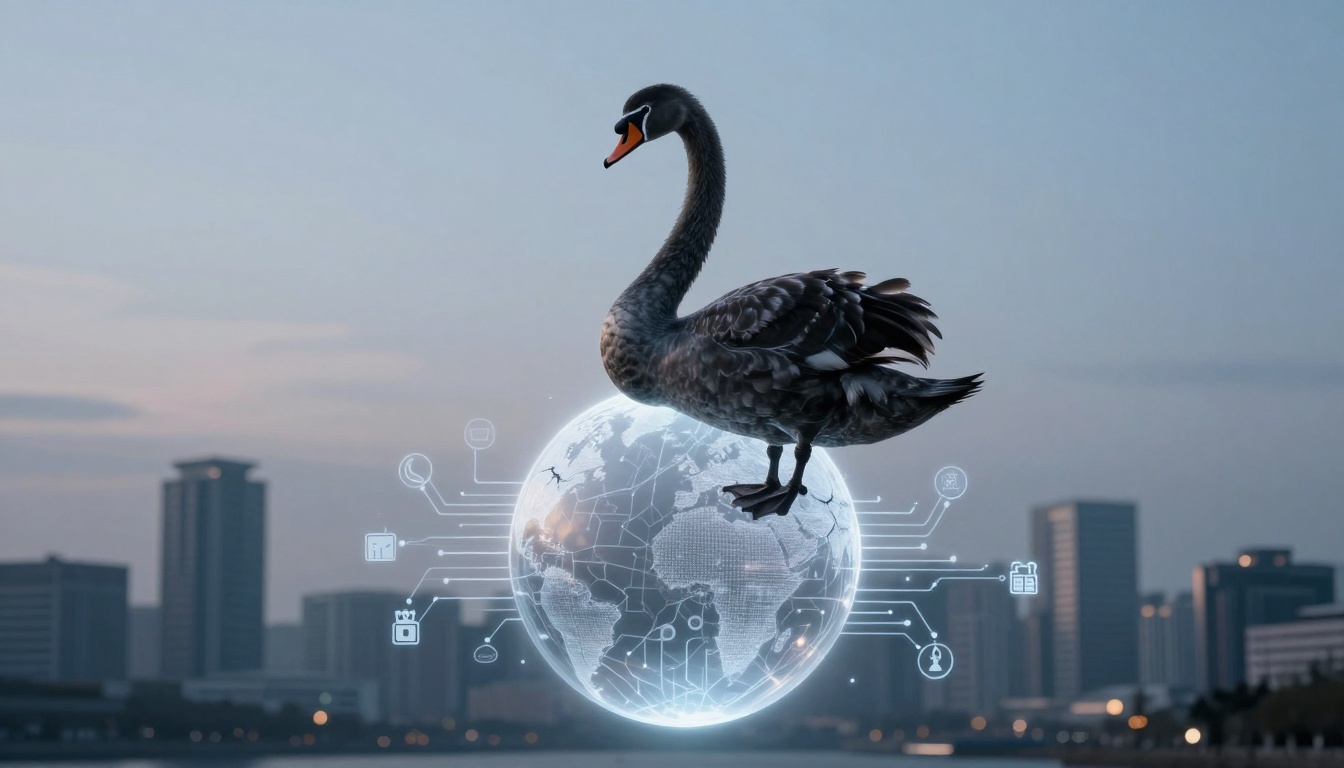
That’s the feel of a black swan shock: rare, high impact, and easy to explain after the fact (“how didn’t we see it?”). In January 2026, serious risk watchers aren’t trying to scare anyone. They’re looking at weak joints in the system and asking what could snap if pushed the wrong way.
The worry is simple: modern life is tightly linked. Finance, energy, tech, and supply chains share the same pipes. When one pipe bursts, the leak spreads fast. The aim here is practical, how to spot the early tremors and build plain, everyday steadiness.
The trust shock: AI-fuelled fake reality that breaks shared facts
For years, misinformation travelled as text and grainy photos. Now the fear is sharper: convincing video, audio, and documents that arrive at speed, in volume, and with just enough detail to feel true. The shock is not that fakes exist. It’s that they can swamp the moment so completely that people can’t agree on what happened, even for a few hours.
Experts have been flagging AI and cyber as a rising source of business risk, with cyber threats staying near the top of global watchlists. A recent report on the Allianz Risk Barometer shift towards AI risk captures the mood: it’s not one threat in isolation, it’s the way digital events spill into real behaviour.
A clear scenario looks like this. A clip appears to show a senior official announcing emergency bank controls, or a city evacuation order, or a sudden military move. It’s shared by accounts that look local and “in the know”. Within minutes, it’s reposted with captions like “I was there” and “my mate in the bank confirmed it”. Even if it’s false, the second-order effects can be real:
- Panic behaviour: cash withdrawals, fuel runs, supermarket shortages.
- Market whiplash: automated trading reacts to headlines, then humans join in.
- Public disorder: protests form around a story that never happened.
- Slower emergency response: officials waste time proving reality instead of acting.
Early warning signs tend to be boring, which is why they matter. Watch for:
- Verification delays from trusted outlets, paired with viral “proof”.
- Screenshots and clips with no original source and no full context.
- Sudden policy moves justified by shaky media, not formal statements.
- Contradictory “official” accounts with tiny spelling changes or odd URLs.
The practical takeaway is not “trust nothing”. It’s “slow down and verify”. People can lower harm with better habits, and institutions need authentication, rapid public comms, and rehearsed playbooks for fast denials and fast confirmations.
How a single viral deepfake could trigger real-world chaos in hours
First, a clip lands on social media, posted by accounts that mimic local news. It spreads because it’s short, emotional, and “looks” like a press briefing.
Second, mainstream channels pick it up cautiously. They may run it with caveats, but the caveats get lost. Group chats share the bold claim, not the warning line.
Third, money moves. A bank’s shares dip. A currency slides. Algorithms react to keywords, not truth. People see the price move and assume it confirms the story.
Fourth, the street responds. A few photos of queues outside cash machines go viral. That becomes a fresh “signal”. Some employers send staff home. A surge in travel changes pushes flight prices up. Power demand spikes as people charge devices and heat homes “just in case”.
By the time the clip is debunked, the day has already been reshaped.
Simple ways to stay steady when you can’t tell what’s real
Pause before sharing. A 30-second delay is a safety feature.
Check primary sources, not reaction posts. Look for official websites, verified channels, or direct statements.
Save key numbers now. Your bank’s fraud line, your local council contact, your workplace duty number. Don’t rely on searching in a rush.
Agree a small family plan. One check-in method, one meeting point, one rule: “We confirm before we move.”
The goal isn’t to win arguments online. It’s to reduce harm when the fog is thick.
Hard-power surprises: a sudden geopolitical break that rewrites the year
Geopolitical shocks are often described as “known risks”, yet the black swan comes from speed. A leadership wobble, a misread signal, a surprise collapse of a ceasefire, or a fast internal fracture can turn a tense background story into the main event in days.
In early 2026, the risks experts talk about are not single predictions. They’re patterns: tighter alliances, high military tempo, and poorer communication lines. Add domestic unrest and economic strain, and you get a world where small errors can escalate.
Why does this land in everyday life? Because geopolitics controls the stuff you touch. Energy flows, fertiliser and grain prices, shipping routes, sanctions, and cyber spillover. Even if you never follow defence news, you feel it in heating bills and supermarket staples.
Pressure points that make “sudden” more likely include:
- Crowded theatres where drones and missiles shorten reaction time.
- Weak back channels between rivals, so rumours replace clarity.
- Domestic instability that encourages leaders to look strong quickly.
- Sanctions and counter-sanctions that hit trade in blunt ways.
This isn’t about living in fear. It’s about running your household or business with buffers and calm decision rules, so you don’t make expensive choices in a rush.
Russia instability: why leadership shocks can ripple into energy, markets, and security
When a tightly controlled system wobbles, what changes first is not policy detail. It’s chain of command and confidence.
Markets hate uncertainty. If outsiders can’t tell who is giving orders, traders price in worst cases. That can hit oil and gas prices quickly, even before any physical supply changes. It can also raise security fears, because nuclear signalling relies on clear lines and stable procedures.
Outcomes can vary wildly. One path could reduce conflict, another could lead to risky moves to prove control. The range is the problem, and that range is why prices jump. Households then feel it through petrol, heating, and food.
If you want a plain refresher on what “black swan” thinking looks like across markets and commodities, this broad primer on black swans over the next decade helps set context, even if the specifics change.
What a wider conflict spillover would hit first: fuel, shipping, and prices
A spillover tends to bite in the same places, fast:
Petrol and diesel: wholesale prices move on fear as well as supply. Even small disruptions can cause queues.
Home energy: gas and electricity costs respond to global pricing and storage worries, not just local weather.
Supermarket staples: oils, grains, and packaged foods react to shipping insurance, port disruption, and rerouted vessels.
Delivery delays: if sea lanes look risky, ships take longer routes. Longer routes mean higher fuel, higher insurance, and fewer ships available.
For small firms, the first pain is cashflow. You pay more for stock, customers become cautious, and lenders get stricter. A simple hedge is choice: two suppliers where possible, and a short list of “can we substitute this?” options for key inputs.
System shocks: finance freezes and cyber hits that turn digital trouble physical
Some black swans don’t start with bombs or speeches. They start with a quiet “no”. A lender pulls a credit line. A payments provider goes down. A key software supplier gets hacked. It feels like admin until it isn’t.
A credit freeze is when lenders suddenly stop taking risk. They can still exist, but they don’t want to lend, or they only lend at harsh rates. A critical infrastructure cyber attack is when attackers disrupt the systems that run power, healthcare, transport, or water. These two can feed each other: a cyber incident triggers panic, panic tightens credit, and tightened credit makes recovery slower.
Risk watchers also talk about weak points in private markets, where lots of lending happens away from public view. Think of it like hidden plumbing behind a wall. When it works, you forget it’s there. When it breaks, the damp spreads before you see the leak. A panel discussion on market risks and “black swan” worries for 2026 reflects that concern: when valuations feel stretched and funding gets tight, small shocks can become big ones.
Tail risks feel higher entering 2026 because many organisations are running with thinner margins, more automation, and more shared vendors. The same tools that speed up business also speed up failure.
A practical resilience kit is not dramatic. It’s boring, and that’s why it works:
- Cash buffer: a small emergency fund, plus a bit of physical cash.
- Redundancy: a backup way to pay, travel, and contact people.
- Backups: offline copies of key files and essential documents.
- Offline plan: what to do if apps fail, and who decides.
- Communication tree: two ways to reach staff or family.
Credit freeze basics: what it means when lenders suddenly say “no”
Credit is the grease of normal life. Mortgages, car finance, business loans, and trade finance keep money moving between promise and delivery.
When credit freezes, the effects can land in weeks, sometimes days:
A small business can’t fund inventory, so shelves thin out. An employer delays hiring. A builder can’t get bridging finance, so projects pause. Invoices age, payroll gets tight, and people spend less because they’re unsure.
The scary part is speed. Once a few lenders get cautious, others follow. Nobody wants to be last holding the risk. That is how a financial wobble becomes a jobs story.
A calm rule helps: if your work depends on customers paying on time, chase invoices early and keep terms clear. If your household budget is tight, reduce fixed commitments where you can, before you have to.
Critical infrastructure cyber attacks: when a hack switches off the lights
The image people have is a hacker in a hoodie. The real hazard is downtime and confusion.
Critical systems often rely on older operational tech, plus newer cloud tools bolted on over time. Attackers don’t always need to hit the main target. They can enter through a smaller supplier, then lock files, scramble settings, or force shutdowns for safety.
What happens next is plain: hospitals move to paper. Trains slow or stop. Fuel stations can’t take payment. Water systems run in manual mode. It’s not the end of the world, but it’s a hard week for a lot of people.
For small firms, sensible precautions are simple:
Patch and update key systems, even when it’s annoying.
Use multi-factor sign-in for email and admin accounts.
Keep clean backups that aren’t always connected.
Practise one drill: “If email dies, how do we work?”
For households, aim for comfort, not bunkers. A charged battery pack, a printed meds list, paper copies of insurance details, and a torch that actually works.
Conclusion
Black swan shocks are hard to predict by design, but weak points are visible. In January 2026, the biggest fears cluster around three buckets: trust (AI-made fakes that break shared facts), hard-power surprises (sudden geopolitical breaks that hit energy and trade), and system shocks (credit freezes and cyber attacks that turn digital trouble into physical disruption).
You can’t control the spark, but you can change how you react. Pick one upgrade this week: a better verification habit, a small emergency fund, a family check-in plan, or basic cyber hygiene. Do it once, write it down, and keep it simple.
Real steadiness looks like spare keys and a torch. Not doom, just readiness when normal life suddenly isn’t.