


Listen to this post: Trump, tariffs and trade wars: Who pays the price outside America?
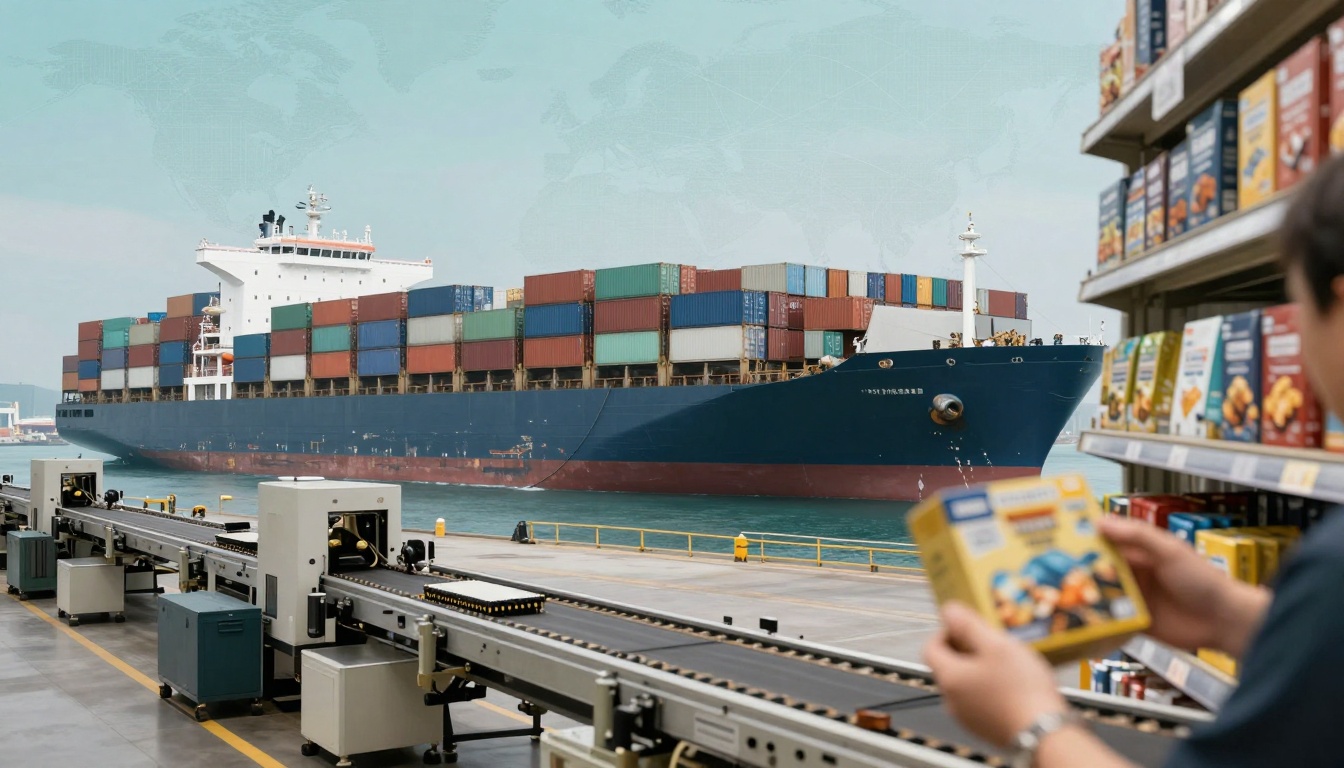
A container ship slides into port, stacked like Lego with metal boxes. Somewhere else, a factory line pauses because a single chip is late. In the supermarket, a shopper hesitates at a higher price tag and puts the “nice” brand back.
That’s the quiet reach of a tariff. A tariff is a tax a country puts on imported goods. It sounds simple, almost tidy, until you remember how much of modern life is assembled from parts that have already crossed oceans, borders, and customs checks.
In January 2026, tariff talk is back in the headlines, with fresh warnings of wider duties and tougher pressure on allies, as tracked by major outlets and policy timelines. When America raises its tariff wall, the effect doesn’t stop at the US border. It travels through contracts, shipping lanes, exchange rates, and pay packets.
One question matters most: when the US turns trade into a fight, who outside America ends up paying, and how does that show up in everyday life?
How Trump-style tariffs travel across borders and land in foreign wallets
A tariff looks like a decision made in Washington, then paid at a US port. That’s only the first step. The real story is the chain reaction.
Picture a toll gate on a busy road. The toll is paid by the driver who passes through, but the cost spreads. Delivery firms raise fees, shops change prices, workers lose hours when orders fall, and some drivers take longer routes that cost more anyway. Tariffs work in a similar way.
Start with something ordinary, like a car. A US buyer wants a mid-range model. The car’s parts may have touched Mexico, Canada, Germany, Japan, or the UK before final assembly. If the US adds a tariff on imported cars or on key inputs (steel, batteries, electronics), the “toll” hits the importer first. The importer then tries to push the cost along the chain: to the foreign supplier, to the dealer, and finally to the person buying the car.
Now scale that logic to phones, food, and medicines:
- Phones: chips, screens, rare metals, and assembly are split across many countries. A tariff on a component can lift costs even if the final product is “made” elsewhere.
- Food: tariffs on cheese, wine, meat, or fertiliser change farm margins and shelf prices, sometimes months later.
- Medicines: active ingredients often come from abroad. If inputs face duties, manufacturers may pay more, or switch suppliers slowly because quality checks take time.
The legal tools matter too, because they shape how sudden and broad a tariff can be. In recent years, US administrations have used multiple authorities, including security-based investigations, to justify duties on wide categories of imports. For a clear view of how recent actions were rolled out and under what powers, see the Congressional Research Service tariff timeline.
The hidden split of the bill: exporters, importers, and shoppers
Who pays a tariff on day one? Usually the US importer, because the tax is collected at the border. But that’s like saying only the person holding the umbrella gets wet. Over time, the cost gets shared and shifted.
Foreign exporters often face a choice: cut prices to keep US customers, or lose sales. If they cut prices, their margins shrink. When margins shrink, firms start trimming. First overtime goes. Then temp staff. Later, investment plans get shelved. The tariff has crossed the border without ever appearing on a foreign tax bill.
Some costs also leak into prices outside the US. Many traded goods and inputs are priced in US dollars. If tariffs shake markets and move currencies, a firm in Europe or Asia might pay more for dollar-priced components, even when selling to non-US customers. For global, model-based evidence that tariffs can feed into inflation and output beyond America, the BIS working paper on the macro impacts of the 2025 US tariffs is a useful reference.
And then there are shoppers abroad. When supply chains re-route, “avoiding the tariff” can mean paying more elsewhere. New suppliers may be pricier. Shipping routes may be longer. Warehousing costs rise as firms hold extra stock “just in case”. Those costs don’t wear a tariff label, but they still land in the till.
Retaliation and rerouting: when countries answer back or firms move supply chains
Trade wars don’t stay one-sided for long. When the US imposes tariffs, trading partners often respond with tariffs of their own. Retaliation is political as well as economic, and it tends to target goods with visibility: farm products, iconic brands, or goods tied to key voting regions.
That retaliation can hurt workers outside the US too. A European government might slap duties on US agricultural imports, then a European food processor that relies on those inputs faces higher costs. A Chinese buyer might switch away from US soybeans, and a logistics hub elsewhere loses transit work. The punch ricochets.
Firms also try to step around tariffs by shifting production or re-labelling supply chains. Some changes are real, such as moving assembly to a lower-tariff country. Some are about paperwork, such as changing sourcing so a product qualifies under a different rule of origin. Either way, switching takes time and money. Regions that used to benefit from stable trade can be left behind when the map is redrawn.
Uncertainty adds a separate cost. Even the threat of tariffs can freeze decisions. A factory doesn’t hire for a new line if it can’t guess next quarter’s duties. For a readable, current take on how tariffs have played out and why they keep returning as a policy tool in 2026, see Foreign Policy’s analysis of tariff impacts.
Who pays outside America: the places and people most exposed
Tariffs don’t hurt everyone equally. The biggest damage often lands where dependence is highest and bargaining power is weakest: countries that sell heavily into the US, sectors with thin margins, and regions built around one or two export industries.
A few quick snapshots make it real:
- A machine operator in a German parts plant watches shifts shrink after a US buyer cuts orders.
- A small food exporter in the UK is told by a US distributor to “share the pain” by cutting prices to offset the duty.
- A household in Mexico pays more for an appliance because key parts are now sourced through a more expensive route.
Exposure isn’t just about where a product is shipped from. It’s also about where value is created. In many industries, one finished product contains value from dozens of countries. So when tariffs hit a category, they hit a web.
In January 2026, reporting has highlighted renewed tariff threats and broader targeting, including pressure on allies. Whether every proposal becomes permanent policy or not, the message alone changes behaviour. Boards plan for worst-case costs. Lenders raise risk premiums. Buyers diversify suppliers.
Allies and partners: Europe and the UK deal with demand shocks and policy pressure
For Europe and the UK, the first risk is simple: less US demand. If a US tariff lifts the landed price of a British whisky, a French cheese, a German car, or an Italian machine tool, some buyers switch to domestic substitutes or cheaper imports from elsewhere. Even when a product keeps selling, exporters may have to discount to stay competitive.
The second risk is political pressure. Allied governments can be pushed into trade-offs: accept higher tariffs, offer concessions in other areas, or subsidise affected industries at home. That’s costly and messy, and it can strain alliances in ways that don’t show up in trade figures.
Some sectors are more sensitive than others:
- Autos and auto parts: big ticket items where a small price change can delay a purchase.
- Machinery and industrial goods: often ordered on long contracts, but easily postponed when uncertainty rises.
- Steel and metals: exposed to security-based tariff arguments and abrupt rule changes.
- Food and luxury goods: politically visible and easy targets.
Smaller economies feel the swings faster. When a large share of a niche industry sells into the US, a single tariff can become the difference between profit and loss in one season. For a running sense of how tariff decisions and market reactions have evolved, the Financial Times tariff tracker is widely cited.
Big exporters and supply-chain hubs: China, Mexico, Canada and the ‘parts economy’
China’s exposure is often discussed as “exports to the US”, but the deeper vulnerability is the parts economy. Tariffs on electronics, chips, machinery, or logistics equipment can hit Chinese firms directly, and also hit Asian and European firms that sell into supply chains linked to China.
Mexico and Canada face a different kind of pressure. Their economies are tightly threaded into US-centred production, particularly in autos, metals, and industrial goods. In these systems, parts can cross borders multiple times. A component might be cast in Canada, machined in the US, assembled in Mexico, then shipped back for final sale. If a tariff hits at one crossing, the added cost can be carried forward and marked up at each step. One duty can be paid again and again in disguised form.
Another volatility point in 2026 is the risk of renewed tension around trade rules and enforcement under the USMCA framework. Even without a formal renegotiation, tougher enforcement, new “national security” claims, or sudden category tariffs can shake investment plans.
The overall effect is a double hit: lower US demand for finished goods, plus higher costs for imported inputs. The Peterson Institute has modelled how broad US tariffs can spill into global output and prices, including knock-on effects through supply chains. The PIIE working paper on global economic effects lays out those channels in detail.
The real-world costs that don’t show up on a tariff headline
Tariff headlines focus on percentages and sectors. Daily life feels different: slower hiring, awkward price rises, and a sense that planning has become harder.
Even when a country “wins” a dispute on paper, the adjustment period can still hurt. Firms don’t rebuild supply chains overnight. Workers can’t instantly move from a shrinking export plant to a growing domestic industry. Households notice when staples creep up in price, even if the cause is three steps back in the supply chain.
The hidden costs tend to arrive in four forms: inflation pressure, job losses (or weaker wage growth), currency swings, and lower confidence. None of these comes with a neat customs receipt, but they can be more painful than the tariff itself.
Jobs, prices, and pay packets: why ‘a tax on trade’ becomes a cost-of-living issue
When export orders fall, the first cut is often hours, not headcount. That still hits families. Less overtime means less cash for rent, childcare, or fuel. Over time, job losses follow, especially in towns built around one export plant.
Prices can rise outside the US too, even though the tariff is charged in America. The reason is that supply chains don’t just “find a new route” for free. If a European appliance maker needs a motor previously sourced through the US market, and tariffs change the flow of that motor globally, the maker may end up buying a more expensive substitute.
A simple example: a kitchen washing machine sold in the UK uses a control board sourced from Asia, a motor from Europe, and specialised steel that trades globally. If tariffs raise US demand for some components from alternative suppliers, prices can rise in other markets too. The product hasn’t become better, it’s just become harder to make cheaply.
For a grounded estimate of how tariff increases have affected prices and economic activity, the US Congressional Budget Office assessment of 2025 tariff effects offers clear figures and mechanisms that also help explain spillovers.
Uncertainty is a cost: delayed deals, delayed investment, and slower growth
Tariffs don’t only change today’s price. They change expectations about tomorrow. That’s where the bigger drag can sit.
When firms can’t predict tariff rates, they behave defensively. They stockpile inputs, which ties up cash. They delay contracts, because signing a 12-month supply deal feels risky. They postpone building new plants, because the economics can flip with one announcement.
Banks and insurers respond too. They price in risk, raising financing costs for exporters and importers. Shipping firms adjust routes and rates. Even if a tariff is later softened, the damage can linger because trust takes time to rebuild.
If many countries react at once, global growth slows. Each government tries to protect its own industries, but the shared result is lower trade, lower investment, and weaker demand. The world economy is a set of connected rooms; shutting one door changes the air pressure everywhere.
Conclusion: The bill lands far beyond the US border
When America raises tariffs, people outside the US often pay through lower sales, weaker pay growth, and higher prices on goods that rely on global inputs. The extra hit is uncertainty, which chills hiring and investment long before a tariff is even collected.
Here’s a short checklist of signs worth watching through 2026:
- Retaliation moves from major partners
- New sector tariffs (autos, chips, medicines, metals)
- Major trade talks and legal challenges to tariff powers
- Shipping rates and key input prices (energy, metals, chips)
- Currency swings that change import costs overnight
The practical takeaway is plain: diversify export markets and supply chains where possible, target support at workers and regions that take the first hit, and keep trade channels open so shocks don’t turn into lasting scars. The tariff wall might be built in Washington, but the echoes travel.