
Listen to this post: BRICS+, the G20 and the G7: Who really sets the rules now?
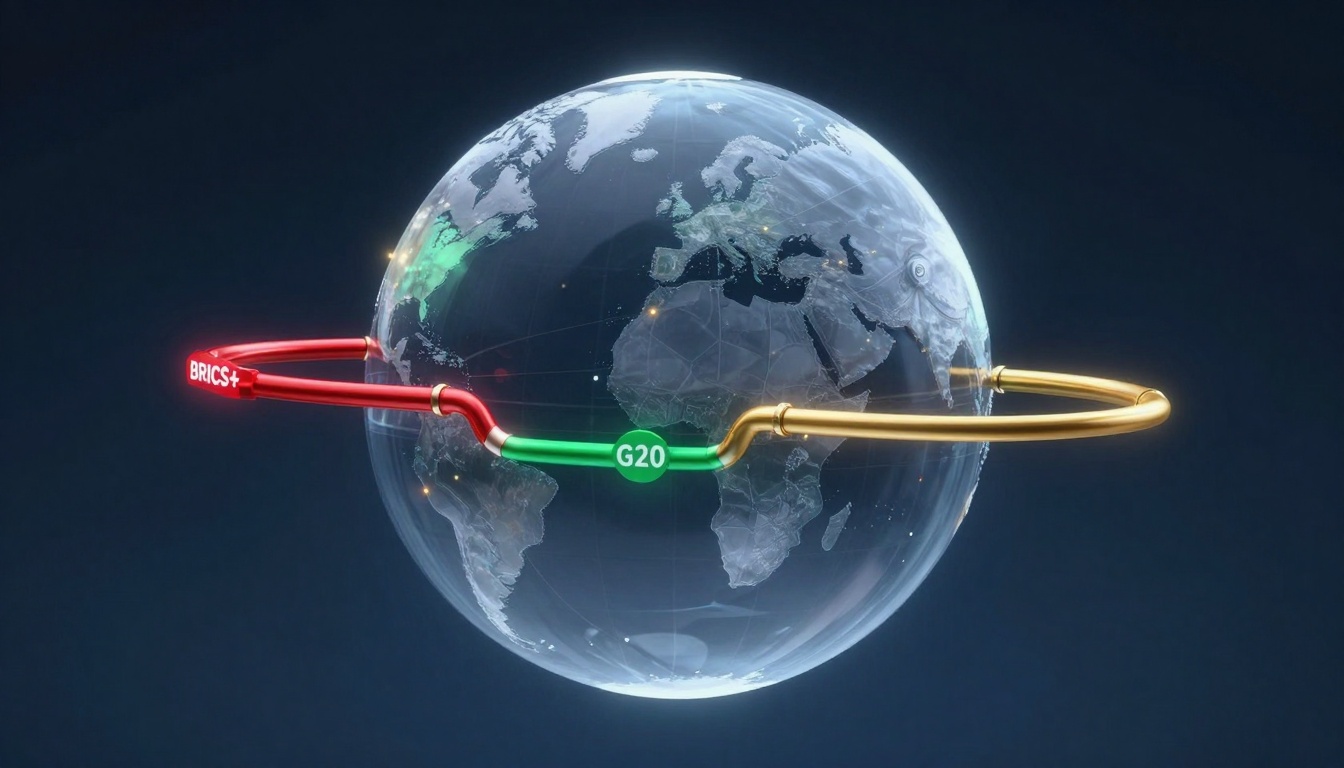
Picture global rules as the plumbing behind everyday life. The pipes decide how money moves across borders, how debt gets priced, what happens when sanctions hit, which tech standards get adopted, and who can keep trading when politics turns sour.
Three big “clubs” sit near the centre of that system in 2026: BRICS+, the G20, and the G7. They don’t pass laws like a world parliament. They don’t have police forces or courts with universal reach. What they do have is something that often matters more in practice: the ability to coordinate powerful states, signal intent to markets, and shape the institutions and networks everyone else relies on.
So who sets the rules now? The honest answer is messier than it used to be. Power has spread out, alliances overlap, and the biggest meetings aren’t always the most decisive. Let’s break down what each group is, how it works, and where its influence comes from in January 2026.
Meet the three clubs: who’s in them, and what they can actually do
Start with a simple truth: these groups are negotiation tables, not world governments. Their “rules” usually land as joint statements, shared standards, coordinated lending, or informal pressure. That can still change real lives, because investors, banks, and businesses listen.
BRICS+ (11 full members in January 2026) is now: Brazil, Russia, India, China, South Africa, Saudi Arabia, Egypt, UAE, Ethiopia, Indonesia, and Iran. The headline is expansion and symbolism, a larger table that says, “The West doesn’t speak for everyone.”
BRICS also has a newer “partner” lane. Partners can join parts of the process without full membership. From January 2025, partner countries include Belarus, Bolivia, Kazakhstan, Cuba, Malaysia, Thailand, Uganda, Uzbekistan, and Nigeria. If you want a deeper sense of what this expansion means for global politics, Carnegie has a useful explainer on BRICS expansion and the future world order.
The G20 is the widest major table: 19 countries, plus the European Union and the African Union. Its membership design is the point. It bundles the biggest advanced economies with major emerging ones, which is why it often becomes the crisis meeting when markets wobble or debt problems spread.
The G7 is smaller: Canada, France, Germany, Italy, Japan, the UK, and the United States, plus the European Union. It’s narrower in membership, but often quicker on shared messaging and coordinated policy, especially when security and finance collide.
In short, BRICS+ is trying to reshape voice and balance, the G20 tries to keep the whole room talking, and the G7 often acts like a tight committee that can move fast.
BRICS+ in 2026: bigger table, looser rules
BRICS+ is built on an idea as much as a structure: a push for a more multipolar order, where emerging powers and resource-heavy states get more say in finance, trade, and institutions.
In 2026, India holds the BRICS chair and will host the 2026 summit (the exact date and location hasn’t been confirmed in the sources available by January). That matters because India often plays two roles at once: it’s part of the “Global South” story, but it also values strategic independence and strong ties with several Western economies.
BRICS+ also carries internal tension. Members have different security ties, different exposures to sanctions, and different economic models. Even within the wider group, agreement can be hard. Reuters reporting on a 2025 ministerial meeting described internal rifts in the growing BRICS group, which is a reminder that size doesn’t automatically create unity.
The ambition is real. So are the frictions.
G20 in 2026: the widest table, but harder to agree
The G20’s strength is its reach. When it works, it can set a “minimum common plan” that stabilises confidence, even if nobody gets everything they want.
Its weakness is the same thing. When big members disagree, the G20 can become a room full of microphones and careful phrases.
As of January 2026, clear public confirmation of the 2026 host, date, and agenda isn’t consistently available in the sources surfaced here. That uncertainty itself tells you something: global coordination is harder when politics is hot and trust is low. Still, the G20 remains the place where emerging economies can press advanced ones on debt treatment, development finance, and trade frictions, without needing to join either a Western security bloc or a BRICS-style identity project.
How rules get set in real life: money pipes, market access, and standards
Most “rules” don’t arrive with a drum roll. They land quietly, like new terms and conditions that everybody has to accept because the system is already built.
A useful way to see it is through a few channels where power travels.
First, financial infrastructure. Second, trade and supply chains. Third, standards, meaning the technical and legal defaults that decide what is allowed to operate. When you control any of these, you don’t need a treaty to shape behaviour. People comply because opting out is costly.
Think of it like roads. If you own the bridge, you don’t need to own every car. You just decide what can cross, what it costs, and what happens when someone breaks the rules.
That’s why these clubs matter. Each one is a forum where members try to influence those channels, either by reinforcing the existing bridge, adding new bridges, or convincing others that a different route is safer.
The financial plumbing: dollars, payments, and who can block a transaction
Money is not only currency, it’s permission. The ability to clear a payment, insure a shipment, or refinance debt can decide whether a country breathes easily or holds its breath.
The US dollar system still carries heavy weight because so much trade, lending, and reserves run through dollar-linked networks, large banks, and established clearing routes. Sanctions power sits in that same ecosystem. If key institutions refuse to touch a transaction, many private firms back away too, even outside the sanctioning country.
BRICS+ talks about reducing reliance on the dollar and building alternatives. That might mean encouraging local-currency trade, expanding non-Western payment links, or using development lenders more actively. But it’s not a switch you flip. Trust, liquidity, legal protections, and deep capital markets take time to build.
The practical takeaway is simple: rule-setting in finance often comes from who can lend at scale, who can price risk, and who can interrupt flows. That’s why forums like BRICS+ and the G7 both keep finance near the top of the agenda, even when they describe their aims very differently. For wider context on how summit diplomacy shapes this space, see BRICS+ and global summit dynamics.
Trade and supply chains: the quiet power of being a must-have market
Trade rules aren’t only about tariffs. They’re also about access.
If you’re a “must-have” market, you can set product requirements and watch the world copy them. If you’re a “must-have” supplier, you can influence contract terms, shipping routes, and the politics around shortages.
The G7 still matters here because its economies are high-income and regulation-heavy. Firms often design goods and compliance processes around these markets because the customers pay more and enforcement is stricter. That becomes a global template.
BRICS+ matters because it combines huge populations, fast-growing demand in parts of the group, and heavyweight roles in commodities and energy. Saudi Arabia, the UAE, Iran, and Russia sit close to energy flows. Brazil is a major food and resource exporter. China is central to manufacturing capacity. Add Indonesia’s scale and minerals, and the table gets even more consequential.
A quick way to picture it: think EV batteries, oil contracts, food imports, and shipping insurance. The “rules” show up as contract clauses, certification requirements, and what banks will finance.
Standards and tech rules: the defaults that shape behaviour
Standards sound boring until you try to ignore them. Data rules decide where a company can store information. Chip controls decide what equipment can be sold. Security standards decide which suppliers get locked out of public networks.
Here the G7 often has an edge because it can align on security-driven restrictions and encourage allies to mirror them. But BRICS+ can still shape outcomes when members agree on alternative systems, or when fast-growing markets set their own digital rules that global firms must follow to keep selling.
For a balanced read on how BRICS, the G7, and the G20 overlap and compete, Carnegie’s analysis of BRICS expansion and the G20’s future role captures the tension well.
So who sets the rules now: it depends on the issue and the moment
If you want a framework you can remember, use a simple scorecard. When any club tries to “set rules”, five traits decide whether it sticks:
| Trait | What it means in practice |
|---|---|
| Speed | Can it act quickly, or does it stall? |
| Unity | Do members accept a shared line, or split? |
| Economic weight | Can it move markets by itself? |
| Legitimacy | Do others see it as representing more than one bloc? |
| Enforcement power | Can it reward compliance or punish defiance? |
Now apply it.
The G7 scores high on speed and unity, because it’s small and politically aligned. It also has strong enforcement tools through finance, sanctions coordination, and security ties.
The G20 scores high on legitimacy and economic weight, because it includes most of the world’s biggest economies across regions. But it can score low on unity in tense periods, which turns statements into cautious wording.
BRICS+ is gaining weight and voice, especially with its expanded membership and partner category. It can project legitimacy to many states that want options. But it can struggle on unity, because members don’t share the same threat perceptions or economic priorities.
So the rule-setter changes by topic. On sanctions and security-linked tech, the G7 often drives. On global debt stress or macroeconomic shocks, the G20 can still be the main room. On resource pricing, payment alternatives, and institutional reform messaging, BRICS+ can pull the debate.
When the G7 still leads: fast action, shared politics, and crisis messaging
When a crisis breaks, speed becomes power.
The G7 can issue a clear line and back it with aligned actions, because members tend to share core assumptions about markets, security, and alliances. That matters for sanctions packages, export controls, and coordinated signals to central banks and investors.
It also matters for “soft rule-setting”, the kind that spreads through headlines and boardrooms. If the G7 frames an issue as a security risk, firms often adjust supply chains and compliance quickly to avoid being caught on the wrong side.
This doesn’t mean the G7 is loved or seen as neutral. It means it is organised, and it can combine diplomacy with market-scale consequences.
When BRICS+ can bend the system: numbers, resources, and alternative networks
BRICS+ influence is less about one unified command, and more about changing the menu of options.
Its expansion has created a larger platform for states that want more say in global finance and trade norms, especially those frustrated with conditional lending, sanctions pressure, or Western dominance in institutions. The partner track also signals demand for looser affiliation, a way to join the conversation without signing up to every position.
BRICS+ can gain leverage when members’ interests overlap: energy trade, development bank funding, payment links that reduce friction, or joint language on reforming international bodies. It can also gain leverage by making the idea of “more than one centre” feel normal.
But there’s a hard limit: different rivalries and alignments can slow joint moves. When members can’t agree, the group still shifts the debate, but it struggles to deliver a single rulebook. A readable discussion of these competing architectures is in this overview of BRICS+ and the G7 in a multipolar context.
Conclusion
No single club fully runs the world in 2026. Rule-setting has become crowded, and sometimes contradictory. The G7 can still move quickly and enforce decisions through finance and security ties. The G20 still has the broadest legitimacy when it can agree on the basics. BRICS+ is reshaping who gets heard, and it’s adding weight through expansion, even if unity is uneven.
If you’re watching for what comes next, keep an eye on a few plain signals: India’s choices during its BRICS chair year, whether the G20 can land a shared minimum plan when tensions rise, any concrete steps on cross-border payments and currency use, and how middle powers pick partners issue by issue rather than bloc by bloc. These aren’t abstract games. They show up in prices, jobs, borrowing costs, and access to technology, long before most people notice the rules have changed.