




Listen to this post: Why the Return Window Always Closes Before You Get Around to It
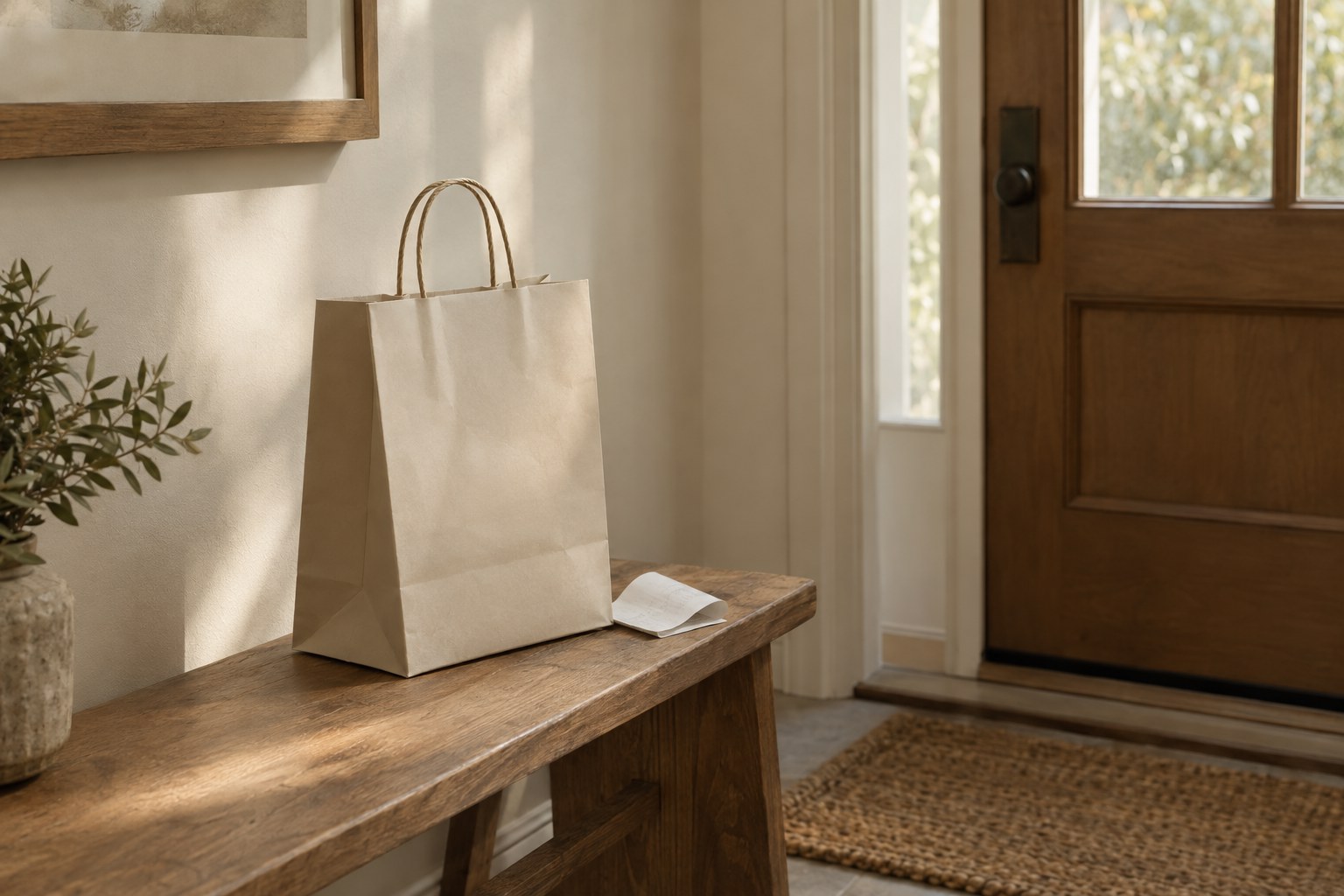
There’s a particular object that lives near most front doors: a bag, still stapled shut, receipt folded inside, sitting on the bench where you set it down “for now.” You meant to take it back within the week. The week became three, and somewhere around day twenty the bag stopped being a task and started being furniture. You still walk past it every day. You’ve just stopped seeing it as something with a deadline attached.
Multiply that bag by everyone who owns one and the numbers get startling fast. A 2024 Finder survey of over a thousand Australians found that 35% of people had failed to return an unwanted online purchase in the past year, at an average loss of $590 each — a collective $4.3 billion left unreturned nationwide. When the same survey asked why, the top answer wasn’t that people forgot, and it wasn’t that the item was defective or wrong. Eighteen percent said returning it just “seemed like too much work.” Only 8% blamed forgetting outright, and 6% said the window had simply closed before they got to it. Most people knew exactly what they needed to do. They just didn’t do it in time.
The deadline doesn’t feel real until it’s already gone
That gap between knowing and doing has a name in behavioral economics: present bias, the tendency to weight today’s effort far more heavily than a cost that only arrives later. A fourteen-day return window doesn’t feel urgent on day one, because day fourteen is an abstraction — a future problem for a future version of you who will presumably have more time and more motivation than you do right now, standing in the kitchen with your coat still on. That future self rarely shows up on schedule. Each day the task gets pushed to “tomorrow,” and tomorrow quietly borrows the same logic from the day before it, until the deadline that felt distant on day one is suddenly in the rearview mirror.
What makes this particular kind of procrastination sneaky is that it doesn’t feel like avoidance while it’s happening. Nobody consciously decides to eat the cost of an unwanted sweater. The bag just sits there, genuinely intended to be dealt with, while attention gets spent on whatever is loudest that day — which a sealed bag by the door, by definition, never is.
The longer it sits, the more it starts to feel like yours
There’s a second force working against you, and it has less to do with procrastination than with ownership itself. Once something has been in your possession for a while — even something you haven’t opened, even something you never wanted — a well-documented quirk called the endowment effect kicks in: people consistently value things more highly simply because they already have them, and that attachment tends to grow the longer the thing stays in their hands. A sweater that felt like an obvious return on day two can start to feel, by day twelve, like something you’d be giving up rather than something you never really had. Nothing about the sweater changed. Only the ownership clock did.
Put those two effects together and you get a window that closes itself quietly from both ends: the task keeps losing urgency while the item keeps gaining a strange, unearned sense of belonging to you. By the time the return period actually expires, it can genuinely feel less like a missed deadline and more like the way things were always going to turn out.
What actually closes the loop
None of this gets fixed by trying harder to remember, because remembering was rarely the problem — the Finder numbers back that up, and most people who miss a return window can tell you exactly what’s in the bag and how much it cost. What tends to help isn’t more willpower, it’s removing the small friction that makes “later” so easy to choose: knowing, without having to dig through a drawer or a group of fifteen email receipts, exactly what you bought, when, and how many days are left before the window shuts. Some people keep that information in a notebook by the door. Others let something like Warranty Watch hold the receipt and the purchase date the moment they get home, so the countdown is sitting right there instead of buried in an inbox search nobody has time to run.
Either way, the point isn’t to become a more disciplined shopper. It’s to shrink the gap between “I should deal with this” and actually dealing with it, since that gap is where almost every unreturned sweater and un-cashed refund quietly lives.
The real cost was never the item
It’s tempting to read a story like this as being about willpower or carelessness, but the research points somewhere less flattering and more universal: everyone is wired to discount tomorrow’s chores and to grow attached to whatever’s already in their hands, which means almost nobody is naturally built to beat a return window through memory and good intentions alone. The fix isn’t becoming a different kind of person. It’s building a system that doesn’t require you to be one — so the bag by the door gets dealt with on day four instead of day forty, back when it still felt like a task and not like something you’d already quietly decided to keep.