


Listen to this post: Why the Wait for an Answer Is Often Worse Than the Answer Itself
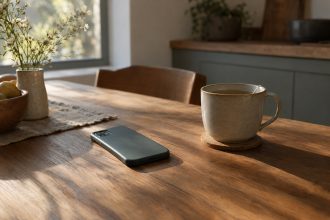
There’s a particular kind of restless that shows up while you’re waiting to hear something back — not bored restless, not tired restless, but a specific, buzzing kind that makes sitting still feel almost physically wrong. You’ve sent the text and you’re watching for the three dots. You’ve submitted the application and you’re refreshing a portal that was never going to update faster for being refreshed more. You’ve had the test and you’re waiting on a callback, doing the dishes with unusual intensity because your hands need something to do while your attention stays fixed on a phone that isn’t ringing. Nothing about the actual news has happened yet, and somehow that’s the part that’s hardest to sit through.
Ask someone what the worst part of a big wait was and they’ll often say some version of the same thing: not the news itself, whichever way it went, but the stretch of time before it, when nothing was resolved and nothing was being done about it. That’s a strange thing to find harder than bad news. It turns out there’s a fairly specific reason for it.
The waiting is doing something real to your body
The feeling isn’t really about the outcome. It’s closer to a state called anticipatory anxiety, and physiologically it sits almost on top of excitement — the same elevated heart rate, the same shallow breathing, the same restless energy looking for somewhere to go. The nervous system doesn’t have a dedicated “waiting for bad news” setting. It has one setting for heightened arousal, and that setting gets used whether you’re backstage before walking on, sitting in a waiting room, or refreshing an inbox at midnight. The dread isn’t a separate feeling from the excitement you’d feel before something good happening. It’s the same physical state, just pointed at an outcome you don’t control.
That matters, because most advice for this moment assumes the fix is to calm down — breathe deeply, relax your shoulders, try not to think about it. For a lot of people, that advice just doesn’t land, and there’s research explaining why. A well-known study out of Harvard Business School, led by Alison Wood Brooks, had people try to talk themselves down before a stressful task — a karaoke performance, a math test, a persuasive speech — versus talking themselves up into excitement instead. The people who reappraised their nervous energy as excitement, rather than trying to suppress it into calm, consistently performed better afterward. The explanation is almost mechanical: anxiety and excitement are both high-arousal states, so shifting from one to the other is a short hop. Calm is a low-arousal state, and getting there from a buzzing, keyed-up body is a much longer trip — one that telling yourself to relax rarely covers on its own.
Why the three dots are so hard to walk away from
This is also why checking a phone over and over during a wait doesn’t actually settle anything, even though it feels like it should. Each check is a tiny hit of possible resolution — maybe this time the reply is there — and that intermittent possibility is exactly the structure that keeps attention locked onto something instead of loosening its grip. You’re not checking because the odds genuinely improved since the last check thirty seconds ago. You’re checking because the body is still in that elevated state, and a check is the fastest available action that might end it. It usually doesn’t. It just resets the clock on the same restlessness and hands you one more data point of “still nothing,” which, if anything, adds to what you’re carrying rather than relieving it.
Giving the energy somewhere shorter to go
None of this means the wait has to be spent white-knuckling a face-down phone, pretending the arousal isn’t there. The more workable move seems to be giving that energy a short, physical outlet that isn’t the thing you’re actually waiting on — something that uses up a bit of the restlessness without pretending to resolve it, and that has a clear end so it doesn’t become its own new thing to check compulsively. A few people reach for something like Starlight Run during exactly this kind of stretch — not because a quick arcade round answers anything, but because it gives the jittery energy somewhere to land for ninety seconds and then it’s simply over, which hands you back to the waiting instead of quietly extending it the way a feed, or a fifth phone-check, tends to.
The same logic is why some people pace, or clean something that didn’t actually need cleaning, or go for a walk around the block rather than sit with a phone face-up on the table. The specific activity matters less than whether it has a shape to it — a start and a finish — rather than being one more open-ended thing to disappear into for longer than intended.
The news arrives either way
None of this changes when the reply comes, or what it says once it does. The outcome was always going to land on its own schedule, indifferent to how many times the inbox got refreshed in the meantime. What changes is how depleted you are by the time it gets there. A wait spent in a low hum of repeated checking tends to end with the news landing on someone already worn down by the waiting itself. A wait spent with the restless energy given somewhere real, if small, to go tends to end with slightly more of you left over to actually meet whatever the answer turns out to be.
That’s really the only part of a wait anyone has much control over — not when it ends, and not what it says, but how worn out the version of you is that’s standing there when it finally does.