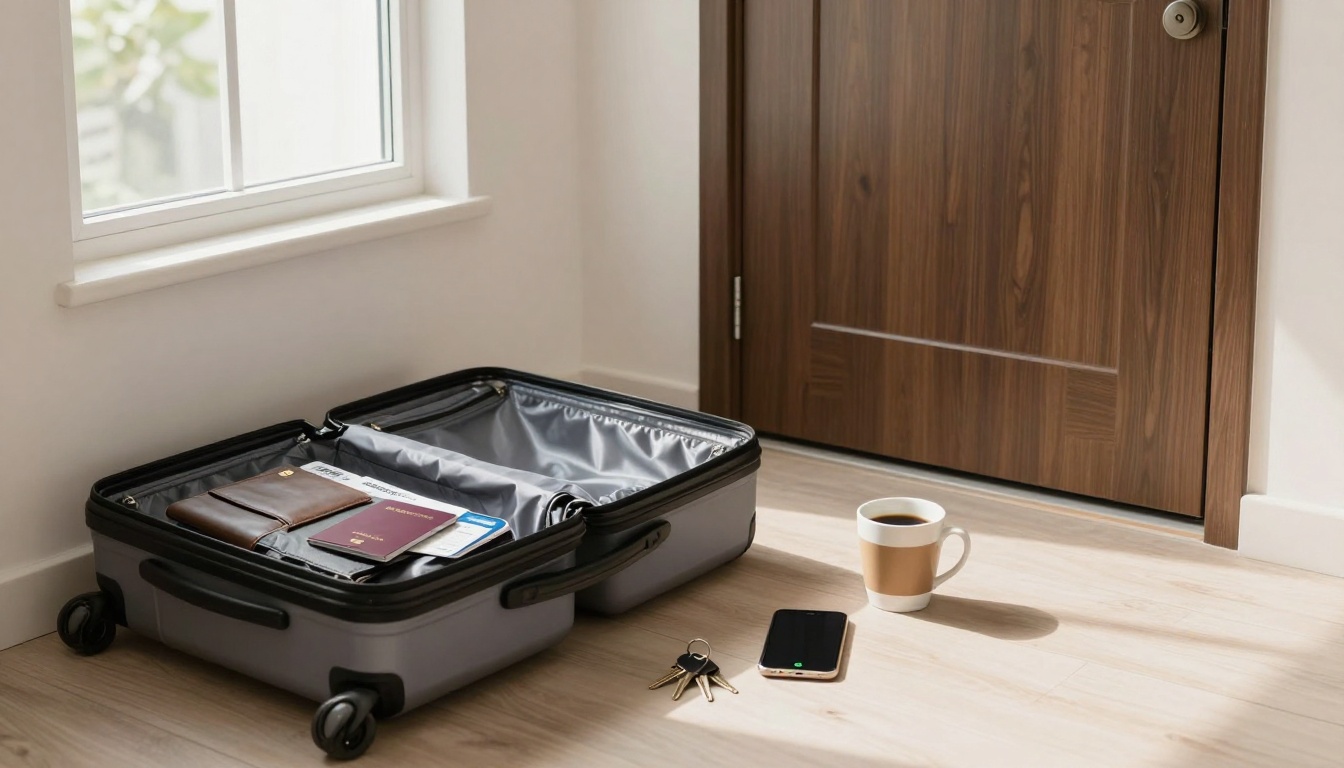

Listen to this post: Travel Security Checklist Before You Leave the House (2026)
The last 20 minutes before you leave home can feel like a small storm. Bags half-zipped, kettle still warm, phone on 12 percent, and that nagging thought: where’s the passport? Most travel problems don’t start abroad, they start on your doormat.
This travel security checklist before you leave the house is built for that exact moment. It’s quick, calm, and practical. It covers home security, documents, money, and digital safety, without turning your departure into a military operation.
Use it for a weekend in Manchester, a month in Thailand, or anything in between. The goal is simple: lock down the boring stuff so you can actually enjoy the trip.
Start with the basics that stop most travel disasters
Think of this as your “last sweep”. Ten minutes, one lap of the house, and you’ve removed the biggest risks. If you’re someone who double-checks things, give yourself a clear end point. When the sweep is done, it’s done.
Lock down keys, doors, windows, and anything with a remote
Start with your keys, because everything depends on them. Put house keys, car keys, and any spare fobs in the same place every time (a bowl by the door beats “somewhere in my bag”). If you’re leaving a key with a neighbour, hand it over directly. Don’t “hide it” under a plant pot. Burglars know all the classics.
Now do a simple lock circuit:
- Front door locked, handle checked, deadbolt on (if you have one).
- Back door and patio doors locked, including the little latch you forget exists.
- Windows shut and locked, especially bathroom and kitchen windows that “only open a bit”.
- Sliding doors secured with a bar or a simple door jammer if you use one.
- Side gate, garage door, shed, and balcony doors checked.
If you use smart locks or alarm systems, test them once before you go. A low battery warning isn’t “tomorrow’s problem” when tomorrow you’re in a different country.
A small trick for anxious checkers: take a quick photo of the locked front door and the closed windows. It gives your brain proof later, when you’re halfway to the airport and doubt tries to climb in the passenger seat.
Finally, do a visibility check from outside. Can you see a laptop box, a handbag, or car keys through a window? Move valuables out of sight. It’s not about fear, it’s about not advertising.
For more ideas that fit typical UK homes, this guide on essential home preparation tips before your holiday is a useful prompt list.
Make the house look lived-in while you are gone
A quiet house can look like an invitation. The fix doesn’t need to be complicated, it just needs to look normal.
Set one or two lamps on timers. If you’ve got smart bulbs, programme them to switch on at slightly different times each night. Total darkness every evening can look odd, but every light blazing at 2 am can look odd too.
Handle your post and deliveries. Ask a neighbour to pick up anything that arrives, or put a hold on deliveries. If you’re going away for more than a few days, consider redirecting or pausing post if that’s practical for you. Also, deal with bins. If everyone’s bins go out and yours never do, it’s noticeable. If yours are out for days and never brought in, that’s also noticeable.
Curtains matter more than people think. Fully closed in every room for a week can read like “nobody’s home”. A simple approach is half-drawn curtains in living areas, normal curtains upstairs.
One more thing, don’t post travel dates in real time. Share the beach photo when you’re back, or at least avoid announcing exactly when the house will be empty.
If you want a broader home-focused checklist, SimpliSafe’s guide to a going on holiday checklist has a good section on making your place look occupied.
Protect your passport, money, and bookings before you step outside
You can replace clothes in a day. You can’t replace a passport in a day. This section is about removing the “show-stopper” problems, the ones that ruin a trip before it starts.
Do a quick passport and ID check, then make backups you can actually use
Do the passport check early in the day if you can, but still do a final glance before you leave. You’re looking for four things:
Validity: many countries require at least six months left on your passport after your trip ends, and some have extra rules. Don’t guess, check the entry rules for your destination. Also check your passport is valid for the entire trip, including return dates.
Condition: no water damage, no torn pages, no loose cover. If it looks “a bit rough”, border staff may take a closer look.
Blank pages: some destinations still want spare pages for visas and entry stamps.
Signatures and matching details: sign it if required, and check the name matches your bookings.
Now backups, but make them useful, not just “somewhere in my camera roll”.
- Make one paper set: passport photo page, driving licence (if relevant), insurance details, key bookings, and emergency contacts. Put this in a different bag from the originals.
- Make one digital set: store in a secure cloud folder, and also email a copy to yourself so you can access it from any device if needed.
If you’re travelling with someone else, swap copies. If one person loses everything, the other still has the basics.
A January 2026 reminder that catches people out: if you’re travelling to the UK with friends or family who aren’t British or Irish citizens, check whether they need an Electronic Travel Authorisation (ETA) before arrival. The UK is expanding ETA requirements from 25 February 2026 for many non-visa visitors, and it’s tied to the passport being used. It’s the sort of admin that’s easy to miss because it doesn’t feel like “travel security”, until you’re at check-in.
For a general planning checklist that includes pre-trip steps, ABTA’s travel checklist is a solid reference point.
Set up your money so it works abroad, even if something gets lost
Money problems on day one feel personal, even when they’re just systems doing their thing. Reduce the risk with a quick money setup that has a Plan B built in.
Start with your cards:
- Check expiry dates and make sure you know your PIN (don’t assume you’ll remember it under pressure).
- Turn on spending alerts in your banking app, they’re an early warning for fraud and a good way to spot a missing card fast.
- If your bank still blocks unusual activity, tell them your travel dates.
Then build redundancy. Carry two payment methods, stored separately. That might mean one card in your wallet and a second in a zipped inner pocket. If you use mobile payments, keep a physical card as back-up. Phones die, terminals fail, and sometimes you just need a card.
Take a small cash stash in local currency (or euros/dollars if you’re arriving late). Split it. A little in your day wallet, a little in a hidden pocket, a little in your main bag. You’re not hiding treasure, you’re buying yourself options.
Also decide what not to bring. You usually don’t need every card, every membership ID, or spare documents that add risk if lost. Leave unnecessary IDs at home.
On the day, keep receipts for big purchases and set aside travel cash, so you’re not flashing a thick wad at the airport coffee queue. Quiet confidence beats visible stress every time.
If you want a broader packing cross-check, AirHelp’s holiday abroad checklist is handy for catching the little things that make you reach for your wallet (adapters, medicines, and the “why didn’t I pack that?” items).
Lock your phone and accounts down, because travel is prime time for digital theft
Your phone is your boarding pass, map, bank branch, and memory box. Travel makes you more distractible, more tired, and more likely to connect to whatever WiFi name looks right. That’s why digital theft often feels like it arrives out of nowhere.
This isn’t about becoming paranoid. It’s about simple barriers that make you harder to mess with.
Do a 5-minute phone hardening check (before you get distracted)
Start with power. Charge your phone fully, and pack the cable you actually use. If you carry a power bank, check it’s charged too. A “secure” phone at 2 percent isn’t secure, it’s a panic button.
Now do the fast security pass:
Update your device: install pending OS updates if you can. Security fixes are often bundled in them.
Use a strong passcode: a six-digit PIN is the bare minimum. Longer is better, and avoid birthdays.
Turn on device tracking: enable Find My (iPhone) or Find My Device (Android). Confirm you can log in.
Back up: photos, notes, and documents. If you lose the phone, you don’t want to lose the trip and your life admin.
Check lock screen settings: hide sensitive notifications. Boarding passes, bank alerts, and two-factor codes popping up on a locked screen are more revealing than you think.
2FA and recovery: make sure your main email account has two-factor authentication, and you can access recovery options. Email is the key to most resets.
If you’re worried about device searches at borders (or you simply prefer privacy), consider switching off face or fingerprint unlock for the trip, and rely on a passcode. A practical step some travellers take is powering the device down before a border crossing so it reboots into a “locked” state. It’s a personal choice, but it’s worth thinking about before you’re in a queue with a tired brain.
Plan for unsafe WiFi and scam messages before they find you
Public WiFi is tempting because it’s easy. It’s also easy to fake. “FreeAirportWiFi” and “FreeAirportWiFi-5G” can look identical when you’re rushing to download a boarding pass.
A simple rule: use mobile data when it matters (banking, bookings, identity). Save public WiFi for low-risk browsing. If you use a VPN, switch it on before connecting.
Scam messages spike around travel because scammers know you’re busy. Expect texts or emails claiming:
- Your booking needs urgent payment.
- Your flight is cancelled and you must confirm details.
- Your hotel needs a deposit “right now”.
- A QR code at a kiosk leads to a payment page.
Don’t rush payments after a “problem” message. Slow down, open the official airline or hotel app, or call the number from the official website, not the number in the message. If something’s real, it will still be real in ten minutes.
Keep your bookings in one trusted place, ideally inside official apps or one secure email folder you can search quickly. When everything is scattered across screenshots, messages, and multiple inboxes, it’s easier to get tricked.
Airport time pressure makes people slip. Manchester Airport’s guide on tips to prepare for your next holiday is a good reminder of the practical side, like leaving enough time for security, so you’re not making rushed choices with your phone in your hand.
Conclusion
If you want a travel security checklist you can actually follow, keep it simple: lock the house, make it look lived-in, confirm your documents and backups, set up money with a back-up plan, and harden your phone before the day gets noisy.
Say the checklist out loud as you do it. It sounds silly, but it stops the “Did I…?” loop later. If you travel often, print a one-page version and keep it by the door with your keys.
Once the boring bits are handled, the trip feels lighter. And when you finally close the door behind you, you can leave with confidence, not nagging doubt.