
Listen to this post: How to Rank Local Content When You Blog About a Specific City or Country
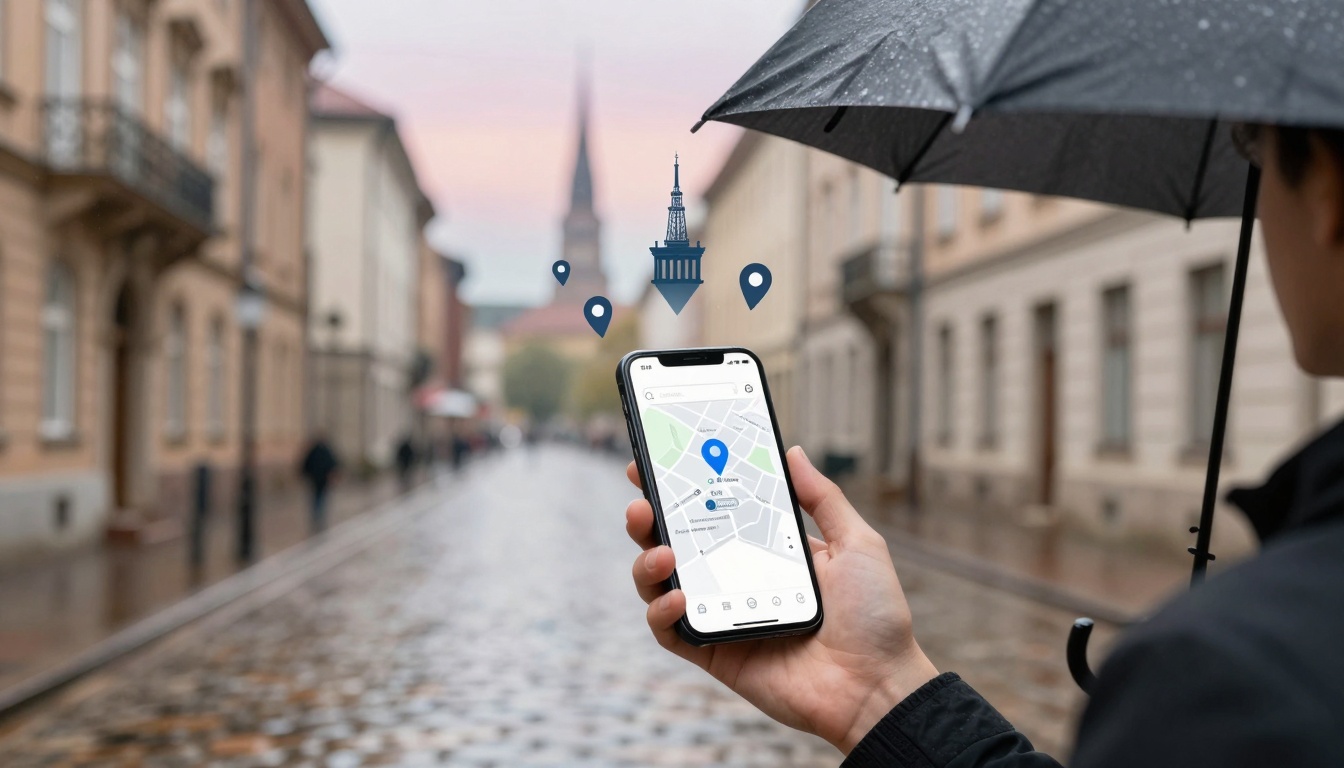
Someone’s walking down a rainy street, phone in one hand, umbrella in the other. They type “best brunch in Manchester” and they want an answer in seconds, not a history lesson. Another person is planning a weekend away and searches “things to do in Lisbon”, hoping to land on a page that feels like it was written by someone who’s actually been there.
If you blog about a specific city or country, you’re not just competing with other bloggers. You’re competing with local guides, newspapers, TikTok round-ups, and Google’s own map results.
The good news is that local content can rank fast when it sends clear local signals. Local signals are simple clues that tell Google where you fit, like place names, nearby landmarks, local pricing, transport notes, and links from websites that are already connected to that place.
Pick the right local topic and keywords, so Google knows where you belong
Local ranking starts before you write a single paragraph. It starts with choosing a target place and a topic that people actually search in that place.
A common mistake is trying to win broad searches like “best restaurants in Italy” or “things to do in London”. Those terms are crowded, and the top results often have years of links and brand trust behind them.
Instead, aim for “specific + useful”. Think of it like finding a side door instead of pushing through the main entrance. You can still build towards big terms later, but you need pages that can earn clicks and links now.
A strong local topic usually has three traits:
- Clear location: city, neighbourhood, region, or country (not “Europe” or “the North”).
- Clear audience: visitor, local, student, remote worker, family, budget traveller.
- Clear task: choose, book, compare, get there, stay safe, save money.
Also pay attention to what’s changing. In January 2026, local SEO is still heavily influenced by trust signals and user experience (mobile speed, easy navigation, and whether people stick around). That lines up with the broader advice in Whitespark’s 2026 local ranking factors, which tracks what tends to move local visibility.
Find “map-level” keywords people actually type
“Map-level” keywords are searches that smell like a real person, in a real place, trying to do something soon. They’re often tied to a landmark, a neighbourhood, a station, a season, or a short trip plan.
Here are patterns that work well for city and country blogs:
- “best [thing] in [city]”
- “[thing] near [landmark]”
- “[thing] in [neighbourhood]”
- “2-day itinerary [city]”
- “where to stay in [city] for [type of trip]”
- “how to get from [airport] to [city centre]”
People also search “near me” constantly, but you don’t need to write “near me” all over your post. Use natural phrasing that matches how humans talk, like “near the city centre”, “by the station”, or “a short walk from the old town”.
Example keyword ideas for Manchester (pick a city you know and swap it in):
- best brunch in Manchester Northern Quarter
- coffee shops near Manchester Piccadilly Station
- things to do in Manchester when it rains
- 2-day itinerary Manchester city centre
- where to stay in Manchester for a gig at AO Arena
- independent shops in Manchester Ancoats
- best Sunday roast in Manchester (bookable)
- Manchester tram tips for visitors
The goal is not to collect hundreds of phrases. It’s to choose one main keyword and a few close variations that all point to the same promise.
Match the page to the search intent (guide, list, how-to, review, news)
Search intent is the “why” behind the query. Two people can search the same place, but want totally different answers.
Simple examples:
- A traveller searching “2-day itinerary Lisbon” wants a plan by time and area.
- A local searching “best Thai restaurant in Lisbon” wants prices, opening times, and how busy it gets.
- A newcomer searching “safe areas to stay in Manchester” wants plain talk about neighbourhoods and late-night transport.
If your page tries to serve every intent at once, it often satisfies none of them.
A good rule of thumb: one main intent per page, and one clear promise in the title. If you want to cover another angle, make it a separate post and link between them.
A quick way to sanity-check intent is to scan the first page of results. Are the top pages lists, maps, itinerary guides, or news pieces? That’s Google showing you what it thinks people want.
If you want a broader local SEO refresher for 2026, SeoProfy’s local SEO guide is a useful companion, especially for understanding how local and organic results overlap.
Make each post feel truly local (on-page SEO that doesn’t sound forced)
You can write a “London guide” that could be copy-pasted for any city. Google can spot that, and humans bounce even faster. The aim is to write pages that feel grounded, like there’s mud on the boots.
This is where on-page SEO matters, but not in the old “repeat the city name 27 times” way. On-page SEO is about making your page easy to read, easy to skim, and easy for Google to understand.
Start with structure:
- Title: include the place once, and make the promise clear.
- H1: match the core topic (don’t make it cute and vague).
- Subheadings: use neighbourhoods, landmarks, seasons, and practical sections (getting there, costs, accessibility).
- Meta description: sell the benefit in one breath (who it’s for, what it covers, what makes it different).
- Images: rename files with real descriptions (not IMG_4921), and write alt text that helps visually impaired readers.
Internal links also matter for local blogs, because they help Google understand you’re building a cluster around one place. Link your “2-day itinerary” to your “where to stay”, “getting around”, and “best cafés” posts, so the site reads like a connected guidebook, not random diary entries.
Add local proof inside the content (details only locals notice)
Local proof is what makes your content believable. It’s the difference between “take the metro” and “take the Green Line two stops, then walk five minutes uphill”.
You don’t need to overdo it. You need the right details in the right places:
Neighbourhood names: not just “the city centre”. Use the areas people recognise (and spell them properly).
Transit tips: which station entrance is easiest with a suitcase, when the last tram runs, whether contactless cards work.
Seasonal notes: “August is packed and hot” hits harder than “summer is busy”. Add what that changes (queues, prices, opening times).
Realistic prices: give ranges in local currency (and be honest about what’s “cheap” for that city). If prices vary, say why.
Opening hour patterns: many cities have quirks, like Sunday closures or late-night dining. Include it, and update it.
Local language and spelling: small touches help, but accuracy matters more than showing off.
Safety and etiquette: keep it calm and practical. Think “keep bags zipped on crowded trams” rather than fear-mongering.
Freshness matters here. Venues close, bus routes change, and ticket systems get updated. Add a visible “last updated” line, then actually update it. A stale local guide is like a folded map from ten years ago.
This also ties into what’s working right now: local content that’s truly about the area, not generic advice with a city name sprinkled in. Many local SEO checklists in 2026 put “real local relevance” near the top, like this LocalMighty local SEO workflow.
Use simple structured data and page basics to help Google read the location
Structured data (schema) is just labels for search engines. It doesn’t magically push you to page one, but it reduces confusion, and confusion is costly in local search.
Choose schema types that match what the page is:
- Article: for most blog posts and guides.
- FAQPage: if you genuinely answer common questions (and the answers are on the page).
- Event: for event listings you keep updated.
- Review: only if you’ve genuinely reviewed something and can stand behind it.
- LocalBusiness: only if the page is about a real business with real-world details (yours or a featured one, where appropriate).
Embedding a map can help users, but only when it adds value. A map makes sense on a “walking route” post, a “neighbourhood guide”, or a “where to stay” page. It’s less useful on a pure list of museums.
Keep the page basics tight. This short checklist catches most local ranking leaks:
- Title tag includes the place once (and says what the page delivers).
- H1 matches the main topic.
- URL is short and readable (avoid dates and filler words if you can).
- Mobile speed is good (images compressed, no heavy pop-ups).
- Alt text describes the image, not a string of keywords.
In January 2026, mobile usability is still a make-or-break detail for local searches, because so many of them happen on the move. If your page stutters, people back out, and that behaviour sends a signal too.
Build trust beyond your blog: local links, citations, and signals Google can verify
You can write the best guide in the world and still struggle if nobody else on the internet confirms you exist. Google likes content it can verify through other sources.
Think of trust like a chain of references. When local sites mention you, link to you, or share your work, it’s like people in a town vouching for you at the pub.
This is where you move from “I say I know this place” to “the web agrees”.
The big trust builders for local content are:
- Local backlinks from relevant sites (not random blogs in unrelated niches).
- Partnerships with local creators and organisations.
- Unlinked mentions (still useful, especially when consistent).
- Citations (directory listings) if you have a real-world presence.
- Reviews if you run a service, tour, shop, or any local business.
- Google Business Profile if you are a local business (it remains a major local signal in 2026).
For bloggers who also run a business, keeping your Google Business Profile active and accurate still matters. Fresh photos, accurate categories, and recent reviews can support the overall trust around your brand and site.
Earn local backlinks the honest way (the links that actually move the needle)
Local links work best when they’re earned through real local usefulness. Here are realistic ways to get them without sliding into spam:
Collaborate with local creators: co-write a neighbourhood guide, swap quotes, or do a joint “best of” list.
Support a local charity or community project: many have sponsor pages, volunteer pages, or thank-you posts.
Create event round-ups: then email organisers with a clean summary and ask if they’ll share it.
Pitch local media: offer a short, punchy angle with data or a fresh take (not a generic guest post request).
Find university or library resource pages: student city guides, newcomer resources, and local reading lists often link out.
Interview local experts: chefs, tour guides, museum staff, historians, or even taxi drivers with strong local knowledge.
Publish data-led posts: cost-of-living snapshots, “free things to do” by season, or a public transport comparison. These earn citations when done carefully.
Avoid paid link farms and bulk guest post deals. They often leave a footprint, and they rarely bring local relevance anyway.
If you want more local visibility ideas that match current practice, weDevs’ local SEO tips for 2026 is a solid reference, especially on consistency and ongoing upkeep.
Get your local details consistent (citations and profiles)
If you run a business (or you have a real office, studio, or shop), citation consistency matters. Citations are listings on map apps and directories that confirm your name and details.
You’ll hear “NAP” a lot. It just means Name, Address, Phone number. If those details don’t match across the web, platforms can get unsure, and uncertainty can hold you back.
Key places people check include Google Business Profile, Apple Maps, Bing Places, and directory sites like Yelp, plus local chambers of commerce and trusted local directories.
A simple “keep it identical” checklist:
- Use the same business name everywhere (no extra keywords).
- Use the same address format everywhere (pick one style and stick to it).
- Use the same phone number everywhere (and the right country code).
- Keep your opening hours current.
- Match your website URL (including https vs http, and with or without www).
If you’re only a blogger with no real-world presence, citations matter less. In that case, put your effort into local proof in content and local links from real sites.
Conclusion
Ranking local content comes down to being clear, helpful, and easy to trust. Pick winnable keywords that match what people in that place are really searching for. Write with local proof that can’t be faked, like neighbourhood details, transport notes, and up-to-date prices. Make each page simple for Google to read with clean structure and basic schema, then build trust with local ties and earned links.
Your next 7 days can be simple: choose one key city page, update it properly (facts, dates, headings, images), then pitch three local link ideas to people who actually serve that place. Keep the work grounded, and your rankings will follow.