
Listen to this post: How to Host a Stress-Free Dinner or Game Night (Cosy, Simple, Actually Fun)
You know the scene. One hand stirring a pan, the other tapping out “come round at 7!” while the doorbell goes and you realise the loo roll is down to one tragic sheet. Your kitchen feels like a control room, and you haven’t even had a sip of water.
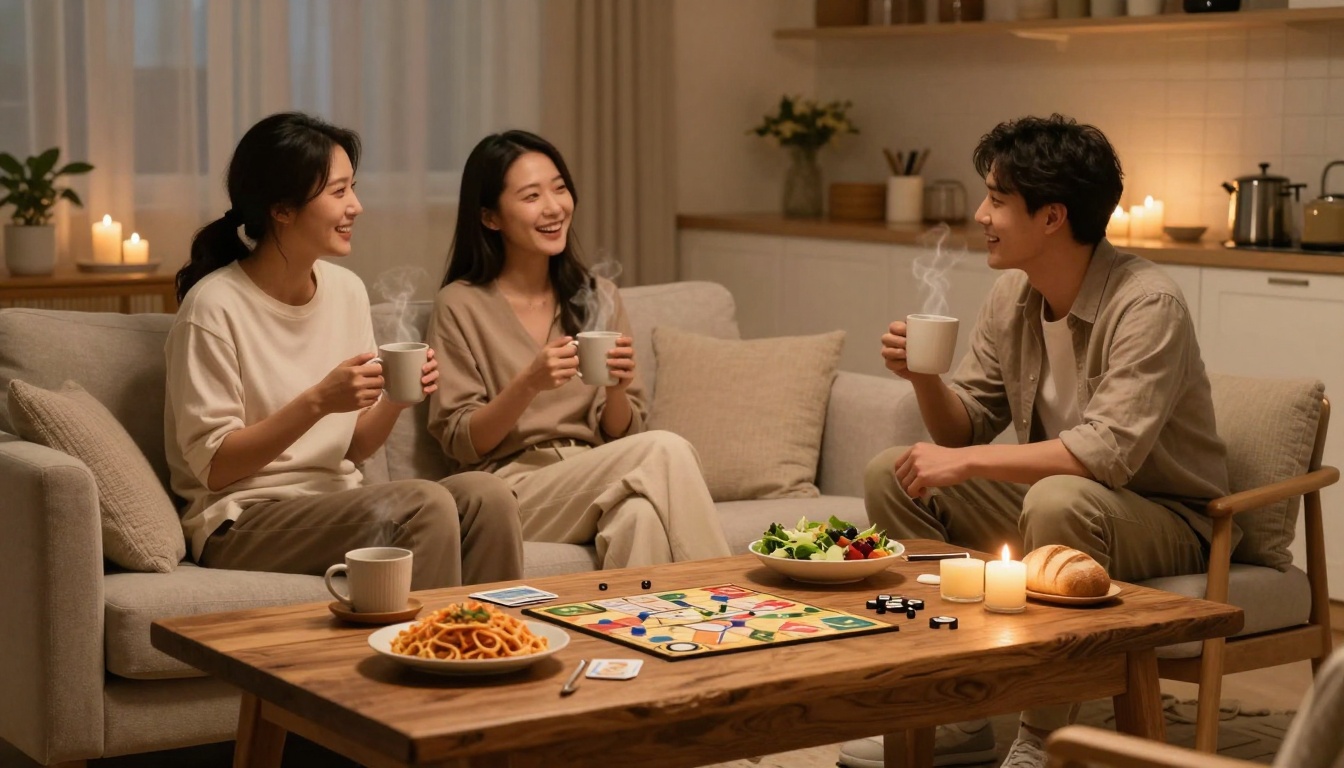
Now picture the calmer version. The room’s warm, the food is easy, and laughter keeps bubbling up from the sofa. People help themselves, nobody’s hungry, and you’re not stuck washing up mid-conversation. That’s the point of a stress-free dinner or game night in January 2026: cosy over perfect, simple choices, and a few smart shortcuts that make the whole evening feel lighter.
Set yourself up for an easy night before anyone arrives
A relaxed night starts earlier than you think. Not with fancy place cards, but with small decisions that stop last-minute panic. The goal is to create a night that can bend without breaking.
Pick the right guest list, start time, and rough plan
Start with the people, not the menu. The best groups have a shared rhythm. Too many big characters in one room can turn a playful night into a loud one, fast.
Keep the guest list honest to your space. If your table fits four comfortably, hosting eight means you’ll spend the night squeezing past knees and apologising. A smaller group often feels more special anyway.
Choose a clear start time and stick to it. “Anytime after 6” sounds friendly, but it creates a slow drip of arrivals that keeps you hovering at the door. If you want a relaxed flow, try a simple structure that works for dinner, games, or a mix:
| Moment | What it looks like | Why it helps |
|---|---|---|
| Arrival (first 30 mins) | Welcome drink and nibbles | People settle without waiting for “the main event” |
| Food | Family-style meal or a one-dish main | You sit down too, not just serve |
| Games | One main game, then optional quick rounds | Keeps energy up without dragging |
| Sweet treat | Easy dessert and tea | Signals a gentle wind-down |
Tell guests what to expect in one line. It removes awkwardness before it starts: shoes off or on, whether they should bring a game, and any key dietary notes. If someone’s vegetarian or alcohol-free, you want that to feel normal, not like a last-minute puzzle.
Do a 15-minute home reset, not a deep clean
Deep cleaning is a trap. It steals your energy and rewards you with… tiredness. A quick reset gives you the “clean enough” feeling without losing your afternoon.
Do this 15-minute sweep:
- Clear visible clutter into one basket (hide it in a bedroom, it’s fine).
- Wipe the loo, sink, and mirror.
- Empty the kitchen bin (nothing kills the mood like a whiff of yesterday’s onions).
- Put out a fresh hand towel.
- Top up toilet roll.
- Check there’s hand soap.
Then go for mood wins. In early 2026, the trend is comfort first, and it shows in the small touches: softer lighting, warm textures, and one main gathering area so people naturally talk more.
Try this quick mood stack:
Lighting: lamps over the big light.
Scent: a spritz of linen spray by the front door.
Sound: a playlist that sits under conversation, not on top of it.
Cosy cues: a couple of throws on the sofa, cushions pulled forward.
If you want more ideas on keeping hosting low-stress, IKEA’s guide to planning a stress-free dinner party has practical reminders that fit real homes. Exploring family bonding activities for everyone can further enhance the joy of gathering. Consider incorporating games, crafts, or a cooking session that encourages participation from all ages. These shared experiences foster deeper connections and create lasting memories.
Plan a no-fuss menu and drinks that won’t trap you in the kitchen
The easiest menu has one homemade “star”, then everything else is support. Think family-style platters (very January-friendly), shop-bought help used with confidence, and food that can sit for a bit without falling apart.
A good rule: if you can’t leave it for 10 minutes while you explain a game, it’s not the right dish tonight.
Choose one main dish you can make ahead and reheat
Pick a main that’s forgiving. It should taste good even if someone arrives late, and it shouldn’t need constant attention.
Here are reliable options:
- One-pan roast chicken and veg: Roast thighs with potatoes, carrots, onions. It holds heat well and feels like comfort food.
- One-pot pasta: A baked pasta or a simple tomato and sausage pot. Add salad on the side.
- Slow-cooker chilli: Beef, turkey, or beans. Serve with rice, tortilla chips, grated cheese, and lime.
- Traybake halloumi and veg: Peppers, courgette, red onion, chickpeas, halloumi. Add warm pittas and yoghurt.
- Big salad plus warm bread: Do a hearty base (lentils, couscous, roasted veg), then add rocket, feta, and a lemon dressing.
Timing that keeps you calm:
The day before: chop veg, mix sauces, set the table, and clear fridge space.
One hour before: put the main in the oven or slow-cooker, set out nibbles, fill a water jug, and change into something comfortable.
If you want more menu thinking, delicious. magazine’s stress-free dinner party tips are a good reminder to keep your cooking realistic.
Build a ‘grab-and-go’ snack board and an easy dessert shortcut
Snacks are your secret bouncers. They keep everyone happy while you finish food, welcome late arrivals, or sort a game.
Make a board that needs no babysitting: crisps, nuts, olives, grapes, sliced cucumber, cherry tomatoes, a tub of hummus, and one cheese you actually like. Add a stack of napkins and small plates, and you’re done.
Dessert shouldn’t be a project. Go simple, then make it look intentional:
Brownies with berries: warm them slightly, add raspberries.
Ice cream with toppings: put out chocolate sauce, crushed biscuits, and chopped fruit.
Bakery cookies on a nice plate: a serving plate turns “shop-bought” into “thoughtful”.
Make a bit more than you think you need. People rarely remember leftovers, but they always remember running out of food or ice.
For more general hosting pointers, the Evening Standard’s dinner party tips reinforce the same truth: prep earlier, keep it simple, and don’t overdo the menu.
Make drinks self-serve so you’re not playing bartender
If you spend the night topping up glasses, you’ll miss the night. A drinks station fixes that in five minutes.
Set up one spot (kitchen corner, sideboard, or coffee table) with: a water jug, cups or glasses, ice, a wine opener, napkins, and a small bowl for bottle tops.
Keep it easy:
- One signature drink max, or none. A jug of something light works well (sparkling water, citrus slices, mint).
- A no-alcohol option that looks the same level as everything else (tonic with lime, ginger beer, or a grown-up cordial).
Label bottles with quick cards if you’re offering choices. It stops the repeated “what’s this one?” and it helps guests feel confident helping themselves.
Make your space work for chatting, eating, and playing
Your home doesn’t need to be big. It needs to be organised in a way that stops traffic jams. A “zones” approach is simple and it works: food zone, drinks zone, game zone, and a quiet chat corner.

Photo by Pavel Danilyuk
Set up simple zones so guests can help themselves
Put food and drinks where guests can reach them without hovering in your cooking space. If your kitchen is small, serve buffet-style on a sideboard, windowsill, or even a sturdy coffee table.
Small-home tricks that keep it flowing:
Perch seating: stools, dining chairs pulled into the lounge, floor cushions for friends who don’t mind them.
A “landing spot”: one side table with plates, napkins, and a bin nearby.
Bottleneck check: don’t place food right next to the fridge door. People will block it.
Keep music low enough that nobody has to shout. Use warm lighting so faces look soft and friendly, not like they’re in a shop changing room.
Prep the game area so rules don’t kill the mood
Games can be magic, or they can become a lecture with snacks. Set yourself up so you’re not hunting for a pen while someone sighs dramatically.
Before guests arrive, put out: the game, spare pens, a phone charger, a timer (or phone timer), coasters, and a small bin for wrappers.
Do a quick rule read-through alone. Not to memorise everything, just to spot the tricky parts. If a game takes 20 minutes to explain, it’s not a “midweek cosy” choice.
Match the game to the group:
- Team games suit bigger groups.
- Co-op games help mixed skill levels.
- Short rounds work best if you’ve got chatty guests.
Run the night with calm host energy, even when things go off-script
You don’t have to entertain like you’re on stage. The best hosts “host from the edges”. You set the tone, then you let people fill the room with their own fun.
Use a soft timeline and let guests mirror your calm
A soft timeline keeps you steady without making the night feel strict.
Think of yourself as a lighthouse, not a cruise director. You’re there to guide, not control. Use calm, simple lines:
“Help yourself.”
“Make it comfy.”
“We’ll start the game after we eat.”
Guests copy your mood. If you look panicked, they’ll fuss. If you look relaxed, they’ll settle. Keep water on the table, keep snacks available, and sit down when you can. Sitting tells everyone it’s safe to relax too.
If conversation needs a nudge, try gentle sparks that aren’t too deep: a good thing you watched lately, a simple “high and low” from the week, or “what’s a small win you’ve had recently?” Keep it light, and don’t interrogate anyone.
Fix common problems fast: late arrivals, rule debates, and messy spills
Things will happen. That’s normal. The trick is to have quick fixes ready, so you don’t spiral.
Late arrivals: start with nibbles on the table. When they come in, greet them warmly, point to snacks, and continue. No stopping the whole room.
Rule debates: pick a house rule before it starts: majority vote, or host decides. Say it with a smile, then move on. The point is the shared moment, not a perfect ruling.
Messy spills: keep paper towels, a spare bin liner, and stain spray where you can grab them. If someone spills, say, “No stress, it happens,” and deal with it quickly. People relax when they’re not made to feel guilty.
Energy dips: switch to a lighter game without making it a big deal. Quick trivia, charades, or conversation cards can lift the room. You’re changing gears, not admitting defeat.
For extra reassurance that “simple is best”, The Telegraph’s stress-free dinner party tips echo what experienced hosts already know: plan less, enjoy more.
Conclusion
At the end of a good night, the room looks lived-in. Plates are empty, someone’s re-telling the funniest moment, and you’re not wiped out. That’s the win.
Keep the method simple: plan light, cook one easy main, set up zones, choose games that fit the group, and stay calm when plans wobble. Try it this week, then pick just one upgrade for next time, better lighting, a drinks station, or a make-ahead main that becomes your signature. The most memorable nights feel easy, not perfect.