
Listen to this post: How to Declutter Your Home Room by Room (Without Getting Overwhelmed)
The clutter rarely arrives with drama. It slips in quietly, one parcel at a time. A spare charging cable you might need. A mug that was “too nice to leave”. Half-used shampoo bottles lined up like they’re waiting for a bus.
Then one morning, you can’t find your keys, the kitchen counter is a landing strip for everything, and cleaning feels like moving stuff from one pile to another. If that sounds familiar, you’re not messy. You’re just living in a home that’s been collecting life.
This room-by-room plan keeps it simple. You won’t try to do the whole house in one heroic day. You’ll sort first, then organise, and you’ll stop before you burn out. starting a blog in 2026 can be a rewarding project that allows you to share your passions and expertise. With the right tools and strategies, you can create engaging content that resonates with your audience. It’s all about finding your unique voice and staying consistent in your efforts.
Before you start, grab: bin bags, a donation box, a marker, a timer, and a microfibre cloth. The goal is realistic, more space, faster cleaning, calmer mornings.
Before you start, set yourself up to win (rules that stop clutter coming back)
A good declutter isn’t about being strict. It’s about making decisions once, so you don’t have to keep making them again.
Use these rules in every room:
One space at a time: not “the kitchen”, the drawer, the shelf, the corner.
Empty the area: clutter hides under clutter.
Sort into five groups: keep, donate, recycle, bin, and a small “maybe”.
Finish the space: wipe it down, then put back only what stays.
A quick decision guide (so you don’t get stuck)
When you’re holding an item and your brain starts bargaining, use three fast checks:
- Have I used this in the last 90 days? (Adjust for seasonal items.)
- Would I buy it again today? If not, it’s taking up rent-free space.
- Does it have a home? If it doesn’t, it becomes clutter by default.
If you want extra reassurance, House & Garden’s room-by-room decluttering advice is a solid reference point for what “good” looks like.
Two 2026-friendly habits that make it stick
Trends this January in the UK lean towards small daily wins, visual calm, and getting items out of the house quickly (not leaving bags by the door “for later”). That’s the difference between a tidy day and a tidy life.
The 5-day shakedown: pick one problem spot and work on it for 20 minutes a day, five days in a row.
Monthly edits: once a month, do a quick pass of one category or zone so build-up doesn’t return.
Also, be blunt about duplicates. Two can openers, four wooden spoons, three half-working torches. Keep the best one, re-home the rest.
Pick your method: 20-minute timer, 5-day shakedown, or one drawer at a time
Choose based on your energy, not your ideal self.
If you’re tired: set a 20-minute timer and stop when it ends.
If you need momentum: do a 5-day shakedown.
If decision fatigue hits fast: do one drawer at a time and celebrate the finish.
Here’s an easy 5-day example:
Day 1: entryway
Day 2: kitchen counter
Day 3: bathroom cabinet
Day 4: wardrobe
Day 5: paper pile
The magic is stopping on time. You’re training your brain to trust the process, not dread it.
Make four boxes and a “rotation zone” for maybes
Your boxes are simple: Keep, Donate, Recycle, Bin. Label them with your marker so you don’t start re-thinking halfway through.
For “maybes”, use a rotation zone: one shelf or one box, clearly labelled. The rule is firm: if it’s not used within 30 days (or by next season, if that fits better), it goes.
Keep it small on purpose. A rotation zone is a decision tool, not a second storage unit.
Room-by-room declutter plan for the busy week (start where you’ll feel it fastest)
Start where you’ll notice the change straight away. That’s usually the places you pass through every day, where clutter has a way of shouting at you before you’ve even had tea.
Entryway and hallway: clear the drop zone and stop the pile-up
This is where “I’ll deal with it later” goes to breed.
Clear first: shoes, coats, bags, post, keys, random receipts.
Keep: only what you use week to week.
Give it a home:
- A small tray or dish for keys and earbuds
- One hook per person (if there aren’t enough hooks, things hit the floor)
- One basket for post (not three piles across the console)
A helpful house rule: one pair of shoes per person out, the rest stored. It makes the hall feel wider in minutes.
Finish with a 60-second evening reset. Put shoes away, hang coats, empty pockets into the key tray. You’re not cleaning, you’re closing the day.
Living room: make surfaces calm and cords invisible
The living room collects “in-between” items. Toys, chargers, paperwork, the candle you like but never light.
Start with the quickest win: pick up anything that belongs in another room and walk it there immediately. Don’t create a “relocation pile”. That’s just clutter with a nicer name.
Focus on hotspots:
Coffee table: remove everything, then return only what supports how you relax.
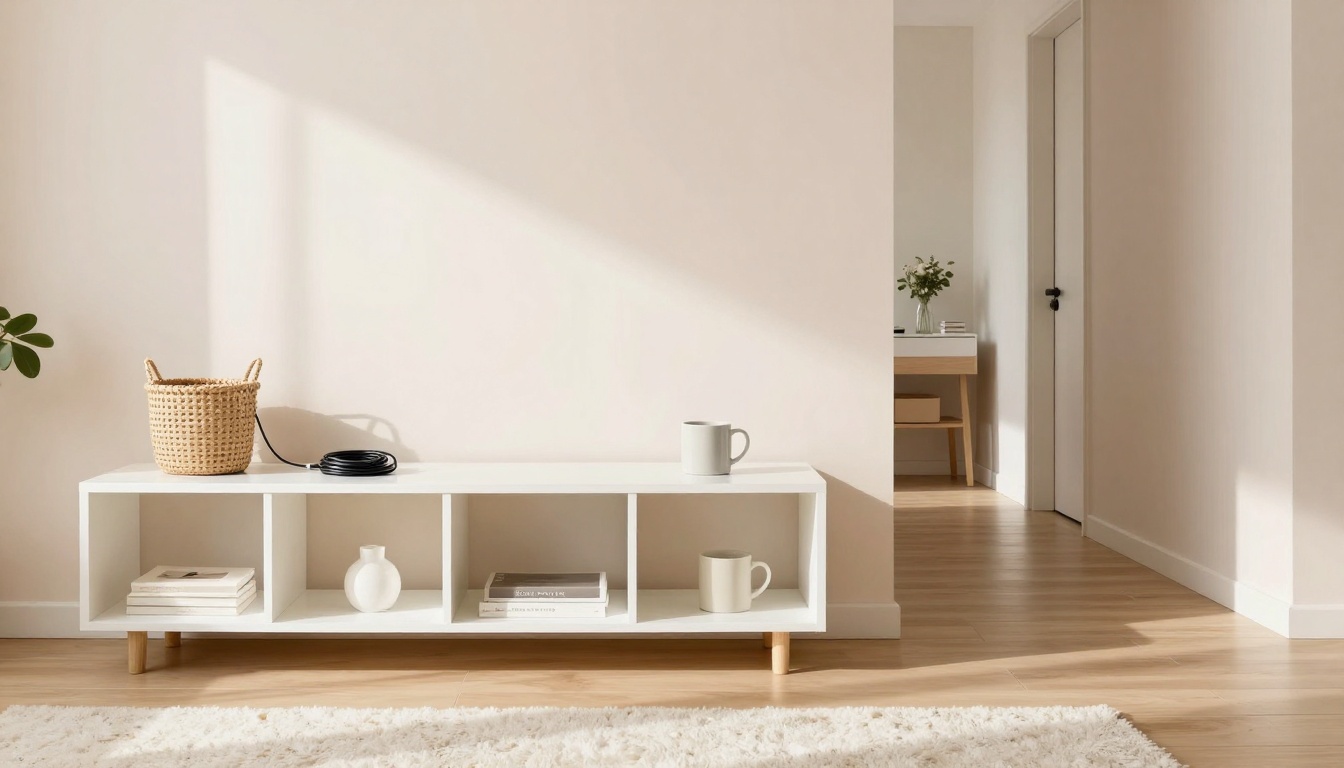
TV unit: bin dead batteries, match remotes to devices, ditch mystery cables.
Side tables: keep one lamp, one coaster, maybe one book.
Make it easier to stay tidy:
A lidded basket: for quick tidies (blankets, toys, controllers).
A charging spot: one place for chargers, labelled if needed.
A one-remote rule: if you’ve got three that “might work”, you’ve got none that work.
If your home gets swamped with “stuff that might be useful”, it can help to read about breaking that habit of obligation clutter. Hammonds’ room-by-room guide touches on the psychology as well as the practical steps.
Kitchen: cut duplicates, clear the counters, and make cupboards work like a shop
A calm kitchen starts with clear counters. Not styled, just usable.
Begin with the counter and the junk drawer. Junk drawers are normal, but they shouldn’t be a black hole. Bin old menus, dried-up pens, spare keys that open nothing.
Then go after the sneaky clutter:
Duplicate gadgets: keep what you reach for, donate the rest.
Mismatched containers: keep the ones with lids that fit, recycle the rest.
Mugs and glasses: be honest about how many people live here.
Organise cupboards like a small shop, grouped by use:
Breakfast zone: cereal, tea, coffee, toaster bits.
Baking zone: flour, sugar, trays, scales.
Cooking zone: oils, spices, pans.
A few simple tools help without turning into a “storage project”:
- Lazy Susans for spices and oils
- Drawer dividers for utensils
- A single tub for snack packets (so they don’t avalanche)
Food rule: if it’s out of date, stale, or you know you won’t eat it, let it go. If you want a more structured checklist, Sharps’ decluttering guide has a clear breakdown of common kitchen problem areas.
Bedroom and wardrobe: keep only what fits your real life
Bedrooms should feel like a deep breath. Clutter makes them feel like a waiting room.
Start with the bedside table. It’s often a mini storage unit: old hand cream, tangled chargers, books you meant to read.
Keep it simple:
On top: lamp, book, water, maybe a small dish for jewellery.
Inside: the basics you use weekly.
Then the wardrobe. Use a keep test you can apply fast:
Fits now: not “after I lose a bit”, not “if I alter it”.
Feels good: if it scratches, pinches, or drags your mood down, it’s not serving you.
Worn recently: within the last season or two.
A 2026-friendly trick is a photo inventory. Snap what you actually wear and save it in an album. Next time you’re tempted to buy another black jumper, you’ll see the five you already own.
Make donating easy: hang a donation bag on the wardrobe door. When you try something on and it’s a no, it goes straight in.
Bathrooms, kids’ rooms, home office, and storage areas (where clutter hides)
These rooms get messy fast because they’re full of small items. If you’ve ever opened a bathroom cupboard and had a travel-sized conditioner fall on your foot, you know.
The fix is categories and limits. One drawer per category, one bin per type, and a quick monthly edit so it doesn’t creep back.
Bathroom: bin half-used clutter and keep only what you use
Sort by category, not by “where it was found”:
Daily basics: toothbrush, face wash, deodorant.
Backups: spares you’ll actually use.
First aid: plasters, pain relief, thermometer.
Hair tools: dryer, straighteners, brushes.
Bin expired products and old cosmetics. Keep a clear limit for backups: one spare per item. Two spares become a silent stockroom.
Simple layout wins:
- Drawer dividers for makeup and small items
- A small caddy under the sink for cleaning supplies
- A labelled tub for first aid so you can grab it fast
If you need a quick cleaning and declutter rhythm to pair with this, Ultra Home Services’ room-by-room guide combines both in a practical way.
Kids’ rooms and play areas: fewer toys, more play
More toys doesn’t mean more play. It often means more mess and less focus.
Keep it kind and simple. Involve kids with two choices at a time:
“Do you want to keep the dinosaur set or the car garage today?”
Create toy zones:
Building: bricks, magnets.
Pretend: dolls, play kitchen bits.
Art: colouring, stickers, paper.
Try a toy rotation box. Keep most toys out of sight, then swap weekly. The room feels calmer, and “old” toys feel new again.
Use a container rule: when the box is full, something goes. Kids understand limits better than lectures.
Home office and paper clutter: turn piles into a small system
Paper piles are delayed decisions. They sit there and whisper, “You still need to deal with me.”
Make it small:
Action: needs a reply or task.
To file: keep for records.
To shred: personal info, old letters, anything sensitive.
That’s it. Three folders only.
Then handle tech clutter: label cords, bin mystery cables, and create a charging station. If you’ve got seven chargers and none fit, you’ve got clutter, not convenience.
Also do a quick digital tidy, because digital mess feeds desk mess:
Downloads folder: delete duplicates.
Email: unsubscribe from what you never read.
Receipts: store in one labelled folder.
Loft, garage, and cupboards: stop storing other people’s decisions
Storage areas collect “just in case” items, broken things, and boxes you didn’t choose.
Use one strong rule: keep only what you can name a real use for. Not a vague future, an actual use.
Be careful of these traps:
Broken items: if it’s not fixed within 30 days, it’s not getting fixed.
Guilt boxes: gifts you don’t like, hand-me-downs you never asked for.
Old projects: supplies for hobbies you’ve quietly stopped doing.
Create a donation exit spot near the door. Not in the hall where it becomes a trip hazard, but close enough that it leaves the house easily.
For storage that looks warm, use natural baskets (seagrass, water hyacinth) for grab-and-go bins. They make “put it away” feel less like a chore.
Keep it tidy with tiny habits (so you don’t have to do a big declutter again)
Decluttering isn’t a one-time event. It’s a light routine that keeps your home from filling back up.
Aim for three habits:
Monthly edit: one area each month, quick and painless.
Weekly 10-minute reset: tidy the main surfaces and floors.
One-in, one-out: for clothes, toys, mugs, and toiletries.
Shopping guardrails help too. Before buying, check what you already own. Duplicate items are how clutter creeps in while you’re convinced you’re being “prepared”.
The 10-minute evening reset that makes mornings easier
Keep it boring and repeatable:
Clear the main surfaces.
Return items to their homes.
Set out tomorrow’s essentials (keys, bag, lunchbox).
Do one quick wipe if something’s sticky.
Ten minutes is short enough to do even when you’re tired, and long enough to change the feel of the house.
Donation and recycling routine: make leaving the house the last step
Donation bag drift is real. Bags sit by the door for weeks, then start to feel like part of the décor.
Pick one plan and stick to it:
One day a week: drop donations off on your usual route.
Or schedule a collection: especially for bulkier items.
Keep a small donation box in a cupboard, not the hallway. When it’s full, it goes out. That way, your “tidy-up tool” doesn’t become new clutter.
Conclusion
A decluttered home feels lighter in a way you can’t quite explain until you live it. You find things fast, clean in minutes, and walk through your rooms without stepping around piles. Keep the approach simple: set rules, sort first, go room by room, give items a home, then maintain with tiny habits. As you organize your space, consider some deep cleaning tips for busy weekends to maximize your time and effort. Tackle one room at a time, focusing on high-traffic areas where dirt accumulates quickly. With a little planning, you can achieve a spotless home without feeling overwhelmed.
Choose one room today, set a 20-minute timer, and start. You don’t need a perfect house, you just need one clear space that proves change is possible. small space hosting techniques can transform even the coziest of rooms into inviting areas for gatherings. By maximizing functionality and creativity, you can create an atmosphere that feels spacious and welcoming. Embrace innovative storage solutions and thoughtful decor to enhance your small space and make it shine.