



Listen to this post: How Nigerians Export Culture Through Food, Music, and Slang
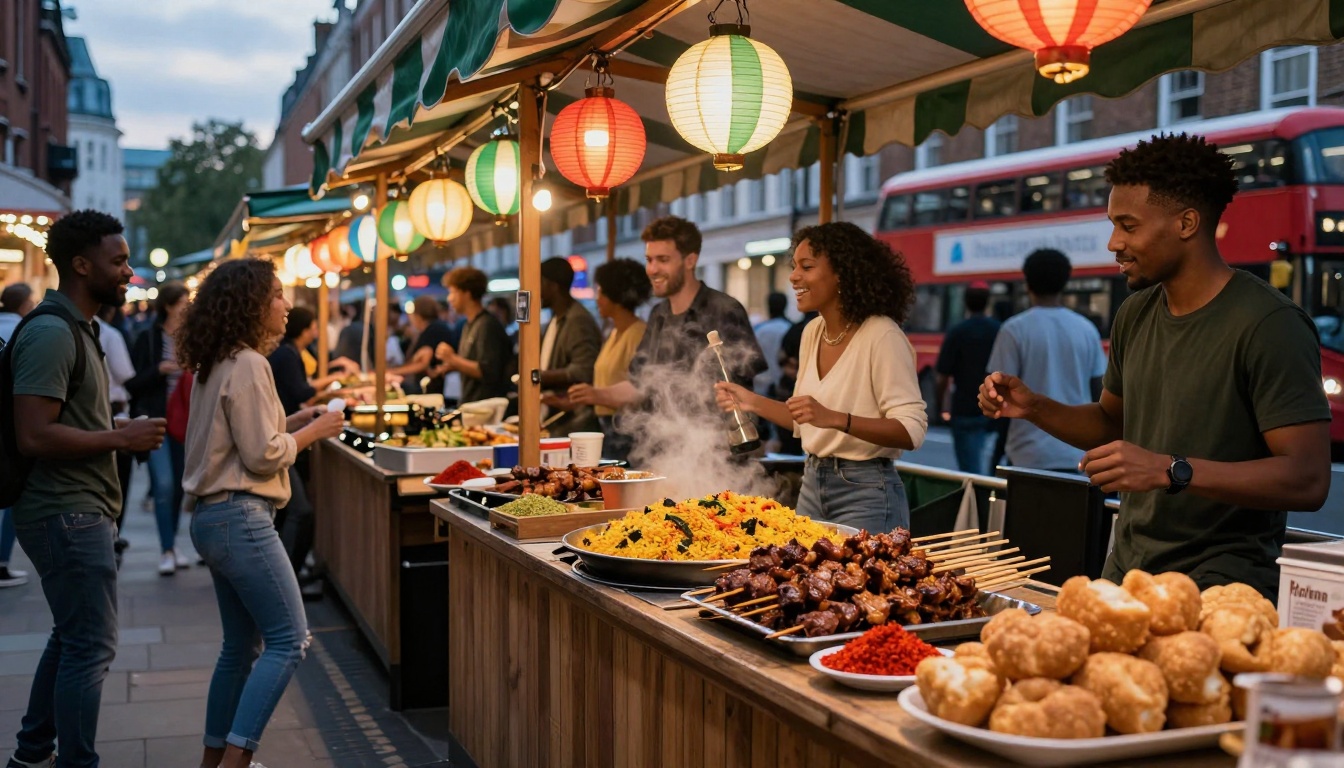
Picture a bustling street food market in London. Jollof rice sizzles on griddles, sending spicy aromas into the air. Afrobeats pulses from speakers, hips sway to the rhythm. Locals grin and say “no wahala” as they queue for suya skewers. This scene captures Nigeria’s vibrant export. Nigerians share their culture worldwide through food, music, and slang.
Food like puff-puff and egusi soup now graces tables from New York to Paris. Restaurants and pop-ups bring bold flavours to new crowds. Music, especially Afrobeats, saw global streams rise 22% in 2025 on Spotify. Artists top charts and fill arenas. Slang words such as “wahala” and “japa” slip into daily chat, thanks to TikTok and lyrics. Oxford dictionaries now list several Nigerian terms.
Nigerians build soft power this way. They spread joy and connection. Diaspora communities lead the charge, backed by digital tools. This article explores each channel. Food wins stomachs first. Then music hooks ears. Slang seals the bond. Together, they paint Nigeria as a place of fun and flair.
Nigerian Food Winning Hearts and Stomachs Abroad
Nigerian dishes travel far. Jollof rice sparks debates in Ghana and the UK. Suya spice mixes sell in supermarkets. Puff-puff draws lines at festivals. These foods carry Nigeria’s warmth and boldness. They turn meals into cultural bridges.
Diaspora chefs open spots in big cities. Packaged goods hit shelves. Influencers share quick recipes online. Events like food fairs amplify the buzz. In 2026, non-oil exports grow, with agro-products like spices in the mix. Food shifts Nigeria’s image from oil giant to tasty innovator. Crowds gather for the sizzle and stories behind each bite.
For more on Nigeria’s cultural push, see how entertainment sets a global model.
Restaurants and Pop-Ups Bringing Naija Flavours to Cities
Casual eateries pop up in London and New York. Think Lagos-style joints with plastic stools and steaming pots. Upscale spots fuse suya with steak in Toronto. Houston’s fast-casual chains serve egusi wraps.
Delivery apps speed the spread. Uber Eats lists jollof bowls next to pizza. Non-Nigerians try it for the crunch and heat. A pop-up in Paris draws foodies with plantain chips. These places spark chats. “What’s that spice?” leads to Nigeria tales. Chefs mix tradition with local twists, like puff-puff burgers. Cities pulse with Naija tastes.
Packaged Snacks and Influencer Videos Fuel Home Cooking
Supermarkets stock kilishi jerky and zobo drink mixes. Chin-chin packs fly off shelves in the US. These let fans cook at home.
YouTubers film step-by-step egusi. TikTok mukbangs show faces light up at first bite. Videos blend food with slang and beats. A creator says “abeg pass the pepper” mid-recipe. Viewers mimic in comments. Home cooks share their tries, tagging #NaijaEats. This DIY wave grows the fanbase. Flavours reach kitchens worldwide.
Afrobeats Sounds Echoing from Lagos to Global Charts
Lagos studios birth hits that climb charts. Afrobeats blends highlife, hip-hop, and funk. Streams surged 22% globally in 2025. Latin America saw over 180% growth. Fans dance in clubs from Brazil to Seoul.
Wizkid hits 10 billion Spotify streams, first for an African artist. Burna Boy headlines arenas. Rema and Tems snag big collabs. Festivals pack crowds. TikTok dances go viral. Diaspora DJs spin tracks at weddings. Digital platforms carry sounds border-free. Concerts erupt in cheers, bodies move as one. Afrobeats reshapes pop.
Explore the story behind Afrobeats’ boom.
Top Artists Like Burna Boy and Wizkid Breaking Records
Burna Boy grabbed a Grammy for Best Global Music Album in 2021. Nominations follow for albums like African Giant. He packs stadiums, from London Stadium’s 60,000 to US arenas.
Wizkid tops with over 10 billion Spotify streams by January 2026. His beats hook millions. Rema’s Calm Down remix with Selena Gomez passes one billion streams. First for an African-led track. Tems shines on Essence with Wizkid. These stars prove Naija talent rules.
Collaborations and Festivals Spreading the Beat Worldwide
Drake features Rema. Tems writes for Rihanna and Beyoncé. Future calls her for Wait for U, a Grammy winner. These links pull Afrobeats into mainstream.
Arena tours sell out in Paris and New York. Afro Nation festivals thump in Ghana and Portugal. Stages host rising acts. Dancers mimic moves on TikTok. Fans chant lyrics, feel the vibe. Collaborations blend styles; festivals unite crowds. The beat spreads like wildfire.
Nigerian Slang and Pidgin Creeping into Everyday Talk
Pidgin mixes over 500 languages into lively speech. Words like “nyash”, “wahala”, “abeg”, “biko”, and “japa” jump borders. Lyrics teach them first. TikToks meme them next. Nollywood clips add flair.
Friends say “no wahala” in London parks. “Japa” means flee tough spots, now global. Music videos flash “chop life”. Social media memes turn “abeg” into pleas. Pidgin builds quick bonds. It feels warm, direct. Non-speakers pick it up for the fun.
Nigeria’s soft power grows through this, as noted in analyses of cultural influence.
Hit Songs and TikToks Making Words Go Viral
Chella’s tracks drop “nyash” in hooks. Fans lip-sync on TikTok. Burna Boy’s lyrics weave “wahala”. Rema’s Calm Down adds “calm down” twists.
Videos explode with challenges. A dance uses “japa” steps. Comments fill with “abeg”. Songs and clips make slang stick. Kids parrot it at school. Stars own the spread.
From Streets to Dictionaries: Official Recognition
Oxford adds “wahala” for trouble. “Japa” enters for escape. These nods validate street talk. Diaspora kids teach parents. It cements Pidgin’s place. Culture gains weight.
Recognition boosts pride. Words from Lagos shape English.
Conclusion
Nigerian food fills plates with joy. Afrobeats fills airwaves with rhythm. Slang fills chats with spark. Together, they fuel a creative surge, eyed for billions in exports. Diaspora drives it, from markets to stages.
Back to that London market: jollof sizzles, beats thump, “no wahala” echoes. Try jollof this weekend. Blast Burna Boy. Slip “abeg” into talk. Feel the pull. What’s your favourite Naija export? Share below. Nigeria’s culture invites all.
(Word count: 1482)