
Listen to this post: Migrant and Refugee Rights in a World of Hardened Borders
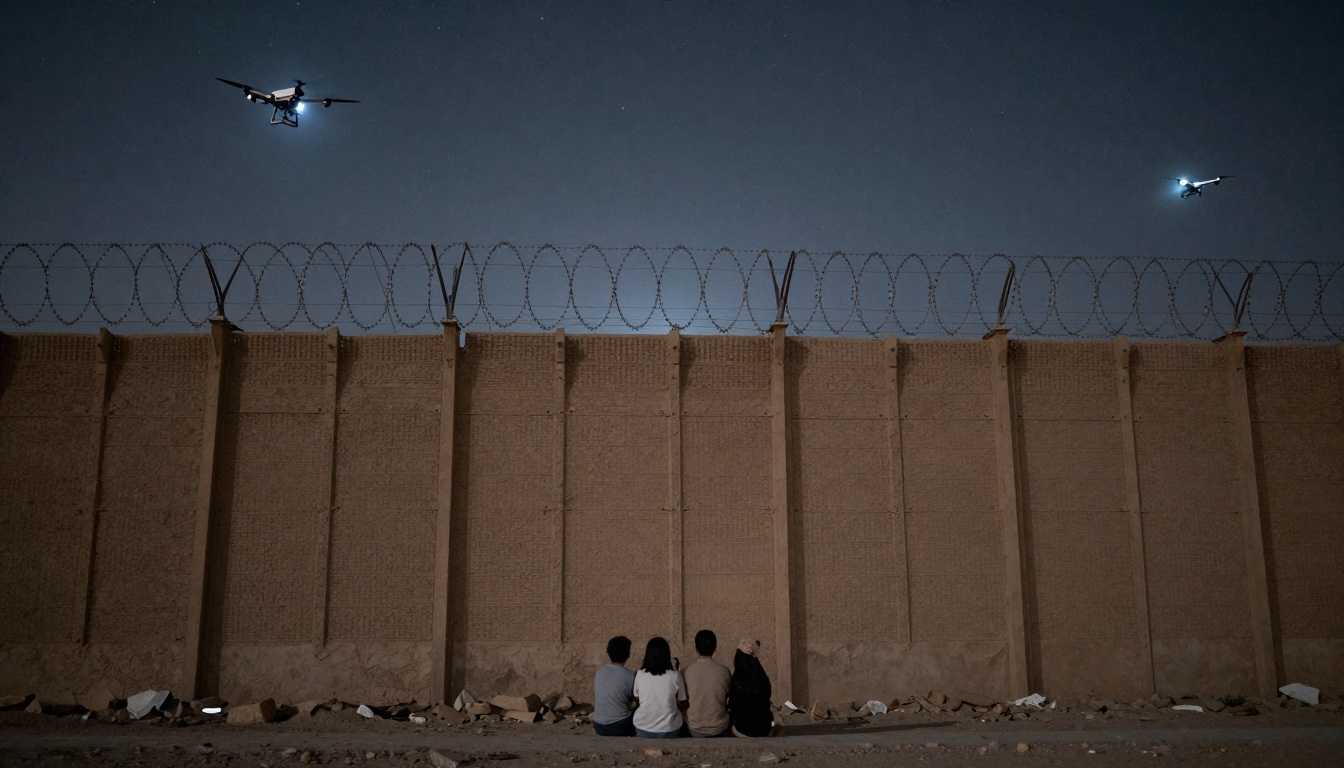
Picture a family huddled under a starry sky at a towering border fence. Drones hum overhead, scanning faces with cold precision. They fled war and hunger, but the gate stays shut. This scene plays out too often in 2026. Hardened borders now mix high-tech scanners, steep tariffs, and iron rules. Nations clamp down to guard jobs and security. Yet these walls crush basic rights. People seeking safety face rejection, danger, and despair.
Migrant rights in 2026 hang by a thread. Refugee policies favour strict controls over open arms. The US cut admissions to just 7,500 this year. Border encounters dropped to 26,000 to 53,000 monthly. Europe tightens asylum with offshore hubs. The UK and Australia push AI checks and security tech. Global displaced hit 121 million, with 30.5 million refugees.
This post maps the shifts. We look at what hardened borders mean today. Then we trace the human toll in the US, EU, UK, and Australia. Finally, we spotlight laws and voices for change. Readers will grasp the stakes and spot paths ahead.
What Hardened Borders Look Like in 2026
Nations build thicker walls in 2026. Automated systems rule crossings. Biometrics scan eyes and fingerprints at airports and seaports. Drones patrol land borders from North America to Asia-Pacific. Protectionism surges too. Since 2020, over 18,000 trade barriers sprouted. Tariffs and carbon taxes snag two-thirds of world trade.
Take key spots. The US sees low migrant flows. Encounters fell from 1.41 million in 2024. Europe rolls out carbon rules that hit imports hard. The UK deploys AI for customs scans. Australia tests token payments at ports.
| Region | Key Trend | Impact on Flows |
|---|---|---|
| US | Closed asylum, ended parole | Entries at 26,000-53,000 monthly |
| EU | Offshore return hubs from June | Faster deportations |
| UK | AI customs and biometric checks | Tighter screening |
| Australia | Security tech, token systems | Reduced unauthorised arrivals |
These tools speed security. But they trap the desperate. Small ports overload with passenger booms. Nations cite terrorism fears. Rules squeeze global ties.
Tech Turning Borders into Iron Gates
Biometrics rule the gates. Scanners read faces in seconds. AI flags fake papers at checkpoints. Airports in Europe hum with these machines. They cut wait times but snare the vulnerable.
Think of a mother with worn documents. The system pings red. She waits days in limbo. Passenger numbers swell post-pandemic. Ports strain under the load. Terrorism worries drive the tech rush. Yet errors trap innocents. Families split at the line.
Tariffs and Rules Squeezing Global Flows
Protectionism bites deep. The US slaps tariffs on chips and minerals. The EU demands no deforestation in imports. Sanctions block shipping lanes. Small nations reel most. Poor farmers lose markets. This sparks more migration pushes.
See ten humanitarian trends to watch in 2026. Crises worsen as trade walls rise. Food shortages grow. People pack bags for distant shores.
How These Borders Crush Migrant and Refugee Rights
Hard walls mean hard lives. Smugglers thrive in the shadows. Risks climb for those who try. US encounters dropped, but deaths mount. Families face detention or split apart. Poor groups bear the brunt. Rules hit the weakest first.
Data gaps hide full violations. Geopolitics adds heat. Energy and food shortages fuel scrutiny. Refugees beg for asylum. But screens grow stricter. Picture a child alone at dawn, papers denied. Rights to safety fade.
Global displaced top 121 million. Refugees number 30.5 million. Yet admissions shrink. Aid cuts leave people adrift.
Real Struggles at the US Frontier
The US frontier tells a stark tale. Encounters plunged to 22,000 to 39,000 monthly. Net migration stays low. But unrest brews south. Smugglers charge steep fees. Crossers dodge patrols in desert nights.
Removals hit 310,000 last year. More may leave in 2026. Asylum grants stalled. Aid drops to four months. Lost protections boot 500,000 home. A father waits in line, dreams dashed by scans.
Europe and Beyond: Widening Gaps
Europe widens the gaps. The EU approved tough migration deals with offshore hubs. Deportations speed up from June. The Council pushes safe country laws.
The UK ramps AI customs. Australia layers security tech. Refugees queue at automated ports. Asylum claims drag. Detentions rise. A young seeker from afar stares at the sea, hope thin.
Key Laws and Voices Pushing for Change
Laws tilt toward control. No major 2026 migrant reforms shine. Enforcement hardens instead. The US holds Section 232 tariffs. Export bans curb flows. WTO talks stall on reforms.
Yet voices rise. Developing nations demand fair trade at WTO. They seek space for agriculture and fish rules. Digital trade heats debate. Advocacy groups spotlight rights gaps. See the EU Commission’s five-year border plan.
What can we do? Support fair policies. Back groups that aid the displaced. Global talks offer glimmers. Nations eye balanced paths. Pressure builds for asylum access. Hope stirs in shared pleas.
Conclusion
Hardened borders in 2026 squeeze migrant and refugee rights tight. Tech gates and tariffs block the vulnerable. US lows, EU hubs, UK scans paint a grim map. Human costs mount in deserts and seas.
Yet change brews. Advocacy and talks point forward. Demand fair treatment. Share this post. Follow for updates on policies. Imagine open paths where safety welcomes all. Act now to build that world.